Excelência em Éter de Celulose — Confiado por mais de 1000 empresas globalmente Obtenha Amostra Grátis


O éter de celulose LANDERCOLL ajuda fabricantes de rejunte para azulejos a melhorar a suavidade de aplicação, retenção de água, desempenho de preenchimento, qualidade do acabamento superficial, consistência da argamassa e estabilidade da formulação.
De rejunte fino a rejunte largo, colorido e modificado com polímero — as formulações de rejunte cimentício para azulejos dependem do grau certo de éter de celulose para garantir desempenho confiável em cada projeto.
— HPMC · HEMC / MHEC · Retenção de Água · Rejuntamento · Acabamento de Superfície · Trabalhabilidade · Rejunte para Azulejos à Base de Cimento · Argamassa Seca
 Rejunte para parede
 Rejunte para piso
 Junta Fina
 Rejunte Colorido

 Preenchimento · Acabamento · Retenção
O rejunte é o material de acabamento que completa toda instalação de azulejos — e seu desempenho depende fortemente da qualidade da formulação. No rejunte à base de cimento, o éter de celulose influencia diretamente a retenção de água, a trabalhabilidade, o comportamento de preenchimento, a suavidade da superfície, o controle reológico e a estabilidade da aplicação. Acertar o grau certo faz uma diferença mensurável tanto na consistência da produção quanto na experiência do usuário final.
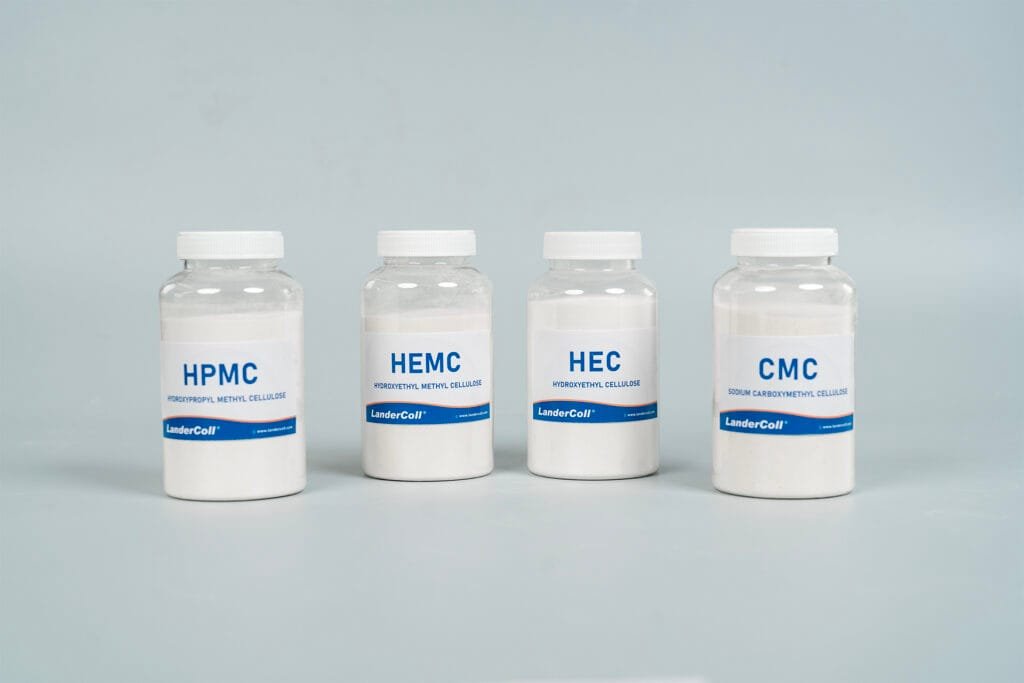
LANDERCOLL fornece HPMC e HEMC / MHEC para fabricantes de rejunte para azulejos que exigem desempenho confiável e consistente entre lotes em rejunte padrão para azulejos, rejunte para paredes, rejunte para pisos, rejunte para juntas finas, rejunte para juntas largas, rejunte colorido, rejunte modificado com polímero e sistemas de rejunte drymix.
The right cellulose ether grade helps tile grout retain water after mixing, remain workable throughout the application window, fill joints smoothly and completely, resist sagging in vertical joints, and deliver a uniform surface finish. For manufacturers, this means better formulation quality and fewer field complaints. For applicators, it means a smoother, more controlled grouting experience on every project.
O rejunte deve ter desempenho consistente em diferentes larguras de juntas, tipos de revestimento, condições do substrato, métodos de aplicação e ambientes climáticos. Sem controle adequado de retenção de água e reologia, o rejunte pode secar muito rápido, tornar-se difícil de aplicar, escorrer de juntas verticais, apresentar textura superficial áspera, produzir cor irregular em sistemas pigmentados ou rachar durante a cura inicial.
A LANDERCOLL fornece graus de éter de celulose HPMC e HEMC / MHEC projetados para sistemas de rejunte de azulejos à base de cimento. A seleção final do grau deve ser confirmada através de testes de formulação com base nos seus requisitos alvo de trabalhabilidade, acabamento superficial e preenchimento de juntas.

Éter de celulose versátil para retenção de água, trabalhabilidade suave e desempenho consistente do rejunte
A hidroxipropilmetilcelulose (HPMC) é amplamente utilizada em formulações de rejunte de azulejos à base de cimento porque fornece retenção de água confiável, espessamento, melhoria da trabalhabilidade e estabilidade da formulação em uma ampla gama de tipos de rejunte. Ajuda o rejunte a permanecer trabalhável durante a aplicação e suporta uma experiência de preenchimento e acabamento mais suave e consistente.

Éter de celulose de grau de construção para aplicação suave, controle reológico e estabilidade de juntas verticais
A hidroxietilmetilcelulose (HEMC / MHEC) é adequada para formulações de rejunte de azulejos onde a retenção de água, trabalhabilidade suave, controle reológico e comportamento estável de preenchimento de juntas são requisitos primários de desempenho. Em sistemas de juntas verticais e juntas mais largas, a HEMC / MHEC fornece melhor corpo estrutural e ajuda a reduzir o escorrimento ou o comportamento de preenchimento irregular.
As formulações de rejunte variam significativamente de acordo com a largura da junta, requisitos de cor, nível de desempenho, disponibilidade local de matérias-primas e padrões do mercado-alvo. A tabela abaixo fornece uma referência geral para componentes comuns.
| Componente | Function in Tile Grout |
|---|---|
| Cimento Portland | Aglomerante hidráulico primário; fornece resistência e integridade estrutural |
| Cargas Minerais Finas | Ajustam textura, suavidade, tom de cor e consistência da formulação |
| Agregados Miúdos Graduados | Estrutura de preenchimento de juntas e desempenho mecânico |
| Pigmentos | Fornecer cor decorativa e aparência visual. |
| Pó de Polímero Redispersível (RDP) | Melhore a aderência, flexibilidade, resistência a trincas e durabilidade |
| Éter de Celulose (HPMC / HEMC) | Melhore a retenção de água, trabalhabilidade, comportamento de preenchimento e consistência |
| Aditivos Repelentes de Água | Support water resistance in selected grout systems |
| Outros Aditivos | Adjust setting time, surface finish, cleaning behavior, or special performance |
Different tile grout systems have different cellulose ether performance priorities. The table below provides a practical selection reference to help manufacturers identify the most suitable product direction.
| Tile Grout Type | Produto Recomendado | Primary Performance Requirements |
|---|---|---|
| Standard Tile Grout | HPMC / HEMC / MHEC | Water retention, workability, filling smoothness |
| Wall Tile Grout | HEMC / MHEC / HPMC | Vertical joint stability, consistency, smooth finishing |
| Floor Tile Grout | HPMC / HEMC / MHEC | Filling behavior, workability, stable curing support |
| Fine Joint Grout | Medium-viscosity HPMC / HEMC / MHEC | Smooth texture, easy filling, fine surface finish |
| Wide Joint Grout | Medium to high-viscosity HPMC / HEMC / MHEC | Structural body, joint stability, reduced shrinkage risk |
| Colored Tile Grout | HPMC / HEMC / MHEC | Uniform consistency, surface finish, pigment distribution |
| Polymer-Modified Grout | HPMC / HEMC / MHEC | Workability, polymer compatibility, consistent handling |
| Water-Resistant Grout | HPMC / HEMC / MHEC Selecionados | Stable application, water retention, surface quality |
The optimal dosage depends on formulation design, joint width, target workability, viscosity grade, water retention requirement, filler particle size, pigment loading, and application conditions.
These dosage ranges are starting reference points only. Final dosage must be confirmed through laboratory testing, including workability evaluation, water retention assessment, surface finish testing, joint filling trials, and curing performance review.
| Tile Grout Application | Typical Reference Dosage |
|---|---|
| Standard Tile Grout | 0.1% – 0.3% |
| Wall Tile Grout | 0.15% – 0.35% |
| Floor Tile Grout | 0.1% – 0.3% |
| Fine Joint Grout | 0.1% – 0.25% |
| Wide Joint Grout | 0.15% – 0.4% |
| Colored Tile Grout | 0.1% – 0.3% |
| Polymer-Modified Grout | 0.15% – 0.35% |
| Water-Resistant Grout | 0.15% – 0.35% |
Water retention is a foundational function of cellulose ether in tile grout. It prevents the grout from losing moisture too rapidly after mixing — supporting stable workability, controlled setting behavior, and better surface finishing quality throughout the application window. Poor water retention leads to rapid surface drying, shortened working time, rough joint texture, and increased risk of early shrinkage cracking.
Tile grout must enter joints smoothly and fill them completely under rubber float or tool pressure, without leaving voids or uneven surfaces. Cellulose ether improves mortar consistency and flow behavior under application pressure, allowing the grout to penetrate joints more easily while maintaining enough structural body to stay in place after filling.
Good workability makes tile grout easier to mix, spread across the tile surface, press firmly into joints, and finish cleanly. HPMC and HEMC / MHEC reduce application roughness, improve handling comfort, and help applicators achieve better results with less effort — particularly important in large-area grouting projects.
A smooth, uniform joint surface is critical for both visual appearance and customer acceptance. Cellulose ether supports better finishing behavior by maintaining water retention, improving mortar consistency, and reducing surface drag during the finishing pass. In colored grout systems, consistent surface quality also helps achieve more uniform color appearance.
Tile grout requires balanced rheology: workable and flowable enough to fill joints completely under tool pressure, yet stable enough to hold its shape and resist sagging after placement. Cellulose ether helps manage this balance, supporting more predictable and controllable application behavior across different joint widths and orientations.
For wall tile grout applications, resistance to sagging in vertical joints is a key performance requirement. HEMC / MHEC and suitable high-performance HPMC grades improve mortar structural body and help grout remain stable in vertical joints after application — reducing the risk of slumping, uneven fill, or surface irregularities.
Cellulose ether helps tile grout maintain stable, uniform consistency after water addition. In colored grout systems, this consistency supports more even pigment distribution and more predictable color appearance across the finished joint surface — reducing batch-to-batch variation and improving overall product quality perception.
When grout application or finishing performance fails on the job site, the cellulose ether grade, viscosity, or dosage is often the first variable to review. The guide below maps common symptoms to likely causes and practical cellulose ether adjustments.
Poor filler balance, low water retention, or unsuitable cellulose ether viscosity grade.
Improve smoothness, workability, and application comfort with a better-matched grade and dosage.
Low water retention, absorbent tile edges or substrate, or hot and dry job-site conditions.
Retain moisture and extend the workable application window with stronger water retention performance.
Weak consistency, poor rheology, or incorrect water demand in the formulation.
Improve grout body, flow under pressure, and filling stability with adjusted viscosity direction.
Weak mortar structure, excess water, or unsuitable cellulose ether grade for wall grout.
Support rheology control and vertical joint stability — HEMC / MHEC or high-viscosity HPMC preferred.
Poor consistency, rapid water loss, or weak workability during the finishing pass.
Improve surface finishing behavior and application uniformity through grade and dosage optimization.
Uneven water distribution, unstable consistency, or pigment dispersion issues in colored grout.
Support uniform consistency and more stable water behavior for better pigment distribution.
Wrong viscosity grade, excessive stickiness, or unsuitable cellulose ether dosage.
Adjust grade selection and dosage balance to improve cleaning and finishing behavior.
Rapid moisture loss, poor water retention, or formulation imbalance during early curing.
Reduce early water loss and support more stable curing with improved water retention performance.
Understanding the variables that influence cellulose ether behavior in tile grout helps manufacturers make better formulation decisions and select the most appropriate grade for their specific system.
Different cement sources vary in hydration rate, water demand, color contribution, and chemical interaction with cellulose ether — affecting workability, setting behavior, and surface finish quality.
Fine fillers strongly influence smoothness, water demand, surface texture, and application feel. Finer filler systems generally require more careful cellulose ether grade selection to maintain balanced workability.
Fine joints and wide joints require different consistency levels and structural body. Wide joint grout typically needs higher viscosity and stronger mortar structure to prevent shrinkage and maintain joint stability.
Colored grout requires uniform pigment distribution and stable water behavior throughout the application window. Cellulose ether grade and dosage should be evaluated in the context of the specific pigment loading and type.
RDP improves adhesion, flexibility, and crack resistance, but also affects rheology and workability. Compatibility between RDP and cellulose ether should be evaluated during formulation development.
Viscosity grade is a primary variable affecting water retention, filling behavior, workability, joint stability, and surface finish. Selection should be matched to joint width, application method, and target performance.
Insufficient dosage leads to poor water retention, rough application, or short working time. Excessive dosage may cause stickiness, difficult cleaning, or slow finishing behavior. Optimal dosage must be confirmed through testing.
Water dosage strongly affects consistency, color appearance, strength development, and surface quality. Consistent water measurement is important for reliable batch-to-batch performance.
Manual filling with a rubber float, sponge cleaning technique, finishing pass timing, and ambient conditions all affect final grout appearance and joint quality.
Selecting the right cellulose ether for tile grout requires a systematic evaluation of filling behavior, water retention needs, workability targets, surface finish requirements, joint stability, color consistency goals, and overall formulation balance.
LANDERCOLL can review your tile grout formulation direction and recommend a suitable HPMC or HEMC / MHEC grade for laboratory evaluation and testing.
Standard, fine joint, wide joint, colored, or polymer-modified?
Is the grout intended for wall joints, floor joints, or both?
What joint width range does the formulation need to cover?
Is color uniformity and surface finish a primary market requirement?
What viscosity range is currently used in your formulation?
What cement type, filler particle size, and pigment system are you working with?
Is redispersible polymer powder included, and at what dosage?
Do you need better vertical joint stability or anti-sag performance?
What working time and cleaning behavior does your market require?
What dosage level are you targeting for cost and performance balance?
Do you require surface-treated or untreated cellulose ether?
Not sure which cellulose ether grade is most suitable for your tile grout? LANDERCOLL can recommend a practical grade for laboratory evaluation.
Solicite Recomendação de Grau
Higigroscópico · Selar Quando Não Estiver em Uso
LANDERCOLL provides a complete set of product documentation to support tile grout formulation development, purchasing review, quality approval, and import compliance requirements.
Solicitar documentos do produtoIf your tile grout is experiencing poor joint filling, rough application feel, rapid drying, sagging in vertical joints, uneven surface finish, color inconsistency, difficult cleaning behavior, or early cracking — the cellulose ether grade or dosage may need to be reviewed.
LANDERCOLL provides technical support to help tile grout manufacturers evaluate HPMC and HEMC / MHEC options based on grout type, joint width, filler system, pigment loading, target consistency, and application requirements.
HPMC and HEMC / MHEC grade selection for tile grout
Water retention improvement and evaluation
Smooth filling behavior support
Surface finish quality discussion
Vertical joint stability and anti-sag performance
Viscosity direction and grade comparison
Dosage reference and adjustment guidance
Sample supply and technical documentation
Quotation and supply chain communication
HPMC (hydroxypropyl methylcellulose) and HEMC / MHEC (hydroxyethyl methylcellulose) are the two main types of cellulose ether used in cement-based tile grout. Both improve water retention, workability, joint filling behavior, mortar consistency, and surface finishing performance.
HPMC improves water retention, smooth workability, grout consistency, joint filling behavior, and surface finishing quality in tile grout formulations. It is widely used in standard, colored, and polymer-modified cement-based grout systems.
HEMC / MHEC improves water retention, rheology control, vertical joint filling stability, anti-sag behavior, smooth application feel, and mortar consistency. It is especially effective in wall tile grout and wide joint grout formulations.
Water retention prevents tile grout from losing moisture too quickly after mixing. This maintains workability during application, supports stable cement hydration, reduces the risk of early surface cracking, and helps achieve a more uniform surface finish — especially on absorbent substrates or in hot, dry conditions.
A common reference dosage range is 0.1%–0.4% by weight of the dry formulation, depending on grout type, joint width, target workability, viscosity grade, and raw material system. Final dosage must always be confirmed through laboratory and application testing.
Yes. Suitable HPMC or HEMC / MHEC improves water retention, mortar consistency, and application smoothness — all of which directly contribute to a better, more uniform joint surface finish. In colored grout systems, consistent cellulose ether performance also helps support more even color appearance.
Sagging in vertical joints is typically caused by excessive water addition, weak mortar rheology, unsuitable cellulose ether grade, insufficient viscosity, poor filler balance, or incorrect dosage. HEMC / MHEC and high-viscosity HPMC grades are generally more effective at supporting vertical joint stability.
Yes. Cellulose ether supports more stable mortar consistency and uniform water distribution throughout the application window, which helps improve pigment dispersion uniformity and reduce color variation in colored grout systems. Pigment quality and overall formulation balance remain equally important.
Both are effective, and the best choice depends on your specific formulation and application requirements. HPMC is versatile and widely used across standard, floor, and colored grout systems. HEMC / MHEC is preferred where vertical joint stability, anti-sag performance, and smooth application feel are primary requirements. Testing both grades in your specific formulation is the most reliable way to identify the optimal choice.
Start by defining your grout type, joint width, application surface (wall or floor), target workability, water retention requirement, surface finish expectation, and pigment system. Share these details with LANDERCOLL and our technical team can recommend suitable HPMC or HEMC / MHEC options for laboratory evaluation.
Whether you manufacture standard tile grout, wall tile grout, floor tile grout, fine joint grout, wide joint grout, colored grout, polymer-modified grout, or water-resistant grout systems — LANDERCOLL can help you identify the right HPMC or HEMC / MHEC grade for better water retention, smooth joint filling, consistent workability, and superior surface finish quality.
Share your formulation requirements and let our technical team recommend the most suitable cellulose ether solution for your production needs and target market.
HPMC for Tile Grout · HEMC / MHEC for Wall Grout · Water Retention · Joint Filling · Surface Finish · Workability · Cement-Based Drymix Grout · Construction Cellulose Ether Supplier.
