Excelência em Éter de Celulose — Confiado por mais de 1000 empresas globalmente Obtenha Amostra Grátis
LANDERCOLL CMC e HEC éter de celulose ajuda fabricantes de detergente para lavanderia a melhorar a suspensão de sujeira, desempenho anti-redeposição, controle de viscosidade, estabilidade da formulação e consistência do produto em formatos em pó, líquido, gel, pasta, tablete e concentrado.
De sabão em pó para lavanderia a sistemas líquidos, em gel, pasta e concentrados — o grau certo de CMC ou HEC proporciona antirredeposição confiável, reologia estável e desempenho de lavagem previsível para compradores estrangeiros de produtos químicos domésticos.

Pó · Líquido · Concentrado · Gel · Pasta · Comprimido · Baixa Espuma



Laundry detergent is one of the most widely produced household chemical products globally. Whether in powder, liquid, gel, paste, tablet, or concentrated format, a high-performing laundry detergent must do more than remove soil from fabric — it must also keep that soil dispersed in the wash water and prevent it from returning to the textile surface during the wash cycle.
LANDERCOLL provides CMC, HEC, and selected cellulose ether grades for laundry detergent manufacturers who need reliable anti-redeposition performance, viscosity control, formulation stability, and consistent product quality across different detergent formats and markets.
CMC in particular has been used in laundry detergent systems for decades because of its ability to adsorb onto soil particles and fabric surfaces, creating a protective barrier that reduces redeposition and helps fabrics maintain their brightness and cleanliness appearance over repeated wash cycles.
In liquid detergent systems, HEC provides non-ionic thickening, viscosity stability, and formulation body — contributing to better pouring behavior, product texture, and user experience without strongly interfering with the ionic surfactant system. Together, CMC and HEC address the most critical secondary performance functions in modern laundry detergent formulations.
During the wash cycle, surfactants and builders lift and emulsify soil from fabric surfaces. Without adequate suspension and anti-redeposition support, dispersed soil particles can migrate back to fabric — causing greying, dullness, and declining wash quality. Cellulose ether helps laundry detergent manufacturers address these formulation challenges.
CMC is the most established cellulose ether for anti-redeposition and soil suspension in laundry detergent. HEC provides non-ionic viscosity control in liquid systems. Selected HPMC grades may be considered for special detergent formulation requirements.
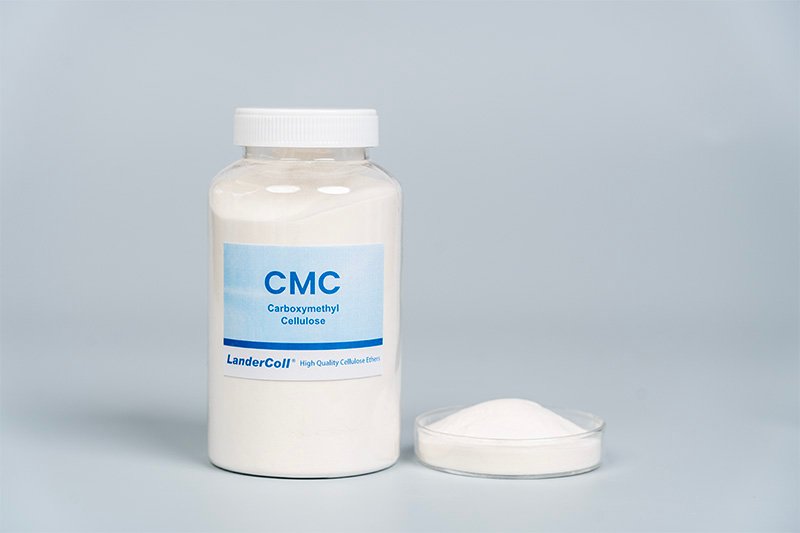 Anionic · Anti-Redeposition
Primary cellulose ether for powder, tablet, paste, and selected liquid laundry detergent systems.
CMC (Carboxymethyl Cellulose) is the most established cellulose ether used in laundry detergent systems. Its anionic character allows it to adsorb onto negatively charged soil particles and cotton fiber surfaces, creating a repulsive barrier that helps prevent soil from redepositing onto fabric during washing. LANDERCOLL CMC is suitable for powder laundry detergent, detergent tablets, detergent paste, and selected liquid formulations.
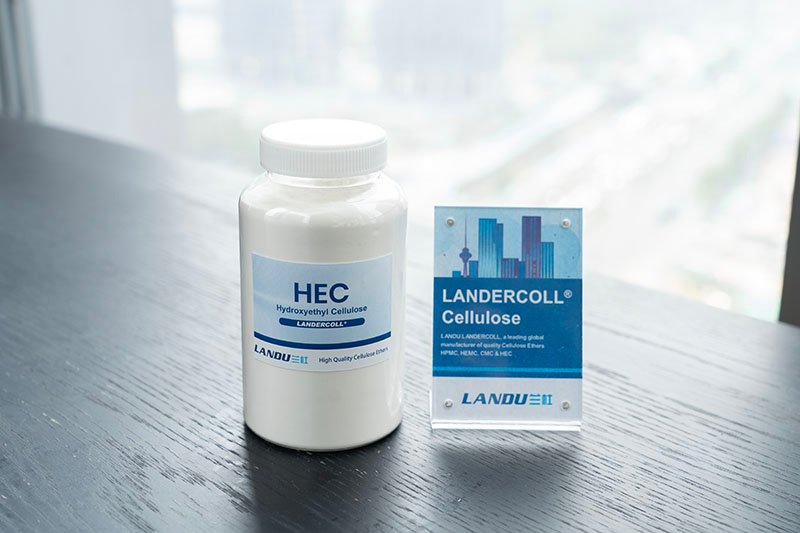 Non-Ionic · Viscosity Control
Practical thickening option for water-based liquid, gel, and concentrated laundry detergent.
HEC (Hydroxyethyl Cellulose) thickens the water phase without strongly interacting with anionic surfactant systems, making it a practical option for water-based liquid detergent formulations. LANDERCOLL HEC helps liquid laundry detergent achieve better product body, more stable viscosity during storage, improved pouring behavior, and a more user-friendly product texture.
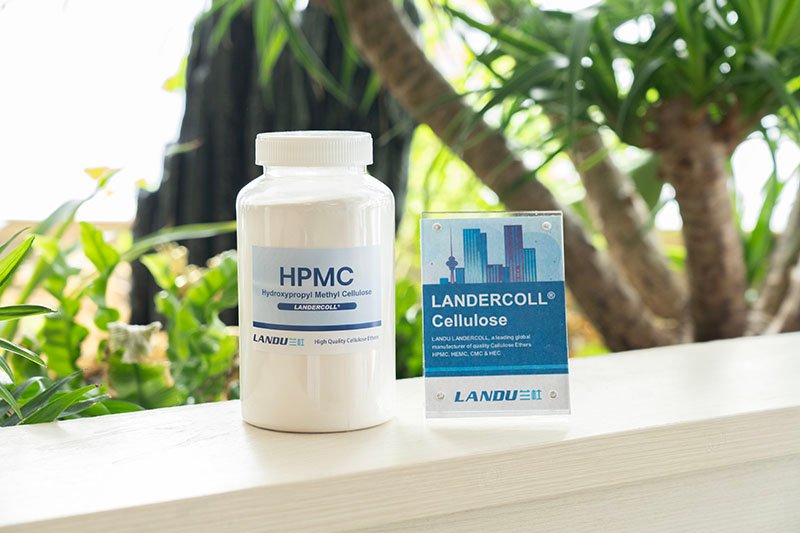 Selected Grade · Special Systems
For selected detergent or household cleaning systems with special rheology needs.
HPMC (Hydroxypropyl Methylcellulose) may be considered in selected detergent or household cleaning systems where non-ionic thickening, water-soluble film behavior, or special rheology adjustment is required. Its use in laundry detergent should be confirmed through formulation compatibility testing, as surfactant type, electrolyte content, pH, fragrance, enzymes, and preservatives can all affect final performance.
Laundry detergent formulations vary significantly by format, market, quality level, and performance target. The table below provides a general reference for common formulation components and the role cellulose ether plays within the system.
| Componente | Function in Laundry Detergent |
|---|---|
| Surfactants (Anionic / Non-ionic / Amphoteric) | Remove oil, stains, and soil from fabric surfaces |
| Builders (Zeolites, Phosphates, Citrates) | Improve washing efficiency and water hardness control |
| Cellulose Ether (CMC / HEC) | Anti-redeposition, soil suspension, viscosity control, and stability |
| Enzymes (Protease, Lipase, Amylase) | Help remove protein, fat, and starch-based stains |
| Optical Brighteners | Improve fabric whiteness and brightness appearance |
| Fragrance | Provides product scent and freshness perception |
| Preservatives | Protect water-based formulations from microbial degradation |
| Chelating Agents (EDTA, MGDA) | Control metal ions and support formulation stability |
| pH Adjusters | Optimize cleaning performance and product stability |
| Colourants / Opacifiers | Adjust product appearance and visual appeal |
| Outros Aditivos | Improve foam, fabric softening, anti-static, or special performance |
| Tipo de Aplicação | Produto Recomendado | Main Requirements |
|---|---|---|
| Detergente em Pó para Lavanderia | CMC | Anti-redeposition, soil suspension, powder compatibility |
| Detergente Líquido para Roupas | HEC / CMC | Viscosity control, stability, suspension |
| Concentrated Laundry Detergent | HEC / selected CMC | Rheology balance, stability, user-friendly texture |
| Gel para Lavanderia | HEC / selected cellulose ether | Thickening, gel body, smooth texture |
| Pasta para Lavanderia | CMC / HEC | Soil suspension, body, stability |
| Tabletes de Detergente | CMC | Soil suspension, anti-redeposition support |
| Detergente de Baixa Espuma | CMC / HEC | Soil suspension, formulation stability |
| Custom Household Laundry | CMC / HEC / HPMC | Custom viscosity, stability, performance balance |
These dosage ranges are starting references only. Final dosage must be confirmed through formulation testing, viscosity measurement, storage stability evaluation, washing performance trials, anti-redeposition testing, compatibility testing, and consumer-use assessment.
| Aplicação | Typical Reference Dosage |
|---|---|
| Detergente em Pó para Lavanderia | 0.3% – 1.5% |
| Detergente Líquido para Roupas | 0.2% – 1.0% |
| Concentrated Laundry Detergent | 0.2% – 0.8% |
| Gel para Lavanderia | 0.3% – 1.2% |
| Pasta para Lavanderia | 0.3% – 1.5% |
| Tabletes de Detergente | 0.3% – 1.2% |
| Detergente de Baixa Espuma | 0.2% – 1.0% |
| Fórmulas Personalizadas para Lavanderia | Depends on target viscosity and performance |
Cellulose ether influences wash performance, product handling, and long-term formulation stability — from anti-redeposition and soil suspension in the wash liquor to viscosity control and batch consistency in production.
Anti-redeposition is the primary and most established function of CMC in laundry detergent. During washing, soil particles removed from fabric are dispersed into the wash liquor. CMC adsorbs onto both soil particles and fabric fiber surfaces — particularly cotton — creating an electrostatic and steric barrier that reduces the tendency of soil to return to the fabric. This helps fabrics maintain their whiteness, brightness, and clean appearance over repeated wash cycles.
Cellulose ether helps keep fine soil particles — including clay, carbon black, dust, and particulate soils — dispersed in the wash liquor throughout the wash cycle. Better soil suspension supports more effective removal and reduces the risk of soil settling back onto fabric surfaces before rinsing.
HEC and selected cellulose ether grades help adjust the viscosity of liquid laundry detergent. Proper viscosity gives the product body, improves pouring and dispensing behavior, supports a premium product feel, and contributes to more stable in-bottle appearance.
In liquid and gel detergent systems, cellulose ether helps stabilize suspended components — including opacifiers, enzymes, and insoluble particles — and supports more uniform product appearance during storage, transport, and temperature variation.
A well-selected cellulose ether grade contributes to a smoother, more consistent liquid or gel texture. This improves the consumer experience during pouring, measuring, and application — increasingly important in premium and concentrated laundry detergent formats.
Cellulose ether supports more predictable viscosity development and application properties across production batches, helping detergent manufacturers deliver consistent product quality to their customers.
When laundry detergent performance fails in production, storage, or consumer use, cellulose ether grade, dosage, or compatibility is often the first variable to review within the complete formulation system.
Soil redeposition during wash cycle.
CMC supports anti-redeposition behavior.
Weak dispersing system, low polymer support.
CMC helps suspend soil particles in wash liquor.
Insufficient thickener or wrong grade.
HEC supports viscosity control and product body.
Particle settling or poor formulation balance.
HEC / CMC support suspension stability.
Viscosity too high or poor rheology balance.
Ajustar o grau e a dosagem do éter de celulose.
Surfactant, electrolyte, or polymer incompatibility.
Test suitable grade and formulation balance.
Poor dispersion or hydration during production.
Improve addition method and mixing process.
Electrolyte, pH, temperature, or surfactant interaction.
Optimize grade, dosage, and compatibility.
Understanding the variables that influence cellulose ether behavior in detergent systems helps formulators make better selection decisions and avoid compatibility or stability problems.
Anionic, non-ionic, amphoteric, and mixed surfactant systems affect cellulose ether compatibility, viscosity development, clarity, and long-term stability. High concentrations of certain anionic surfactants may interact with CMC; HEC’s non-ionic character generally provides broader compatibility.
Salt, zeolite, phosphate, citrate, and other builder or electrolyte content can significantly influence cellulose ether viscosity, hydration behavior, and long-term stability. High electrolyte systems require careful grade selection and dosage optimization.
Laundry detergents typically operate under alkaline conditions (pH 8–11). Cellulose ether selection should be tested under the actual formulation pH range to confirm stability and performance.
High-active concentrated formulations may require special viscosity and stability balancing. Higher active matter content can affect cellulose ether hydration and viscosity efficiency.
Cellulase enzymes, if present in the formulation, may degrade cellulose ether over time. Compatibility between cellulose ether and the enzyme system should be evaluated during formulation development.
Certain fragrances and preservatives may affect cellulose ether viscosity stability or formulation compatibility. Testing under actual formulation conditions is recommended.
Hard water, dissolved minerals, and metal ions can affect detergent performance and cellulose ether behavior. Chelating agents help manage this, but their interaction with cellulose ether should also be confirmed.
Addition sequence, hydration time, mixing speed, and water temperature all affect cellulose ether dispersion and final viscosity development. CMC and HEC should be properly dispersed and hydrated before other components are added to avoid lumping.
Low or high storage temperatures may influence viscosity stability, clarity, and product appearance. Temperature cycling during transport can accelerate viscosity drift in poorly optimized formulations.
Too little cellulose ether may not provide sufficient anti-redeposition or viscosity control. Too much may cause excessive viscosity, poor pouring behavior, processing difficulty, or formulation incompatibility.
Selecting the correct cellulose ether requires matching the product format, target performance function, surfactant system, pH, electrolyte level, viscosity requirement, and processing conditions. Use the checklist below before requesting a grade recommendation.
 Grade Selection Guide
LANDERCOLL can review your laundry detergent formulation direction and recommend suitable CMC, HEC, or selected cellulose ether grades for testing.
Is the detergent powder, liquid, gel, paste, tablet, or concentrate?
Is the main need anti-redeposition, viscosity control, or both?
Do you need a clear, opaque, or gel-like product appearance?
What anti-redeposition or viscosity level is required?
What surfactant system is used — anionic, non-ionic, or mixed?
What is the target pH range of the formulation?
What is the electrolyte or builder concentration?
Are enzymes — particularly cellulase — included?
What target viscosity range is required (mPa·s or cP)?
What mixing process, equipment, and hydration method are available?
What dosage level and cost target are you working within?
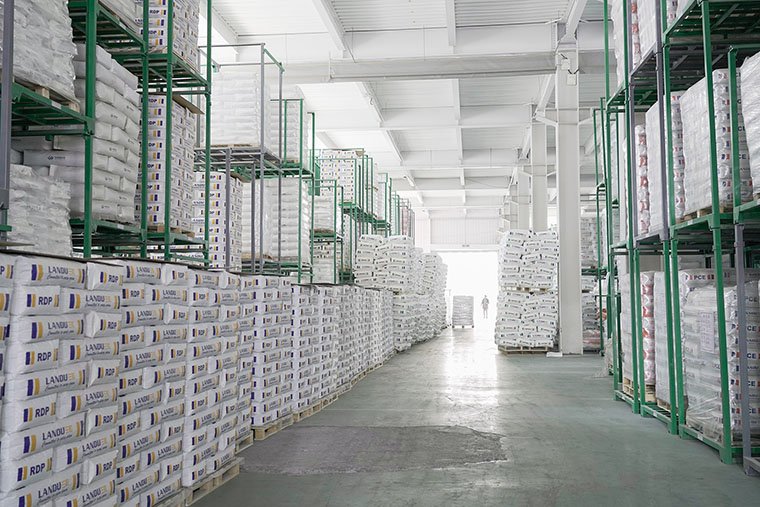
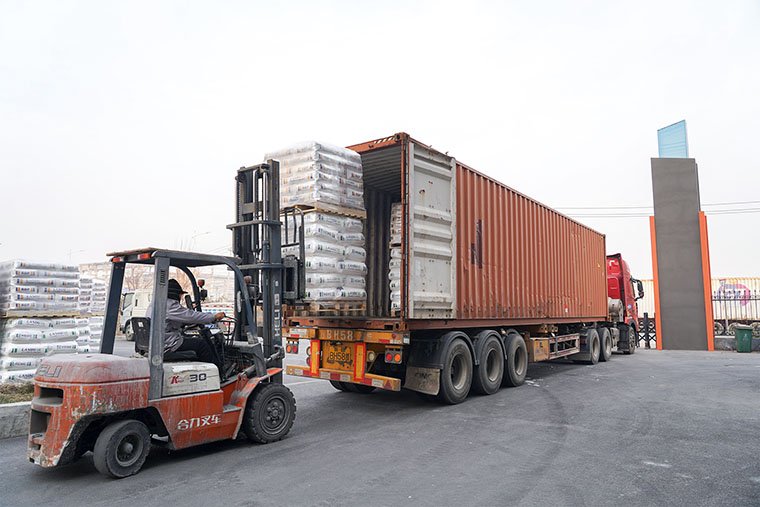

Supporting laundry detergent development with complete technical documentation.
— LANDERCOLL R&D —LANDERCOLL provides product-related documentation to support laundry detergent formulation testing, purchasing review, quality approval, and import compliance requirements.
All documents supplied upon request to support your formulation review, quality approval, and import compliance process.
CMC and HEC grade selection for laundry detergent formulations
Anti-redeposition and soil suspension performance support
Liquid detergent viscosity control and rheology optimization
Powder, liquid, gel, paste, and concentrated format guidance
Formulation stability and storage performance discussion
Cellulose ether grade comparison and dosage direction
Compatibility testing guidance with surfactants and builders
Sample supply and technical documentation (TDS, SDS, COA)
Quotation and export supply chain communication
If your laundry detergent is experiencing fabric greying, poor soil suspension, liquid viscosity loss, unstable product appearance, difficult pouring, product separation during storage, or batch-to-batch inconsistency — the cellulose ether grade or dosage may need to be reviewed.
LANDERCOLL provides technical support to help laundry detergent manufacturers evaluate CMC and HEC options based on detergent format, surfactant system, target viscosity, pH range, electrolyte level, and storage stability requirements.
CMC (Carboxymethyl Cellulose) is the most commonly used cellulose ether in laundry detergent, primarily for anti-redeposition and soil suspension. HEC (Hydroxyethyl Cellulose) is used in selected liquid laundry detergent systems for viscosity control and formulation stability.
CMC adsorbs onto soil particles and fabric fiber surfaces — particularly cotton — creating a barrier that reduces the redeposition of removed soil during washing. This helps fabrics maintain their whiteness, brightness, and clean appearance over repeated wash cycles.
HEC helps adjust viscosity, improve liquid texture, support product stability, and improve pouring and dispensing behavior in selected water-based liquid detergent formulations. Its non-ionic character provides broad compatibility with common detergent surfactant systems.
Cellulose ether primarily supports soil suspension, anti-redeposition, viscosity, and formulation stability. Cleaning power depends on the complete surfactant system, builders, enzymes, washing conditions, water temperature, and overall formulation design.
A common reference dosage range is 0.2%–1.5% by weight, depending on detergent format, cellulose ether grade, target function, and formulation design. Powder detergent typically uses 0.3%–1.5% CMC, while liquid systems may use 0.2%–1.0% HEC or CMC. Final dosage must be confirmed through formulation testing.
Yes. CMC is widely and historically used in powder laundry detergent as an anti-redeposition and soil suspension additive. It is compatible with dry-blending production processes and performs well in alkaline powder detergent systems.
HEC may be used in selected concentrated laundry detergent systems, but compatibility with the specific surfactant blend, electrolyte level, fragrance, preservative, and pH must be tested and confirmed during formulation development.
Viscosity loss during storage may be caused by surfactant incompatibility, high electrolyte content, pH drift, temperature variation, microbial degradation, enzyme activity (particularly cellulase), poor initial hydration, or an unsuitable cellulose ether grade. A systematic review of the formulation and production process typically helps identify the root cause.
Yes. Share your detergent format, target function (anti-redeposition, viscosity, stability), surfactant system, pH range, electrolyte level, viscosity target, and processing method. LANDERCOLL can recommend suitable CMC or HEC grades for laboratory evaluation and provide supporting technical documentation.
Whether you produce powder laundry detergent, liquid laundry detergent, concentrated detergent, laundry gel, detergent paste, detergent tablets, or customized household laundry formulations — LANDERCOLL can help you identify the right CMC or HEC grade for better soil suspension, anti-redeposition performance, viscosity control, formulation stability, and product consistency.
Share your detergent format, surfactant system, target viscosity, pH range, and performance requirements — LANDERCOLL will respond with a suitable cellulose ether grade recommendation and supporting documentation.
