Excelência em Éter de Celulose — Confiado por mais de 1000 empresas globalmente Obtenha Amostra Grátis


Soluções de HPMC, CMC, HEC e éteres de celulose selecionados de grau farmacêutico para ligação, formação de filme, controle de viscosidade, estabilidade de suspensão, liberação controlada e consistência de formulação.
LANDERCOLL éteres de celulose apoiam o desenvolvimento de formulações farmacêuticas com funcionalidade confiável de excipientes — incluindo ligação de comprimidos, formação de filme de revestimento, estrutura de matriz, ajuste de viscosidade, suporte de suspensão e estabilidade da forma farmacêutica em formas sólidas, semissólidas e líquidas.
— HPMC · CMC · HEC · Ligação de Comprimidos · Revestimento por Película · Liberação Controlada · Filmes Orais · Suspensões · USP/NF · Ph. Eur. · ChP
 Vinculação de Tablet
 Revestimento de Filme
 Liberação controlada
 Suspensões & Géis
Aplicações de excipientes farmacêuticos exigem produtos de éter de celulose de grau farmacêutico adequados, com documentação de qualidade apropriada. Nem todo grau de éter de celulose é adequado para uso farmacêutico.
Antes de testar ou aplicar comercialmente, os clientes devem confirmar a especificação do produto, Ficha de Dados Técnicos, Ficha de Dados de Segurança, Certificado de Análise, informações relacionadas à farmacopeia, dados microbiológicos, informações sobre metais pesados, informações sobre solventes residuais e outra documentação exigida pela forma farmacêutica alvo, mercado e processo interno de qualificação. A adequação final deve ser confirmada pelas equipes de formulação, qualidade, regulamentação e fabricação do cliente.
HPMC, CMC e HEC são os éteres de celulose primários usados como excipientes farmacêuticos. HPMC é o mais versátil — suportando compressão de comprimidos, revestimento de filmes, matrizes de liberação controlada, filmes orais e aplicações em cápsulas. CMC é comumente usado para controle de viscosidade, estabilidade de suspensão e sistemas líquidos orais ou oftálmicos selecionados. HEC may be used in selected water-based systems for thickening and stabilization. Final polymer type, grade, and concentration must be confirmed through formulation testing and documentation review.


 Binding · Coating · Release Control
Pharmaceutical excipients play an essential role in dosage form design. They support manufacturability, stability, appearance, release behavior, patient acceptability, and product consistency. In many solid, semi-solid, and liquid dosage forms, cellulose ethers are used because they can provide binding, film formation, viscosity control, gel formation, suspension stability, and controlled-release support.
LANDERCOLL fornece adequado HPMC, CMC, HEC, and selected cellulose ether grades for pharmaceutical excipient applications. These products can be used in tablets, capsules, coatings, controlled-release systems, oral films, ophthalmic formulations, suspensions, gels, and other selected dosage forms.
A suitable cellulose ether grade helps formulators control powder cohesion, solution viscosity, coating performance, matrix hydration, suspension behavior, and product texture. Because pharmaceutical applications require strict quality control, grade selection and documentation review are critical before formulation evaluation begins.
Looking for pharmaceutical-grade cellulose ether for your excipient application?
Peça uma recomendação de produtoCellulose ether is valued in pharmaceutical formulations because it provides water-soluble polymer functionality across a broad range of viscosity grades — allowing formulators to precisely adjust dosage form performance according to the target application, route of administration, and release requirement.
Pharmaceutical formulations vary widely depending on dosage form, active ingredient, process method, release target, and route of administration. The table below provides a general reference for common components where cellulose ether may play a functional role.
| Componente | Function in Pharmaceutical Formulations |
|---|---|
| Ingrediente Farmacêutico Ativo (IFA) | Provides therapeutic function |
| Éter de Celulose (HPMC / CMC / HEC) | Binding, film forming, viscosity control, suspension, matrix support |
| Fillers / Diluentes | Adjust dosage form weight, volume, and processability |
| Desintegrantes | Support tablet breakup where required |
| Lubrificantes | Reduce friction during tablet compression or capsule filling |
| Plastificantes | Improve film flexibility in coating or oral film systems |
| Buffers / pH Modifiers | Adjust formulation pH and stability |
| Preservatives | Used in selected liquid or multi-dose systems |
| Stabilizers | Support chemical or physical stability |
| Other Functional Excipients | Adjust release, texture, appearance, taste, or process behavior |
LANDERCOLL provides pharmaceutical-grade HPMC, CMC, and HEC for excipient applications across tablets, coatings, controlled-release systems, suspensions, gels, and specialty dosage forms. All grade selections should be confirmed through formulation testing and customer qualification.

Hypromellose for binding, film formation & controlled release
HPMC is one of the most versatile cellulose ethers used in pharmaceutical excipient applications. Suitable pharmaceutical-grade HPMC can support tablet binding, film coating, controlled-release matrix formation, oral film systems, capsule applications, and selected liquid or semi-solid formulations.

Carboxymethyl cellulose for viscosity & suspension stability
CMC is used in selected pharmaceutical formulations where viscosity modification, suspension support, hydration behavior, and smooth texture are required. Suitable pharmaceutical-grade CMC may be used in oral suspensions, selected ophthalmic systems, gels, and other water-based dosage forms.

Hydroxyethyl cellulose for viscosity & stabilization
HEC may be used in selected pharmaceutical systems where thickening, viscosity control, stabilization, and water-based texture adjustment are required. Suitable pharmaceutical-grade HEC should be evaluated according to dosage form, route of administration, compatibility profile, and documentation requirements.
Different pharmaceutical dosage forms require different cellulose ether functions and grades. The table below provides a practical selection reference for formulators at the early stage of development.
Cohesion, granule strength, tablet hardness
Film formation, coating uniformity, viscosity control
Gel-layer formation, matrix integrity, release profile control
Shell support, viscosity control, filling consistency
Film formation, flexibility, dissolution behavior
Viscosity, lubrication feel, suspension stability
Suspension stability, viscosity, texture
Thickening, gel texture, consistency
Gel structure, viscosity, spreadability
Depends on formulation design and validation
Cellulose ether dosage in pharmaceutical formulations depends on dosage form, target function, viscosity grade, API properties, process method, and required performance. The following provides directional guidance for early-stage development.
These are starting references only. Final dosage should be confirmed through formulation trials, viscosity testing, mechanical testing, disintegration or dissolution testing, stability testing, process evaluation, and customer validation appropriate to the dosage form.
Depends on tablet hardness, binder efficiency, and process
Depends on coating solids, viscosity, and weight gain target
Depends on target release profile and matrix design
Depends on shell system or fill viscosity target
Depends on film thickness, flexibility, and dissolution
Depends on viscosity, clarity, comfort, and stability
Depends on suspension stability and pourability
Depends on viscosity, texture, and spreadability
In tablet formulations, cellulose ether can help improve powder cohesion, granule strength, tablet hardness, and mechanical integrity — supporting both wet granulation and direct compression processes depending on grade and concentration.
HPMC can form smooth and uniform films for tablet coating and oral film systems. Film quality depends on polymer grade, plasticizer selection, coating process parameters, drying conditions, and overall formulation design.
HPMC can hydrate and form a gel layer in hydrophilic matrix tablets, helping regulate water penetration, API diffusion, and matrix erosion. Viscosity grade and polymer concentration are the primary levers for tuning the release profile.
Cellulose ethers help adjust viscosity in liquid, semi-solid, coating solution, suspension, and gel formulations. Viscosity grade selection is critical for both processability during manufacturing and final product performance.
CMC, HPMC, and selected HEC grades can help suspend dispersed ingredients and reduce sedimentation in selected pharmaceutical systems — including oral suspensions and ophthalmic formulations.
Cellulose ether can improve texture, spreadability, lubrication feel, and product consistency in selected liquids, gels, and semi-solid systems — contributing to patient acceptability and ease of use.
A suitable cellulose ether grade helps maintain predictable hydration, viscosity, and formulation behavior during manufacturing and scale-up — reducing batch-to-batch variability and supporting process validation.
Cellulose ether can help improve many formulation challenges, but final dosage-form performance depends on the complete formulation, API properties, excipient compatibility, manufacturing process, stability profile, and regulatory validation.
Insufficient binder, poor granulation, weak cohesion.
HPMC or selected HEC supports binding and tablet cohesion.
Unsuitable polymer grade, poor plasticizer balance.
HPMC supports film formation and coating uniformity.
Wrong viscosity grade, poor matrix design.
HPMC supports matrix formation and release control.
Low viscosity, weak suspension system.
CMC, HPMC, or HEC supports suspension stability.
Unsuitable polymer type or dosage.
Cellulose ether helps adjust viscosity and texture.
pH, ionic strength, poor hydration, additive interaction.
Revisar a compatibilidade do grau e as condições da formulação.
Excessive viscosity, poor flow, hydration issues.
Adjust grade, dosage, and addition sequence.
Wrong product grade or incomplete qualification.
Select suitable pharmaceutical-grade product with full documents.
Understanding the key variables that influence cellulose ether behavior is essential for successful pharmaceutical formulation development.
HPMC, CMC, and HEC differ in hydration behavior, viscosity, ionic character, and film-forming properties.
Affects binding efficiency, matrix gel strength, suspension stability, and coating sprayability.
Influences solubility, gelation behavior, hydration rate, and compatibility.
Solubility, dose loading, particle size, and stability affect excipient performance.
Affects hydration, viscosity, clarity, and stability — especially in liquid and ophthalmic systems.
Granulation, coating, casting, mixing, filling, and sterilization all influence performance.
Cellulose ether can absorb moisture — packaging and storage conditions affect powder flow and hydration.
Grade selection must align with pharmacopoeia standards and target market documentation requirements.
Choosing the right cellulose ether for pharmaceutical excipient use requires matching product type, grade, viscosity, documentation, and performance function to the target dosage form. The following questions guide early-stage selection.
What dosage form are you developing — tablet, coating, controlled-release matrix, capsule, oral film, suspension, gel, or ophthalmic product?
What function is the cellulose ether expected to perform — binder, film former, matrix polymer, thickener, suspending agent, or stabilizer?
Which cellulose ether type is required: HPMC, CMC, HEC, or another selected grade?
What viscosity range is required for the target application?
What API properties must be considered — solubility, dose, particle size, stability?
What manufacturing process will be used?
What pH, ionic strength, solvent system, or sterilization method applies?
What performance tests are required — dissolution, viscosity, hardness, stability?
What pharmacopoeia standards and documentation requirements apply?
What target market and regulatory pathway are involved?
LANDERCOLL can help review your pharmaceutical excipient application and recommend suitable cellulose ether grade options for evaluation.
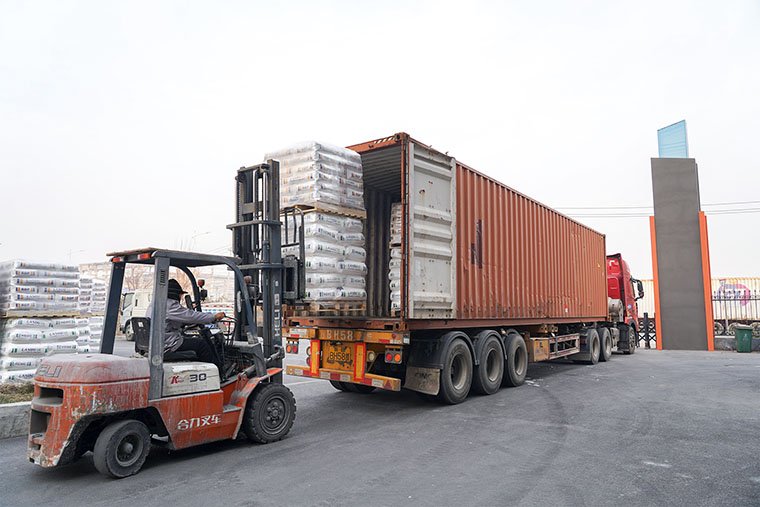
Solicite Recomendação de GrauLANDERCOLL pharmaceutical-grade cellulose ether is supplied in packaging suitable for protected transportation, storage, and pharmaceutical production handling.
| Parâmetro | Referência |
|---|---|
| Tamanho Padrão da Embalagem | 25 kg por saco ou tambor (dependendo do grau) |
| Revestimento interno | Revestimento interno protetor contra umidade |
| Embalagem Paletizada | Disponível mediante solicitação |
| Embalagem Personalizada | Disponível para cooperação de fornecimento qualificada |
Proper storage helps maintain powder flowability, hydration behavior, viscosity performance, and overall product stability throughout the supply chain.
 25 kg · Selado · GMP
If your formulation has weak tablet strength, poor coating film, unstable viscosity, inconsistent release, suspension settling, poor gel texture, process difficulty, or documentation mismatch, the cellulose ether type, grade, and dosage may need to be reviewed.
LANDERCOLL can help evaluate suitable HPMC, CMC, HEC, and selected cellulose ether options based on your dosage form, target function, viscosity requirement, API properties, manufacturing process, and documentation needs.
HPMC, CMC, and HEC grade selection for your specific dosage form and function
Viscosity direction recommendation based on application and process requirements
Tablet, coating, matrix, suspension, gel, and film application discussion
Compatibility review for API, excipient, pH, and process interactions
Suporte documental incluindo TDS, SDS, CoA e informações de conformidade regulatória
Sample and quotation communication for evaluation and commercial planning
Long-term qualified supply discussion for commercial-scale procurement
LANDERCOLL provides comprehensive pharmaceutical documentation to support excipient evaluation, supplier qualification, formulation development, quality review, and regulatory assessment.
| Document | Disponibilidade |
|---|---|
| Ficha de Dados Técnicos (FDT) | Disponível |
| Ficha de Dados de Segurança (SDS) | Disponível |
| Certificado de Análise (CoA) | Disponível |
| Especificação do Produto | Disponível |
| Pharmaceutical Grade Statement | Quando aplicável |
| Informações Relacionadas a Farmacopeias (USP/NF, Ph. Eur., ChP) | Quando aplicável |
| Dados Microbiológicos | Quando aplicável |
| Informações sobre Metais Pesados | Quando aplicável |
| Informações sobre Solventes Residuais | Quando aplicável |
| Declarações de Alérgenos / OGM / EET-ESB | Quando aplicável |
| Informações sobre Embalagem e Armazenamento | Disponível |
| Documentos Relacionados à Exportação | Quando aplicável |
HPMC, CMC, and HEC are the primary cellulose ethers used as pharmaceutical excipients. HPMC is the most widely used, covering tablet binding, film coating, controlled-release matrices, oral films, and capsule applications. CMC is commonly used for viscosity control, suspension stability, and selected ophthalmic or oral liquid systems. HEC may be used in selected water-based systems for thickening and stabilization.
HPMC may be used as a tablet binder, film-forming coating polymer, hydrophilic controlled-release matrix former, viscosity modifier in liquid systems, oral film polymer, and selected capsule-related excipient. Its versatility across multiple dosage forms makes it one of the most important pharmaceutical excipients in modern formulation development.
CMC may be used for viscosity control, suspension stability, smooth texture, lubrication feel, and selected oral liquid or ophthalmic systems. It is particularly associated with oral suspension formulations and artificial tear systems where hydration feel and viscosity-building performance are required.
HEC may be used in selected water-based pharmaceutical systems for viscosity control, thickening, stabilization, and texture adjustment. Its non-ionic character makes it useful in systems where ionic sensitivity is a concern. Customer validation and suitable pharmaceutical-grade documentation are required.
Yes. HPMC is widely used in hydrophilic matrix tablets where hydration and gel-layer formation help control drug diffusion and matrix erosion — enabling extended or modified-release profiles. Final release performance must be confirmed through dissolution testing and validated according to the target regulatory pathway.
Yes. Suitable cellulose ether grades — particularly HPMC — can support binding, cohesion, and tablet mechanical strength in selected tablet formulations, both in wet granulation and direct compression processes.
No. Pharmaceutical applications require suitable pharmaceutical-grade cellulose ether that meets recognized pharmacopoeia standards (USP/NF, Ph. Eur., ChP) and is supported by appropriate quality documentation. Industrial or food-grade materials do not meet the purity, safety, and documentation requirements for pharmaceutical dosage forms.
Typical documents include TDS, SDS, CoA, product specification, pharmacopoeia-related compliance information, microbiological data, heavy metals information, residual solvent information, and other quality or regulatory documents depending on the product grade, dosage form, and target market. LANDERCOLL can provide available documentation upon request.
Start with dosage form, target excipient function, cellulose ether type, viscosity grade, API properties, manufacturing process, pH and ionic conditions, documentation requirements, and regulatory pathway. LANDERCOLL can help recommend suitable grade directions for evaluation based on your specific formulation parameters.
Se você desenvolve tablets, film coatings, controlled-release systems, capsules, oral films, ophthalmic formulations, oral suspensions, pharmaceutical gels, ou specialty dosage forms — LANDERCOLL can help you choose suitable pharmaceutical-grade HPMC, CMC, HEC, or selected cellulose ether products for reliable excipient performance and formulation consistency.
Nosso portfólio de éteres de celulose de grau farmacêutico é apoiado por documentação completa de BPF, informações de conformidade com farmacopeias e suporte técnico dedicado — dando às suas equipes de formulação, qualidade e regulamentação a confiança para avançar do desenvolvimento à qualificação comercial.
Pharmaceutical-Grade Cellulose Ethers for Tablet Binding, Film Coating, Controlled Release, Oral Films, Ophthalmic Formulations, and Specialty Pharmaceutical Excipient Applications.
