Excelência em Éter de Celulose — Confiado por mais de 1000 empresas globalmente Obtenha Amostra Grátis



Graus de CMC e HEC para controle de viscosidade, suspensão de propante, estabilidade reológica e auxílio na perda de fluido em sistemas de fluidos de fraturamento à base de água e serviços de poço.
 Operações de Fraturamento
 Fluid Lab
 Transporte de Propante
 Estimulação · Desviando


 Viscosidade · Suspensão de Propante · Reologia
CMC e HEC éter de celulose são usados em sistemas selecionados de suporte de fraturamento à base de água e fluidos de serviço de poço. to improve viscosity control, particle suspension, rheology stability, fluid-loss control assistance, and operational consistency during mixing, pumping, and field application. A correctly selected grade helps the fluid maintain stable performance throughout the operation — from initial mixing through downhole exposure — while remaining compatible with the brine system, temperature conditions, and the full additive package.
Fracturing support fluids are used in oilfield stimulation, well service, proppant transportation, temporary suspension, diverting operations, and related fluid systems where viscosity, carrying capacity, stability, and controlled rheology are critical to operational success.
LANDERCOLL provides cellulose ether grades selected for fracturing support applications. CMC is recommended for viscosity adjustment, suspension support, and fluid-loss control assistance in compatible water-based systems. HEC is recommended for non-ionic thickening and selected brine-system rheology where broader electrolyte compatibility is needed. Selected specialty grades may also be considered for customized oilfield fluid requirements.
Fracturing support fluids must remain stable during preparation, storage, pumping, and downhole exposure. If the fluid has poor viscosity control or weak suspension, particles may settle, carrying capacity may decrease, additive distribution may become uneven, and operational consistency may be compromised — leading to reduced stimulation effectiveness and increased operational risk. Cellulose ether helps build controlled viscosity in selected water-based systems.
| Function | O Que Isso Significa na Prática |
|---|---|
| Controle de viscosidade | Adjusts fluid body for pumping and particle carrying |
| Ajuste de reologia | Supports controlled flow profile under shear and temperature |
| Particle suspension | Keeps proppants, sand, fibers, and particles in suspension |
| Proppant carrying support | Supports transport of solid materials in selected systems |
| Additive distribution | Helps maintain uniform distribution of functional additives |
| Fluid-loss control assistance | Reduces filtrate invasion in compatible systems |
| Brine compatibility | Supports stable performance in selected salt-containing systems |
| Pumping consistency | Maintains workable flow profile during operations |
| Estabilidade de armazenamento | Supports consistent fluid behavior during holding periods |
| Field operation reliability | Reduces variability from mixing through placement |
LANDERCOLL offers CMC, HEC, and selected cellulose ether grades for fracturing support fluid systems. Product selection depends on base fluid type, salinity, temperature, proppant loading, and whether viscosity control, suspension, fluid-loss assistance, or brine compatibility is the primary performance requirement.

Viscosity adjustment, suspension support, and fluid-loss assistance
Carboxymethyl Cellulose (CMC) may be used in selected fracturing support fluids where viscosity control, particle suspension, and fluid-loss control assistance are required. It helps improve fluid consistency and supports the suspension of selected solid materials or functional additives during mixing and pumping. CMC use in fracturing support fluids should be confirmed through testing, as performance depends on water quality, salinity, temperature, shear exposure, proppant loading, breaker chemistry, and the full additive package.

Non-ionic thickening and water-based fluid stability
Hydroxyethyl Cellulose (HEC) may be considered in selected fracturing support or well service fluids where non-ionic thickening, smooth viscosity development, and stable flow behavior are required. Its non-ionic character provides broader compatibility with salts, divalent ions, and a wider range of oilfield additives compared to anionic grades such as CMC — making it a useful option in brine-based fracturing support systems. HEC performance should be evaluated through formulation testing, as behavior is influenced by brine type, salt concentration, temperature, shear exposure, pH, and compatibility with other oilfield additives including breakers and friction reducers.

Customized rheology, suspension, and fluid handling support
Specialty fracturing and well service fluids — including high-salinity brine systems, high-temperature applications, or low-residue fluid requirements — may need selected cellulose ether grades to balance viscosity, suspension, pumpability, temperature tolerance, fluid-loss control assistance, and additive compatibility. LANDERCOLL can recommend suitable grades based on fluid type, salinity, temperature exposure, particle loading, pumping conditions, and target fluid behavior.
Not sure which grade fits your fracturing support system? Solicite uma Recomendação de Produto →
Fracturing support fluid formulations typically include water or brine, cellulose ether, proppants, friction reducers, clay stabilizers, breakers, and other functional additives designed to meet specific stimulation and placement requirements.
| Componente | Function in Fracturing Support Fluids |
|---|---|
| Water / Brine | Base fluid and carrying medium |
| Éter de Celulose | Viscosity control, suspension, and fluid-loss support |
| Proppants / Sand | Help maintain fracture conductivity where applicable |
| Friction Reducers | Reduce pumping friction in selected systems |
| Clay Stabilizers | Help reduce clay swelling or migration |
| Biocides | Control microbial growth where required |
| Surfactants | Adjust wetting, cleanup, or fluid behavior |
| Scale Inhibitors | Reduce scale formation risk |
| Corrosion Inhibitors | Protect equipment and tubulars |
| Breakers / Oxidizers | Help reduce viscosity after placement where applicable |
| Outros Aditivos | Adjust stability, compatibility, or operational performance |
Different fracturing support fluid systems require different cellulose ether performance profiles. The table below provides a practical selection reference for fracturing fluid engineers and formulation specialists.
| Tipo de Aplicação | Direção Recomendada | Principais Requisitos de Desempenho |
|---|---|---|
| Water-Based Fracturing Support Fluid | CMC / HEC | Viscosity, suspension, fluid consistency |
| Brine-Based Fracturing Support Fluid | HEC / selected cellulose ether | Salt compatibility, rheology stability |
| Proppant Carrying Fluid | CMC / grau selecionado | Suspension, carrying capacity, pumpability |
| Well Stimulation Fluid | CMC / HEC | Fluid consistency, additive distribution, stability |
| Diverting Support Fluid | Selected cellulose ether | Particle suspension, viscosity, placement control |
| Workover Support Fluid | CMC / HEC | Suspension, fluid handling, stability |
| Cleanout Support Fluid | HEC / CMC | Carrying capacity, flow behavior, suspension |
| Specialty Oilfield Support Fluid | CMC / HEC / selected grade | Customized rheology and operational performance |
Reference dosage ranges for cellulose ether in fracturing support fluid applications (% by fluid volume). Actual dosage should be determined through laboratory testing and field performance validation.
These ranges are starting references only. Final dosage must be confirmed through viscosity testing, suspension testing, proppant carrying evaluation, brine compatibility testing, thermal aging, shear stability testing, breaker compatibility testing, and field performance review.
| Aplicação | Typical Reference Dosage (% by fluid volume) |
|---|---|
| Water-Based Fracturing Support Fluid | 0.1% – 0.8% |
| Brine-Based Fracturing Support Fluid | 0.1% – 1.0% |
| Proppant Carrying Fluid | 0.2% – 1.2% |
| Well Stimulation Fluid | 0.1% – 0.8% |
| Diverting Support Fluid | 0.2% – 1.2% |
| Workover Support Fluid | 0.1% – 0.8% |
| Cleanout Support Fluid | 0.1% – 1.0% |
| Specialty Oilfield Support Fluid | 0.1% – 1.2% |
Cellulose ether helps adjust the viscosity of selected fracturing support fluids, supporting fluid handling, particle carrying, and controlled pumping behavior. The viscosity contribution depends on the grade selected, dosage, water quality, salinity, temperature, and shear conditions during mixing and pumping.
Fracturing support fluids may need to suspend sand, proppants, fibers, diverting materials, or other functional particles over extended mixing, pumping, and placement periods. Cellulose ether can support suspension stability in selected systems by building sufficient fluid body to counteract particle settling — particularly during low-flow or static periods.
A suitable cellulose ether grade helps create a more controlled flow profile, balancing fluid body, pumpability, and placement requirements. Proper rheology management is critical for consistent pump pressure, particle transport efficiency, and predictable downhole fluid behavior.
CMC and selected cellulose ether grades may assist fluid-loss control in compatible fracturing support systems by reducing the rate of filtrate invasion into permeable formations or fracture faces. Final fluid-loss performance depends on formation permeability, fluid design, particle size distribution, and the full additive package.
Cellulose ether supports uniform distribution of functional additives — including clay stabilizers, scale inhibitors, biocides, and surfactants — by maintaining consistent fluid body and preventing premature settling or separation during mixing and pumping.
The fracturing support fluid must remain pumpable at the required rate and pressure while maintaining enough viscosity for suspension and carrying support. Cellulose ether grade and dosage must be carefully optimized — particularly in the presence of friction reducers, breakers, and high-shear pumping conditions.
When fracturing support fluid performance fails, the cellulose ether grade, dosage, or formulation balance is often the first variable to review. The guide below maps typical symptoms to likely causes and practical support strategies.
Insufficient viscosifier or poor hydration.
CMC / HEC support viscosity control.
Weak suspension or low fluid body.
Improve suspension and carrying capacity.
Low viscosity, high shear, or poor rheology.
Support viscosity and suspension in selected systems.
High salinity or divalent ion concentration.
Test suitable HEC or selected grade for brine conditions.
Shear, temperature, salinity, or breaker interaction.
Select compatible grade and evaluate dosage.
Excessive viscosity or unsuitable flow profile.
Optimize cellulose ether dosage and rheology balance.
Weak mixing or low fluid consistency.
Support uniform additive distribution.
Incompatible polymer, additive, or residue risk.
Confirm compatibility through lab and field testing.
Premature viscosity reduction or incompatibility.
Evaluate breaker timing and grade compatibility.
Water quality variation, temperature, or shear changes.
Testar sob condições operacionais representativas.
Understanding what influences cellulose ether behavior in a fracturing support fluid system helps with grade selection, dosage optimization, and troubleshooting under field conditions.
Freshwater, produced water, seawater, and brine can significantly influence cellulose ether hydration, viscosity development, and stability. High salinity and divalent ions — particularly calcium and magnesium — can reduce the effectiveness of anionic grades such as CMC. HEC generally offers better tolerance in these conditions.
Formation temperature and fluid aging conditions may reduce viscosity and weaken polymer stability. Grade selection and dosage should be evaluated through thermal aging tests under the expected temperature range, including hot-rolling aging at representative downhole temperatures.
High shear during mixing, pumping, and downhole flow can reduce viscosity and alter fluid structure. Shear stability should be evaluated under conditions representative of the actual mixing equipment and pumping rate.
Sand, proppant, fibers, and diverting materials increase suspension requirements and influence fluid rheology. Higher particle loading typically requires higher viscosity to maintain adequate carrying capacity.
Breakers or oxidizers are used to reduce fluid viscosity after placement. Compatibility between the cellulose ether grade and the breaker system — including timing and concentration — must be carefully evaluated to avoid premature viscosity reduction during pumping.
pH, calcium, magnesium, iron, and other ions may influence polymer performance, hydration rate, and additive compatibility. The pH range and ion content of the base fluid should be characterized before grade selection.
Friction reducers, surfactants, clay stabilizers, biocides, scale inhibitors, and corrosion inhibitors may interact with cellulose ether. Full additive compatibility should be confirmed through laboratory testing before field use.
The complete fluid system should be evaluated for compatibility with formation minerals, reservoir fluids, produced water, and cleanup requirements — particularly in production-zone applications where polymer residue could affect permeability.
Choosing the right cellulose ether for fracturing support requires balancing viscosity, suspension stability, brine compatibility, pumpability, shear stability, temperature tolerance, breaker compatibility, and formation compatibility.
LANDERCOLL can help review your fracturing support fluid system and recommend suitable CMC, HEC, or selected cellulose ether grades for laboratory testing and field evaluation.
Is the fluid freshwater-based, seawater-based, produced-water-based, or brine-based?
What viscosity and particle carrying capacity are required for the operation?
Is proppant, sand, fiber, or diverting material included — and at what loading?
What temperature and pressure conditions are expected downhole?
What salinity level and ion content are present in the base fluid?
Is fluid-loss control assistance required for the formation type?
Are breakers, friction reducers, surfactants, or clay stabilizers included in the formulation?
What pumpability and shear stability targets are needed?
Is formation compatibility or cleanup performance a key concern?
What laboratory testing and field validation are required before commercial use?
Not sure which cellulose ether grade fits your fracturing support system? LANDERCOLL can recommend a practical starting grade for laboratory testing.
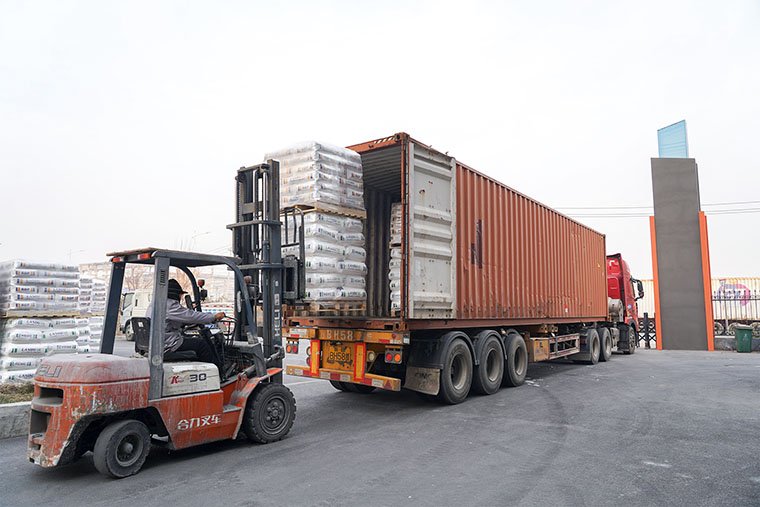
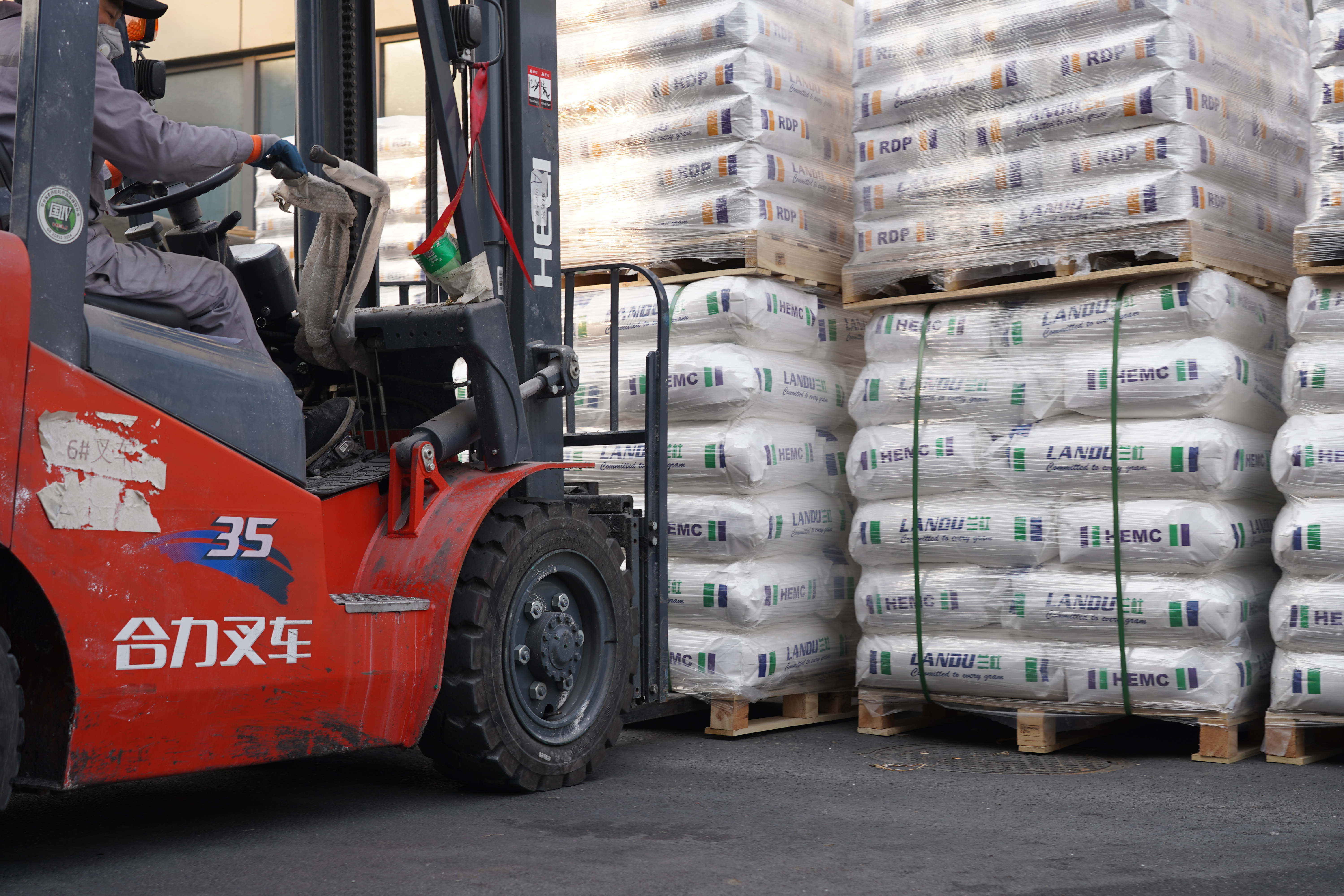
Solicitar recomendação de grau de fluido de fraturamentoLANDERCOLL cellulose ether for fracturing support applications is supplied in industrial packaging suitable for oilfield, well service, mining, and industrial fluid formulation use.
 Higigroscópico · Selar Quando Não Estiver em Uso
LANDERCOLL provides product-related documentation to support fracturing support fluid testing, purchasing review, quality evaluation, and project approval.
Especificações do produto, viscosidade e dados de desempenho para avaliação do grau.
Informações de segurança, manuseio e regulamentação para conformidade no local.
Confirmação de qualidade específica do lote para inspeção de recebimento.
Parâmetros detalhados de classificação e critérios de aceitação.
Overview of product range and oilfield applications.
Formulation and processing reference for fracturing fluids.
Selection support tailored to your fracturing support fluid system.
Referência de manuseio, prazo de validade e condições de armazenamento.
Documentação de conformidade aduaneira e de importação, quando aplicável.
If your fracturing support fluid is experiencing low viscosity, particle settling, poor proppant carrying, poor brine compatibility, viscosity loss during pumping, difficult pumping, uneven additive distribution, or formation compatibility concerns — the cellulose ether grade or dosage may need to be reviewed.
LANDERCOLL can help evaluate suitable CMC, HEC, or selected cellulose ether options based on your base fluid type, salinity, temperature range, particle loading, additive package, viscosity target, fluid-loss requirement, and field operation conditions.
CMC grade selection for viscosity control and suspension support
HEC grade selection for brine-based rheology and salt tolerance
Proppant and particle carrying capacity discussion
Fluid-loss control assistance evaluation
Thermal aging and shear stability assessment direction
Breaker and additive compatibility guidance
Formation compatibility testing direction
Referência de dosagem e recomendações de ponto de partida
Providenciamento de amostras e comunicação de cotações
Documentação técnica para revisão e aprovação do projeto
CMC and HEC are the most commonly considered cellulose ethers for fracturing support fluid applications. CMC supports viscosity adjustment, particle suspension, and fluid-loss control assistance in selected water-based systems. HEC provides non-ionic thickening with broader salt and electrolyte compatibility, making it useful in brine-based fracturing support systems. Selected specialty grades may also be considered for customized requirements.
CMC helps adjust viscosity, support particle and proppant suspension, improve fluid consistency, and assist fluid-loss control in selected compatible water-based systems. Its performance is sensitive to salinity and divalent ion concentration, so compatibility with the specific base fluid and brine system must be confirmed through testing.
HEC supports viscosity control, smooth rheology, and fluid consistency in compatible water-based and brine-based fracturing support fluids. Its non-ionic character provides broader tolerance for salts, divalent ions, and a wider range of oilfield additives compared to CMC — making it a preferred option in many brine-based and high-salinity fracturing support systems.
Cellulose ether can help improve fluid viscosity and suspension behavior, which may support proppant and sand carrying capacity in selected systems. Final carrying performance depends on particle size and density, fluid viscosity profile, flow rate, shear conditions, temperature, and the complete fluid design. Cellulose ether alone is typically used as a viscosity support additive rather than a primary crosslinked fracturing fluid polymer.
Selected cellulose ether grades — particularly HEC — may be used in brine-based fracturing support fluids, but compatibility must be confirmed through testing with the specific brine type, salt concentration, divalent ion content, temperature, and full additive package. Not all grades are suitable for high-salinity or divalent-ion-containing systems.
A common reference dosage range is approximately 0.1%–1.2% by fluid volume, depending on base fluid type, salinity, viscosity target, particle loading, temperature, and cellulose ether grade. Proppant carrying fluids and diverting support fluids typically require higher dosages. Final dosage must be confirmed through viscosity testing, suspension evaluation, and shear stability testing.
Viscosity loss during pumping may be caused by high shear rates, elevated temperature, high salinity, pH changes, divalent ion effects, premature breaker activation, additive incompatibility, insufficient polymer concentration, or an unsuitable grade for the specific fluid conditions. Grade selection should include shear stability and thermal aging evaluation under representative conditions.
Start by defining the base fluid type, salinity, temperature range, particle loading, viscosity target, pumpability requirement, breaker chemistry, additive package, formation compatibility needs, and field operation requirements. LANDERCOLL can recommend suitable CMC, HEC, or selected cellulose ether grades for your specific fracturing support fluid system and arrange samples for laboratory evaluation.
Whether you formulate water-based fracturing support fluids, brine-based fracturing support fluids, proppant carrying fluids, well stimulation fluids, diverting support fluids, workover support fluids, cleanout support fluids, or specialty oilfield well service fluids — LANDERCOLL can help you identify the right cellulose ether grade for better viscosity control, suspension stability, proppant carrying support, fluid-loss assistance, and consistent operational performance.
Our technical team is available to review your fracturing support fluid system, recommend suitable CMC, HEC, or selected cellulose ether grades, provide dosage references, arrange samples, and support your evaluation from initial laboratory testing through to field application.
CMC for Viscosity & Suspension · HEC for Brine Systems · Selected Grades for Specialty Fluids · Proppant Carrying · Rheology Stability · Fluid-Loss Assistance · Water-Based · Brine-Based · Well Stimulation · Diverting · Workover · Cleanout · Fracturing Support.
All performance data, dosage references, and formulation guidance provided on this page are for reference only. Final suitability must be confirmed through testing under your specific fluid system and field conditions. LANDERCOLL reserves the right to update product information without prior notice.
