
TDS
Ficha Técnica
Product specifications and performance data for formulation review.
O éter de celulose LANDERCOLL ajuda fabricantes de xampus a melhorar a viscosidade do produto, fluxo suave, estabilidade de suspensão, textura, aparência e desempenho de aplicação amigável ao consumidor em formulações de xampus claros, opacos, perolados, condicionadores, suaves, herbais e anticaspa.
De xampus transparentes do dia a dia a fórmulas premium de pérola e condicionadores — o grau certo de HEC, HPMC ou CMC proporciona reologia previsível, corpo estável do produto e experiência consistente ao consumidor para fabricantes no exterior e formuladores de cuidados pessoais.

Claro · Opaco · Pérola · Condicionante · Suave · Ervas · Anticaspa
 Resposta rápida
Resposta rápidaHEC (Hidroxietilcelulose) é o principal éter de celulose utilizado em formulações de xampu para controle de viscosidade, textura suave, estabilidade de suspensão e consistência da formulação. Graus selecionados de HPMC e CMC podem ser considerados em sistemas de xampu personalizados onde reologia especial, formação de filme ou suporte de suspensão são necessários. O éter de celulose ajuda o xampu a atingir corpo estável do produto, suporta a dosagem uniforme e mantém a aparência uniforme durante o armazenamento em formatos claros, opacos, perolados, condicionadores, suaves, herbais e anticaspa.
Referência de desempenho, compatibilidade e fornecimento para fabricantes de xampu e formuladores de cuidados pessoais no exterior.
Looking for a cellulose ether recommendation for your shampoo formulation?
Peça uma recomendação de shampoo Solicite um orçamento


Shampoo is a hair cleansing product designed to remove oil, dirt, sweat, styling residues, and impurities from the scalp and hair. It may be formulated as clear shampoo, opaque shampoo, pearl shampoo, conditioning shampoo, anti-dandruff shampoo, mild shampoo, silicone-free shampoo, herbal shampoo, or concentrated shampoo — each with distinct viscosity, texture, and stability requirements.
LANDERCOLL provides cellulose ether products for shampoo manufacturers — especially HEC (Hidroxietil Celulose) for viscosity control, smooth texture, and formulation stability. Selected HPMC e CMC grades may also be considered in customized shampoo systems where rheology adjustment, suspension support, or special texture is required.
If shampoo is too thin, it may look watery and be difficult to dose accurately. If it is too thick or stringy, it may be difficult to pour, spread, or rinse. Without reliable rheology control, products lose consumer-perceived quality, show poor pearl or active suspension, and develop viscosity drift during storage.
LANDERCOLL provides HEC and selected cellulose ether grades for shampoo manufacturers who need dependable viscosity control, smooth texture, suspension stability, and formulation consistency across different shampoo types and production environments.
Shampoo must balance cleansing, foam, viscosity, and product feel. Cellulose ether helps formulators adjust viscosity, support smooth texture, stabilize suspended ingredients, maintain controlled flow, and provide batch-to-batch consistency.
LANDERCOLL offers HEC as the primary cellulose ether for shampoo applications, with HPMC for selected specialty rheology and CMC for suspension support in compatible systems.
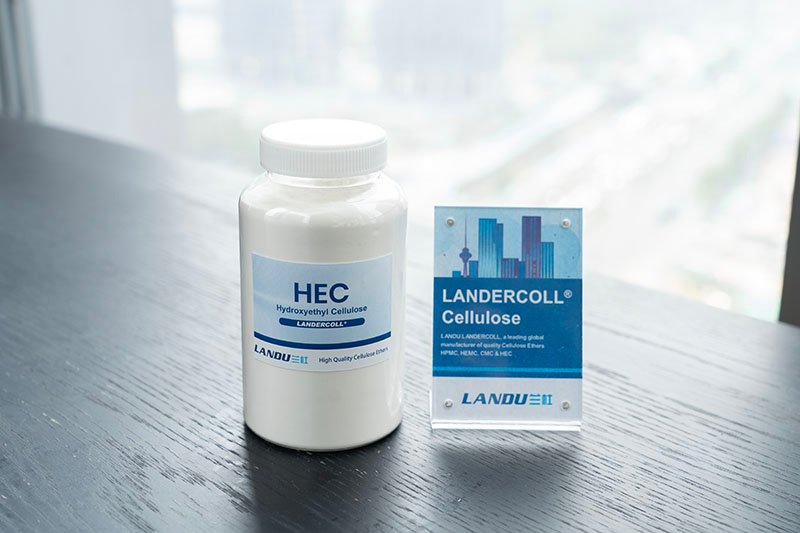
Primary · Non-Ionic · HEC
Non-ionic cellulose ether for viscosity control, smooth texture, and personal care formulation stability.
HEC is the most widely used cellulose ether in shampoo and hair care formulations where viscosity control, smooth flow, and stable texture are required. As a non-ionic, water-soluble cellulose ether, HEC can be suitable for many surfactant-based personal care systems after compatibility testing. In shampoo, HEC helps improve product body, reduce watery appearance, support smooth dispensing, and stabilize selected suspended ingredients.
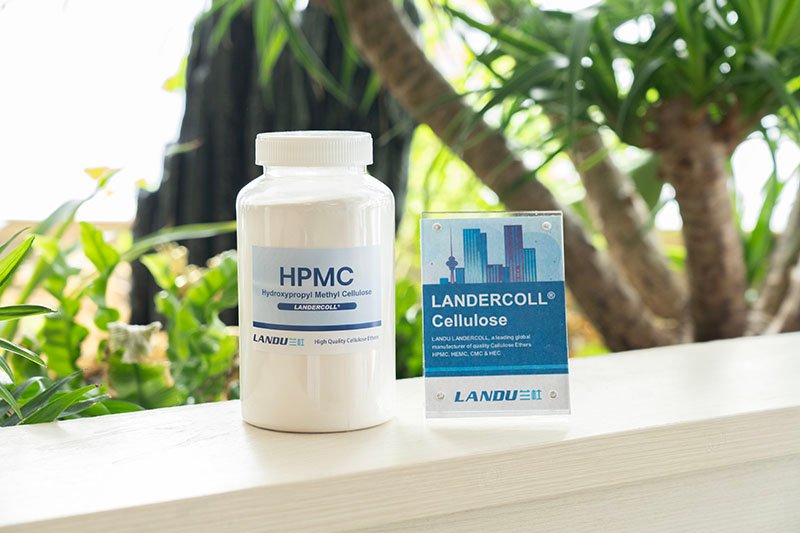 Specialty · HPMC · Custom Rheology
Specialty cellulose ether for selected thickening, rheology adjustment, and film-forming support.
HPMC may be considered in selected shampoo and hair care formulations where special rheology, water-soluble polymer behavior, or film-forming support is required. Its use should be validated through formulation testing, because shampoo performance depends on surfactant type, salt level, pH, conditioning agents, fragrance, preservatives, and active ingredients.
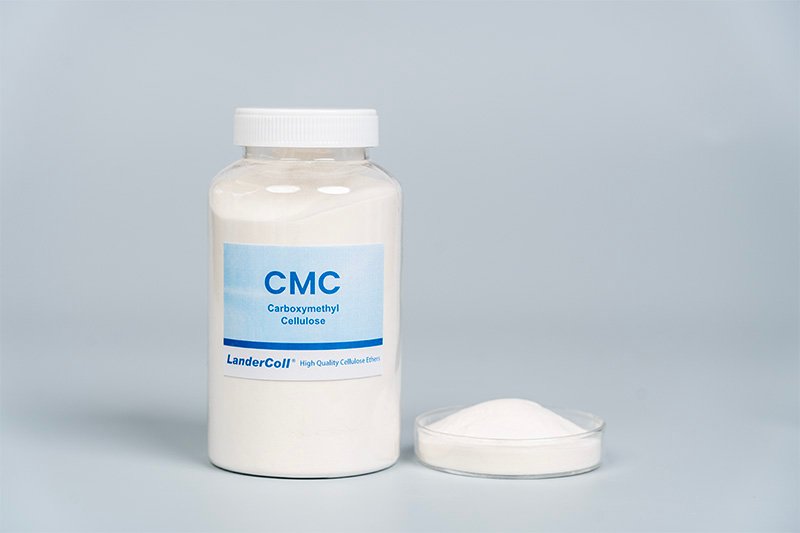 Anionic · CMC · Selected Systems
Cellulose ether option for suspension support, consistency, and selected texture adjustment.
CMC may be used in selected shampoo or hair care formulations where suspension support, product consistency, or viscosity contribution is needed. It may be suitable for certain opaque, herbal, or particle-containing systems after compatibility testing. Final use should be confirmed, because surfactants, electrolytes, pH, and conditioning ingredients can strongly affect formulation behavior.
Shampoo formulations vary by product type, surfactant system, conditioning level, and market positioning. The table below provides a general reference for common components.
| Componente | Function in Shampoo |
|---|---|
| Água | Main solvent and carrier |
| Primary Surfactants | Provide cleansing and foam |
| Co-Surfactants | Improve mildness, foam quality, and formulation balance |
| Cellulose Ether (HEC / HPMC / CMC) | Viscosity control, texture, suspension, and stability |
| Conditioning Agents | Support hair feel, combability, and conditioning effect |
| Salt / Electrolytes | Adjust viscosity in selected surfactant systems |
| Fragrance | Provides product scent |
| Preservatives | Protect water-based formulas from microbial growth |
| pH Adjusters | Maintain target pH and formulation stability |
| Pearlizing Agents / Actives | Improve appearance or provide functional claims |
| Tipo de Aplicação | Direção Recomendada do Produto | Principais Requisitos de Desempenho |
|---|---|---|
| Clear Shampoo | HEC / selected cellulose ether | Viscosity, clarity, smooth flow |
| Opaque Shampoo | HEC / CMC | Product body, suspension, stable appearance |
| Pearl Shampoo | HEC | Pearlizing agent suspension, viscosity, texture |
| Conditioning Shampoo | HEC / selected HPMC | Compatibility, smooth texture, stable body |
| Mild Shampoo | HEC | Gentle texture, viscosity, stable flow |
| Herbal Shampoo | HEC / CMC | Suspension support, uniform appearance |
| Anti-Dandruff Shampoo | HEC / selected cellulose ether | Active suspension, viscosity, stability |
| Concentrated Shampoo | HEC / selected cellulose ether | High-active compatibility, rheology balance |
These dosage ranges are starting references only. Final dosage should be confirmed through viscosity testing, compatibility testing, foam evaluation, pH stability testing, storage stability testing, suspension testing, dispensing behavior evaluation, and consumer-use trials.
| Tipo de Aplicação | Typical Reference Dosage |
|---|---|
| Clear Shampoo | 0.2% – 0.8% |
| Opaque Shampoo | 0.2% – 0.9% |
| Pearl Shampoo | 0.2% – 0.8% |
| Conditioning Shampoo | 0.2% – 0.8% |
| Mild Shampoo | 0.15% – 0.7% |
| Herbal Shampoo | 0.2% – 1.0% |
| Anti-Dandruff Shampoo | 0.2% – 1.0% |
| Concentrated Shampoo | 0.2% – 0.8% |
Cellulose ether influences viscosity control, smooth texture, suspension stability, foam-compatible rheology, dispensing behavior, and long-term storage performance in surfactant-based shampoo systems.
HEC helps adjust shampoo viscosity and supports a stable product body. This improves dispensing, appearance, and consumer-use experience. Achieving the right viscosity is critical for both manufacturing consistency and end-user satisfaction across clear, opaque, pearl, and conditioning shampoo formats.
A smooth texture is important for shampoo application and consumer perception. Cellulose ether helps create uniform flow and reduces watery or uneven product feel — contributing to a premium product experience during dispensing and use.
Pearlizing agents, herbal extracts, particles, conditioning droplets, or active ingredients may need stable distribution throughout the product. Cellulose ether can support suspension stability when properly matched with the formulation system.
Cellulose ether primarily supports viscosity and texture. Foam performance depends mainly on the surfactant system, so compatibility testing is recommended to maintain the desired foam profile without interference from the thickening system.
Shampoo should pour or pump smoothly — not too thin, too thick, or too stringy. The right cellulose ether grade helps balance body and flow for consistent dispensing from bottles, pumps, or sachets.
A suitable cellulose ether grade helps maintain stable viscosity and appearance during storage when compatible with surfactants, salts, preservatives, fragrance, and active ingredients across temperature variations.
When shampoo fails viscosity, texture, suspension, or stability targets, cellulose ether grade, dosage, hydration, or compatibility is often the first variable to review.
Low viscosity response or weak thickener system.
HEC supports viscosity control and product body.
Excessive polymer or salt response.
Adjust cellulose ether dosage and viscosity grade.
Unsuitable rheology or high polymer dosage.
Select proper grade and optimize dosage.
Poor suspension or incompatible ingredients.
Support suspension stability through grade selection.
Weak rheology or poor stabilizer balance.
Melhorar a viscosidade e o suporte à suspensão.
Salt, pH, surfactant, or temperature interaction.
Test compatible grade and formulation balance.
Poor dispersion or hydration process.
Improve addition sequence and mixing.
Polymer, fragrance, salt, or surfactant incompatibility.
Confirm compatibility through testing.
Shampoo formulations are surfactant-rich and salt-sensitive. Multiple factors influence how cellulose ether performs and how stable the product remains over time.
Anionic, non-ionic, amphoteric, and mixed surfactant systems can affect cellulose ether hydration, viscosity response, clarity, and stability. Compatibility testing with the specific surfactant blend is always recommended.
Salt is often used to adjust viscosity in shampoo. The interaction between salt, surfactants, and cellulose ether should be tested carefully, as salt can either enhance or reduce polymer performance depending on the system.
Shampoo pH affects formulation stability, preservative performance, hair feel, and polymer performance. Most shampoos are formulated in the mildly acidic to near-neutral range (pH 4.5–7.0).
Silicones, cationic polymers, oils, and conditioning agents may influence viscosity, clarity, and compatibility with cellulose ether. Interaction testing is recommended for conditioning-rich formulations.
Anti-dandruff agents, botanical extracts, proteins, or specialty actives may require suspension or compatibility testing to ensure stable performance throughout shelf life.
Fragrance oils and preservatives can influence clarity, viscosity, and long-term stability. Their interaction with cellulose ether should be evaluated during formulation development.
Addition sequence, hydration time, water temperature, and mixing speed affect cellulose ether dispersion and final viscosity. Proper processing is critical for consistent batch results.
Temperature changes during transport and storage may affect viscosity, clarity, appearance, and product stability. Stability testing under relevant temperature conditions is recommended.
Choosing the right cellulose ether requires balancing viscosity, texture, foam compatibility, clarity, suspension stability, dispensing behavior, and storage performance across the complete shampoo formulation system.
 Grade Selection Guide
LANDERCOLL can review your shampoo formulation direction and recommend suitable HEC, HPMC, CMC, or selected cellulose ether grades for testing.
Clear, opaque, pearl, herbal, conditioning, or active-containing?
Anionic, non-ionic, amphoteric, or mixed surfactants?
Qual faixa de viscosidade alvo é necessária?
What is the final pH range of the formulation?
What salt or electrolyte level is included?
Are oils, silicones, or cationic polymers included?
Do pearls, actives, or particles need suspension support?
Bottle, pump, or sachet dispensing format?
What production process and hydration method are used?
What temperature range and shelf life are expected?

LANDERCOLL provides product-related documentation to support shampoo formulation testing, purchasing review, quality approval, and import compliance.
 Formulation & Performance Evaluation
Supporting shampoo and personal care product development with complete technical documentation.
— LANDERCOLL R&D —Product specifications and performance data for formulation review.
Safety, handling, and regulatory information (SDS / MSDS).
Batch quality confirmation supplied per shipment.
Overview of cellulose ether range and application areas.
Formulation guidance and usage recommendations.
Grade recommendation for specific shampoo applications.
Referência de manuseio, prazo de validade e condições de armazenamento.
Available where applicable for international orders and import compliance.
All documents supplied upon request to support formulation review, quality approval, and import compliance.
Solicitar documentos do produtoHEC selection for viscosity control in shampoo systems
Shampoo texture and rheology adjustment
Suspension stability discussion and testing direction
Foam-compatible viscosity support
Compatibility testing direction for surfactant and salt systems
Dosage reference and optimization for shampoo types
Sample provision and quotation communication
If your shampoo is too thin, too thick, stringy, unstable, cloudy, difficult to dispense, losing viscosity, or showing poor suspension — the cellulose ether grade may need to be reviewed.
LANDERCOLL can help evaluate suitable HEC and selected cellulose ether options based on your surfactant system, salt level, pH, conditioning ingredients, active ingredients, target viscosity, and processing method.
HEC is the most commonly used cellulose ether in shampoo for viscosity control, smooth texture, suspension stability, and formulation consistency. HPMC and CMC may be considered in selected customized shampoo systems where special rheology, suspension, or texture requirements exist.
HEC helps improve viscosity, product body, smooth texture, dispensing behavior, suspension stability, and storage stability in selected water-based shampoo formulations. It is a non-ionic thickener compatible with many surfactant systems used in personal care.
Cellulose ether mainly supports viscosity and texture — not foam generation. Foam performance depends primarily on the surfactant system, foam boosters, water quality, and overall formulation design. Compatibility testing is recommended to ensure cellulose ether does not negatively affect the foam profile.
Yes. Selected cellulose ether grades may be used in clear shampoo, but final clarity depends on surfactant type, salt level, fragrance, preservatives, polymer grade, dosage, and processing conditions. Compatibility testing is essential before finalizing the formulation.
A common reference dosage is approximately 0.15%–1.0%, depending on shampoo type, viscosity target, surfactant system, salt level, and cellulose ether grade. Final dosage should always be confirmed through viscosity testing and stability evaluation.
Viscosity loss may be caused by surfactant incompatibility, changes in salt level, pH shifts, temperature fluctuations, fragrance or preservative interaction, poor hydration during manufacturing, or an unsuitable cellulose ether grade. A full stability test under relevant storage conditions is recommended.
Lumps or fish eyes may occur when cellulose ether is added too quickly, poorly dispersed, or not given sufficient hydration time. Optimizing the addition method, pre-dispersion approach, mixing sequence, and water temperature can resolve this issue.
Start by defining shampoo type, surfactant system, target viscosity, salt response, pH, clarity target, conditioning system, active ingredients, and storage conditions. LANDERCOLL can recommend suitable HEC or selected cellulose ether grades based on your specific formulation requirements.
Whether you produce clear shampoo, opaque shampoo, pearl shampoo, conditioning shampoo, mild shampoo, herbal shampoo, anti-dandruff shampoo, or concentrated shampoo — LANDERCOLL can help you choose the right cellulose ether grade for better viscosity control, smooth texture, suspension stability, and formulation consistency.
Our team can provide grade recommendations, dosage references, technical data sheets, samples, and quotations to support your formulation development and purchasing process.
LANDERCOLL cellulose ether products are manufactured for industrial and commercial use. All formulation data, dosage references, and application guidance provided are for general reference only. Final product performance must be confirmed through testing under your specific formulation, process, and storage conditions.