セルロースエーテルの卓越性 — 世界中の1000以上の企業に信頼されています 無料サンプルを入手
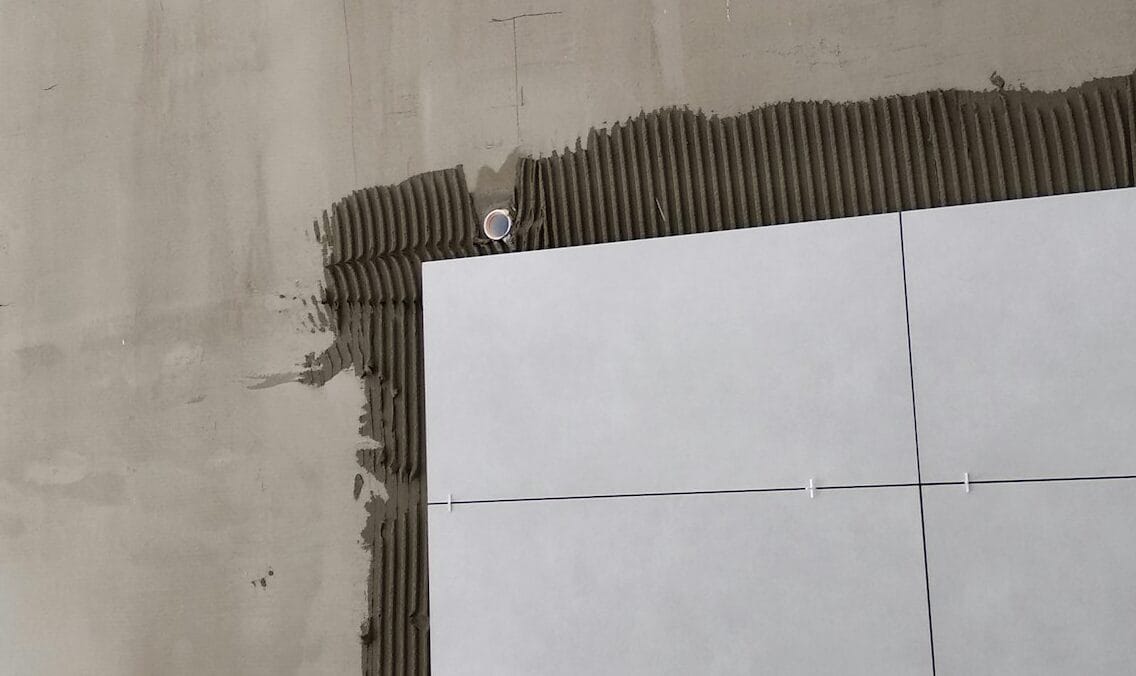
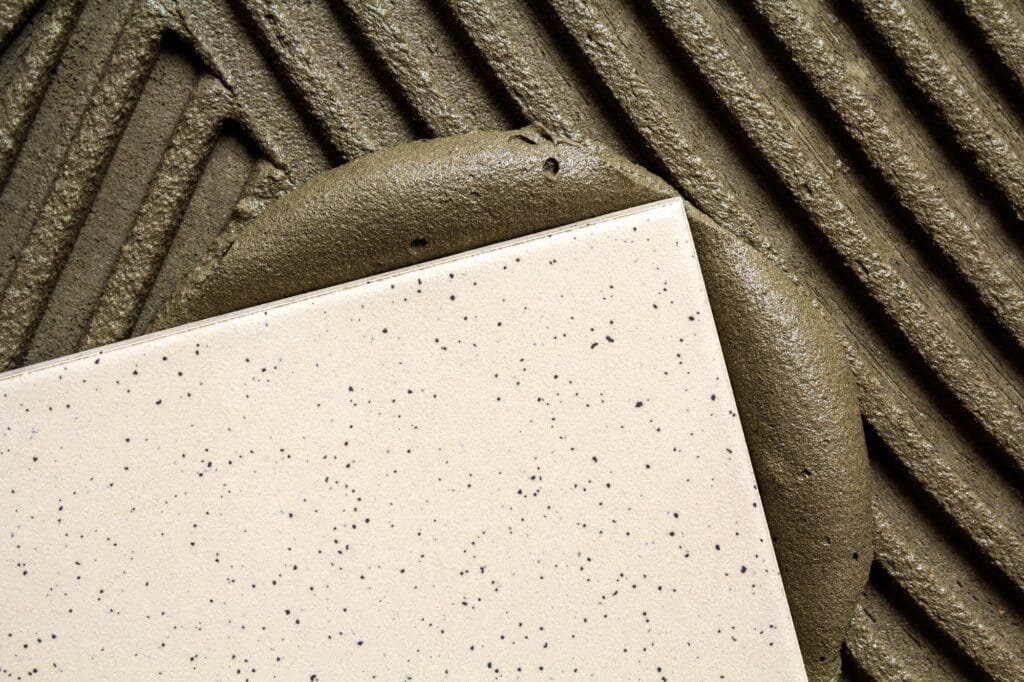

LANDERCOLLセルロースエーテルは、世界中のタイル接着剤メーカーが、施工性、保水性、オープンタイム、耐滑り性、モルタルの安定性、および現場での施工性能を向上させるのに役立ちます。
標準的な壁タイルシステムから大判・フレキシブル接着剤グレードまで、セメント系タイル接着剤の配合は、適切なセルロースエーテルグレードに依存して、あらゆる現場で信頼性の高い性能を発揮します。
— HPMC · HEMC / MHEC · 保水性 · オープンタイム · 耐滑り性 · 鏝塗り · セメント系タイル接着剤 · ドライミックスモルタル
 壁タイル
フロアタイル
壁タイル
フロアタイル
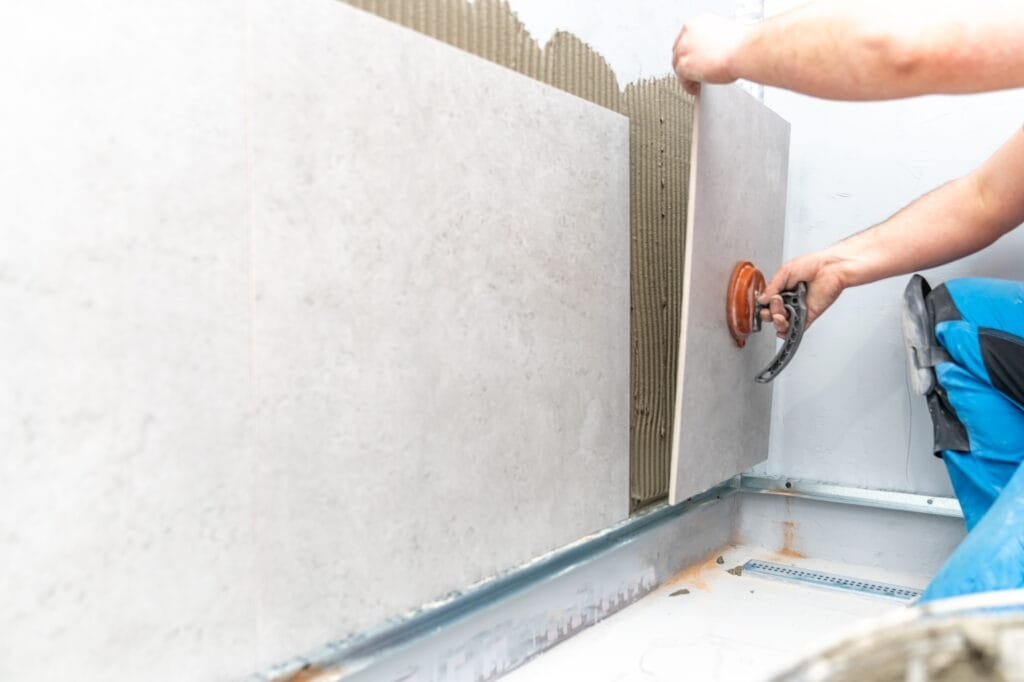 大判
大判
 フレキシブルシステム
保持時間 · 開放時間 · 滑り止め
フレキシブルシステム
保持時間 · 開放時間 · 滑り止め
タイル接着剤は、建築用セルロースエーテルにとって最も技術的に要求される用途の一つです。セメント系タイル接着剤の配合において、セルロースエーテルは保水性、オープンタイム、鏝塗り挙動、滑り抵抗、モルタルの粘稠性、および全体的な施工安定性を直接制御するため、グレード選定が製品品質に極めて重要です。
LANDERCOLLは供給します HPMC および HEMC / MHEC 標準的なタイル接着剤、壁用タイル接着剤、床用タイル接着剤、大判タイル接着剤、フレキシブル接着剤システム、および産業用ドライミックスモルタル製造において、信頼性が高く一貫した性能を必要とするタイル接着剤メーカー様へ。
適切なセルロースエーテルグレードにより、タイル接着剤の可使時間が長くなり、こての下で滑らかに広がり、垂直面でのタイルのずれを減らし、水混合後のモルタルの粘度を安定させます。メーカーにとっては、配合品質の向上と顧客満足度の強化につながります。施工者にとっては、あらゆる現場でよりスムーズで信頼性の高い施工体験を意味します。
タイル接着剤は、異なる下地、タイルの形状、温度、湿度レベル、施工方法において確実に機能する必要があります。適切な保水性とレオロジー制御がないと、接着剤が早く乾燥しすぎたり、オープンタイムが早期に失われたり、塗り広げが難しくなったり、垂直面でタイルが滑り落ちたり、接着結果にばらつきが生じる可能性があります。
LANDERCOLL provides HPMC and HEMC / MHEC cellulose ether grades designed for cement-based tile adhesive systems. Final grade selection should be confirmed through formulation testing based on your target open time, anti-slip requirements, and raw material system.
Versatile cellulose ether for water retention, open time, troweling performance, and mortar consistency
Hydroxypropyl methylcellulose (HPMC) is the most widely used cellulose ether in cement-based tile adhesive globally. It provides a strong balance of water retention, thickening, workability improvement, film-forming support, and mortar stability — suitable for a broad range of standard and specialty tile adhesive formulations.
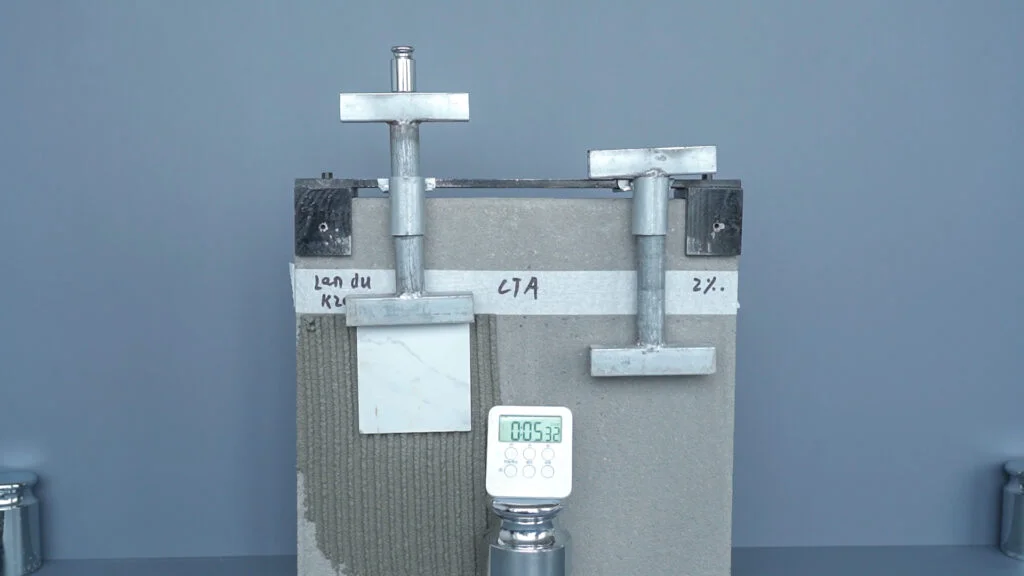
Construction-grade cellulose ether optimized for open time, anti-slip behavior, and vertical tile installation
Hydroxyethyl methylcellulose (HEMC / MHEC) is especially well-suited for tile adhesive formulations where open time, anti-sag behavior, anti-slip performance, smooth troweling, and stable mortar structure are primary performance requirements. Preferred for wall tile and large-format tile adhesive systems.
Tile adhesive formulations vary significantly by product grade, local raw material availability, target performance standard, tile type, and regional market requirements. The table below provides a general reference for common components.
| 成分 | Function in Tile Adhesive |
|---|---|
| ポルトランドセメント | Primary hydraulic binder; provides strength and bonding |
| Graded Sand | Provides structure, volume, and mechanical support |
| 鉱物フィラー | Adjust consistency, cost balance, and formulation density |
| 再分散性ポリマーパウダー(RDP) | Improves adhesion, flexibility, and long-term durability |
| セルロースエーテル(HPMC / HEMC) | Improves water retention, open time, workability, and anti-slip behavior |
| スターチエーテル | Supports anti-sag behavior and rheology fine-tuning |
| その他の添加剤 | Adjust setting time, special performance, or regional requirements |
Different tile adhesive systems have different cellulose ether performance priorities. The table below provides a practical selection reference to help manufacturers identify the most suitable product direction.
| タイル接着剤の種類 | 推奨製品 | Primary Performance Requirements |
|---|---|---|
| 標準タイル接着剤 | HPMC / HEMC / MHEC | Water retention, workability, open time |
| 壁タイル用接着剤 | HEMC / MHEC / HPMC | Anti-slip, open time, troweling, ridge stability |
| 床タイル用接着剤 | HPMC / HEMC / MHEC | Workability, consistency, water retention |
| 大判タイル用接着剤 | High-viscosity HEMC / MHEC / HPMC | Anti-slip, extended open time, stable mortar structure |
| Flexible Tile Adhesive | HPMC / HEMC / MHEC with polymer system | Workability, open time, consistency, polymer compatibility |
| 速硬性タイル接着剤 | 選定されたHPMC / HEMC / MHEC | Controlled workability, water retention, setting balance |
| Premium Tile Adhesive | High-performance HEMC / MHEC / HPMC | Long open time, anti-slip, smooth application, stability |
The optimal dosage depends on formulation design, target open time, viscosity grade, water retention requirement, tile size, substrate absorption, local climate, and applicable performance standard.
These dosage ranges are starting reference points only. Final dosage must be confirmed through laboratory testing, including open time evaluation, slip resistance testing, tensile adhesion testing, application trials, and job-site performance assessment.
| Tile Adhesive Application | 標準的な参考添加量 |
|---|---|
| 標準タイル接着剤 | 0.2% – 0.4% |
| 壁タイル用接着剤 | 0.25% – 0.5% |
| 床タイル用接着剤 | 0.2% – 0.4% |
| 大判タイル用接着剤 | 0.3% – 0.5% |
| Flexible Tile Adhesive | 0.25% – 0.5% |
| Premium Tile Adhesive | 0.3% – 0.5% |
Water retention is the most fundamental function of cellulose ether in tile adhesive. It prevents the adhesive from losing moisture too quickly after mixing — supporting cement hydration, maintaining open time, and ensuring stable application behavior across different substrates. Poor water retention leads to rapid drying, shortened open time, surface skin formation, and difficulty adjusting tiles after placement.
Open time is the working window during which tile adhesive remains bondable after being applied to the substrate. A suitable cellulose ether grade extends open time by slowing water evaporation and maintaining workable mortar consistency — giving applicators more flexibility during tile positioning and reducing waste from premature skinning.
Anti-slip performance is critical for wall tile adhesive and large-format tile installation. Cellulose ether improves mortar rheology and structural body, helping the adhesive hold tiles firmly in position on vertical surfaces. HEMC / MHEC and high-performance HPMC grades are particularly effective for vertical application stability.
Tile adhesive must spread smoothly and evenly under the trowel while maintaining clean ridge shape after notch trowel application. Cellulose ether improves troweling feel, reduces drag and harshness, and helps create a more controlled, consistent application experience — reducing applicator fatigue and improving coverage quality.
Cellulose ether stabilizes mortar consistency after water addition, producing a uniform, predictable body that handles, spreads, and forms ridges reliably. Consistent mortar behavior is essential for both production quality control and repeatable job-site performance across different operators and conditions.
Proper water retention and workability help tile adhesive maintain active wetting behavior during tile placement. This supports easier tile adjustment within the open time window and produces more stable, reliable bonding results — especially important when working with low-porosity tiles such as large-format porcelain.
When fresh mortar performance fails on the job site, the cellulose ether grade, viscosity, or dosage is often the first variable to review. The guide below maps common symptoms to likely causes and practical cellulose ether adjustments.
Rapid water loss, high temperature, or highly absorbent substrate drawing moisture from the mortar too quickly.
Improve water retention with a higher-viscosity HPMC or HEMC / MHEC grade; maintain workable consistency longer on the substrate.
Weak mortar structure, poor rheology control, or heavy tiles exceeding the adhesive’s vertical hold capacity.
Improve anti-slip behavior and ridge stability — HEMC / MHEC or high-viscosity HPMC grades are preferred for wall tile systems.
Poor mortar consistency, harsh formulation balance, wrong cellulose ether viscosity grade, or insufficient mixing time.
Adjust viscosity direction and dosage to improve workability, reduce drag, and deliver a smoother, more controlled troweling feel.
Low cellulose ether viscosity, weak mortar body, or insufficient rheology structure after notch trowel application.
Support rheology control and structural body with a grade that maintains clean trowel ridge shape during tile placement.
Low water retention performance, highly absorbent substrate, or hot and dry job-site conditions accelerating evaporation.
Reduce water loss and support cement hydration with a grade offering stronger water retention across varied substrates.
Poor cellulose ether dispersion, unstable mortar consistency, or inconsistent mixing across production batches.
Improve mortar uniformity and spreading behavior through grade optimization and consistent dispersion in the drymix process.
Excessive cellulose ether dosage, unsuitable viscosity grade, or unbalanced formulation with too much thickening additive.
Adjust viscosity direction and dosage balance — reduce level or switch to a lower-viscosity grade while maintaining water retention targets.
Understanding the variables that influence cellulose ether behavior helps manufacturers make better formulation decisions and select the most suitable grade for their specific system.
Different cement sources vary in hydration rate, water demand, and chemical interaction with cellulose ether — affecting open time, setting behavior, and overall mortar performance.
Particle size distribution directly influences water demand, workability, troweling behavior, and mortar consistency. Coarser or poorly graded sand increases water demand and may affect cellulose ether efficiency.
RDP affects adhesion, flexibility, and mortar rheology. Compatibility between RDP and cellulose ether should be evaluated during formulation development.
Viscosity grade is a primary variable affecting water retention, mortar body, anti-slip behavior, troweling feel, and open time. Higher viscosity generally improves water retention and anti-slip but may increase stickiness if overdosed.
Insufficient dosage leads to poor water retention or short open time. Excessive dosage may cause sticky feel, reduced spreadability, or perceived setting delay. Optimal dosage must be confirmed through testing.
Highly absorbent substrates draw water rapidly from the adhesive. Higher water retention performance helps compensate and maintain open time on porous surfaces.
Large-format or heavy tiles require stronger anti-slip performance and more stable mortar structure to prevent movement after placement.
Hot, dry, or windy conditions accelerate water evaporation and shorten open time. Cellulose ether selection and dosage may need adjustment for different climatic zones.
Mixing time, water addition sequence, rest time after initial mixing, and remixing all affect cellulose ether hydration quality and final adhesive behavior on the job site.
Selecting the right cellulose ether for tile adhesive requires a systematic evaluation of water retention needs, target open time, anti-slip requirements, troweling feel, viscosity range, polymer compatibility, and overall mortar consistency goals.
LANDERCOLL can review your tile adhesive formulation direction and recommend a suitable HPMC or HEMC / MHEC grade for laboratory evaluation and testing.
Standard, wall, floor, large-format, flexible, or premium?
What open time performance is required by your target standard or market?
Is anti-slip a primary requirement for wall or large-format applications?
What viscosity range is currently used in your formulation?
What cement type, sand grading, and filler system are you working with?
Is redispersible polymer powder included, and at what dosage?
What tile sizes and substrate types are most common in your target market?
What temperature, humidity, and wind conditions must the adhesive handle?
What dosage level are you targeting for cost and performance balance?
Do you require surface-treated or untreated cellulose ether?
Not sure which cellulose ether grade is most suitable for your tile adhesive? LANDERCOLL can recommend a practical grade for laboratory evaluation.
グレード推奨を依頼する
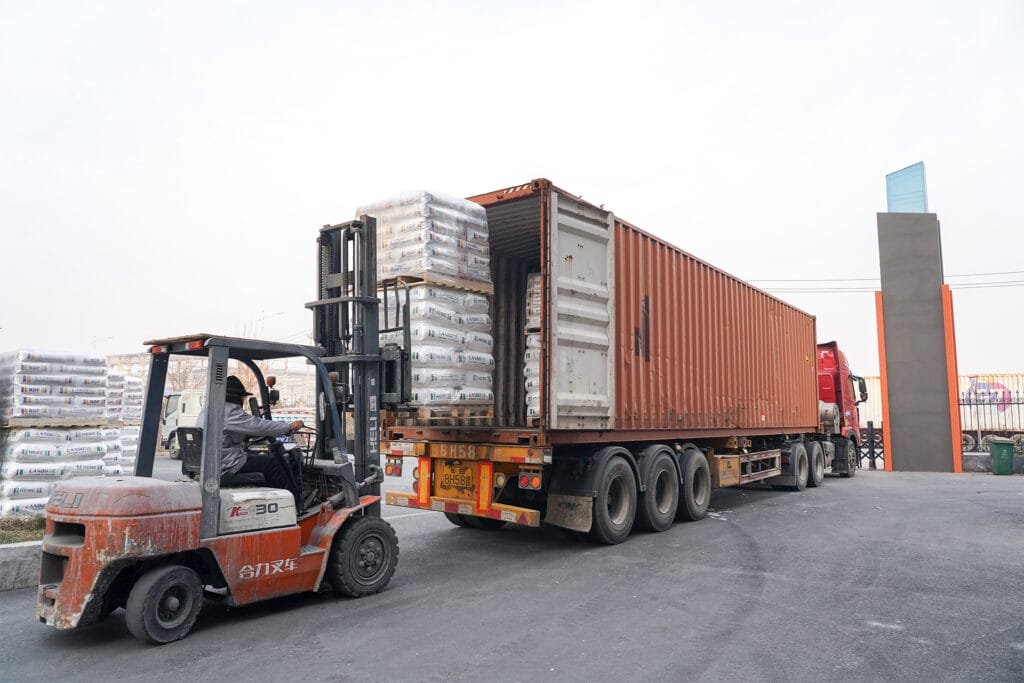 吸湿性あり・不使用時は密閉してください
LANDERCOLL provides a full set of product documentation to support tile adhesive formulation development, purchasing review, quality approval, and import compliance.
製品資料を請求するIf your tile adhesive is experiencing short open time, difficult troweling, tile slip on vertical surfaces, rapid drying, inconsistent mortar consistency, weak ridge stability, or unreliable job-site performance — the cellulose ether grade or dosage may need to be reviewed.
LANDERCOLL provides technical support to help tile adhesive manufacturers evaluate HPMC and HEMC / MHEC options based on formulation design, target performance, raw material system, dosage level, and local application conditions.
HPMC and HEMC / MHEC grade selection for tile adhesive
Open time improvement and extension
Anti-slip performance optimization for wall and large-format tile systems
Water retention evaluation and improvement
Viscosity direction and grade comparison
Dosage reference and adjustment guidance
Sample supply and technical documentation
Quotation and supply chain communication
HPMC (hydroxypropyl methylcellulose) and HEMC / MHEC (hydroxyethyl methylcellulose) are the two main types of cellulose ether used in cement-based tile adhesive. Both improve water retention, open time, troweling performance, anti-slip behavior, and mortar consistency.
HPMC improves water retention, workability, open time, troweling feel, mortar consistency, and application stability in tile adhesive formulations. It is the most widely used cellulose ether in standard cement-based tile adhesive globally.
HEMC / MHEC improves water retention, open time, anti-slip performance, anti-sag behavior, troweling feel, and mortar structural body. It is especially effective in wall tile adhesive and large-format tile adhesive systems.
Both are effective, and the best choice depends on your formulation requirements. HPMC is versatile and widely used across many tile adhesive types. HEMC / MHEC is preferred where extended open time, anti-slip performance, and vertical application stability are primary requirements. Many manufacturers test both to identify the optimal grade.
A common reference dosage range is 0.2%–0.5% by weight of the dry formulation, depending on tile adhesive type, target open time, viscosity grade, and raw material system. Final dosage must always be confirmed through laboratory and application testing.
Water retention prevents the adhesive from losing moisture too quickly after mixing. This is essential for maintaining open time, supporting cement hydration, ensuring proper tile-to-adhesive wetting, and delivering stable application behavior — especially on absorbent substrates or in hot, dry conditions.
Cellulose ether improves mortar rheology and structural body, increasing the resistance of the adhesive to flow or deformation under tile weight. This helps tiles remain stable on vertical surfaces immediately after placement, reducing slip and the need for repositioning.
Difficult troweling is typically caused by an unsuitable cellulose ether grade, incorrect dosage, poor sand grading, high water demand, insufficient mixing time, or an unbalanced formulation. Reviewing the cellulose ether viscosity grade and dosage is usually the first step in diagnosing troweling problems.
Yes. Share your tile adhesive type, formulation direction, target open time, anti-slip requirements, current viscosity grade or dosage, and raw material system. LANDERCOLL can recommend suitable HPMC or HEMC / MHEC options and provide samples for laboratory evaluation.
Whether you manufacture standard tile adhesive, wall tile adhesive, floor tile adhesive, large-format tile adhesive, flexible adhesive systems, or premium drymix mortar products — LANDERCOLL can help you identify the right HPMC or HEMC / MHEC grade for better water retention, extended open time, reliable anti-slip performance, and consistent application stability.
Share your formulation requirements and let our technical team recommend the most suitable cellulose ether solution for your production and market needs.
HPMC for Tile Adhesive · HEMC / MHEC for Wall Tile · Water Retention · Open Time · Anti-Slip · Troweling Performance · Cement-Based Drymix Mortar · Construction Cellulose Ether Supplier.
