Excelencia en Éter de Celulosa — Confiado por más de 1000 empresas a nivel mundial Obtener muestra gratuita

HPMC, HEC y CMC grados para control de viscosidad, estabilidad de suspensión, unión, retención de agua y consistencia de procesamiento en formulaciones industriales especializadas personalizadas.
¿Necesitas un grado de partida o una referencia de dosificación para tu formulación industrial especializada?
Solicitar Recomendación Solicitar un presupuesto
Viscosidad · Suspensión · Adhesión · Reología
Los éteres de celulosa HPMC, HEC y CMC se utilizan en una amplia gama de formulaciones industriales especializadas para mejorar el control de la viscosidad, el ajuste de la reología, la estabilidad de la suspensión, la adhesión, la retención de agua, el comportamiento de recubrimiento y la consistencia del procesamiento. Un grado seleccionado correctamente ayuda a que la formulación se mantenga estable durante la producción, el almacenamiento y la aplicación, ofreciendo un rendimiento fiable entre lotes, independientemente del sistema industrial específico involucrado.
Las aplicaciones industriales especializadas a menudo implican formulaciones personalizadas donde las categorías de producto estándar no describen completamente los requisitos de procesamiento o rendimiento. Estos sistemas pueden requerir viscosidad controlada, suspensión estable de partículas, adhesión mejorada, soporte de retención de agua, comportamiento de película, uniformidad de recubrimiento o estabilidad de procesamiento, y el grado de éter de celulosa adecuado puede abordar múltiples requisitos simultáneamente dentro de una sola formulación.
LANDERCOLL proporciona grados de éter de celulosa seleccionados para uso industrial especializado. HPMC se recomienda para retención de agua, ajuste de reología y soporte de película seleccionado. HEC se recomienda para un control suave de la viscosidad, estabilidad de la suspensión y amplia compatibilidad con aditivos. CMC se recomienda para adhesión, suspensión de partículas y consistencia de formulación en sistemas en polvo y minerales.
Las formulaciones industriales especializadas a menudo contienen polvos, partículas, cargas, pigmentos, aglutinantes, sales, tensioactivos o aditivos funcionales que deben permanecer estables y procesables durante la producción, almacenamiento, transporte y aplicación. Si la viscosidad es demasiado baja, las partículas se sedimentan y la calidad varía. Si es demasiado alta, el bombeo, pulverización, extrusión o recubrimiento se vuelve difícil. Los éteres de celulosa ayudan a los formuladores a encontrar y mantener el equilibrio adecuado entre estabilidad y procesabilidad.
| Function | Qué significa en la práctica |
|---|---|
| Control de viscosidad | Ajusta el cuerpo de la formulación para el proceso y la aplicación objetivo |
| Ajuste de reología | Equilibra el flujo y la estructura para un procesamiento y aplicación estables |
| Estabilidad de suspensión | Mantiene partículas, cargas y polvos distribuidos uniformemente |
| Distribución de partículas y cargas | Favorece la distribución uniforme de los componentes sólidos |
| Unión y cohesión | Mejora la unión entre partículas en sistemas de pasta y polvo |
| Retención de agua | Controla el movimiento de la humedad durante el procesamiento y el secado |
| Soporte de película | Puede favorecer el comportamiento de formación de película en sistemas de recubrimiento seleccionados |
| Consistencia en recubrimiento y aplicación | Favorece una cobertura superficial uniforme y un peso de aplicación constante |
| Estabilidad de procesamiento | Mantiene un comportamiento consistente de la formulación durante la producción |
| Fiabilidad lote a lote | Reduce la variabilidad entre lotes de producción |
LANDERCOLL offers HPMC, HEC, and CMC cellulose ether grades for specialty industrial coating, slurry, gel, paste, and customized manufacturing systems. Product selection depends on application type, raw material system, target viscosity, stability requirement, and whether water retention, suspension, binding, or film support is the primary performance need.

Water retention, rheology control, film support, and processing stability
Hydroxypropyl Methylcellulose (HPMC) is used across many specialty industrial systems where water retention, viscosity control, workability, and stable processing behavior are required. It may also support selected film-forming or coating-related performance in compatible systems, and its thermal gelation behavior can be useful in certain specialty processing applications. HPMC can be considered for specialty coatings, construction-related formulations, extrusion systems, ceramic auxiliary systems, adhesive formulations, and a broad range of customized industrial applications.

Smooth viscosity control, suspension stability, and formulation consistency
Hydroxyethyl Cellulose (HEC) is widely used in water-based industrial systems where smooth thickening, stable rheology, and broad compatibility with other formulation components are required. As a non-ionic cellulose ether, HEC can support viscosity and suspension stability in selected coatings, cleaners, functional fluids, latex systems, and specialty aqueous formulations without introducing ionic interactions that could destabilize the system. HEC suitability should be confirmed through compatibility testing with pH, salts, surfactants, solvents, preservatives, and other additives present in the specific formulation.

Binding, suspension support, water retention, and formulation stability
Carboxymethyl Cellulose (CMC) may be used in specialty industrial systems where particle suspension, binding, water retention, viscosity contribution, or formulation consistency is required. It is particularly useful in ceramic, mineral, agricultural, coating, adhesive, paper, and powder-based systems where its anionic character and binding properties provide functional value. CMC use in specialty systems should be confirmed through testing, as performance can be affected by pH, salts, divalent ions, dispersants, surfactants, and other formulation components.
Not sure which grade fits your specialty industrial system? Ask for a Product Recommendation →
Specialty industrial formulations typically include water, cellulose ether, mineral powders, binders, surfactants, dispersants, and functional additives designed to meet specific processing, coating, binding, and performance requirements.

| Componente | Function in Specialty Industrial Systems |
|---|---|
| Agua | Carrier, solvent, or processing medium |
| Éter de celulosa | Viscosity, rheology, suspension, binding, water retention, and stability |
| Mineral Powders / Fillers | Provide structure, density, cost control, or functional performance |
| Pigments / Colorants | Provide color, opacity, or visual properties |
| Polymer Binders | Support film formation, adhesion, or product strength |
| Dispersants | Improve particle distribution and slurry stability |
| Surfactants / Wetting Agents | Improve wetting, spreading, and compatibility |
| pH Adjusters | Maintain formulation stability and additive performance |
| Preservatives | Protect selected water-based systems during storage |
| Defoamers | Reduce foam during mixing and application |
| Functional Additives | Provide specialty performance according to application requirements |
Different specialty industrial systems require different cellulose ether performance profiles. The table below provides a practical selection reference for formulation engineers and industrial manufacturing specialists.
| Tipo de Aplicación | Recommended Direction | Principales Requisitos de Rendimiento |
|---|---|---|
| Specialty Coating System | HEC / HPMC | Viscosity, flow, coating uniformity |
| Mineral Slurry System | CMC / HEC | Suspension, anti-settling, processing stability |
| Industrial Gel System | HPMC / HEC | Gel texture, viscosity, stability |
| Powder-Based Paste System | CMC / HPMC | Binding, water retention, cohesion |
| Catalyst Carrier Support | CMC / HPMC | Extrusion support, shape stability, binding |
| Carbon / Graphite Formulation | CMC / selected grade | Binding, plasticity, processing stability |
| Functional Aqueous Formulation | HEC / CMC | Rheology, suspension, storage stability |
| Customized Industrial System | HPMC / HEC / CMC | Application-specific performance balance |
Reference dosage ranges for cellulose ether in specialty industrial applications (% by formulation weight). Actual dosage should be determined through viscosity testing, suspension testing, binding evaluation, and final product performance validation.
These ranges are starting references only. Final dosage must be confirmed through viscosity testing, suspension testing, binding evaluation, water retention testing, processing trials, storage stability testing, and application-specific performance validation.
| Aplicación | Typical Reference Dosage (% by formulation weight) |
|---|---|
| Specialty Coating System | 0.1% – 1.2% |
| Mineral Slurry System | 0.05% – 0.8% |
| Industrial Gel System | 0.3% – 2.0% |
| Powder-Based Paste System | 0.2% – 1.5% |
| Catalyst Carrier Support | 0.5% – 2.5% |
| Carbon / Graphite Formulation | 0.3% – 1.5% |
| Functional Aqueous Formulation | 0.1% – 1.2% |
| Customized Industrial System | 0.05% – 2.5% |
Cellulose ether helps adjust viscosity in water-based and paste-like industrial systems, supporting mixing, pumping, coating, spraying, extrusion, casting, or manual application. The target viscosity depends on the specific application method and the flow behavior required at each stage of the process — from initial mixing through final application.
A suitable cellulose ether grade helps balance flow and structure, allowing formulations to remain stable during storage while still flowing properly during processing or application. Proper rheology management reduces problems such as sagging, dripping, uneven coverage, settling, and inconsistent application weight.
Industrial systems containing minerals, pigments, fillers, particles, or functional powders often require effective suspension support to maintain uniform distribution throughout the formulation. CMC, HEC, and selected cellulose ether grades can help reduce settling in compatible formulations — supporting consistent product quality from the top to the bottom of the container during storage and use.
CMC and selected cellulose ether grades help improve cohesion in powder-based, paste-like, ceramic, mineral, or extrusion systems. Improved binding supports stronger green bodies, more stable paste structures, better shape retention, and more consistent product formation before drying or curing.
HPMC, CMC, and selected cellulose ether grades help control water movement within the formulation, supporting stable processing behavior, more uniform drying, and consistent application performance. Water retention is particularly important in paste systems, extrusion formulations, and coating applications where premature drying can cause cracking, surface defects, or inconsistent film formation.
Selected cellulose ether grades — particularly HPMC — may support film behavior, coating consistency, and surface application in compatible systems. This can contribute to more uniform surface coverage, improved coating integrity, and better appearance in specialty coating and functional treatment applications. Final film performance depends on the complete binder and additive system.
When specialty industrial formulation performance fails, the cellulose ether grade, dosage, or formulation balance is often the first variable to review. The guide below maps typical symptoms to likely causes and practical support strategies.
Low viscosity or weak thickener system.
HEC / HPMC / CMC support viscosity control.
Excessive polymer or unsuitable grade.
Adjust cellulose ether grade and dosage.
Weak suspension or poor particle distribution.
CMC / HEC support suspension stability.
Wrong rheology or poor wetting behavior.
HEC / HPMC help adjust flow and application behavior.
Insufficient binding or poor water balance.
CMC / HPMC support binding and water retention.
pH, salts, surfactants, temperature, or preservative effects.
Test compatible cellulose ether grade and review formulation.
Poor hydration or incorrect addition sequence.
Improve addition method and mixing procedure.
Additive incompatibility or unstable formulation structure.
Review grade selection and full formulation balance.
Poor water retention or viscosity imbalance.
Improve water retention and rheology control.
Raw material variation or poor hydration control.
Improve mixing procedure and hydration consistency.
Understanding what influences cellulose ether behavior in a specialty industrial formulation helps with grade selection, dosage optimization, and troubleshooting during development and production.
Different specialty industrial applications require different performance priorities — suspension in mineral slurries, water retention in paste systems, binding in extrusion, viscosity in coatings, or gel structure in functional fluids. The primary performance requirement should guide initial grade selection.
Minerals, pigments, fillers, binders, polymers, salts, surfactants, and solvents can all affect cellulose ether hydration, viscosity development, and formulation stability. The complete raw material system must be considered when selecting a grade and dosage.
pH, salts, divalent ions, acids, alkalis, and ionic additives may influence viscosity response, hydration rate, and formulation stability. Most cellulose ether grades perform within defined pH ranges — this should be confirmed during formulation development.
Particle size, density, and surface chemistry influence settling behavior, suspension demand, rheology, and storage stability. Finer, denser, or more hydrophobic particles typically require more suspension support.
Hardness, dissolved salts, temperature, and impurities in the process water can affect cellulose ether dispersion, hydration rate, and viscosity development. Water quality should be characterized and considered during grade selection.
Mixing speed, addition sequence, hydration time, shear level, temperature, and equipment type can all influence the final performance of cellulose ether in the formulation. Proper hydration before use is essential for most grades.
Spraying, coating, dipping, extrusion, casting, rolling, brushing, or filling each require different viscosity profiles and flow behavior. The target viscosity range depends directly on the application method and equipment design.
Temperature, humidity, microbial protection, container type, and storage duration affect viscosity retention, suspension stability, and overall formulation integrity. Preservative selection and storage temperature should be considered alongside cellulose ether grade selection.
Choosing the right cellulose ether for specialty industrial applications requires a clear understanding of the formulation structure, processing method, target viscosity, stability requirement, and final performance goal.
LANDERCOLL can help review your specialty industrial formulation and recommend suitable HPMC, HEC, CMC, or selected cellulose ether grades for testing based on your specific system and performance requirements.
What type of specialty industrial formulation are you developing?
Is the primary requirement viscosity control, suspension, binding, water retention, or film support?
Is the system water-based, paste-like, powder-based, coating-based, or gel-structured?
What raw materials, binders, fillers, pigments, or functional particles are included?
What pH range, salt level, water quality, and surfactant system are present?
What application method is required — coating, spraying, extrusion, dipping, casting, or mixing?
What target viscosity and flow behavior are needed at each stage of the process?
Is long-term storage stability or shelf life a critical requirement?
Are temperature resistance, shear stability, or chemical compatibility important factors?
What laboratory testing and production validation steps are planned before commercial use?
Not sure which cellulose ether grade fits your specialty industrial system? LANDERCOLL can recommend a practical starting grade for laboratory testing.
Solicite una recomendación de aplicación especializada.LANDERCOLL cellulose ether for specialty industrial uses is supplied in industrial packaging suitable for coatings, ceramics, mineral systems, adhesives, oilfield fluids, textile systems, agricultural formulations, and customized industrial manufacturing environments.
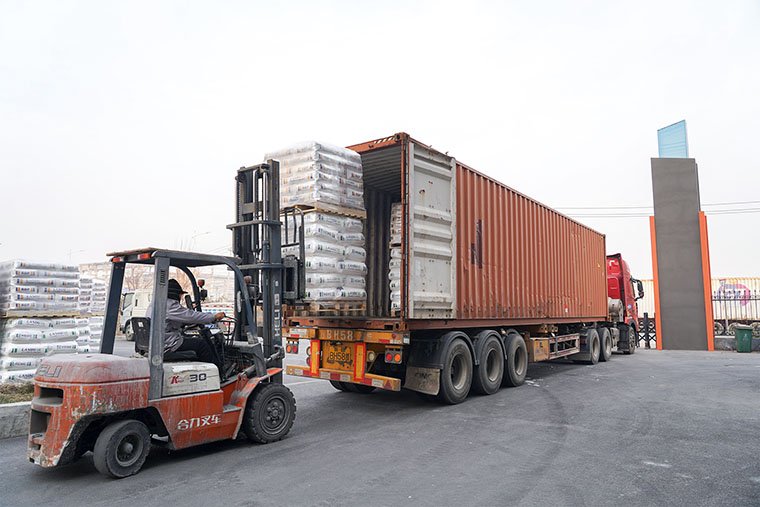 Hygroscopic · Seal When Not in Use · 25 kg Industrial Bags
LANDERCOLL can provide product-related documentation to support specialty industrial formulation testing, purchasing review, quality evaluation, and internal approval processes.
Product specifications, viscosity, and performance data for grade evaluation.
Safety, handling, and regulatory information for site compliance.
Batch-specific quality confirmation for incoming inspection.
Detailed grade parameters and acceptance criteria.
Overview of product range and specialty industrial applications.
Formulation and processing reference for specialty industrial applications.
Grade selection support for your specialty industrial system.
Handling, shelf life, and storage condition reference.
Customs and import compliance documentation where applicable.
If your specialty industrial formulation is experiencing viscosity drift, particle settling, poor coating behavior, weak binding, difficult mixing, poor water retention, unstable storage, or inconsistent processing performance, the cellulose ether grade or dosage may need to be reviewed.
LANDERCOLL can help evaluate suitable HPMC, HEC, CMC, or selected cellulose ether options based on your application type, raw material system, target viscosity, processing method, stability requirement, and final performance goals.
HPMC grade selection for water retention, rheology, and film support
HEC grade selection for smooth viscosity control and suspension stability
CMC grade selection for binding, particle suspension, and formulation consistency
Customized grade recommendation for specialty system requirements
Dosage reference and formulation testing direction
Compatibility evaluation guidance for complex additive systems
Storage stability and shelf life discussion
Sample arrangement and quotation communication
Technical documentation for internal review and approval
HPMC, HEC, and CMC may each be used in specialty industrial formulations depending on the application type and performance requirements. HPMC supports water retention, rheology adjustment, and selected film support. HEC supports smooth viscosity control and broad additive compatibility. CMC supports binding, particle suspension, and formulation consistency. The right choice depends on the specific formulation system, processing method, and performance target.
Cellulose ether helps improve viscosity, rheology, suspension stability, binding, water retention, coating behavior, and processing consistency in selected industrial formulations. It is typically used as a functional processing additive rather than as the primary active ingredient — supporting the physical formulation properties that allow active components to perform as intended.
Yes. Selected cellulose ether grades — particularly CMC and HEC — can help support suspension of minerals, pigments, fillers, powders, or functional particles in compatible water-based or paste-like systems. Final suspension performance depends on particle size, density, surface chemistry, cellulose ether grade and dosage, and the complete formulation system.
Cellulose ether can help adjust viscosity and flow behavior, which may support coating uniformity and application control in selected systems. HPMC and HEC are commonly used in coating formulations for this purpose. Final coating performance depends on the binder system, substrate, additive package, application method, and drying conditions.
CMC and selected cellulose ether grades can help improve cohesion and binding in powder-based or paste-like systems — including ceramic, mineral, carbon, and catalyst carrier formulations. Final binding strength depends on formulation design, solids content, water level, drying or curing conditions, and the complete processing method.
A common reference dosage range is approximately 0.05%–2.5% by formulation weight, depending on the application type, target viscosity, solids content, particle loading, processing method, and cellulose ether grade. Gel systems and catalyst carrier formulations typically require higher dosages, while mineral slurries and functional aqueous systems may use lower dosages. Final dosage must be confirmed through formulation testing.
Viscosity loss in specialty industrial formulations may be caused by pH changes, salt or electrolyte content, elevated temperature, high shear during processing, surfactant interaction, preservative incompatibility, microbial activity, poor initial hydration, or an unsuitable cellulose ether grade for the specific formulation system. A systematic formulation review covering pH, ionic content, temperature, and additive compatibility can help identify the cause.
Start by defining the application type, formulation composition, primary performance requirement — viscosity, suspension, binding, water retention, or film support — target viscosity, pH range, water quality, additive system, processing method, and storage stability target. LANDERCOLL can recommend suitable HPMC, HEC, CMC, or selected cellulose ether grades for your specific specialty industrial system and arrange samples for formulation testing.
Whether you develop specialty coating systems, mineral slurry formulations, industrial gel systems, powder-based paste formulations, catalyst carrier systems, carbon and graphite processing formulations, functional aqueous systemso fully customized industrial manufacturing formulations, LANDERCOLL can help you identify the right cellulose ether grade for better viscosity control, suspension stability, binding, water retention, coating behavior, and consistent processing performance.
Our technical team is available to review your specialty industrial formulation, recommend suitable HPMC, HEC, or CMC grades, provide dosage references, arrange samples, and support your evaluation from initial laboratory testing through to full production scale-up.
HPMC for Water Retention & Rheology · HEC for Viscosity & Suspension · CMC for Binding & Cohesion · Mineral Slurries · Gel Systems · Catalyst Carriers · Carbon Processing · Specialty Coatings · Customized Industrial Formulations.
All performance data, dosage references, and formulation guidance provided on this page are for reference only. Final suitability must be confirmed through testing under your specific formulation system and production conditions. LANDERCOLL reserves the right to update product information without prior notice.
