
TDS
Ficha técnica
Product specifications and performance data for formulation review.
LANDERCOLL éter de celulosa ayuda a los fabricantes de champú a mejorar la viscosidad del producto, el flujo suave, la estabilidad de la suspensión, la textura, la apariencia y el rendimiento de aplicación amigable para el consumidor en formatos de champú transparente, opaco, perlado, acondicionador, suave, herbal y anticaspa.
Desde champús claros de uso diario hasta fórmulas premium de perlas y acondicionadoras, el grado adecuado de HEC, HPMC o CMC proporciona una reología predecible, una consistencia estable del producto y una experiencia uniforme para el consumidor, tanto para fabricantes internacionales como para formuladores de cuidado personal.

Claro · Opaco · Perla · Acondicionador · Suave · Herbal · Anticaspa
 Respuesta rápida
Respuesta rápidaHEC (Hidroxietilcelulosa) es el éter de celulosa principal utilizado en formulaciones de champú para el control de la viscosidad, textura suave, estabilidad de suspensión y consistencia de la formulación. Se pueden considerar grados seleccionados de HPMC y CMC en sistemas de champú personalizados donde se requiera reología especial, formación de película o soporte de suspensión. El éter de celulosa ayuda al champú a lograr un cuerpo de producto estable, favorece una dosificación uniforme y mantiene una apariencia homogénea durante el almacenamiento en formatos transparentes, opacos, perlados, acondicionadores, suaves, herbales y anticaspa.
Referencia clave de rendimiento, compatibilidad y suministro para fabricantes de champús y formuladores de cuidado personal en el extranjero.
¿Busca una recomendación de éter de celulosa para la formulación de su champú?
Pide una recomendación de champú. Solicitar un presupuesto


El champú es un producto de limpieza capilar diseñado para eliminar la grasa, la suciedad, el sudor, los residuos de peinado y las impurezas del cuero cabelludo y el cabello. Puede formularse como champú transparente, champú opaco, champú perlado, champú acondicionador, champú anticaspa, champú suave, champú sin siliconas, champú de hierbas o champú concentrado, cada uno con requisitos específicos de viscosidad, textura y estabilidad.
LANDERCOLL proporciona productos de éter de celulosa para fabricantes de champú, especialmente HEC (Hidroxietilcelulosa) para el control de la viscosidad, la textura suave y la estabilidad de la formulación. Determinados HPMC y CMC grados también pueden considerarse en sistemas de champú personalizados donde se requiera ajuste reológico, soporte de suspensión o una textura especial.
Si el champú es demasiado líquido, puede parecer acuoso y ser difícil de dosificar con precisión. Si es demasiado espeso o fibroso, puede ser difícil de verter, extender o aclarar. Sin un control reológico fiable, los productos pierden la calidad percibida por el consumidor, presentan una mala suspensión de partículas perladas o activos, y desarrollan una deriva de la viscosidad durante el almacenamiento.
LANDERCOLL proporciona HEC y grados seleccionados de éter de celulosa para fabricantes de champú que necesitan un control fiable de la viscosidad, una textura suave, estabilidad de la suspensión y consistencia en la formulación en diferentes tipos de champú y entornos de producción.
El champú debe equilibrar la limpieza, la espuma, la viscosidad y la sensación del producto. El éter de celulosa ayuda a los formuladores a ajustar la viscosidad, favorecer una textura suave, estabilizar los ingredientes en suspensión, mantener un flujo controlado y garantizar la consistencia entre lotes.
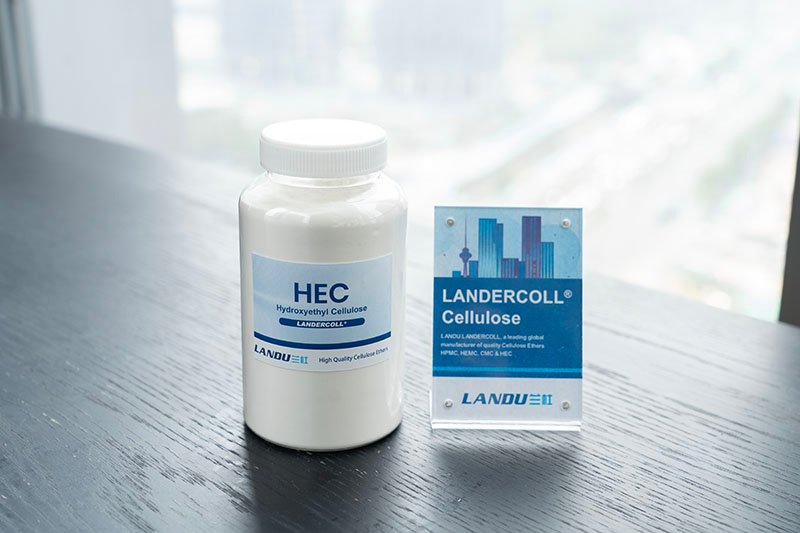
LANDERCOLL offers HEC as the primary cellulose ether for shampoo applications, with HPMC for selected specialty rheology and CMC for suspension support in compatible systems.
Primary · Non-Ionic · HEC
Non-ionic cellulose ether for viscosity control, smooth texture, and personal care formulation stability.
HEC is the most widely used cellulose ether in shampoo and hair care formulations where viscosity control, smooth flow, and stable texture are required. As a non-ionic, water-soluble cellulose ether, HEC can be suitable for many surfactant-based personal care systems after compatibility testing. In shampoo, HEC helps improve product body, reduce watery appearance, support smooth dispensing, and stabilize selected suspended ingredients.
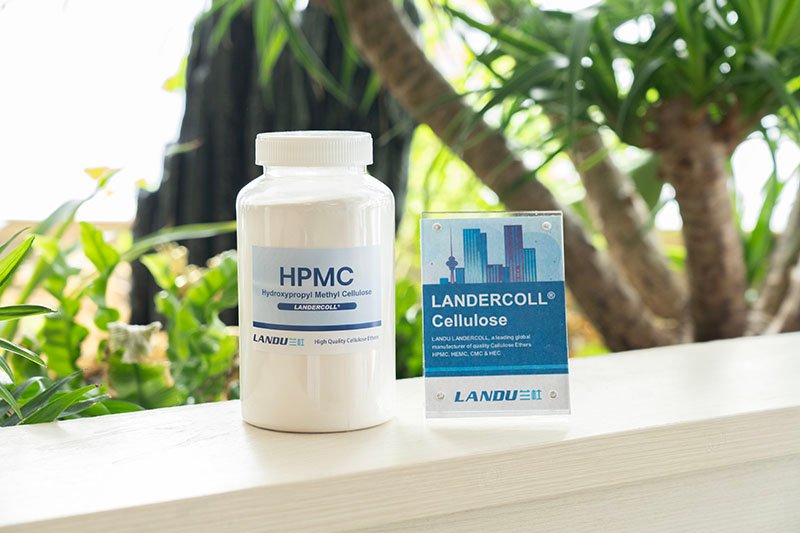 Specialty · HPMC · Custom Rheology
Specialty cellulose ether for selected thickening, rheology adjustment, and film-forming support.
HPMC may be considered in selected shampoo and hair care formulations where special rheology, water-soluble polymer behavior, or film-forming support is required. Its use should be validated through formulation testing, because shampoo performance depends on surfactant type, salt level, pH, conditioning agents, fragrance, preservatives, and active ingredients.
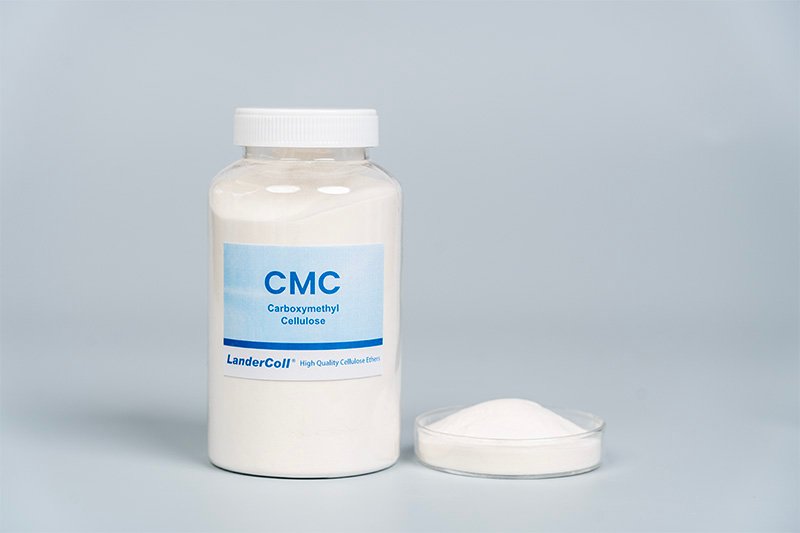 Anionic · CMC · Selected Systems
Cellulose ether option for suspension support, consistency, and selected texture adjustment.
CMC may be used in selected shampoo or hair care formulations where suspension support, product consistency, or viscosity contribution is needed. It may be suitable for certain opaque, herbal, or particle-containing systems after compatibility testing. Final use should be confirmed, because surfactants, electrolytes, pH, and conditioning ingredients can strongly affect formulation behavior.
Shampoo formulations vary by product type, surfactant system, conditioning level, and market positioning. The table below provides a general reference for common components.
| Componente | Function in Shampoo |
|---|---|
| Agua | Main solvent and carrier |
| Primary Surfactants | Provide cleansing and foam |
| Co-Surfactants | Improve mildness, foam quality, and formulation balance |
| Cellulose Ether (HEC / HPMC / CMC) | Viscosity control, texture, suspension, and stability |
| Conditioning Agents | Support hair feel, combability, and conditioning effect |
| Salt / Electrolytes | Adjust viscosity in selected surfactant systems |
| Fragrance | Provides product scent |
| Preservatives | Protect water-based formulas from microbial growth |
| pH Adjusters | Maintain target pH and formulation stability |
| Pearlizing Agents / Actives | Improve appearance or provide functional claims |
| Tipo de Aplicación | Recommended Product Direction | Principales Requisitos de Rendimiento |
|---|---|---|
| Champú transparente | HEC / selected cellulose ether | Viscosity, clarity, smooth flow |
| Champú opaco | HEC / CMC | Product body, suspension, stable appearance |
| Champú Pearl | HEC | Pearlizing agent suspension, viscosity, texture |
| Champú acondicionador | HEC / selected HPMC | Compatibility, smooth texture, stable body |
| Champú suave | HEC | Gentle texture, viscosity, stable flow |
| Champú de hierbas | HEC / CMC | Suspension support, uniform appearance |
| Champú anticaspa | HEC / selected cellulose ether | Active suspension, viscosity, stability |
| Champú concentrado | HEC / selected cellulose ether | High-active compatibility, rheology balance |
These dosage ranges are starting references only. Final dosage should be confirmed through viscosity testing, compatibility testing, foam evaluation, pH stability testing, storage stability testing, suspension testing, dispensing behavior evaluation, and consumer-use trials.
| Tipo de Aplicación | Typical Reference Dosage |
|---|---|
| Champú transparente | 0.2% – 0.8% |
| Champú opaco | 0.2% – 0.9% |
| Champú Pearl | 0.2% – 0.8% |
| Champú acondicionador | 0.2% – 0.8% |
| Champú suave | 0.15% – 0.7% |
| Champú de hierbas | 0.2% – 1.0% |
| Champú anticaspa | 0.2% – 1.0% |
| Champú concentrado | 0.2% – 0.8% |
Cellulose ether influences viscosity control, smooth texture, suspension stability, foam-compatible rheology, dispensing behavior, and long-term storage performance in surfactant-based shampoo systems.
HEC helps adjust shampoo viscosity and supports a stable product body. This improves dispensing, appearance, and consumer-use experience. Achieving the right viscosity is critical for both manufacturing consistency and end-user satisfaction across clear, opaque, pearl, and conditioning shampoo formats.
A smooth texture is important for shampoo application and consumer perception. Cellulose ether helps create uniform flow and reduces watery or uneven product feel — contributing to a premium product experience during dispensing and use.
Pearlizing agents, herbal extracts, particles, conditioning droplets, or active ingredients may need stable distribution throughout the product. Cellulose ether can support suspension stability when properly matched with the formulation system.
Cellulose ether primarily supports viscosity and texture. Foam performance depends mainly on the surfactant system, so compatibility testing is recommended to maintain the desired foam profile without interference from the thickening system.
Shampoo should pour or pump smoothly — not too thin, too thick, or too stringy. The right cellulose ether grade helps balance body and flow for consistent dispensing from bottles, pumps, or sachets.
A suitable cellulose ether grade helps maintain stable viscosity and appearance during storage when compatible with surfactants, salts, preservatives, fragrance, and active ingredients across temperature variations.
When shampoo fails viscosity, texture, suspension, or stability targets, cellulose ether grade, dosage, hydration, or compatibility is often the first variable to review.
Low viscosity response or weak thickener system.
HEC supports viscosity control and product body.
Excessive polymer or salt response.
Adjust cellulose ether dosage and viscosity grade.
Unsuitable rheology or high polymer dosage.
Select proper grade and optimize dosage.
Poor suspension or incompatible ingredients.
Support suspension stability through grade selection.
Weak rheology or poor stabilizer balance.
Improve viscosity and suspension support.
Salt, pH, surfactant, or temperature interaction.
Test compatible grade and formulation balance.
Poor dispersion or hydration process.
Improve addition sequence and mixing.
Polymer, fragrance, salt, or surfactant incompatibility.
Confirm compatibility through testing.
Shampoo formulations are surfactant-rich and salt-sensitive. Multiple factors influence how cellulose ether performs and how stable the product remains over time.
Anionic, non-ionic, amphoteric, and mixed surfactant systems can affect cellulose ether hydration, viscosity response, clarity, and stability. Compatibility testing with the specific surfactant blend is always recommended.
Salt is often used to adjust viscosity in shampoo. The interaction between salt, surfactants, and cellulose ether should be tested carefully, as salt can either enhance or reduce polymer performance depending on the system.
Shampoo pH affects formulation stability, preservative performance, hair feel, and polymer performance. Most shampoos are formulated in the mildly acidic to near-neutral range (pH 4.5–7.0).
Silicones, cationic polymers, oils, and conditioning agents may influence viscosity, clarity, and compatibility with cellulose ether. Interaction testing is recommended for conditioning-rich formulations.
Anti-dandruff agents, botanical extracts, proteins, or specialty actives may require suspension or compatibility testing to ensure stable performance throughout shelf life.
Fragrance oils and preservatives can influence clarity, viscosity, and long-term stability. Their interaction with cellulose ether should be evaluated during formulation development.
Addition sequence, hydration time, water temperature, and mixing speed affect cellulose ether dispersion and final viscosity. Proper processing is critical for consistent batch results.
Temperature changes during transport and storage may affect viscosity, clarity, appearance, and product stability. Stability testing under relevant temperature conditions is recommended.
Choosing the right cellulose ether requires balancing viscosity, texture, foam compatibility, clarity, suspension stability, dispensing behavior, and storage performance across the complete shampoo formulation system.
 Grade Selection Guide
LANDERCOLL can review your shampoo formulation direction and recommend suitable HEC, HPMC, CMC, or selected cellulose ether grades for testing.
Clear, opaque, pearl, herbal, conditioning, or active-containing?
Anionic, non-ionic, amphoteric, or mixed surfactants?
What target viscosity range is required?
What is the final pH range of the formulation?
What salt or electrolyte level is included?
Are oils, silicones, or cationic polymers included?
Do pearls, actives, or particles need suspension support?
Bottle, pump, or sachet dispensing format?
What production process and hydration method are used?
What temperature range and shelf life are expected?

LANDERCOLL provides product-related documentation to support shampoo formulation testing, purchasing review, quality approval, and import compliance.
 Formulation & Performance Evaluation
Supporting shampoo and personal care product development with complete technical documentation.
— LANDERCOLL R&D —Product specifications and performance data for formulation review.
Safety, handling, and regulatory information (SDS / MSDS).
Batch quality confirmation supplied per shipment.
Overview of cellulose ether range and application areas.
Formulation guidance and usage recommendations.
Grade recommendation for specific shampoo applications.
Handling, shelf life, and storage condition reference.
Available where applicable for international orders and import compliance.
All documents supplied upon request to support formulation review, quality approval, and import compliance.
Solicitar documentos del productoHEC selection for viscosity control in shampoo systems
Shampoo texture and rheology adjustment
Suspension stability discussion and testing direction
Foam-compatible viscosity support
Compatibility testing direction for surfactant and salt systems
Dosage reference and optimization for shampoo types
Sample provision and quotation communication
If your shampoo is too thin, too thick, stringy, unstable, cloudy, difficult to dispense, losing viscosity, or showing poor suspension — the cellulose ether grade may need to be reviewed.
LANDERCOLL can help evaluate suitable HEC and selected cellulose ether options based on your surfactant system, salt level, pH, conditioning ingredients, active ingredients, target viscosity, and processing method.
HEC is the most commonly used cellulose ether in shampoo for viscosity control, smooth texture, suspension stability, and formulation consistency. HPMC and CMC may be considered in selected customized shampoo systems where special rheology, suspension, or texture requirements exist.
HEC helps improve viscosity, product body, smooth texture, dispensing behavior, suspension stability, and storage stability in selected water-based shampoo formulations. It is a non-ionic thickener compatible with many surfactant systems used in personal care.
Cellulose ether mainly supports viscosity and texture — not foam generation. Foam performance depends primarily on the surfactant system, foam boosters, water quality, and overall formulation design. Compatibility testing is recommended to ensure cellulose ether does not negatively affect the foam profile.
Yes. Selected cellulose ether grades may be used in clear shampoo, but final clarity depends on surfactant type, salt level, fragrance, preservatives, polymer grade, dosage, and processing conditions. Compatibility testing is essential before finalizing the formulation.
A common reference dosage is approximately 0.15%–1.0%, depending on shampoo type, viscosity target, surfactant system, salt level, and cellulose ether grade. Final dosage should always be confirmed through viscosity testing and stability evaluation.
Viscosity loss may be caused by surfactant incompatibility, changes in salt level, pH shifts, temperature fluctuations, fragrance or preservative interaction, poor hydration during manufacturing, or an unsuitable cellulose ether grade. A full stability test under relevant storage conditions is recommended.
Lumps or fish eyes may occur when cellulose ether is added too quickly, poorly dispersed, or not given sufficient hydration time. Optimizing the addition method, pre-dispersion approach, mixing sequence, and water temperature can resolve this issue.
Start by defining shampoo type, surfactant system, target viscosity, salt response, pH, clarity target, conditioning system, active ingredients, and storage conditions. LANDERCOLL can recommend suitable HEC or selected cellulose ether grades based on your specific formulation requirements.
Whether you produce clear shampoo, opaque shampoo, pearl shampoo, conditioning shampoo, mild shampoo, herbal shampoo, anti-dandruff shampoo, or concentrated shampoo — LANDERCOLL can help you choose the right cellulose ether grade for better viscosity control, smooth texture, suspension stability, and formulation consistency.
Our team can provide grade recommendations, dosage references, technical data sheets, samples, and quotations to support your formulation development and purchasing process.
LANDERCOLL cellulose ether products are manufactured for industrial and commercial use. All formulation data, dosage references, and application guidance provided are for general reference only. Final product performance must be confirmed through testing under your specific formulation, process, and storage conditions.