Tselluloos eetri tipptase — usaldatud enam kui 1000 ettevõtte poolt üle maailma Hangi tasuta proovi
LANDERCOLL HEC cellulose ether helps latex paint manufacturers improve thickening efficiency, viscosity control, pigment and filler suspension, application feel, leveling performance, and in-can stability across economy, standard, premium, interior, exterior, matt, satin, and high-PVC grades.
From economy interior latex to premium exterior coatings and high-PVC architectural systems — the right HEC grade delivers dependable water-phase thickening, stable rheology, and predictable application performance.

Interior · Exterior · Economy · Premium · Matt · Satin · High-PVC



Latex paint is the dominant coating format for residential, commercial, and institutional building surfaces worldwide. As a water-based system built around polymer emulsion binders, it offers low VOC content, easy cleanup, and broad substrate compatibility — but these advantages only translate into a marketable product when the formulation delivers reliable in-can stability, smooth application performance, and consistent coating appearance.
Unlike associative thickeners, LANDERCOLL HEC is a non-ionic, water-soluble polymer that thickens the water phase directly — a robust, predictable solution for latex paint formulators across economy, standard, premium, interior, exterior, matt, satin, and high-PVC grades.
For latex paint manufacturers, this means better thickening efficiency, stronger pigment suspension, and more reliable in-can stability. For applicators and end users, it means smoother brush and roller application, reduced spatter, cleaner coverage, and a more uniform surface after drying.
Within a latex paint formulation, HEC operates in the continuous water phase — building viscosity, providing structural body, supporting pigment and filler suspension, and controlling the flow behavior that determines how the paint feels under a brush or roller. HEC dissolves cleanly in water, builds stable viscosity efficiently at low dosage levels, and is compatible with acrylic, vinyl-acrylic, styrene-acrylic, and PVA emulsion binders.
Without suitable thickening and rheology control, latex paint fails at the most basic performance requirements — both in the container and during application. HEC helps latex paint manufacturers address these challenges across economy through premium formulation grades.
HEC (Hydroxyethyl Cellulose) is the industry-standard water-phase thickener for water-based architectural coatings — valued for clean dissolution in water, stable viscosity development, broad formulation compatibility, and reliable performance across latex paint grades and application types.
 Industry Standard · Non-Ionic · Water-Soluble
Primary cellulose ether for water-based latex paint — thickening, pigment suspension, and stable application performance.
LANDERCOLL HEC dissolves in cold or warm water, builds viscosity efficiently at low dosage levels, and maintains stable performance across the pH ranges and additive combinations typical of latex paint formulations. Suitable for economy latex paint, standard interior and exterior latex paint, premium wall coatings, matt latex paint, satin latex paint, high-PVC latex paint, and other water-based architectural coating systems.
Latex paint formulations vary by binder type, pigment volume concentration (PVC), quality level, application area, and target performance. The table below provides a general reference for common formulation components and the role HEC plays within the system.
| Komponent | Function in Latex Paint |
|---|---|
| Polymer Emulsion | Main film-forming binder; provides adhesion, durability, and film integrity |
| Titanium Dioxide | Provides whiteness, hiding power, and opacity |
| Colored Pigments | Provide decorative color and tinting |
| Fillers (CaCO₃, Kaolin, Talc) | Adjust opacity, texture, body, and cost balance |
| Vesi | Main dispersion medium for the water-based system |
| Dispersants | Help disperse and stabilize pigments and fillers |
| Vahutõrjeained | Reduce foam during production and application |
| Säilitusained | Support in-can microbial stability and shelf life |
| pH modifikaatorid | Adjust formulation pH for stability and compatibility |
| HEC (Cellulose Ether) | Controls viscosity, rheology, suspension, leveling, and application stability |
| Coalescing Agents | Support film formation at lower temperatures |
| Wetting Agents | Improve substrate wetting and surface coverage |
| Associative Thickeners | May be used alongside HEC to optimize ICI viscosity and leveling in premium systems |
| Muud lisandid | Adjust open time, durability, or special surface properties |
| Latex Paint Type | Soovitatav toode | Peamised nõuded |
|---|---|---|
| Economy Latex Paint | Medium viscosity HEC | Basic thickening, suspension, stable application |
| Standard Latex Paint | Medium viscosity HEC | Viscosity control, brushability, roller application |
| Premium Latex Paint | Selected HEC grade | Smooth application, stable viscosity, uniform finish |
| Interior Latex Paint | HEC | Pigment suspension, leveling, storage stability |
| Exterior Latex Paint | HEC | Anti-sag support, coating consistency, filler stability |
| Matt Latex Paint | HEC | Smooth rolling, pigment stability, surface uniformity |
| Satin Latex Paint | Valitud HEC | Flow control, leveling, smooth appearance |
| High-PVC Latex Paint | Keskmise kuni kõrge viskoossusega HEC | Filler suspension, body, anti-settling support |
These dosage ranges are starting references only. Final dosage must be confirmed through laboratory testing, viscosity measurement (KU, ICI, Brookfield), storage stability evaluation, pigment settling assessment, brush and roller application trials, leveling review, and coating appearance assessment.
| Latex Paint Application | Typical Reference Dosage |
|---|---|
| Economy Latex Paint | 0.2% – 0.5% |
| Standard Latex Paint | 0.3% – 0.7% |
| Premium Latex Paint | 0.3% – 0.8% |
| Interior Latex Paint | 0.2% – 0.7% |
| Exterior Latex Paint | 0.3% – 0.8% |
| Matt Latex Paint | 0.2% – 0.7% |
| Satin Latex Paint | 0.2% – 0.6% |
| High-PVC Latex Paint | 0.4% – 1.0% |
HEC influences every stage of latex paint performance — from low-shear pigment suspension and KU viscosity to roller application, leveling, anti-sag behavior, and long-term storage stability.
HEC builds and controls viscosity in the water phase of latex paint. Proper viscosity gives the paint body and handling stability, supports consistent film thickness during application, improves in-can appearance, and contributes to more uniform coating quality. Latex paint without adequate thickening feels watery, is difficult to control during application, and tends to run or sag on vertical surfaces.
Latex paint requires balanced rheology across three shear regimes. HEC primarily controls low-shear and medium-shear viscosity — structured enough to suspend pigments at rest, fluid under brush or roller force — providing the structural foundation on which the complete rheology system is built.
Latex paint contains TiO₂, CaCO₃, kaolin, talc, and colored pigments with varying densities. HEC increases structural viscosity in the water phase, helping keep pigments and fillers evenly distributed and reducing hard sediment that is difficult to redisperse.
HEC improves the way latex paint moves and spreads under brush force — creating smoother application, better directional control, and more comfortable handling on walls and trim while reducing drag and streaking.
During roller application, latex paint must transfer evenly, spread smoothly, and minimize spatter. HEC supports stable viscosity and controlled flow for cleaner application, better coverage, and reduced material waste.
HEC supports flow and leveling by controlling medium-shear rheology. In premium latex paint, HEC is often used alongside associative thickeners to optimize the balance between low-shear suspension and high-shear leveling.
Suitable HEC grades provide enough structural body to prevent the wet film from running or sagging on vertical walls — particularly important at higher film thicknesses or in warm conditions where the paint remains wet longer.
HEC helps maintain stable viscosity and pigment suspension during storage, transport, and temperature variation — reducing hard settling, phase separation, syneresis, and inconsistent application performance after extended storage periods.
When latex paint performance fails in production or application, the HEC grade, hydration, or dosage is often the first variable to review within the complete formulation system.
Insufficient HEC dosage, poor hydration, unsuitable grade.
Improve viscosity build and paint body.
Weak suspension, low viscosity, high-density fillers.
Support pigment and filler suspension stability.
Low viscosity, poor rheology balance, unsuitable formulation.
Support controlled application behavior during rolling.
Weak structural body, excessive water, low thickener efficiency.
Improve anti-sag body and structural viscosity.
Unbalanced rheology, wrong viscosity, incompatible additives.
Improve flow behavior and leveling balance.
Poor suspension system, low viscosity, incompatible additives.
Improve formulation stability and in-can consistency.
Poor filler dispersion, unbalanced rheology, wrong HEC grade.
Support smoother and more comfortable application.
Poor hydration, pH drift, surfactant or preservative incompatibility.
Improve viscosity stability through grade selection.
Understanding the variables that influence HEC behavior in latex paint systems helps formulators make better selection decisions and avoid common performance problems in production and storage.
Different emulsion systems — pure acrylic, vinyl-acrylic, styrene-acrylic, PVA — affect viscosity development, compatibility, film formation, and application behavior. HEC grade selection should be evaluated against the specific emulsion used, as some emulsion types may affect HEC viscosity efficiency.
TiO₂, CaCO₃, kaolin, talc, and colored pigments vary in particle size, density, and surface chemistry. Higher filler loadings require stronger suspension support. The specific surface area and surface treatment of titanium dioxide can also affect HEC viscosity response.
High-PVC latex paint systems — particularly economy and standard grades with high filler loadings — require stronger body and suspension control. Higher viscosity HEC grades or higher dosages may be needed.
Most HEC grades perform well across a broad pH range (pH 2–12), but the timing of pH adjustment during production can affect HEC hydration and viscosity development. Alkaline pH modifiers should typically be added after HEC has fully hydrated.
Dispersants and surfactants affect pigment dispersion quality, viscosity development, foam behavior, and HEC compatibility. Some surfactant systems at high concentrations may reduce HEC viscosity efficiency and require dosage adjustment.
Certain preservatives, particularly isothiazolinone-based biocides, may affect HEC viscosity stability over time. Compatibility testing is recommended, especially for products with long shelf-life requirements.
HEC must be properly dispersed and fully hydrated to develop its target viscosity. Poor hydration may result in lumps, delayed viscosity development, or unstable performance. HEC is typically added to water before pigments and fillers.
Mixing speed, addition sequence, hydration time, water temperature, and shear history all affect final viscosity development and paint stability. Proper mixing protocol is essential for consistent HEC performance across production batches.
Too little HEC may not provide sufficient thickening or suspension. Too much may reduce leveling performance, create stringiness during application, or make the paint feel heavy and difficult to spread.
Temperature changes during storage and transport can affect viscosity stability. HEC-thickened latex paint should be stored within the recommended temperature range and protected from freezing, which can irreversibly damage the emulsion.
Selecting the correct HEC grade requires balancing viscosity target, rheology profile, pigment suspension, application feel, leveling performance, anti-sag behavior, and storage stability. Use the checklist below to define your formulation direction before requesting a grade recommendation.
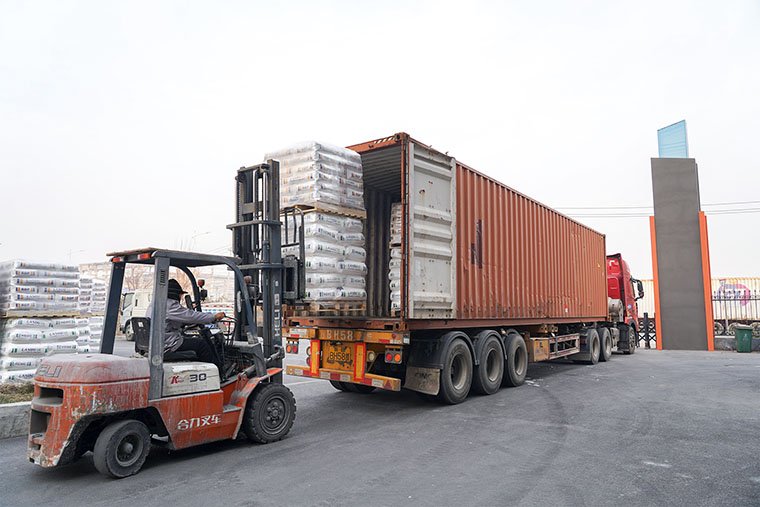 Grade Selection Guide
LANDERCOLL can review your latex paint formulation direction and recommend a suitable HEC grade for laboratory evaluation and testing.
Interior, exterior, matt, satin, economy, or premium latex paint?
What is the target viscosity (KU, ICI, Brookfield)?
What polymer emulsion binder is used?
What pigment and filler system is included, and what is the PVC?
Is leveling, anti-sag, or suspension the highest priority?
Do you need better brushability or roller performance?
Will associative thickeners be used alongside HEC?
What pH range does the formulation operate at?
What dispersants, surfactants, and preservatives are included?
What mixing equipment and hydration time are available?
What batch size and production process are used?
What shelf-life period and temperature range are required?

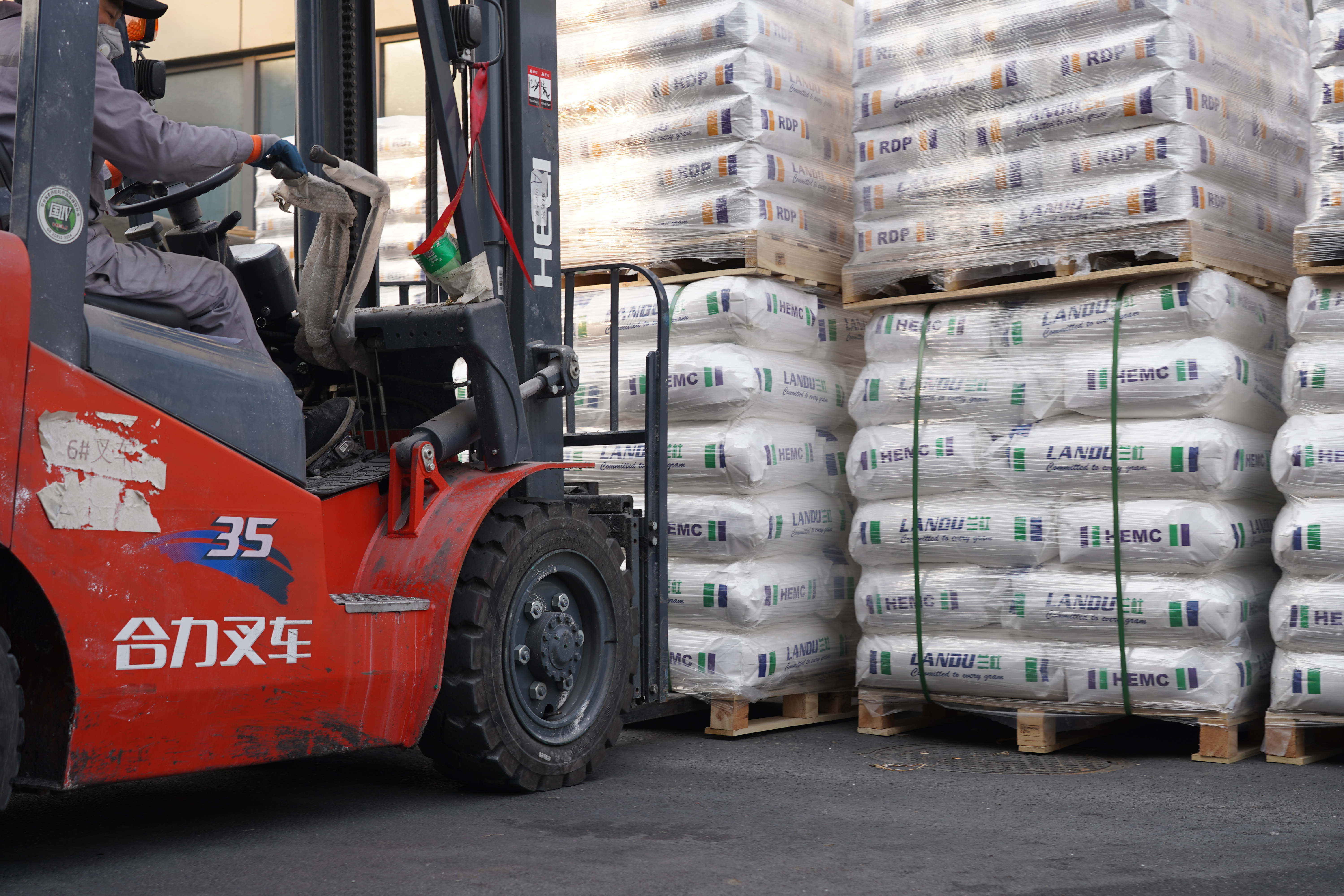

Supporting latex paint development with complete technical documentation.
— LANDERCOLL R&D —LANDERCOLL provides product-related documentation to support latex paint formulation testing, purchasing review, quality approval, and import compliance requirements.
All documents supplied upon request to support your formulation review, quality approval, and import compliance process.
HEC grade selection for latex paint formulations
Thickening efficiency and rheology profile optimization
Pigment and filler suspension improvement
Brushability, roller application, and spatter reduction support
Leveling, anti-sag, and storage stability discussion
HEC vs. associative thickener system guidance
Dosage reference and adjustment guidance
Sample supply and technical documentation (TDS, SDS, COA)
Quotation and export supply chain communication
If your latex paint is experiencing low viscosity, pigment settling, excessive roller spatter, sagging on vertical walls, poor leveling, storage separation, or inconsistent batch performance — the HEC grade or dosage may need to be reviewed.
LANDERCOLL provides technical support to help latex paint manufacturers evaluate HEC options based on binder system, pigment and filler loading, target viscosity, PVC level, application method, and storage stability requirements.
HEC (Hydroxyethyl Cellulose) is the most widely used cellulose ether in water-based latex paint. It improves thickening, viscosity control, pigment and filler suspension, rheology, brush and roller application feel, leveling, anti-sag behavior, and storage stability across interior and exterior latex paint grades.
HEC builds viscosity in the water phase of latex paint, stabilizes pigments and fillers against settling, improves brush and roller application feel, supports leveling, provides anti-sag body on vertical surfaces, and helps maintain consistent paint stability during storage and transport.
Thickening gives latex paint body and structural stability. Without adequate thickening, latex paint may be too thin to control during application, allow pigments and fillers to settle during storage, produce excessive roller spatter, sag on vertical walls, and deliver inconsistent coverage and coating appearance.
Yes. HEC increases the structural viscosity of the water phase, which helps keep pigments and fillers — including dense materials like titanium dioxide and calcium carbonate — evenly distributed during storage and reduces hard settling that is difficult to redisperse.
A common reference dosage range is 0.2%–1.0% by weight, depending on paint grade, target viscosity, pigment and filler loading, and formulation design. Economy grades typically use 0.2%–0.5%, while high-PVC systems may use up to 0.4%–1.0%. Final dosage must be confirmed through testing.
HEC is a non-ionic, water-soluble polymer that thickens the continuous water phase directly, providing robust low-shear and medium-shear viscosity with broad formulation compatibility. Associative thickeners interact with the emulsion polymer and provide stronger high-shear (ICI) viscosity and leveling improvement, but are more sensitive to surfactant concentration. Many premium latex paint formulations use both HEC and associative thickeners.
Viscosity loss during storage may be caused by poor HEC hydration, unsuitable grade selection, pH drift, surfactant or preservative incompatibility, high electrolyte content, enzymatic or microbial degradation, or temperature-related changes. A systematic review of the HEC grade, preservative system, pH stability, and production process typically helps identify the cause.
HEC supports leveling by helping control medium-shear rheology and flow behavior. However, final leveling performance depends on the complete formulation — including binder type, dispersant, surfactant, defoamer, and the balance between low-shear and high-shear viscosity. Associative thickeners are often used alongside HEC in premium systems to optimize leveling.
Yes. LANDERCOLL supplies HEC in export-ready industrial packaging with full documentation support including TDS, SDS, COA, and export-related documents where applicable. Contact our team to discuss your requirements and receive a grade recommendation.
Whether you produce economy latex paint, standard interior or exterior latex paint, premium wall coatings, matt latex paint, satin latex paint, or high-PVC latex paint — LANDERCOLL can help you identify the right HEC grade for better thickening efficiency, pigment suspension, application feel, leveling performance, anti-sag behavior, and storage stability.
Share your paint type, target viscosity, binder system, pigment and filler loading, PVC level, and application requirements — LANDERCOLL will respond with a suitable HEC grade recommendation and supporting documentation.
