Eccellenza in Etere di Cellulosa — Affidato da oltre 1000 aziende a livello globale Richiedi il campione gratuito

L'etere di cellulosa LANDERCOLL aiuta i produttori di malte secche pronte all'uso di tutto il mondo a migliorare la ritenzione idrica, la lavorabilità, il tempo aperto, il controllo reologico, le prestazioni anti-cedimento e l'affidabilità dell'applicazione in cantiere nei sistemi di malte secche a base di cemento, gesso e modificate con polimeri.
Dall’adesivo per piastrelle e dallo stucco murale all’intonaco cementizio, alla malta da riparazione e alla malta isolante: la scelta del giusto tipo di HPMC o HEMC/MHEC garantisce che la malta fresca si comporti in modo uniforme durante la miscelazione, la stesura, la lisciatura e la finitura.
— HPMC · HEMC / MHEC · Ritenzione idrica · Tempo di lavorabilità · Anti-cedimento · Lavorabilità · Malta pronta all’uso · Produttori di malte secche
 Adesivo per piastrelle
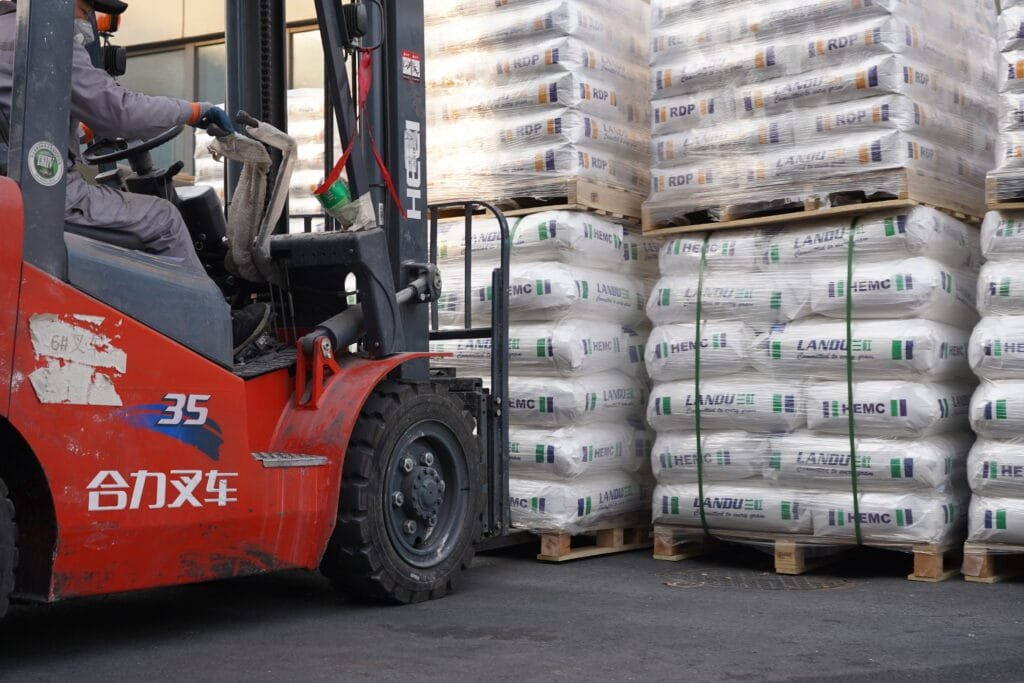 Stucco per paretiIntonaci e rivestimenti
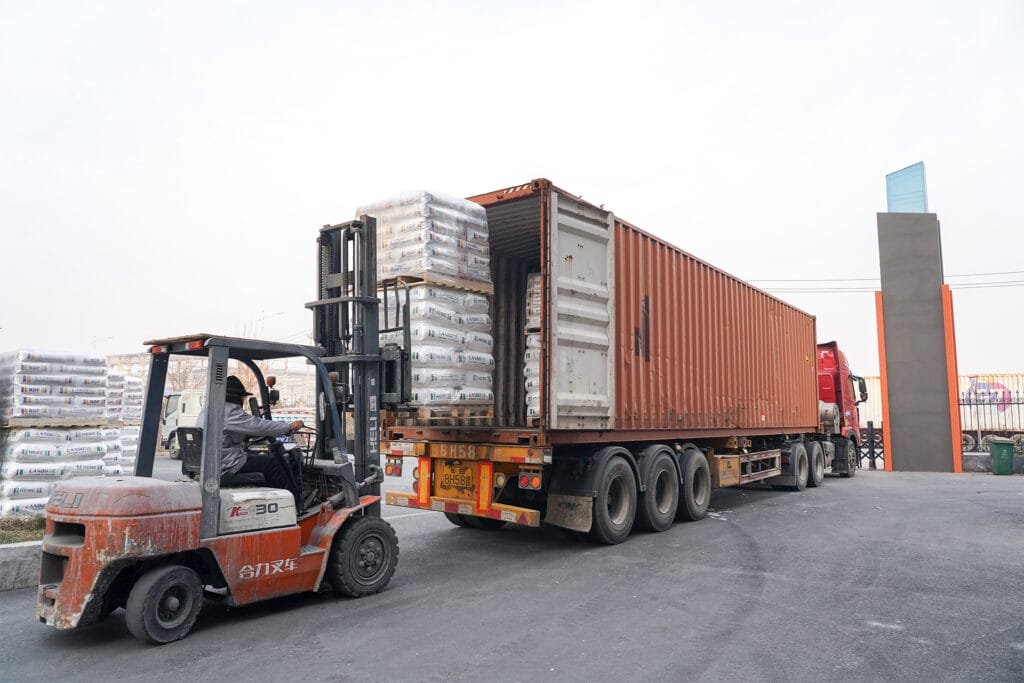 Malta di Riparazione
Etere di cellulosa — principalmente HPMC (Idrossipropilmetilcellulosa) e HEMC/MHEC (Idrossietilmetilcellulosa) — è un additivo funzionale chiave utilizzato nella malta secca premiscelata per migliorare la ritenzione d’acqua, la lavorabilità, il tempo aperto, la consistenza, il comportamento anti-scolamento e la stabilità della malta fresca in sistemi a base di cemento, gesso e polimeri modificati.

La malta secca premiscelata è un materiale in polvere prodotto in fabbrica mediante la miscelazione di cemento, gesso, calce, sabbia, filler, polvere polimerica ridisperdibile, etere di cellulosa e altri additivi in condizioni di formulazione controllate. Viene fornita in sacchi o silos sfusi e miscelata con acqua in cantiere prima dell'applicazione.
A differenza della malta tradizionale miscelata in cantiere, la malta secca premiscelata offre un dosaggio delle materie prime più costante, un migliore controllo della formulazione, una maggiore efficienza di costruzione e prestazioni applicative più prevedibili, ma solo quando il sistema additivo, incluso l'etere di cellulosa, è correttamente selezionato e dosato.
Un grado adatto di etere di cellulosa garantisce che, dopo l'aggiunta di acqua, la malta umida si comporti in modo coerente durante la miscelazione, la stesura, la cazzuolatura, il raschiamento, il riempimento, la livellatura e la finitura. Riduce la rapida perdita d'acqua, supporta il tempo aperto di lavorazione, controlla la reologia e aiuta i produttori a fornire prodotti che funzionano in modo affidabile su diversi substrati, climi e metodi di costruzione.
Senza un adeguato etere di cellulosa, la malta secca premiscelata può presentare una serie di problemi prestazionali allo stato fresco che influiscono direttamente sulla qualità dell'applicazione in cantiere e sulla soddisfazione dell'applicatore.
I problemi comuni includono malta che si asciuga troppo rapidamente su substrati assorbenti, tempo aperto breve che limita la posa delle piastrelle o le finestre di intonacatura, scarsa lavorabilità che rende difficile la stesura e la cazzuolatura, cedimento su superfici verticali, prestazioni incoerenti da lotto a lotto, finitura superficiale ruvida e separazione o bleeding della malta durante l'applicazione.
L'etere di cellulosa aiuta i produttori di malta secca premiscelata a controllare le proprietà della malta fresca che gli applicatori notano più direttamente: ritenzione idrica, lavorabilità, tempo aperto, consistenza, comportamento anti-sag, controllo della reologia, coesione della malta, finitura superficiale, stabilità della sospensione e affidabilità da lotto a lotto.
L'etere di cellulosa aiuta i produttori di malta secca premiscelata a controllare le proprietà della malta fresca che gli applicatori notano più direttamente in cantiere. Il giusto grado di HPMC o HEMC / MHEC supporta prestazioni costanti in adesivi per piastrelle, intonaci, rivestimenti, stucchi, malte per riparazione e altri sistemi a secco.
Riduce la rapida perdita di umidità verso substrati assorbenti e aria, supportando l'idratazione e un'applicazione stabile.
Extends the workable window for tile setting, plastering, rendering, and finishing operations.
HPMC e HEMC/MHEC sono le due principali linee di prodotti a base di eteri di cellulosa per malta secca premiscelata. Ognuna offre vantaggi prestazionali distinti a seconda del tipo di applicazione, del sistema legante e dei requisiti prestazionali target.

HPMC (Hydroxypropyl Methylcellulose) provides water retention, thickening, workability improvement, consistency control, and fresh mortar stability across a broad range of cement-based and gypsum-based drymix systems.
LANDERCOLL HPMC is suitable for tile adhesive, wall putty, skim coat, cement plaster, gypsum plaster, masonry mortar, repair mortar, waterproof mortar, joint filler, and other standard dry mortar products.
HEMC / MHEC (Hydroxyethyl Methylcellulose) is selected for ready-mix dry mortar systems where open time, anti-sag behavior, smooth workability, vertical surface stability, and stronger fresh mortar structure are critical performance requirements.
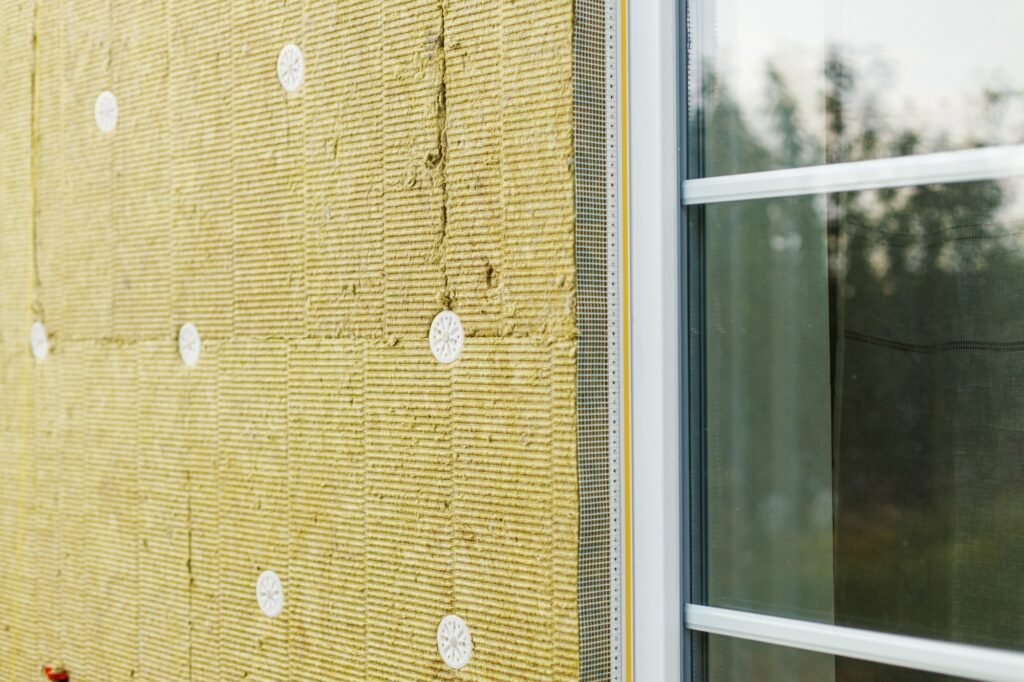
LANDERCOLL HEMC / MHEC is often used in tile adhesive, EIFS / ETICS mortar, cement render, repair mortar, waterproof mortar, insulation mortar, wall putty, and other demanding drymix systems.
Ready-mix dry mortar formulations vary widely depending on application type, binder system, raw material availability, performance target, and local standards.
| Componente | Function in Ready-Mix Dry Mortar |
|---|---|
| Cement / Gypsum / Lime | Main binder system depending on product type. |
| Sand / Aggregates | Provide structure, volume, strength, and application body. |
| Fillers / Fine Powders | Adjust consistency, smoothness, density, and cost balance. |
| Polvere Polimerica Ridispersibile | Supports adhesion-related behavior, flexibility, and durability. |
| Etere di cellulosa (HPMC / HEMC) | Improves water retention, workability, open time, rheology, and consistency. |
| Etere di amido | May support anti-sag behavior and rheology control. |
| Fibre | Support crack resistance and reinforcement in selected systems. |
| Additivi Idrofobici | Support water resistance in exterior or waterproof systems. |
| Additivi aeranti | Improve workability and density control in selected systems. |
| Set-Control Additives | Adjust setting time and strength development. |
| Altri Additivi | Adjust special performance, processing, or surface quality. |
Different dry mortar products require different cellulose ether performance profiles. This table provides a practical selection reference for common ready-mix dry mortar systems.
| Dry Mortar Type | Prodotto Consigliato | Requisiti Principali di Prestazione |
|---|---|---|
| Adesivo per piastrelle | HPMC / HEMC / MHEC | Ritenzione idrica, tempo aperto, cazzuolatura, anti-scivolo. |
| Stuccatura delle piastrelle | HPMC / HEMC / MHEC | Filling smoothness, consistency, surface finish. |
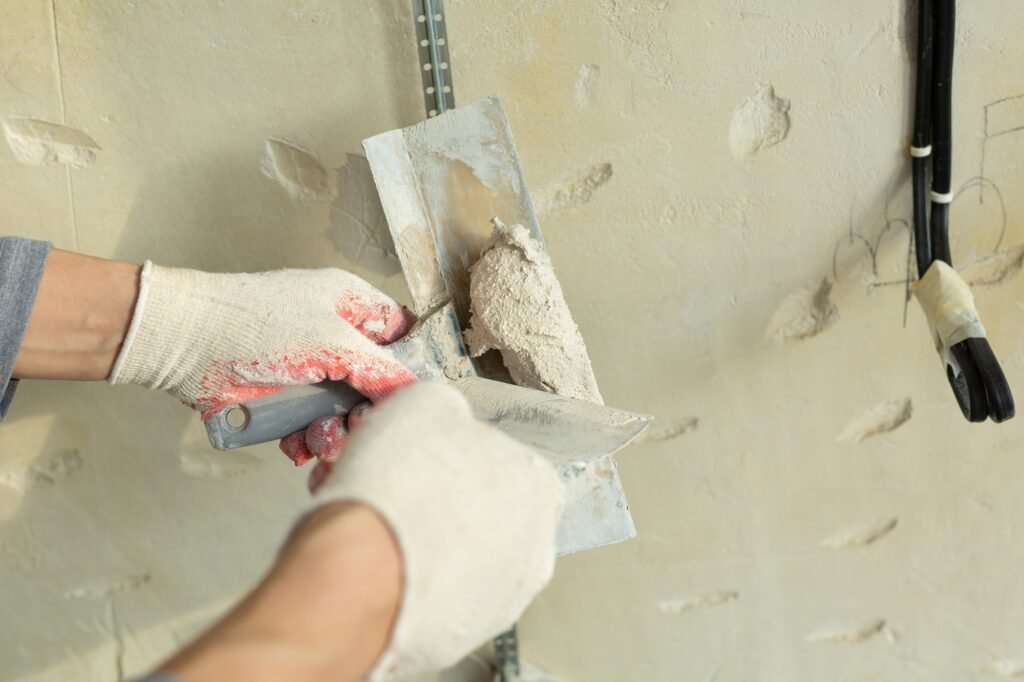
| Stucco per pareti / Rasante | HPMC / HEMC / MHEC | Smooth scraping, water retention, leveling. |
| Intonaco di cemento | HPMC / HEMC / MHEC | Lavorabilità, spalmabilità, anti-sag. |
| Intonaco di gesso | HPMC / HEMC / MHEC | Smooth application, water management, finish. |
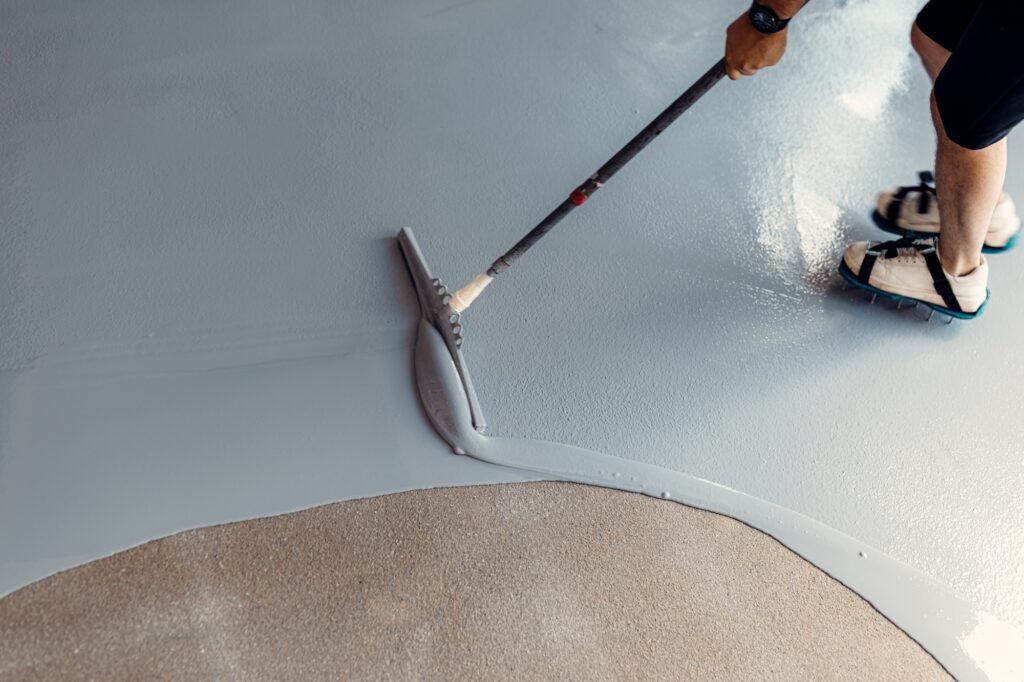
| Self-Leveling Compound | Low–medium viscosity HPMC / HEMC | Flow stability, suspension, anti-segregation. |
| Malta da muratura | HPMC / HEMC / MHEC | Board life, spreadability, water retention. |
| Malta di Riparazione | HEMC / MHEC / HPMC | Anti-sag, ritenzione della forma, coesione. |
| Malta impermeabile | HPMC / HEMC / MHEC | Spreadability, water retention, layer stability. |
| Malta Isolante | HPMC / HEMC / MHEC | Lightweight aggregate stability, anti-sag, cohesion. |
| Riempitivi per Giunti | HPMC / HEMC / MHEC | Smooth filling, shape retention, surface finish. |
The dosage of cellulose ether in ready-mix dry mortar depends on product type, viscosity grade, target performance, binder system, raw material quality, application method, and local job-site conditions.
In ready-mix dry mortar formulations, cellulose ether supports water retention, workability, open time, rheology, anti-sag behavior, mortar cohesion, and surface finish — the properties applicators evaluate most directly on the job site.
Water retention is one of the most critical functions of cellulose ether in ready-mix dry mortar. It helps the wet mortar retain moisture after mixing, supporting cement hydration, gypsum setting behavior, workability duration, and stable application performance — particularly on absorbent substrates such as brick, block, aerated concrete, or dry drywall.
Good workability makes dry mortar easier to mix, spread, scrape, trowel, fill, level, and finish. HPMC and HEMC / MHEC improve application comfort, reduce harshness from coarse sand or filler systems, and help applicators work more efficiently on-site.
Open time is especially important in tile adhesive, EIFS / ETICS mortar, plaster, render, and other systems where applicators need sufficient time to apply, adjust, position, and finish the material. Cellulose ether helps extend the workable window by slowing moisture loss.
Cellulose ether helps control the flow and structural behavior of wet mortar. This pseudoplastic (shear-thinning) behavior allows the material to flow and spread under tool pressure while remaining stable and in place after the tool is removed.
Vertical construction applications — including tile adhesive, render, repair mortar, waterproof mortar, and insulation mortar — require sufficient mortar body to stay in position after application. Suitable cellulose ether grades, particularly HEMC / MHEC, help improve anti-sag resistance and reduce material slippage.
Cellulose ether improves wet mortar cohesion and helps the material remain uniform during mixing, application, and finishing. For wall putty, plaster, joint filler, grout, and finishing mortar, cellulose ether supports smoother surface formation by improving water retention, consistency, and workability — resulting in better final surface appearance and reduced rework.
Many fresh mortar performance issues are related to water retention, workability, rheology, and consistency — areas where cellulose ether grade and dosage selection directly affect results.
Rapid water loss, absorbent substrate, hot or windy conditions.
Improve water retention and extend workable time.
Harsh sand or filler, unsuitable viscosity, poor water balance.
Improve smoothness and application comfort.
Weak rheology, excessive water, low viscosity grade.
Migliorare il comportamento anti-scolamento e la corposità della malta.
Low dosage, unsuitable grade, highly absorbent substrate.
Improve moisture control and retention.
Poor rheology, excessive water, unstable particle system.
Improve consistency and suspension stability.
Excessive dosage or unsuitable high-viscosity grade.
Regola il grado e l’equilibrio del dosaggio.
Poor filler grading, rapid water loss, unstable consistency.
Supportare un comportamento di finitura più uniforme.
Raw material variation, poor dispersion, wrong additive balance.
Improve formulation stability and reliability.
Understanding the variables that influence cellulose ether behavior helps manufacturers make better formulation decisions and avoid common performance issues.
Tile adhesive, wall putty, plaster, self-leveling compound, repair mortar, and waterproof mortar each require different viscosity, water retention, and rheology profiles from the cellulose ether.
Cement, gypsum, lime, calcium aluminate cement, and blended binders affect hydration behavior, setting time, water demand, and cellulose ether interaction. Gypsum-based systems require careful viscosity selection to avoid over-retardation.
Particle size distribution, shape, fineness, and absorption characteristics influence water demand, workability, surface finish, and consistency. Coarser or more angular sands typically require higher cellulose ether dosages.
Polymer powder affects adhesion behavior, flexibility, durability, and rheology. Compatibility with cellulose ether should be evaluated during formulation development.
Viscosity grade directly affects water retention capacity, consistency, anti-sag behavior, spreadability, open time, and surface finish. Higher viscosity grades generally provide stronger water retention but may increase stickiness if overdosed.
Too little cellulose ether leads to poor water retention or weak workability. Too much may cause stickiness, reduced flow, delayed finishing, or difficult application. The correct dosage must be confirmed through testing.
Dry blending uniformity, water addition sequence, mixing time, rest time, and remixing all affect cellulose ether hydration and final wet mortar behavior.
Moisture exposure, poor packaging seal, high humidity storage, and extended storage time may degrade dry mortar quality and reduce additive effectiveness.
Hot, dry, windy, or highly absorbent conditions accelerate water loss and reduce working time. Higher cellulose ether dosages or higher-viscosity grades may be needed in these environments.
Selecting the correct cellulose ether grade requires matching product type, viscosity, water retention performance, rheology profile, application method, and target performance requirements.
What type of dry mortar are you producing?
Is the system cement-based, gypsum-based, or polymer-modified?
Do you need stronger water retention or longer open time?
Is anti-sag behavior a critical requirement?
Do you need smooth scraping, troweling, filling, or leveling performance?
What binder, sand, filler, and polymer system is used?
Quale spessore di applicazione è richiesto?
What climate and substrate conditions are typical in your market?
What viscosity range and dosage level are you targeting?
Do you require surface-treated (delayed-dissolution) or untreated cellulose ether?
LANDERCOLL can help review your ready-mix dry mortar formulation direction and recommend suitable HPMC or HEMC / MHEC grades for testing.
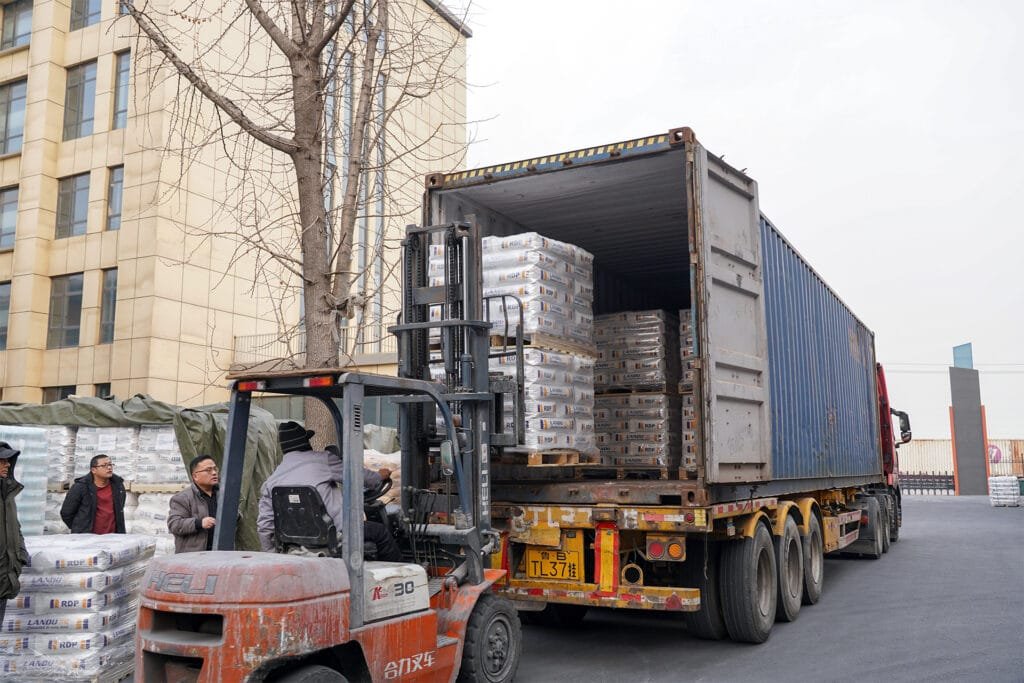
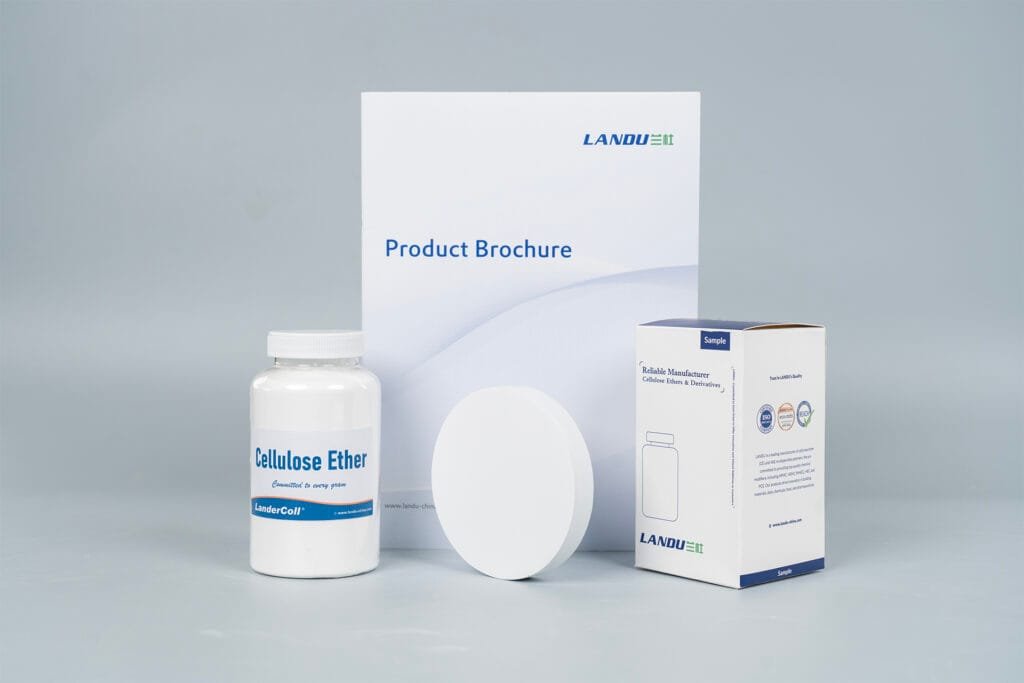
Richiedi supporto tecnicoLANDERCOLL cellulose ether for ready-mix dry mortar is supplied in industrial packaging suitable for drymix mortar production, transportation, and storage.
LANDERCOLL provides product-related documentation to support dry mortar formulation testing, purchasing review, and internal approval processes.
If your ready-mix dry mortar dries too quickly, has short open time, poor workability, sagging on vertical surfaces, sticky application feel, rough surface finish, mortar separation, or inconsistent batch-to-batch performance, the cellulose ether grade or dosage may need to be reviewed.
LANDERCOLL provides technical support to help drymix mortar manufacturers evaluate suitable HPMC and HEMC / MHEC options based on product type, binder system, target water retention, open time, anti-sag requirements, and job-site application conditions.
HPMC and HEMC / MHEC product selection for ready-mix dry mortar.
Water retention and open time improvement strategy.
Anti-sag and rheology control support.
Workability, troweling, and surface finish improvement.
Viscosity grade direction and dosage recommendation.
Formulation review for tile adhesive, plaster, render, grout, and repair mortar.
Sample arrangement and technical evaluation support.
TDS, SDS, COA, and quotation communication.
HPMC and HEMC / MHEC are the most commonly used cellulose ethers in ready-mix dry mortar. They improve water retention, workability, open time, consistency, anti-sag behavior, and surface finishing across cement-based, gypsum-based, and polymer-modified drymix systems.
HPMC improves water retention, workability, consistency, troweling or scraping feel, and application stability in cement-based and gypsum-based dry mortar systems. It is versatile and widely used across tile adhesive, wall putty, plaster, masonry mortar, repair mortar, waterproof mortar, and joint filler formulations.
HEMC / MHEC improves water retention, open time, anti-sag behavior, smooth application feel, and vertical surface stability. It is often selected for demanding drymix systems such as tile adhesive, EIFS / ETICS mortar, cement render, repair mortar, waterproof mortar, and insulation mortar.
The typical reference dosage range is 0.05%–0.60% by weight of dry mortar, depending on the mortar type, viscosity grade, binder system, and target performance. Tile adhesive and wall putty typically use 0.20%–0.50%, while self-leveling compounds use lower dosages of 0.05%–0.20%. Final dosage must always be confirmed through formulation testing.
Cellulose ether is used in tile adhesive, tile grout, wall putty, skim coat, cement plaster, gypsum plaster, cement render, masonry mortar, repair mortar, waterproof mortar, insulation mortar, joint filler, and self-leveling compounds — covering virtually all major ready-mix dry mortar product categories.
HPMC is versatile and suitable for a broad range of dry mortar systems. HEMC / MHEC is typically selected where stronger open time, anti-sag behavior, and vertical application stability are critical requirements. Both can be used in many of the same systems — the final choice depends on your specific performance targets, binder system, and application conditions.
Cellulose ether primarily improves fresh mortar properties such as water retention, workability, consistency, and application stability. Final hardened strength depends on the complete formulation, binder content, water-to-binder ratio, curing conditions, and raw material quality — not cellulose ether dosage alone.
Stickiness is typically caused by excessive cellulose ether dosage, an unsuitable high-viscosity grade, high redispersible polymer powder content, excessive water addition, or an unbalanced filler and sand system. Reviewing the viscosity grade and reducing the dosage incrementally usually resolves this issue.
Yes. Share your product type, formulation direction, target performance, viscosity requirement, dosage level, and raw material system. LANDERCOLL can help recommend suitable HPMC or HEMC / MHEC grades for testing and provide supporting technical documentation.
Whether you produce tile adhesive, tile grout, wall putty, cement plaster, gypsum plaster, masonry mortar, repair mortar, waterproof mortar, insulation mortar, joint filler, self-leveling compound, or other ready-mix dry mortar products, LANDERCOLL can help you identify the right HPMC or HEMC / MHEC grade for better water retention, workability, consistency, open time, anti-sag performance, and application reliability.
Our team can review your formulation direction, recommend suitable grades for testing, and provide technical documentation to support your purchasing and product development process.
