Eccellenza in Etere di Cellulosa — Affidato da oltre 1000 aziende a livello globale Richiedi il campione gratuito




LANDERCOLL HEC aiuta i produttori di pitture per pareti esterne a migliorare l'ispessimento, il controllo reologico, la sospensione di pigmenti e cariche, la resistenza allo sgocciolamento, la sensazione in applicazione e la stabilità in stoccaggio nelle categorie di rivestimenti economici, standard, premium, elastomerici e per facciate.
Dalla pittura murale economica ai rivestimenti elastomerici di facciata di alta qualità — il giusto grado di HEC garantisce viscosità costante, sospensione affidabile e prestazioni di applicazione prevedibili su superfici verticali esterne.
— HEC · Controllo della Viscosità · Reologia · Anti-Sgocciolamento · Sospensione dei Pigmenti · Pittura per Pareti Esterne · Rivestimento a Base Acqua
 HEC · Rivestimento Esterno
Reologia bilanciata per applicazione su facciata verticale — struttura a riposo, flusso sotto taglio.
Cellulose ether — specifically HEC (Hydroxyethyl Cellulose) — is a key rheology modifier and thickener used in exterior water-based wall paint to control viscosity, stabilize pigments and fillers against settling, support anti-sag behavior on vertical surfaces, improve brush and roller application, and maintain consistent storage stability throughout the product’s shelf life and application window.
Exterior wall paint is one of the most technically demanding categories in the architectural coatings market. Unlike interior paint, exterior coatings must perform reliably under direct sunlight, rain, wind, temperature cycling, humidity variation, UV exposure, and substrate movement.
A high-performing exterior wall paint must remain stable in the container, apply smoothly and uniformly on vertical façade surfaces, resist sagging at application thickness, and produce a consistent, durable coating appearance after drying. Within the formulation system, cellulose ether plays a critical role in the water phase.
LANDERCOLL HEC is designed for exterior wall paint manufacturers who need dependable thickening, stable rheology, reliable pigment suspension, anti-sag support, and predictable application performance across economy, standard, premium, elastomeric, and façade coating grades.
Exterior wall paint faces more demanding stability and application requirements than interior paint. It is applied on vertical surfaces at varying film thicknesses, often under challenging outdoor conditions including heat, wind, and direct sunlight — all of which accelerate water loss and reduce the working window.
Without suitable thickening and rheology control, exterior wall paint is vulnerable to performance failures including thin paint that sags on vertical walls, pigment and filler settling during storage, excessive roller spatter, poor coating uniformity, unstable viscosity between batches, and separation or syneresis during storage or transport.
HEC helps exterior wall paint manufacturers address these challenges through thickening, rheology control, pigment and filler suspension, anti-sag support, improved brushability and roller application, coating uniformity, storage stability, batch-to-batch consistency, and application comfort.

HEC helps exterior wall paint manufacturers address stability and application challenges that directly affect coating quality, applicator efficiency, and product reliability across economy through premium exterior coating grades.
Builds and maintains stable viscosity for consistent film thickness and in-can handling.
Keeps pigments and fillers evenly distributed to prevent settling and color inconsistency.
HEC (Hydroxyethyl Cellulose) is the primary LANDERCOLL cellulose ether product for exterior wall paint applications. As a non-ionic, water-soluble polymer, HEC is compatible with a wide range of binders, pigments, dispersants, surfactants, hydrophobic additives, and preservatives commonly used in exterior wall paint formulations.
HEC · Thickening · Rheology · Suspension
HEC dissolves cleanly in water, builds stable and consistent viscosity, supports pigment and filler suspension, and provides reliable application performance across a broad range of exterior coating formulations — from economy masonry paint to premium elastomeric façade coatings.
LANDERCOLL HEC is suitable for economy exterior wall paint, standard façade paint, premium exterior coatings, matt exterior paint, elastomeric coatings, high-PVC exterior paint, water-resistant wall coatings, and other water-based exterior architectural coating systems.
Exterior wall paint formulations vary by binder type, weather resistance requirement, pigment volume concentration, surface condition, climate zone, and market quality level.
| Componente | Function in Exterior Wall Paint |
|---|---|
| Emulsione Polimerica | Main film-forming binder; provides adhesion, weather resistance, and durability. |
| Biossido di Titanio | Provides whiteness, hiding power, and UV scattering. |
| Colored Pigments | Provide decorative color and tinting. |
| Fillers (CaCO₃, Kaolin, Talc, Mica) | Adjust opacity, texture, durability, and cost balance. |
| Acqua | Main dispersion medium for the water-based system. |
| Disperdenti | Help disperse and stabilize pigments and fillers. |
| Antischiuma | Riduce la schiuma durante la produzione e l'applicazione. |
| Conservanti | Support in-can microbial stability and shelf life. |
| Modificatori di pH | Adjust formulation pH for stability and compatibility. |
| Additivi Idrofobici | Support water resistance and weathering performance. |
| HEC (Etere di Cellulosa) | Controls viscosity, rheology, suspension, anti-sag, and application stability. |
| Agenti Coalescenti | Support film formation at lower temperatures. |
| UV Stabilizers / Additives | Improve UV resistance and exterior durability in selected systems. |
| Altri Additivi | Adjust leveling, wetting, open time, or special performance. |
Different exterior paint systems require different viscosity profiles, suspension strength, anti-sag performance, and rheology behavior.
| Exterior Paint Type | Direzione del prodotto consigliata | Requisiti Principali di Prestazione |
|---|---|---|
| Economy Exterior Wall Paint | Idrossietilcellulosa a media viscosità | Basic thickening, suspension, stable application. |
| Standard Exterior Wall Paint | Idrossietilcellulosa a media viscosità | Viscosity control, roller application, anti-sag support. |
| Premium Exterior Wall Paint | HEC a medio e alto rendimento | Stable viscosity, smooth coating, uniform appearance. |
| Matt Exterior Paint | HEC | Pigment suspension, smooth rolling, surface uniformity. |
| Elastomeric Exterior Paint | Selected HEC | Viscosity control, body, application stability. |
| High-PVC Exterior Paint | HEC a viscosità medio-alta | Sospensione delle cariche, corpo, supporto anti-deposizione. |
| Rivestimenti per Facciate | HEC | Vertical stability, coating consistency, roller feel. |
| Water-Resistant Exterior Paint | Selected HEC | Compatibility with hydrophobic additives, stable viscosity. |
The dosage of HEC in exterior wall paint depends on target viscosity, paint quality level, pigment and filler loading, binder system, anti-sag requirement, application method, and storage stability target.
HEC supports the fresh paint properties that formulators and applicators evaluate most directly — viscosity, rheology, suspension, anti-sag behavior, application feel, coating uniformity, and storage stability.
HEC builds and controls viscosity in the water phase of exterior wall paint. Proper viscosity gives the paint body and structural stability, supports consistent film thickness during application, improves in-can handling, and contributes to more uniform coating appearance. Exterior paint applied without adequate thickening tends to run, sag, and produce uneven coverage — particularly on vertical façade surfaces.
Exterior wall paint requires carefully balanced rheology for vertical surface application. The paint must remain structured in the container, flow freely under brush or roller pressure, and recover quickly after the tool is removed to resist sagging. HEC provides pseudoplastic (shear-thinning) behavior essential for reliable exterior paint application.
Exterior wall paint typically contains higher pigment and filler loadings than interior paint. Without sufficient suspension support, materials settle during storage — forming hard sediment and leading to color inconsistency and poor coating quality. HEC increases structural viscosity of the water phase to keep pigments and fillers evenly distributed.
Anti-sag performance is particularly important because exterior paint is applied on vertical surfaces, often at higher film thicknesses. Suitable HEC grades provide enough structural body to prevent the wet coating from flowing downward after application, helping maintain uniform film thickness and clean coating appearance.
HEC improves the way exterior paint moves and spreads under brush or roller force. It helps create smoother application, more even transfer from roller to wall, better directional control during brushing, and reduced spatter during rolling on large exterior wall areas.
Uniform coating appearance is critical for exterior walls and building façades, where uneven film thickness or patchy coverage are clearly visible. HEC supports consistent film formation through improved rheology and suspension. It also helps maintain stable viscosity and pigment suspension during storage, reducing hard settling, phase separation, syneresis, and inconsistent application performance after prolonged storage or temperature cycling.
Many exterior paint stability and application issues are related to viscosity, suspension, and rheology — areas where HEC grade and dosage selection directly affect performance.
Insufficient thickener dosage, poor hydration, unsuitable grade.
Improve viscosity build and paint body.
Weak suspension, low viscosity, high-density fillers.
Support pigment and filler suspension stability.
Weak structural body, excessive water, low thickener efficiency.
Improve anti-sag behavior and structural body.
Low viscosity, poor rheology, formulation imbalance.
Support controlled application behavior during rolling.
Pigment instability, poor leveling, unstable viscosity.
Improve rheology and suspension balance.
Poor suspension system, incompatible additives, low viscosity.
Improve formulation stability and in-can consistency.
Poor filler dispersion, unbalanced rheology, wrong HEC grade.
Support smoother and more comfortable application.
Poor hydration, pH effects, additive incompatibility, temperature.
Improve viscosity stability through grade selection.
Understanding the variables that influence HEC behavior in exterior paint systems helps formulators make better selection decisions and avoid common performance problems.
Different emulsion systems — pure acrylic, styrene-acrylic, vinyl-acrylic, silicone-modified — affect viscosity development, compatibility, film formation, and exterior durability.
TiO₂, CaCO₃, kaolin, talc, mica, and colored pigments vary in particle size, density, and surface chemistry. Higher filler loadings increase demand on the HEC suspension system.
High-PVC exterior paint systems require stronger body and suspension control. Higher viscosity HEC grades or higher dosages may be needed.
HEC performance can be influenced by formulation pH and the timing of pH adjustment during production. Compatibility should be confirmed during development.
Water-resistant exterior paint may include silicone emulsions, wax dispersions, or other hydrophobic additives that can influence rheology and compatibility with HEC.
Dispersants and surfactants affect pigment dispersion quality, viscosity development, foam behavior, and HEC compatibility. Some systems may reduce HEC viscosity efficiency.
Certain preservatives may affect HEC viscosity stability over time, particularly in formulations stored at elevated temperatures.
HEC must be properly dispersed and fully hydrated to develop target viscosity. Poor hydration may result in lumps, delayed viscosity development, or unstable performance.
Mixing speed, addition sequence, hydration time, water temperature, and shear history all affect final viscosity development. HEC is typically added to water before pigments and fillers.
Exterior paint may be exposed to temperature extremes during storage and transport. Grade selection and dosage optimization should account for the expected temperature range.
Selecting the correct HEC grade requires balancing viscosity target, rheology profile, pigment suspension requirement, anti-sag performance, application feel, coating uniformity, and storage stability.
What type of exterior wall paint are you producing?
What is the target viscosity (KU, ICI, Brookfield)?
Is the paint economy, standard, premium, elastomeric, or façade grade?
Quale sistema di emulsione polimerica viene utilizzato?
What pigment and filler system is included, and what is the PVC level?
Is anti-sag performance a critical requirement?
Do you need better brushability or roller application performance?
Are hydrophobic additives included in the formulation?
What pH range, dispersants, surfactants, and preservatives are included?
What production process, hydration time, and storage temperature range are required?
LANDERCOLL can help review your exterior wall paint formulation direction and recommend a suitable HEC grade for testing.
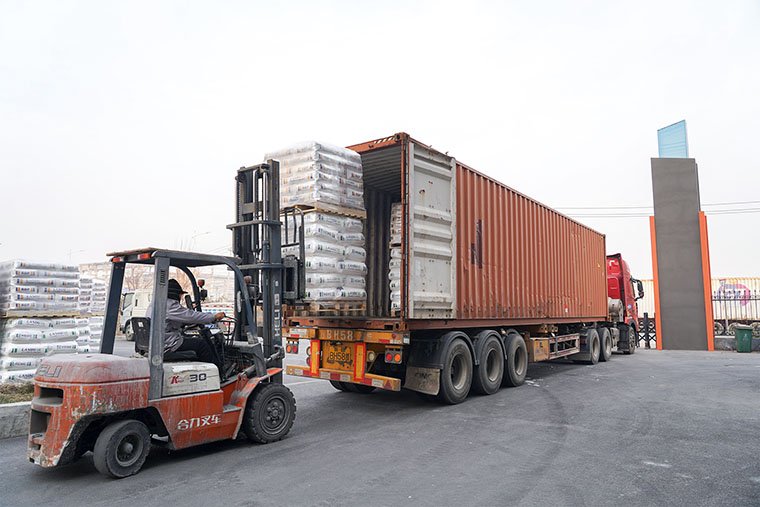
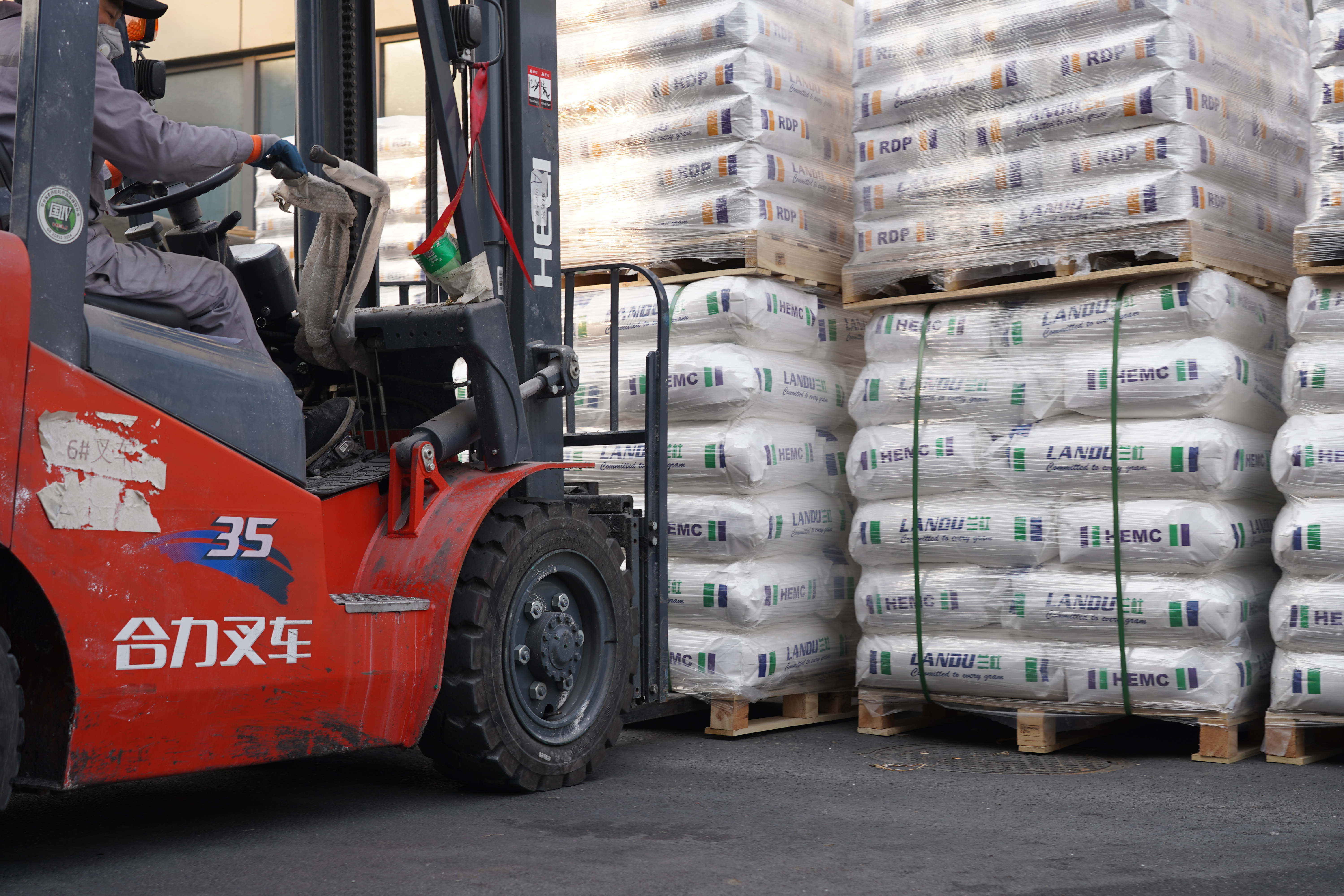
Richiedi supporto tecnicoLANDERCOLL HEC for exterior wall paint is supplied in industrial packaging suitable for coating production, transportation, and storage.


LANDERCOLL provides product-related documentation to support exterior paint formulation testing, purchasing review, and internal approval processes.
If your exterior wall paint has low viscosity, pigment or filler settling, sagging on vertical walls, excessive roller spatter, poor coating uniformity, separation during storage, rough application feel, or unstable viscosity between batches, the HEC grade or dosage may need to be reviewed.
LANDERCOLL provides technical support to help exterior paint manufacturers evaluate suitable HEC options based on paint type, binder system, target viscosity, pigment and filler loading, anti-sag requirement, and storage stability target.
HEC product selection for exterior wall paint systems.
Viscosity and rheology control improvement strategy.
Pigment and filler suspension support.
Anti-sag behavior improvement for vertical façade application.
Brush and roller application performance optimization.
HEC grade direction and dosage recommendation.
Sample arrangement and laboratory evaluation support.
TDS, SDS, COA, and quotation communication.
HEC (Hydroxyethyl Cellulose) is the most commonly used cellulose ether in exterior water-based wall paint. It improves thickening, viscosity control, pigment and filler suspension, rheology, anti-sag behavior, and storage stability in water-based exterior coating systems.
HEC builds viscosity in the water phase, stabilizes pigments and fillers against settling, improves brush and roller application feel, supports anti-sag behavior on vertical exterior surfaces, and helps maintain consistent paint stability during storage and transport.
Viscosity control gives exterior paint body and structural stability for vertical surface application. Without adequate viscosity, paint may sag after application, produce uneven film thickness, allow pigments to settle during storage, and deliver inconsistent coverage on building façades.
Yes. Suitable HEC grades help improve the structural body of exterior wall paint, reducing the tendency of the wet coating to sag or run on vertical surfaces — particularly important when applying at higher film thicknesses on exterior walls and façades.
A common reference dosage range is 0.2%–1.0% by weight, depending on paint grade, target viscosity, pigment and filler loading, anti-sag requirement, and formulation design. High-PVC and elastomeric systems may use higher dosages of 0.4%–1.0%. Final dosage must be confirmed through testing.
HEC primarily improves fresh paint properties such as viscosity, suspension, anti-sag behavior, application stability, and coating uniformity. Final exterior durability depends on the binder system, pigment and filler selection, hydrophobic additives, film formation quality, substrate preparation, and curing conditions.
Storage separation or hard settling may be caused by insufficient HEC dosage, an unsuitable viscosity grade, poor pigment dispersion, weak suspension system, incompatible additives, poor HEC hydration during production, or temperature extremes during storage.
HEC is generally compatible with silicone emulsions and other hydrophobic additives used in water-resistant exterior paint, but compatibility should always be confirmed through formulation testing, as specific additive combinations and concentrations can affect viscosity development and stability.
Yes. Share your paint type, target viscosity, binder system, pigment and filler loading, PVC level, anti-sag requirement, pH range, additives, and storage stability target. LANDERCOLL can recommend suitable HEC grades for laboratory evaluation and provide supporting technical documentation.
Whether you produce economy exterior wall paint, standard façade paint, premium exterior coatings, matt exterior paint, elastomeric coatings, high-PVC exterior paint, or water-resistant wall coatings, LANDERCOLL can help you identify the right HEC grade for better viscosity control, pigment and filler suspension, anti-sag behavior, application feel, coating uniformity, and storage stability.
Our team can review your formulation direction, recommend suitable HEC grades for testing, and provide full technical documentation to support your purchasing and product development process.
