
TDS
Hoja de Datos Técnicos
Product specifications and performance data for formulation review.
LANDERCOLL éter de celulosa ayuda a los fabricantes de cosméticos decorativos a mejorar el control de viscosidad, la suspensión de pigmentos, la textura suave, el ajuste reológico y el rendimiento de aplicación consistente en bases líquidas, bases en crema, productos para labios, máscaras de pestañas, geles para delineador, rubores, esmaltes de uñas y formulaciones de maquillaje especializado.
Desde bases líquidas hasta maquillaje especial con brillo — el grado adecuado de HEC, HPMC o CMC proporciona viscosidad predecible, distribución estable de pigmentos y un rendimiento de aplicación confiable para fabricantes de cosméticos y equipos de formulación en el extranjero.

Base Líquida · Base en Crema · Lápiz Labial · Máscara de Pestañas · Delineador · Rubor · Esmalte de Uñas · Brillo
 Respuesta Rápida
Respuesta RápidaEl éter de celulosa se utiliza en cosméticos decorativos como modificador de viscosidad, ajustador de reología, auxiliar de suspensión de pigmentos y mejorador de textura. La HEC se usa ampliamente en maquillaje líquido y en crema para el control del flujo y una textura suave. La HPMC favorece el ajuste de reología y el comportamiento formador de película en sistemas seleccionados. La CMC ayuda a suspender pigmentos, mica, brillantina y materiales particulados para mantener una distribución uniforme del color y la estabilidad del producto.
Referencia clave de rendimiento, compatibilidad y suministro para fabricantes de cosméticos decorativos y formuladores de cuidado personal en el extranjero.
¿Busca una recomendación de éter de celulosa para su formulación de cosméticos decorativos?
Solicita una recomendación de cosmético decorativo. Solicitar un presupuesto


Cosméticos decorativos son productos utilizados para realzar, modificar o resaltar los rasgos faciales, la apariencia de la piel o las uñas. Incluyen bases, productos para labios, maquillaje de ojos, productos para el cutis, esmaltes de uñas y maquillaje de especialidad. Las formulaciones varían en viscosidad, carga de pigmentos, textura y rendimiento de aplicación, y pueden contener pigmentos, aceites, agua, emulsionantes, humectantes, conservantes y fragancias.
LANDERCOLL ofrece productos de éter de celulosa para fabricantes de cosméticos decorativos, incluyendo HEC para el control de viscosidad y flujo, HPMC para el ajuste de reología y la formación de película, y CMC para la suspensión de pigmentos o partículas en sistemas seleccionados.
Sin un éter de celulosa adecuado, las formulaciones cosméticas decorativas pueden sufrir sedimentación de pigmentos, distribución desigual del color, textura deficiente, aplicación inconsistente o separación de fases durante el almacenamiento. El éter de celulosa ayuda a controlar la viscosidad, estabilizar pigmentos, mejorar la textura, ajustar la reología y mantener la estabilidad del producto.
LANDERCOLL ofrece grados de éter de celulosa HEC, HPMC y CMC para fabricantes de cosméticos decorativos que necesitan un control de viscosidad confiable, suspensión de pigmentos, textura suave, ajuste reológico y consistencia en la formulación en formatos de maquillaje para base, labios, ojos, cutis, uñas y maquillaje especializado.
Los cosméticos decorativos deben tener viscosidad controlada, textura suave y distribución uniforme de pigmentos. Los éteres de celulosa LANDERCOLL ayudan a los formuladores a controlar el flujo, mejorar la sensación de aplicación, suspender pigmentos y mantener un rendimiento estable y consistente del producto.
LANDERCOLL offers HEC as the primary cellulose ether for liquid and cream decorative products, with HPMC for selected rheology and film support and CMC for pigment and particle suspension.
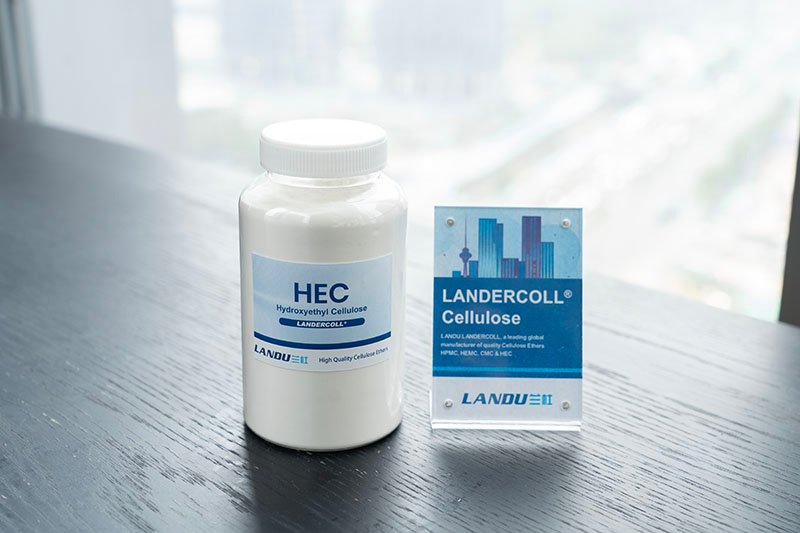
Primary · Non-Ionic · HEC
Non-ionic cellulose ether for viscosity control, flow, and smooth texture.
HEC (Hydroxyethyl Cellulose) is widely used in decorative cosmetics where smooth viscosity, stable texture, and controlled flow are required. It helps improve the consistency of liquid foundations, cream blushes, mascara bases, and makeup products that require a smooth, uniform texture and reliable dispensing behavior. As a non-ionic polymer, HEC offers broad compatibility with most decorative cosmetic ingredients.
 Specialty · HPMC · Rheology
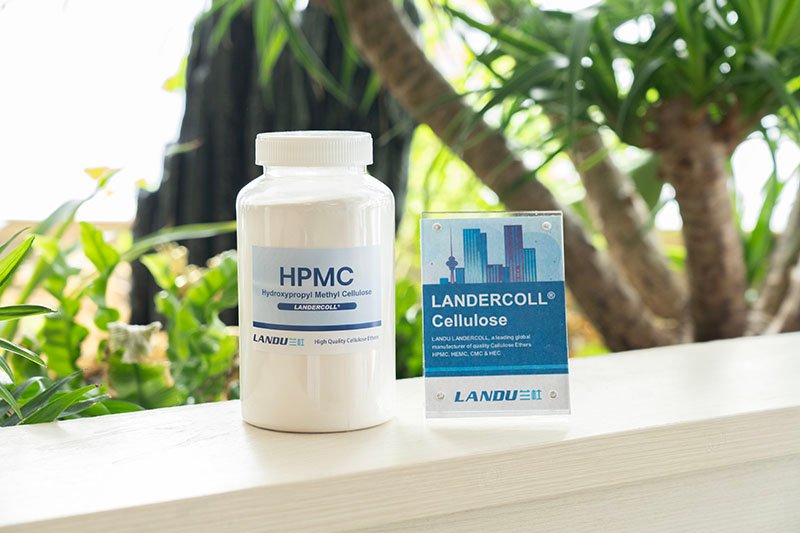
Specialty cellulose ether for rheology adjustment, smooth texture, and film formation.
HPMC may be used in selected decorative cosmetics — including cream foundations, lip products, eyeliner gels, and specialty makeup — where rheology modification, smooth texture, or film-forming behavior is desired. HPMC can contribute to a smooth, even application feel and may support surface film properties in selected formulations.
 Specialty · CMC · Suspension
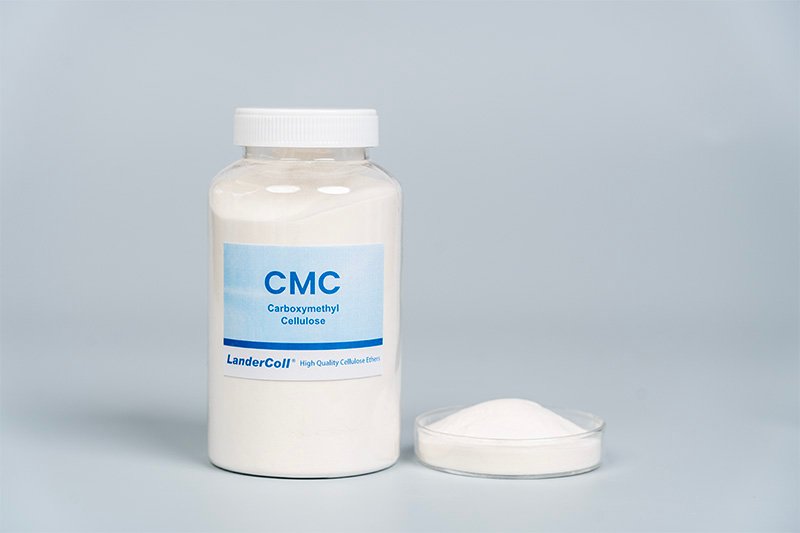
Cellulose ether for pigment, mica, and particle stabilization in decorative formulations.
CMC may be used in decorative cosmetics where pigments, mica, glitter, shimmer powders, or other particulate materials require stable suspension and even distribution throughout the formulation. It helps maintain uniform color distribution during storage and use, preventing settling or uneven appearance that can affect product quality and consumer experience.
Decorative cosmetic formulations vary by pigment system, oil phase, emulsifier type, humectant level, and market positioning. The table below provides a general reference for common components.
| Componente | Function in Decorative Cosmetics |
|---|---|
| Water | Solvent and carrier |
| Oils / Emollients | Provide shine, texture, and skin conditioning |
| Pigments | Color and visual effect |
| Cellulose Ether (HEC / HPMC / CMC) | Viscosity, suspension, texture, and stability |
| Emulsifiers | Stabilize liquid or cream product systems |
| Thickeners | Support product structure and rheology |
| Humectants | Moisturizing and skin feel improvement |
| Conservantes | Protect product integrity and shelf life |
| Fragrance | Improve user experience |
| Additives / Powders | Colorants, glitter, pearl effects, specialty powders |
| Application Type | Recommended Product Direction | Main Performance Requirements |
|---|---|---|
| Base líquida | HEC | Viscosity, flow, smooth texture, uniform appearance |
| Base en crema | HEC / HPMC | Texture, rheology, emulsion stability |
| Lipstick / Lip Gloss | HPMC | Smooth texture, spreadability, film formation |
| Máscara de pestañas | HEC / HPMC | Viscosity, flow, smooth application |
| Gel delineador | HPMC / HEC | Texture, consistency, rheology control |
| Blush / Bronzer | HEC / HPMC | Pigment suspension, smooth application |
| Esmalte de uñas | HPMC / CMC | Suspension, viscosity, stability |
| Glitter / Specialty Makeup | CMC / HPMC | Particle suspension, smooth texture, stability |
Dosage ranges are starting references only. Final formulation should be confirmed through testing for viscosity, texture, pigment suspension, application performance, and storage stability.
| Application Type | Typical Reference Dosage |
|---|---|
| Base líquida | 0.2% – 1.2% |
| Base en crema | 0.3% – 1.5% |
| Lipstick / Lip Gloss | 0.2% – 1.0% |
| Máscara de pestañas | 0.3% – 1.5% |
| Gel delineador | 0.3% – 1.5% |
| Blush / Bronzer | 0.2% – 1.2% |
| Esmalte de uñas | 0.3% – 1.5% |
| Glitter / Specialty Makeup | 0.3% – 1.5% |
Cellulose ether influences viscosity and flow control, pigment suspension, texture and spreadability, rheology adjustment, film-forming support, and long-term storage performance in decorative cosmetic systems.
HEC helps control product viscosity and flow in liquid and cream decorative cosmetics. Proper viscosity control supports consistent dispensing from pumps, tubes, or bottles, prevents dripping during application, and ensures a stable product body throughout shelf life.
CMC helps suspend pigments, mica, glitter, and shimmer powders, maintaining uniform color distribution during storage and use. Without adequate suspension support, pigments may settle, leading to inconsistent color payoff.
HEC and HPMC improve smoothness, spreadability, and overall skin feel. The right cellulose ether grade contributes to a product that spreads easily, blends evenly, and leaves a comfortable, non-heavy finish.
HPMC and HEC help adjust flow behavior and rheology profile. Rheology affects how a foundation spreads, how mascara applies to lashes, and how an eyeliner gel draws a line — essential for consistent application performance.
HPMC may support film-forming behavior in selected decorative cosmetic systems, such as lip products, eyeliner gels, or long-wear foundations. Film formation can contribute to improved coverage, wear performance, and product longevity.
A suitable cellulose ether grade helps maintain product viscosity, texture, pigment suspension, and overall appearance during storage and throughout shelf life under expected storage conditions.
When a decorative cosmetic fails viscosity, pigment suspension, texture, or stability targets, cellulose ether grade, dosage, hydration, or compatibility is often the first variable to review.
Weak suspension system.
CMC for pigment and particle stabilization.
Poor suspension or dispersion.
CMC or HEC to improve uniformity.
Low polymer content or insufficient thickener.
HEC or HPMC to adjust viscosity.
Incorrect rheology profile.
Adjust HPMC or HEC grade for texture improvement.
Poor emulsifier or polymer compatibility.
HEC or HPMC to improve flow and stability.
Excessive polymer or unsuitable grade.
Optimize grade, dosage, and formulation balance.
pH, temperature, or electrolyte changes.
Choose compatible cellulose ether grade and test stability.
Inconsistent viscosity or flow.
HEC or HPMC for smooth, consistent application.
Decorative cosmetic formulations combine pigments, oils, emulsifiers, and humectants in complex rheology systems. Multiple factors influence how cellulose ether performs and how stable the product remains over time.
Different pigments — organic, inorganic, mica, glitter, or specialty powders — have different particle sizes, densities, surface treatments, and suspension requirements. Higher pigment loading generally requires more careful cellulose ether grade and dosage selection.
The type and level of oils, emollients, and waxes in the formulation affect viscosity, texture, and compatibility with cellulose ether. Oil-in-water and water-in-oil emulsion systems may require different cellulose ether approaches.
Emulsifier type and level affect emulsion stability, viscosity, and compatibility with cellulose ether. Compatibility testing between the emulsifier system and cellulose ether is recommended during formulation development.
pH affects cellulose ether performance, preservative efficiency, and overall formulation stability. CMC is more sensitive to pH extremes than HEC or HPMC. Final pH should be confirmed and maintained within the appropriate range for the selected cellulose ether grade.
Glycerin, propylene glycol, and other humectants influence viscosity, skin feel, and compatibility with cellulose ether. Humectant level can affect cellulose ether hydration and final product consistency.
Dispersion sequence, hydration time, mixing speed, shear, and temperature affect cellulose ether hydration quality and final product texture. Proper dispersion before hydration is important for achieving a smooth, lump-free cosmetic product.
Pump bottle, tube, jar, stick, or aerosol packaging affects the target viscosity, dispensing behavior, and required product structure. Different packaging formats may require different cellulose ether grades or dosage levels to achieve optimal dispensing and application performance.
Choosing the right cellulose ether requires balancing viscosity, pigment suspension, texture, spreadability, rheology, film-forming properties, and storage stability across the complete decorative cosmetic formulation system.
 Grade Selection Guide
LANDERCOLL can review your decorative cosmetic formulation direction and recommend suitable HEC, HPMC, CMC, or selected cellulose ether grades for testing.
Liquid foundation, cream, lipstick, mascara, eyeliner gel, blush, nail lacquer, or specialty makeup?
What target viscosity and flow behavior are required?
What pigment type, particle size, and loading level are used?
Do mica, glitter, or specialty powders require suspension?
What texture and skin feel are desired?
What spreadability and coverage performance are targeted?
What oil phase and emulsifier system are used?
What pH range is required?
Pump bottle, tube, jar, stick, or aerosol packaging?
What storage stability and shelf-life requirements apply?
Are film-forming properties required for the target product?

LANDERCOLL provides product-related documentation to support decorative cosmetic formulation testing, purchasing review, quality approval, and import compliance.
 Formulation & Performance Evaluation
Supporting decorative cosmetic and personal care product development with complete technical documentation.
— LANDERCOLL R&D —Product specifications and performance data for formulation review.
Safety, handling, and regulatory information (SDS / MSDS).
Batch quality confirmation supplied per shipment.
Detailed product specification for quality and formulation review.
Formulation guidance and usage recommendations.
Grade recommendation for specific decorative cosmetic applications.
Handling, shelf life, and storage condition reference.
Quality-related documents for suitable grades and export-related documents where applicable for international orders.
All documents supplied upon request to support formulation review, quality approval, and import compliance.
Solicitar Documentos del ProductoIf your foundation, mascara, eyeliner gel, lip product, blush, or specialty makeup formulation shows pigment settling, uneven color distribution, runny consistency, poor spreadability, phase separation, or viscosity drift — the cellulose ether grade or dosage may need to be reviewed.
 Formulation Support
HEC grade selection, pigment suspension optimization, and rheology guidance for decorative cosmetic manufacturers.
— LANDERCOLL Technical Team —HEC selection for viscosity and flow control
HPMC for rheology adjustment and texture improvement
CMC for pigment and particle suspension
Texture and spreadability optimization
Stability and storage performance evaluation
Compatibility testing guidance
Dosage reference and starting point recommendations
Sample and quotation communication
HEC is commonly used in liquid and cream decorative cosmetics for viscosity control, flow management, and smooth texture. HPMC is used in selected systems for rheology adjustment, film-forming behavior, and smooth application. CMC is used for pigment, mica, and glitter suspension to maintain uniform color distribution and product stability.
Yes. CMC is effective for suspending pigments, mica, glitter, and specialty powders in decorative cosmetic formulations. It helps maintain even color distribution and prevents settling during storage, ensuring consistent product appearance and performance from the first use to the last.
Yes. HEC and HPMC improve smoothness, spreadability, and skin application feel. The right cellulose ether grade contributes to a product that spreads easily, blends evenly, and leaves a comfortable finish — which is a critical quality factor in decorative cosmetics.
HPMC may support film-forming behavior in selected decorative cosmetic systems, such as lip products, eyeliner gels, or long-wear formulations. Final film-forming performance depends on the complete formulation system and should be confirmed through testing.
A common reference dosage is 0.2%–1.5%, depending on product type, desired viscosity, pigment loading, and formulation requirements. Final dosage should always be confirmed through formulation testing and stability evaluation.
Pigment settling may be caused by insufficient suspension support, low viscosity, or incompatibility between the pigment surface treatment and the polymer system. CMC or HEC can help improve suspension stability. Reviewing the cellulose ether grade, dosage, and compatibility with the pigment system is a recommended first step.
HEC is primarily used for viscosity control, flow management, and smooth texture in liquid and cream cosmetic systems. CMC is primarily used for pigment, mica, and particle suspension to maintain uniform color distribution. Both may be used together in selected formulations depending on the performance requirements.
For mascara, HEC or HPMC is generally recommended for viscosity control and smooth application. Key factors include target viscosity, brush or wand format, pigment loading, film-forming requirements, and storage stability. LANDERCOLL can recommend suitable grades based on your specific mascara formulation direction.
Whether you produce liquid foundations, cream foundations, lipsticks, lip glosses, mascaras, eyeliner gels, blushes, bronzers, nail lacquers, glitter products, or specialty makeup formulations — LANDERCOLL cellulose ether can help you achieve better viscosity control, pigment suspension, smooth texture, rheology adjustment, and consistent formulation stability.
Our team can review your formulation direction, recommend the most suitable HEC, HPMC, or CMC grade, and support your evaluation with technical data, samples, and documentation.
LANDERCOLL cellulose ether products are manufactured for industrial and commercial use. All formulation data, dosage references, and application guidance provided are for general reference only. Final product performance must be confirmed through testing under your specific formulation, process, and storage conditions.