

1. Klampumo bandymas: tirštinimo efektyvumo vertinimas
Bandymo tikslas:
Klampumas yra viena svarbiausių HPMC savybių plytelių klijų formulėse. Jis tiesiogiai veikia klijų tekėjimo elgseną ir konsistenciją. Tinkamas klampumas užtikrina lengvą naudojimą, puikų sukibimą ir kontroliuojamą atvirą laiką montavimo metu.

Testavimo metodika:
HPMC tirpalų klampumą galima išmatuoti naudojant Brookfield viskozimetrą arba rotacinį viskozimetrą. Mėginys ištirpinamas vandenyje reikiamos koncentracijos (paprastai 2 % masės) ir tiriamas kontroliuojamoje temperatūroje (paprastai 20 °C). Klampumas registruojamas esant įvairiems šlyties greičiams. Gamintojai turėtų palyginti klampumo rezultatus su formulės reikalavimais, užtikrindami, kad jie būtų norimame diapazone, kad būtų pasiektas pastovus veikimas.
2. Drėgmės kiekis: Stabilumo ir laikymo kokybės užtikrinimas
Bandymo tikslas:
Drėgmės kiekis HPMC įtakoja jo laikymo stabilumą ir veikimą. Per didelė drėgmė gali sukelti sulipimą, skaidymąsi arba sutrumpinti galiojimo laiką. Kita vertus, per mažai drėgmės gali paveikti tirpumą ir hidratacijos greitį.

Testavimo metodika:
Gravimetrinė analizė (džiovinimas orkaitėje) arba drėgmės analizatoriai naudojami drėgmės kiekiui nustatyti. Mėginys džiovinamas 105°C temperatūroje, kol pasiekiamas pastovus svoris, o drėgmės kiekis apskaičiuojamas kaip pradinio svorio procentinė dalis. Idealus drėgmės kiekis paprastai turėtų būti mažesnis nei 5%, nors tai gali skirtis priklausomai nuo konkrečių taikymo poreikių. Pavyzdžiui, didelės drėgmės aplinkoje gali prireikti mažesnio drėgmės kiekio.
3. Dalelių dydžio pasiskirstymas: įtaka tirpimui ir homogeniškumui
Bandymo tikslas:
HPMC dalelių dydis tiesiogiai veikia jos tirpimo greitį ir galutinių plytelių klijų konsistenciją. Smulkesnės dalelės paprastai tirpsta greičiau ir tolygiau, užtikrindamos geresnę dispersiją ir stipresnį tirštinimo efektą.

Testavimo metodika:
Dalelių dydžio pasiskirstymas paprastai matuojamas naudojant lazerinę difrakciją arba sietų analizę. Šie metodai padeda nustatyti mėginio dalelių dydžio vienodumą. Gamintojai turėtų užtikrinti, kad dalelių dydžio pasiskirstymas būtų optimizuotas efektyviam maišymui ir nuosekliam veikimui galutinėje klijų formulėje. Pavyzdžiui, dažnai pirmenybė teikiama 80-120 akių dydžio diapazonui, kad būtų užtikrintas greitas tirpimas.
4. Tirpumo testas: Greito ir visiško ištirpimo patikrinimas
Bandymo tikslas:
HPMC must dissolve efficiently and thoroughly in water to function as an effective thickener. Poor solubility can result in uneven dispersion, leading to performance inconsistencies in the tile adhesive.

Testavimo metodika:
Standartinis tirpumo testas apima HPMC mėginio ištirpinimą šiltame vandenyje (40-50°C) ir tirpimo greičio bei tirpalo skaidrumo stebėjimą. HPMC turi greitai ištirpti, nesusidarant gumuliukų ir nepaliekant neištirpusių dalelių. Skaidrūs tirpalai rodo aukštos kokybės HPMC, kuris gerai veiks plytelių klijų kompozicijose.

LANDERCOLL Aukštos kokybės HPMC cheminė medžiaga
Gaukite HPMC mėginius nemokamai
Atsižvelgiant į aukštą kokybę Palyginimui HPMC mėginiai? Susisiekite su „Landercoll“ dabar, kad gautumėte jūsų poreikiams pritaikytus HPMC sprendimus ir pagerintumėte savo produktų kokybę.
5. Pelenų kiekis: Grynumo ir kokybės patvirtinimas
Bandymo tikslas:
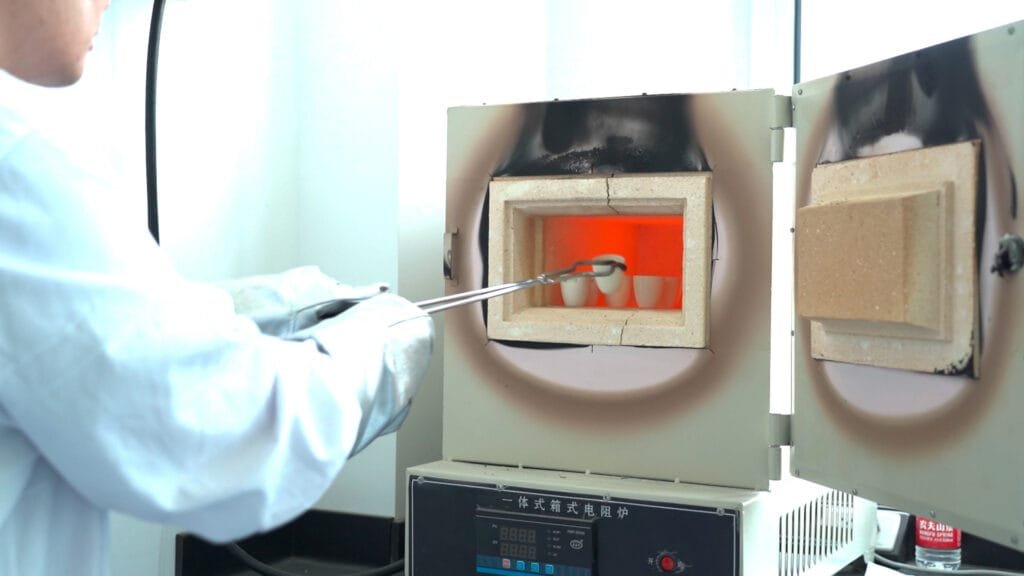
Kaip pelenų kiekis of HPMC represents the level of inorganic impurities present in the sample. High ash content can compromise the quality and stability of the final product, affecting the adhesive’s performance.
Testavimo metodika:
To measure ash content, the sample is subjected to high-temperature combustion (600-800°C), leaving behind an inorganic residue. The percentage of ash is calculated based on the weight of the remaining residue. Ideally, ash content should be kept below 5% to ensure high purity and product stability. In some regions, such as Europe, the ash content may need to be below 3% to meet local standards.
6. pH Value: Ensuring Product Stability
Bandymo tikslas:
Kaip pH of an HPMC solution influences the stability and behavior of tile adhesives, particularly during curing. An incorrect pH can lead to premature gelling or weakening of adhesive bonds.

Testavimo metodika:
The pH value is measured using a pH meter after dissolving HPMC in water. The pH should typically fall between 6 and 8, ensuring that the adhesive remains stable and works effectively with the tiles. For example, a pH of 7 is often ideal for neutral applications.
7. Hydration Time: Improving Manufacturing Efficiency
Bandymo tikslas:
Hydration time refers to the time it takes for HPMC to fully dissolve and disperse in water. Fast hydration is crucial for manufacturing efficiency, as it ensures quicker blending and formulation of tile adhesives.

Testavimo metodika:
Mix the HPMC sample with water and observe the time required for full hydration and uniform dispersion. The ideal hydration time should be short (typically less than 10 minutes) to improve the overall speed of the mixing process, ensuring efficient production.
8. Thermal Stability: Ensuring Long-Term Performance
Bandymo tikslas:
Tile adhesives may be exposed to varying temperatures during both application and curing. Thermal stability of HPMC ensures that it maintains its properties under heat stress and does not degrade or lose viscosity.

Testavimo metodika:
Expose the HPMC sample to high temperatures in a controlled environment and observe any changes in its klampumas or physical appearance. High-quality HPMC should exhibit minimal degradation at temperatures commonly encountered during tile adhesive application.
9. Chemical Composition Analysis: Verifying Raw Material Integrity
Bandymo tikslas:
Understanding the chemical composition of HPMC ensures that it meets the specific functional requirements of tile adhesives, confirming the consistency of the material’s quality and its suitability for the intended application.

Testavimo metodika:
Advanced techniques such as infrared spectroscopy (FTIR) or gas chromatography (GC) can be used to analyze the chemical structure of HPMC. FTIR is particularly useful for identifying functional groups, while GC can detect volatile impurities. These methods provide insights into the material’s purity, functional groups, and potential contaminants.
Ensure Quality with Comprehensive HPMC Testing
For tile adhesive Gamintojai, the quality of raw materials directly impacts the performance and durability of the final product. Testing HPMC samples on key parameters—viscosity, moisture content, particle size, solubility, ash content, pH value, hydration time, thermal stability, and chemical composition—provides critical data to ensure the additive meets formulation specifications.
By thoroughly testing HPMC, manufacturers can optimize their production processes, reduce variability, and improve the consistency and quality of tile adhesives. These tests not only enhance product performance but also help maintain customer satisfaction by ensuring reliable and high-quality adhesives in every batch.
By following these rigorous testing protocols, manufacturers can confidently use HPMC in tile adhesives, knowing they are enhancing both product quality and performance.
Landercoll: Offering Comprehensive HPMC Testing and Custom Solutions
Supporting Manufacturers with Quality Assurance
Prie Landercoll, we understand the importance of ensuring that every ingredient in your tile adhesive formulations meets the highest standards. That’s why we go beyond just providing HPMC; we offer in-depth testing services to ensure that our products deliver consistent performance and meet your specific formulation requirements. Our state-of-the-art laboratory testing facilities are equipped to carry out all the essential tests outlined above, from viscosity to thermal stability.
Tailored Testing to Meet Your Needs
Our commitment to quality extends to personalized support throughout the production process. Before any shipment leaves our facility, we conduct thorough testing on HPMC samples to ensure they meet the specifications and performance standards you require. Whether you need customized viscosity, solubility adjustments, or other formulation considerations, our laboratory can modify the product according to your needs, helping you achieve the desired results in your tile adhesive production.
Why Choose Landercoll for HPMC?
- Comprehensive Testing:We test HPMC samples for viscosity, moisture content, solubility, and more to ensure they meet industry standards.
- Tailored Solutions:Our lab adjusts HPMC to match your specific application requirements, ensuring optimal adhesive performance.
- Reliable Results:With rigorous pre-shipment testing, you can be confident that the HPMC you receive will meet your exact needs, every time.
- Expert Guidance:Our technical team is available to support you with formulation adjustments, helping you achieve superior tile adhesive products.
Quality You Can Trust in Tile Adhesive Production
Landercoll’s comprehensive testing services provide an added layer of assurance that your tile adhesive formulations will perform as expected. By working closely with our laboratory, you gain access to custom solutions that help you meet customer demands and ensure product quality at every stage of production. With Landercoll’s HPMC, you are not only receiving top-tier materials, but also the expertise and support to create exceptional tile adhesives.


