Keunggulan Ether Selulosa — Dipercaya oleh lebih dari 1000 Perusahaan di Seluruh Dunia Dapatkan Sampel Gratis
Larutan CMC, HPMC, dan eter selulosa terpilih untuk kontrol viskositas, stabilitas suspensi, manajemen air, dukungan emulsi, konsistensi tekstur, dan stabilitas masa simpan dalam sistem pangan.
LANDERCOLL selulosa eter food grade membantu produsen makanan meningkatkan stabilitas formulasi, mengurangi pemisahan, mempertahankan body produk, menstabilkan partikel, mengontrol migrasi air, serta mendukung tekstur yang konsisten pada minuman, produk susu, saus, dressing, produk roti, makanan beku, dan sistem makanan olahan.
 Minuman
 Susu
Susu Saus
Saus Beku
BekuEter selulosa food-grade untuk kontrol viskositas, stabilitas suspensi, manajemen air, dukungan emulsi, konsistensi tekstur, dan stabilitas umur simpan di seluruh minuman, produk susu, saus, roti, makanan beku, isian, makanan nabati, dan sistem makanan olahan.
CMC food grade adalah eter selulosa yang paling banyak digunakan untuk stabilisasi makanan — memberikan kontrol viskositas, stabilitas suspensi, manajemen air, pengurangan sineresis, dan stabilisasi tekstur di seluruh minuman, produk susu, saus, dressing, dan makanan olahan. HPMC sangat berharga dalam sistem roti, bebas gluten, beku, rendah lemak, dan nabati di mana retensi kelembaban dan dukungan struktural diperlukan. Dosis awal yang umum berkisar dari 0.05%–2.0%, depending on food category and stability function.

 Viskositas · Suspensi · Stabilitas
Stabilisasi makanan sangat penting untuk mempertahankan penampilan produk, tekstur, viskositas, rasa di mulut, dan konsistensi selama pemrosesan, pengemasan, transportasi, penyimpanan, dan konsumsi. Banyak sistem makanan mengandung air, minyak, protein, pati, partikel, mineral, serat, dan perasa yang harus tetap terdistribusi secara seragam dan stabil secara fisik — dari jalur produksi hingga ke meja konsumen.
LANDERCOLL menyediakan food-grade yang sesuai CMC, HPMC, dan grade eter selulosa terpilih untuk aplikasi stabilisasi makanan. Eter selulosa ini membantu meningkatkan struktur fase air, viskositas, stabilitas suspensi, retensi kelembaban, kontrol tekstur, dan konsistensi pemrosesan di berbagai kategori makanan.
Grade eter selulosa yang sesuai dapat membantu mengurangi pemisahan air, sedimentasi, pemisahan fase, sineresis, perubahan viskositas, kerusakan tekstur, serta ketidakstabilan yang disebabkan oleh pemanasan, pendinginan, pembekuan, pencairan, geseran, atau penyimpanan yang diperpanjang. Kinerja akhir tergantung pada jenis produk, pH, kadar air, kadar garam, kandungan gula, kadar lemak, sistem protein, sistem pati, metode pemrosesan, dan kondisi penyimpanan.
Butuh panduan selulosa eter untuk tantangan stabilitas pangan?
Minta Rekomendasi ProdukStabilisasi pangan yang efektif mengatasi tantangan kualitas fisik yang memengaruhi penampilan, tekstur, dan konsistensi selama masa simpan produk yang diinginkan — relevan untuk hampir semua kategori pangan dan metode pemrosesan.
| Tantangan Stabilitas | Deskripsi | Kategori Pangan yang Terpengaruh |
|---|---|---|
| Sedimentasi | Pengendapan partikel, pulp, kakao, atau mineral | Minuman, saus, minuman susu |
| Pemisahan air | Air bebas yang bermigrasi dari matriks pangan | Produk susu, saus, dressing, isian |
| Pemisahan minyak | Fase minyak terpisah dari fase air | Dressing, saus, produk emulsi |
| Sineresis | Whey atau cairan merembes dari matriks gel atau susu | Yogurt, keju, gel, isian |
| Pergeseran viskositas | Perubahan ketebalan produk yang tidak terkendali | Saus, minuman, produk susu, isian |
| Kerusakan tekstur | Hilangnya kekentalan, kekencangan, atau integritas struktural | Produk roti, makanan beku, produk susu, isian |
| Kerusakan beku-cair | Pertumbuhan kristal es dan kerusakan struktural | Makanan beku, makanan penutup beku |
| Kehilangan kelembapan | Mengering selama penyimpanan atau pemanggangan | Roti, isian, makanan olahan |
| Pemisahan fase | Pemisahan komponen yang tidak dapat bercampur | Saus, minuman, produk susu |
Banyak produk pangan merupakan sistem multi-fase yang kompleks dan secara inheren rentan terhadap ketidakstabilan fisik. Eter selulosa kelas pangan membantu mengelola mekanisme ketidakstabilan ini dengan membangun viskositas fase air, mengikat air, mendukung integritas struktural, menstabilkan partikel tersuspensi, dan menjaga konsistensi tekstur selama proses produksi dan penyimpanan.
LANDERCOLL menyediakan CMC, HPMC, dan grade eter selulosa tertentu untuk stabilisasi makanan di berbagai kategori makanan. Semua pemilihan grade harus dikonfirmasi melalui uji coba formulasi, pengujian stabilitas, evaluasi sensorik, dan kualifikasi keamanan pangan pelanggan.
Karboksimetil selulosa food-grade untuk viskositas & manajemen air
CMC adalah eter selulosa yang paling banyak digunakan untuk stabilisasi makanan. Ini memberikan pembentukan viskositas yang andal, kapasitas pengikatan air, kontribusi tekstur yang halus, dan dukungan suspensi di berbagai minuman, minuman susu, saus, dressing, makanan penutup beku, isian, dan sistem makanan olahan — efektif pada dosis rendah dengan kontribusi fungsional yang bersih.

Hidroksipropil metil selulosa food-grade untuk retensi kelembapan & struktur
HPMC dapat digunakan dalam sistem makanan tertentu di mana retensi air, dukungan struktur, perilaku termal, atau perbaikan tekstur diperlukan — terutama berguna dalam aplikasi makanan panggang, bebas gluten, beku, rendah lemak, nabati, dan olahan di mana karakter non-ionik dan gelasi termal memberikan keunggulan stabilisasi yang khas.
Referensi pemilihan praktis di seluruh kategori makanan utama. Pemilihan produk akhir harus dikonfirmasi melalui uji coba formulasi.
Suspensi, mouthfeel, sedimentasi berkurang
Stabilitas tekstur, manajemen air, body yang halus
Viskositas, daya lekat, suspensi, pemisahan berkurang
Stabilitas beku-cair, kontrol air, tekstur
Retensi kelembapan, kelembutan, dukungan struktur
Dukungan struktur, retensi gas, stabilitas remah
Viskositas, kemampuan menyebar, kontrol air
Rasa di mulut, tubuh, dukungan tekstur
Suspensi, manajemen air, konsistensi tekstur
Stabilitas, tubuh, konsistensi pemrosesan
Sistem stabilisasi pangan bervariasi berdasarkan kategori produk, pH, kandungan padatan, metode pemrosesan, dan target masa simpan. Eter selulosa merupakan salah satu komponen dalam strategi formulasi stabilisasi yang lengkap.
| Komponen | Function in Food Stabilization |
|---|---|
| Air | Fase utama; memengaruhi hidrasi, viskositas, dan perilaku pemisahan |
| Protein | Supports structure, nutrition, emulsion, or gel behavior |
| Lemak / Minyak | Provides mouthfeel, richness, and emulsion structure |
| Starch / Flour | Provides thickness, gel structure, and body |
| Gula / Pemanis | Adds solids, sweetness, and water activity influence |
| Salt / Minerals | Flavor, ionic strength, nutrition, and stability influence |
| Emulsifiers | Support oil-in-water or fat dispersion systems |
| Stabilisator / Hidrokoloid | Improve viscosity, water binding, texture, and shelf-life stability |
| Selulosa Eter (CMC / HPMC) | Viscosity, suspension, water management, texture stability |
| Fibers / Pulp / Particles | Add texture, nutrition, or appearance; may require suspension support |
| Acids / pH Modifiers | Adjust pH, flavor, preservation, and system stability |
| Rasa / Warna | Provide sensory identity |
| Pengawet | Support microbiological shelf life where applicable |
| Other Functional Ingredients | Adjust nutrition, structure, processing, or stability |
Cellulose ether dosage for food stabilization depends on product type, target viscosity, water level, solids content, pH, processing conditions, and desired stability performance.
These dosage ranges are starting references only. Final dosage should be confirmed through viscosity testing, suspension testing, processing trials, freeze-thaw evaluation where applicable, sensory evaluation, storage stability testing, and customer validation.
Cellulose ether helps adjust and stabilize viscosity in liquids, semi-solids, sauces, fillings, batters, beverages, and dairy-style systems — the foundation of effective food stabilization in most liquid and semi-liquid categories.
Products containing cocoa, fruit pulp, spices, herbs, fibers, minerals, proteins, or insoluble particles require effective suspension support. CMC helps reduce settling by increasing water-phase viscosity and supporting the structural environment around suspended particles.
Cellulose ether binds and manages water — reducing water separation, syneresis, and moisture migration critical in yogurt, cheese, sauces, fillings, and frozen food systems.
In sauces, dressings, dairy-style systems, and plant-based products, cellulose ether supports water-phase structure and helps improve emulsion stability when used with suitable emulsifiers — reducing oil droplet coalescence and phase separation.
Cellulose ether helps maintain consistent body, smoothness, spreadability, pourability, spoonability, and eating texture during processing and storage — reducing degradation from moisture migration, protein aggregation, or starch retrogradation.
In frozen foods, CMC and selected HPMC grades support water control and texture stability through freezing, storage, thawing, and reheating — binding water and limiting ice crystal growth.
In bakery products, frozen dough, gluten-free foods, and fillings, cellulose ether — particularly HPMC — helps retain moisture and support softer, more stable texture during shelf life.
Suitable cellulose ether grades help maintain predictable behavior during mixing, heating, cooling, homogenization, filling, baking, and freezing — reducing batch-to-batch variation across production runs.
Cellulose ether can help improve many food stability problems, but final product quality depends on the complete formulation, processing conditions, packaging system, storage environment, regulatory requirements, and sensory validation.
Heavy particles, low viscosity, weak stabilizer system.
Supports suspension and uniform particle distribution.
Poor water binding, weak structure, storage stress.
Supports water management and reduces syneresis.
Emulsi lemah, keseimbangan pengemulsi buruk, viskositas fase air rendah.
Mendukung struktur fase air dan stabilitas emulsi.
Low solids, insufficient stabilizer, high dilution.
Meningkatkan viskositas dan kekentalan produk.
Ice crystal growth, water migration, weak stabilizer.
Supports freeze-thaw texture stability.
Moisture loss, weak water retention, process stress.
Supports moisture retention in bakery and fillings.
Dosis berlebihan atau tingkat yang tidak sesuai.
Optimize cellulose ether type, grade, and dosage.
pH, salt, heat, shear, or hydration variation.
Review grade compatibility and processing conditions.
Poor dispersion, raw material changes, process variation.
Supports predictable viscosity when properly hydrated.
Understanding the key variables that influence cellulose ether behavior across food systems is essential for designing effective stabilization solutions.
Beverages, dairy, sauces, bakery, and frozen foods all require different stabilization profiles.
Acidic, neutral, fermented, and heat-processed systems affect CMC hydration, viscosity, and stability.
High-water systems need stronger viscosity and water management support.
Electrolytes and minerals can influence hydration, viscosity, and stability.
Dissolved solids affect water activity, viscosity, and storage behavior.
Fat level affects emulsion stability, mouthfeel, and texture support requirements.
Dairy, plant, and egg proteins interact differently with cellulose ether.
Interactions with other thickeners affect final texture — test in complete formulation.
Heating, cooling, freezing, shear, homogenization, and filling affect stabilization performance.
Ambient, refrigerated, frozen, or temperature-cycling storage affects viscosity, separation, and texture.
Choosing cellulose ether for food stabilization requires matching the product type, stability challenge, processing method, storage conditions, and food-grade requirements. The following questions guide early-stage selection.
What food product are you producing and what stability problem needs to be solved?
Is the primary challenge sedimentation, water separation, oil separation, texture breakdown, viscosity drift, or moisture loss?
Is the product liquid, semi-solid, baked, frozen, filled, fermented, or heat-processed?
What pH range, water level, salt level, sugar level, fat level, and solids level are involved?
Does the product contain proteins, starches, fibers, pulp, cocoa, spices, or suspended particles?
Does the system require emulsion stability support, suspension stability, or both?
Will the product be pasteurized, UHT processed, baked, frozen, thawed, or reheated?
What processing steps are involved — mixing, homogenization, filling, cooling, freezing?
What target texture, body, and sensory profile are required throughout shelf life?
What food-grade documentation is required for the target market?
LANDERCOLL can help review your food stabilization application and recommend suitable food-grade CMC or HPMC grade options for evaluation.
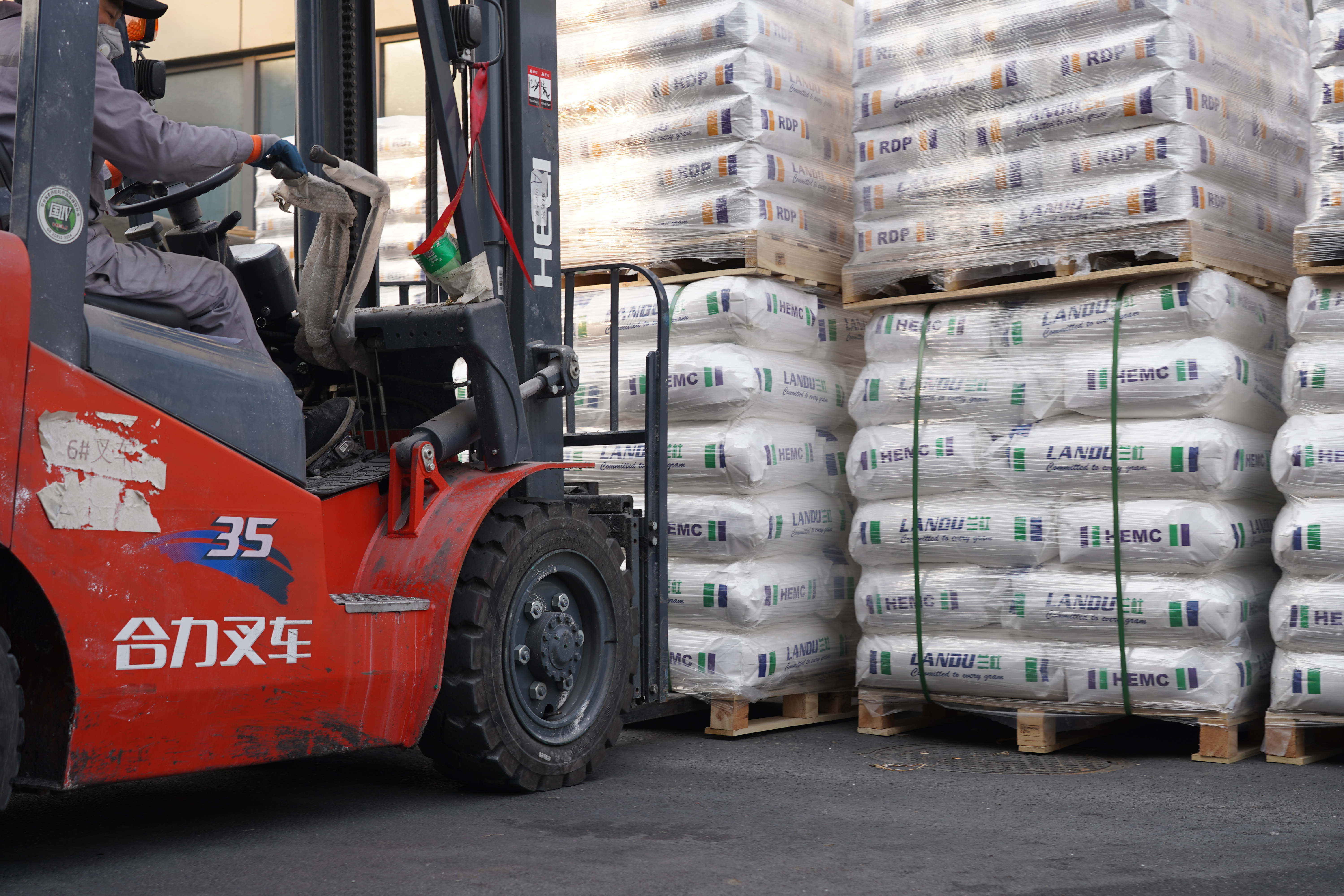
Minta Rekomendasi TingkatanLANDERCOLL food-grade cellulose ether for food stabilization applications is supplied in packaging suitable for protected transportation, storage, and food production handling.
| Parameter | Reference |
|---|---|
| Standard Pack Size | 25 kg per bag or drum (depending on grade) |
| Inner Liner | Moisture-protective inner liner |
| Palletized Packaging | Available upon request |
| Custom Packaging | Available for qualified supply cooperation |
 25 kg · Sealed · Food Grade
If your food product has sedimentation, water separation, oil separation, thin texture, freeze-thaw breakdown, dry texture, gummy texture, viscosity drift, or inconsistent batches, the cellulose ether type, grade, and dosage — and the broader formulation approach — may need to be reviewed.
LANDERCOLL can help evaluate suitable food-grade CMC, HPMC, and selected cellulose ether options based on your product type, pH, water level, solids content, protein system, fat level, processing method, storage conditions, and target texture.
Food-grade CMC and HPMC grade selection for your specific food stabilization application
Viscosity direction recommendation based on product type and target stability
Suspension stability support for particle-containing beverages, sauces, and dairy systems
Water management and syneresis reduction support for dairy, fillings, and sauce systems
Emulsion stability discussion for dressings, sauces, and plant-based food systems
Freeze-thaw stability discussion for frozen food applications
Texture and mouthfeel improvement for reduced-fat and specialty food systems
Documentation support including TDS, SDS, CoA, and food-grade compliance information
Sample and quotation communication for evaluation and commercial planning
LANDERCOLL provides comprehensive food-grade documentation to support food stabilization formulation testing, supplier approval, quality review, and regulatory assessment.
| Document | Availability |
|---|---|
| Lembar Data Teknis (TDS) | Available |
| Lembar Data Keselamatan (SDS) | Available |
| Certificate of Analysis (CoA) | Available |
| Spesifikasi Produk | Available |
| Food-Grade Statement | Where applicable |
| Allergen Statement | Where applicable |
| GMO Statement | Where applicable |
| Halal / Kosher Information | Where applicable |
| Heavy Metals Information | Where applicable |
| Microbiological Data | Where applicable |
| Informasi Kemasan dan Penyimpanan | Available |
| Export-Related Documents | Where applicable |
Food-grade CMC and HPMC are the primary cellulose ethers used for food stabilization. CMC is widely used for viscosity control, suspension stability, water management, syneresis reduction, and texture stabilization across beverages, dairy products, sauces, dressings, frozen foods, and processed food systems. HPMC is especially valuable in bakery, gluten-free, frozen food, reduced-fat, and plant-based applications where moisture retention, thermal gelation behavior, and structural support are required.
CMC helps improve viscosity, product body, suspension stability, water management, reduced sedimentation, and smooth texture in selected food and beverage systems. It is effective at low dosage levels and provides a clean functional contribution without significantly altering the flavor or appearance of the food product.
HPMC supports moisture retention, structure, texture stability, and selected thermal behavior in bakery, gluten-free, frozen, reduced-fat, and processed food systems. Its non-ionic character makes it less sensitive to salt and acid interactions compared to CMC, which can be advantageous in certain food stabilization applications.
Yes. Cellulose ether can help improve water management and reduce syneresis or water separation in selected formulations by binding water within the food matrix and supporting the structural integrity of the food system. Final results depend on the complete formulation, pH, ionic strength, processing conditions, and storage environment.
Yes. Food-grade CMC can help suspend pulp, cocoa, spices, herbs, fibers, minerals, and other particles by improving water-phase viscosity and structure — reducing sedimentation and maintaining more uniform ingredient distribution throughout the product’s shelf life.
Cellulose ether can support water-phase viscosity and structure in emulsion systems, helping to slow oil droplet coalescence and phase separation. However, final emulsion stability also depends on emulsifier selection, oil level, homogenization conditions, pH, and the complete formulation design.
Yes. CMC and selected HPMC grades can support water control and texture stability in selected frozen food systems by binding water and limiting ice crystal growth. Final freeze-thaw performance depends on freezing rate, storage temperature, solids balance, and the complete formulation design.
Typical starting reference ranges are 0.05%–2.0%, depending on food category, target stability function, cellulose ether grade, water level, and processing method. Gluten-free bakery systems may require higher levels (0.5%–2.0%), while beverages typically use lower levels (0.05%–0.6%). Final dosage should always be confirmed through product trials and sensory evaluation.
No. Food applications require suitable food-grade cellulose ether with appropriate food safety documentation, regulatory compliance information, and customer qualification. Industrial-grade materials do not meet the purity, safety, and documentation requirements for food use.
Start with product type, primary stability challenge, pH, water level, salt and sugar level, fat content, protein system, starch system, processing method, storage conditions, target sensory profile, and food-grade documentation needs. LANDERCOLL can help recommend suitable CMC or HPMC grade directions for evaluation based on your specific food stabilization application.
Whether you produce minuman, dairy products, sauces and dressings, bakery products, frozen foods, fillings and toppings, plant-based foods, reduced-fat products, atau processed food systems — LANDERCOLL can help you choose suitable food-grade CMC or HPMC for viscosity control, suspension stability, water management, texture consistency, and shelf-life stability support.
Our food-grade cellulose ether portfolio is supported by full technical documentation, food safety compliance information, and dedicated application support — helping your food development and quality team achieve more consistent product stability from formulation trial to commercial production and throughout the full supply chain.
Food-Grade Cellulose Ethers for Food Stabilization, Texture Control, Fat Reduction, Bakery, Dairy, Sauces & Dressings, Frozen Foods, and Beverage Systems.
