
A cellulóz-éterek vízoldható polimerek, amelyek cellulózból, a legelterjedtebb természetes polimerből származnak. A cellulóz-éterek vezető gyártójaként a LANDERCOLL a Hidroxipropil-metil-cellulóz (HPMC), Metil-hidroxietil-cellulóz (MHEC) és Hidroxietil-cellulóz (HEC) előállítására specializálódott.

Magas teljesítményű nemionos cellulóz-éterként a Hidroxipropil-metil-cellulóz (HPMC) kiváló diszperziós, emulgeáló, sűrítő, kötő, vízmegtartó és géltartó tulajdonságokkal rendelkezik.
A hidroxi-etil-metil-cellulóz (HEMC) egy sokoldalú cellulóz-éter, amely kiváló oldhatósággal, sűrítőképességgel, nedvességmegtartó tulajdonságokkal és filmképző képességgel rendelkezik. Magasabb gélesedési hőmérséklete miatt különösen hasznos meleg környezetben.
A hidroxi-etil-cellulóz (HEC) széles körű szubsztitúciós fokkal, oldhatósággal és viszkozitással rendelkezik, valamint jó termikus stabilitással (140°C alatt). Nemionos polimerként a HEC nem lép kölcsönhatásba ionokkal, és jó kompatibilitással bír, ezért széles körben alkalmazzák bevonatokban és olajfúrásban.
Karboximetil-cellulóz (CMC) egy ionos cellulóz-éter. A finomítatlan CMC közvetlenül használható mosószerekben, olajfúrásban és papírgyártásban, míg a nagy tisztaságú CMC-t általában élelmiszer-adalékként alkalmazzák.
HPMC (Hydroxypropyl Methyl Cellulose) is produced by the reaction of alkalized cellulose with two etherifying agents: chloromethane and propylene oxide. Its properties and performance are affected by the content and ratio of methoxy and hydroxypropoxy groups.

LANDERCOLL HPMC (Hydroxypropyl Methyl Cellulose) is a white, odorless, and tasteless powder with different solubility properties in cold and hot water. HPMC has excellent water retention and thickening properties, making it widely used in the construction industry.
Also, it does not react with metal salts or ionic compounds, allowing it to be effectively utilized in pharmaceuticals without affecting the effectiveness of the medicine.
Using advanced equipment in production is crucial for optimal product quality. LANDERCOLL has implemented both horizontal and vertical reactors to facilitate thorough mixing, sufficient contact, and efficient heat transfer throughout the manufacturing process. This investment in technology enhances the consistency and performance of our products.


Hydroxyethyl Methyl Cellulose (HEMC) is produced by introducing epoxy ethyl substituents (MS0.3 ~ 0.4) into Methyl Cellulose (MC). It exhibits better salt resistance and higher gel temperature than HPMC.
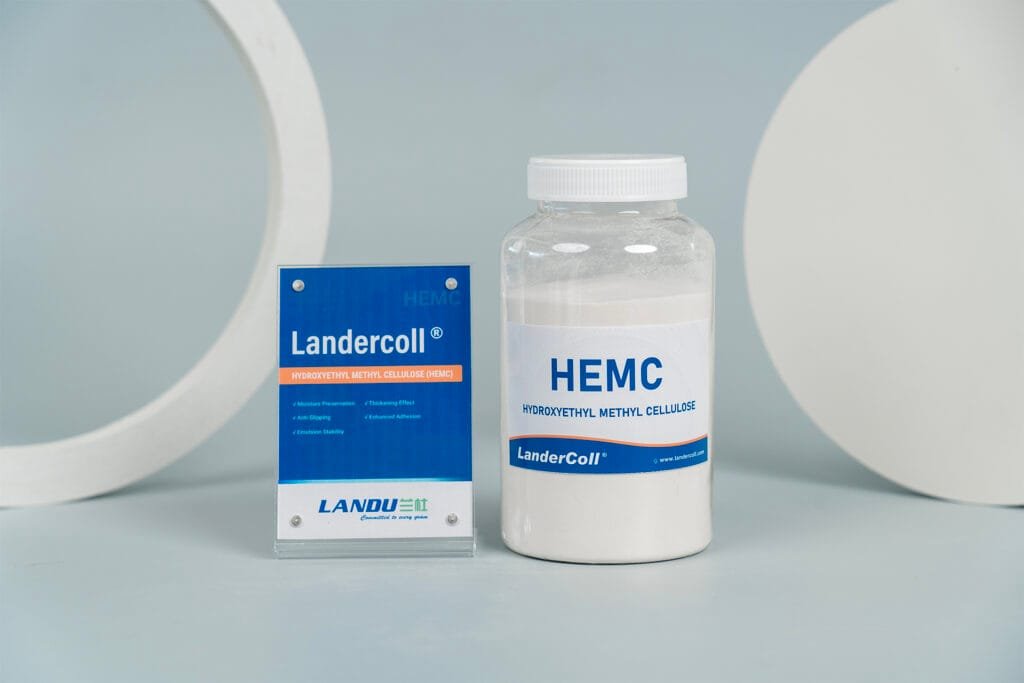
Hydroxyethyl Methyl Cellulose (HEMC) is a white, odorless, tasteless, and non-toxic powder that dissolves in cold water to form a transparent solution. Due to its surface-active properties, it can serve as a colloidal protective agent, emulsifier, and dispersant.
Our LANDERCOLL HEMC solutions exhibit good hydrophilicity and act as an effective water-retaining agent. They also possess excellent mold resistance and maintain good viscosity and anti-mold properties during long-term storage. They are highly effective additives used to improve the performance of building materials.
LANDERCOLL is fully aware that product performance can be affected by the amount of materials and the concentration ratio of solvents. Therefore, precise measurement is crucial for Cellulose Ether production. LANDERCOLL utilizes high-precision instruments for product testing and research and development to achieve optimal results.


The industrial production of HEC(Hydroxyethyl Cellulose) is mostly achieved by reacting alkali cellulose with ethylene oxide in a slurry state, utilizing 1, 2 – dimethoxyethane as the preferred dispersing medium.
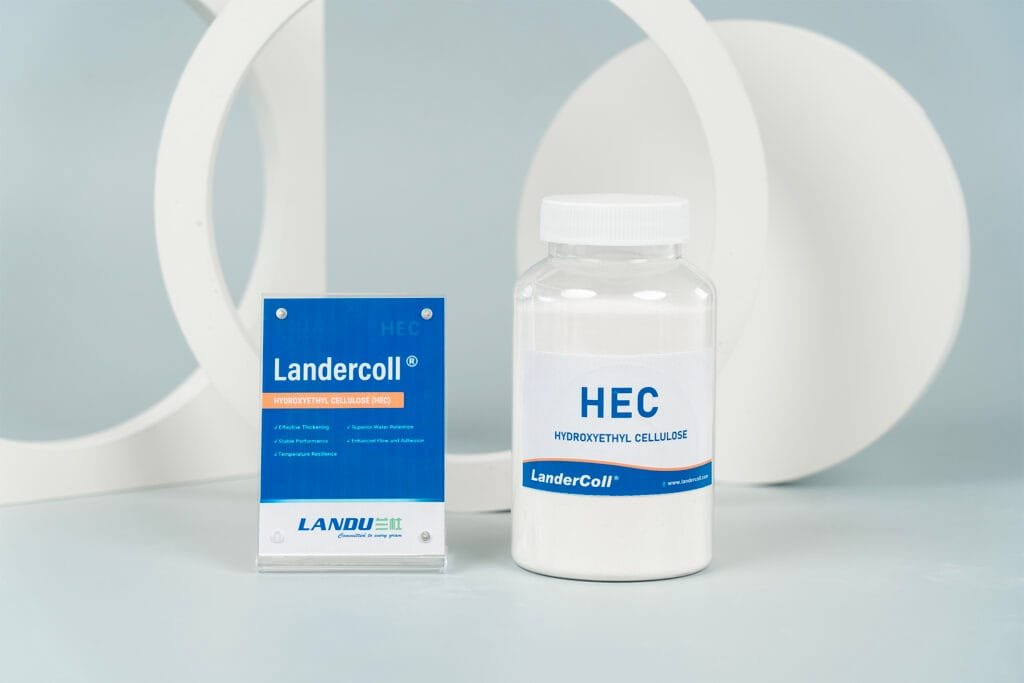
HEC (Hydroxyethyl Cellulose) is a white or slightly yellow, odorless, and tasteless powder that flows easily, and it is soluble in both hot and cold water. Surface-treated HEC disperses in cold water without coagulating.
HEC can uniformly disperse and stabilize materials such as pigments and fillers while providing thickening effects. It can be used in latex paints, significantly enhancing viscosity and improving leveling properties. In the oil drilling industry, HEC can be added to water-based fracturing fluids to address interlayer conflicts caused by differences in permeability among various oil layers.
To support sustainable manufacturing practices and minimize environmental impact, LANDERCOLL has introduced MVR wastewater treatment technology, which could minimize environmental impact by recovering water and reducing waste generation.
