Άριστη Πηκτίνη Ήθρε — Αξιόπιστη από 1000+ Επιχειρήσεις σε όλο τον κόσμο Αποκτήστε δωρεάν δείγμα


Διαλύματα CMC και επιλεγμένων αιθέρων κυτταρίνης για πλαστικότητα, αντοχή σε άψητη κατάσταση, συγκράτηση νερού, σταθερότητα αιώρησης και συνέπεια επεξεργασίας σε συνθέσεις σώματος κεραμικών πλακιδίων.
Το LANDERCOLL αιθέρας κυτταρίνης βοηθά τους κατασκευαστές κεραμικών πλακιδίων να βελτιώσουν την επεξεργασιμότητα του σώματος, την απόδοση διαμόρφωσης, την αιώρηση σωματιδίων, την αντοχή σε ωμή κατάσταση και τη σταθερότητα παραγωγής στην επεξεργασία σώματος κεραμικών πλακιδίων.
Από συμπιεσμένα σώματα πλακιδίων και συστήματα πορσελάνης μέχρι πλακίδια τοίχου, πλακίδια δαπέδου, κεραμική ιλύ και παραγωγή μεγάλων διαστάσεων — η κατάλληλη ποιότητα αιθέρα κυτταρίνης υποστηρίζει σταθερή διαμόρφωση, χειρισμό και απόδοση πριν την όπτηση σε κάθε παρτίδα.
— CMC · HPMC · HEC · Πράσινη Αντοχή · Πλαστικότητα · Κατακράτηση Νερού · Σταθερότητα Αιωρήματος · Σώμα Κεραμικού Πλακιδίου · Βιομηχανικός Αιθέρας Κυτταρίνης
 Πιεσμένο Σώμα
 Πορσελάνη
 Πλακάκι τοίχου
 Μεγάλο Φορμά


 Σύνδεση · Πράσινη Αντοχή · Πλαστικότητα
Οι συνθέσεις σωμάτων κεραμικών πλακιδίων απαιτούν κάτι περισσότερο από ένα σταθερό μείγμα ορυκτών. Οι ομάδες παραγωγής χρειάζονται αξιόπιστη διασπορά σωματιδίων, ελεγχόμενη πλαστικότητα, προβλέψιμη συμπεριφορά διαμόρφωσης, επαρκή αντοχή σε άψητη κατάσταση για χειρισμό και συνεπή επεξεργασία από την άλεση έως την προετοιμασία ψησίματος. Όταν κάποια από αυτές τις μεταβλητές αποκλίνει, τα ποσοστά ελαττωμάτων αυξάνονται, η απόδοση μειώνεται και η ποιότητα από παρτίδα σε παρτίδα γίνεται δύσκολο να ελεγχθεί.
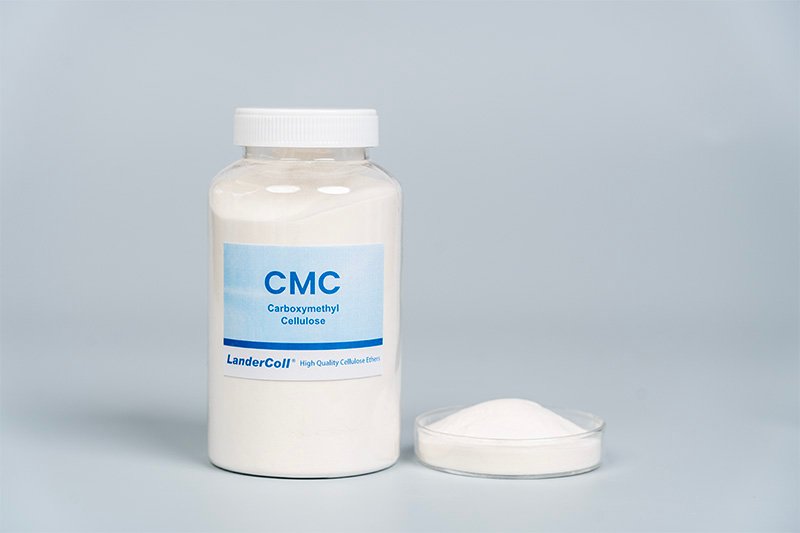
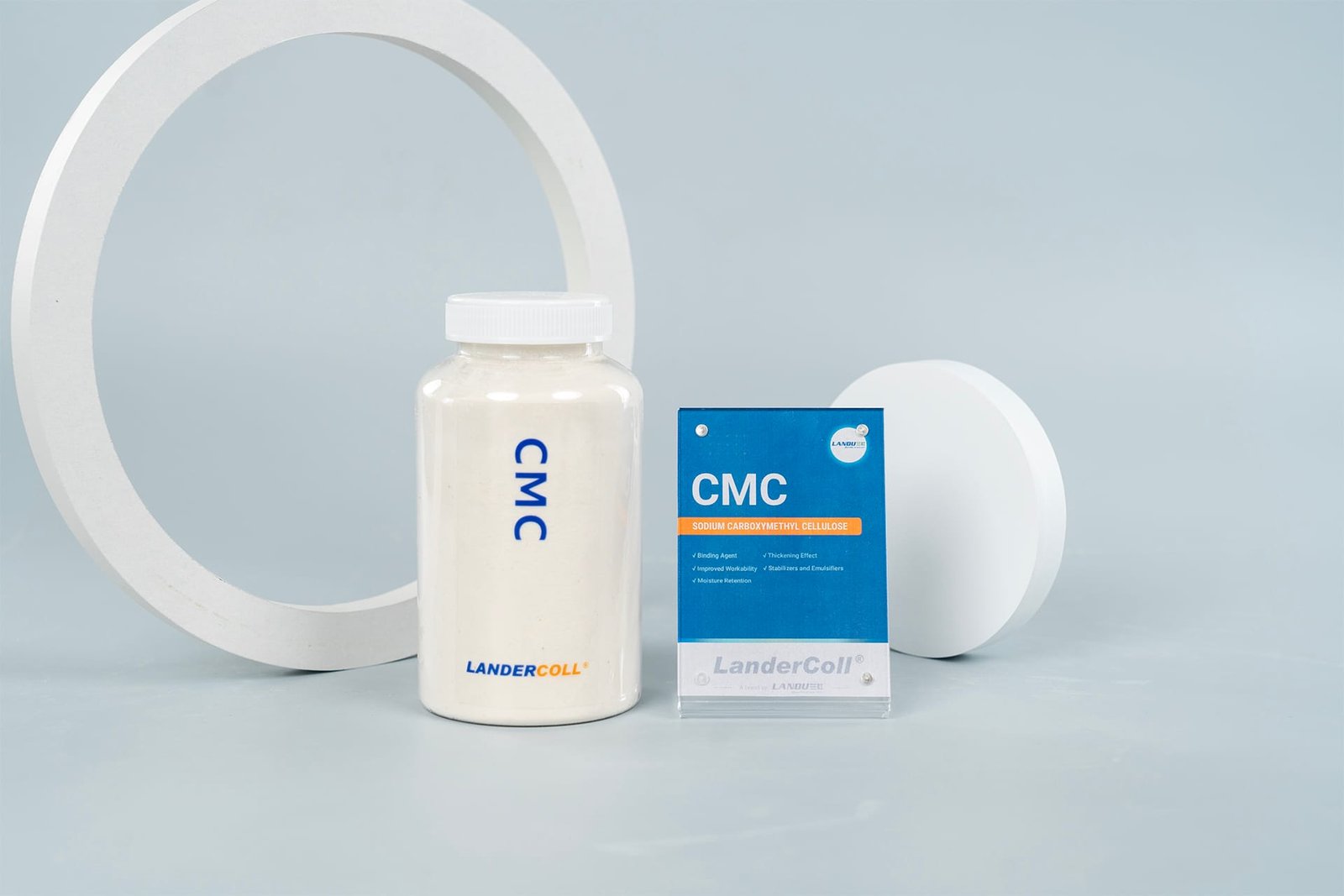
LANDERCOLL προμηθεύει προϊόντα αιθέρα κυτταρίνης σχεδιασμένα για εφαρμογές σε σώματα κεραμικών πλακιδίων — με CMC (Καρβοξυμεθυλοκυτταρίνη) ως κύρια ποιότητα για συγκόλληση, υποστήριξη αιώρησης, συγκράτηση νερού, βελτίωση πλαστικότητας και αντοχή ωμού σώματος. Επιλεγμένες ποιότητες HPMC και HEC είναι επίσης διαθέσιμες για προσαρμοσμένα κεραμικά συστήματα όπου απαιτείται ρύθμιση ρεολογίας, σταθερότητα επεξεργασίας ή βελτιωμένη συνοχή σώματος.
Μια σωστά επιλεγμένη ποιότητα αιθέρα κυτταρίνης βελτιώνει τη σταθερότητα του κεραμικού πολτού, τη συνοχή της μάζας, τον χειρισμό του ξηρού σώματος και τη συνολική αξιοπιστία παραγωγής — αποτελέσματα που ενδιαφέρουν άμεσα τους διευθυντές εργοστασίων, τους μηχανικούς σύνθεσης και τις ομάδες προμηθειών που αξιολογούν προμηθευτές πρόσθετων.
Ceramic tile body systems contain mineral particles that must remain uniformly dispersed and processable from mixing through pre-firing handling. Without adequate binding and suspension support, ceramic bodies frequently exhibit poor plasticity, weak green strength, slurry settling, uneven moisture distribution, cracking during drying, and elevated defect rates.
LANDERCOLL offers a focused cellulose ether portfolio for ceramic tile body applications. Product selection depends on body type, forming method, mineral system, and specific performance targets.

Binding, plasticity, water retention, suspension stability, and green strength support
CMC is the most widely used cellulose ether in ceramic tile body formulations worldwide. It helps maintain uniform distribution of mineral particles and supports stable processing during body preparation and forming — particularly effective in pressed tile body, wall tile, floor tile, and porcelain systems.

Specialty rheology control, water retention, and processing adjustment
HPMC may be considered in selected ceramic body systems where water retention, rheology modification, or customized processing behavior is required. Its use should always be validated through formulation testing based on mineral composition, solids content, and forming method.

Non-ionic viscosity control and suspension support in water-based ceramic systems
HEC may be used in selected ceramic slurry or specialty processing systems where viscosity control and suspension support are needed. Because HEC is non-ionic, it is generally less sensitive to electrolyte interference — useful in systems with variable pH or soluble salt content.
The tile body governs many critical processing characteristics: plasticity, shaping behavior, green strength, drying stability, dimensional control, and firing performance. Cellulose ether functions as a targeted functional additive supporting binding, water retention, suspension stability, and processing consistency.
| Συστατικό | Function in Ceramic Tile Body |
|---|---|
| Clay | Provides plasticity and ceramic structure |
| Feldspar | Supports fluxing during firing |
| Quartz / Silica | Supports dimensional stability and body structure |
| Kaolin | Improves whiteness, body quality, and forming behavior |
| Νερό | Processing medium for mixing and shaping |
| Αιθέρας κυτταρίνης | Binding, plasticity, water retention, suspension, and green strength support |
| Διασπαστικά μέσα | Improve particle dispersion and slurry flow |
| Binders | Support green strength and body cohesion |
| Deflocculants | Adjust slurry rheology in selected systems |
| Άλλα Πρόσθετα | Adjust processing, drying, firing, or product performance |
Different ceramic tile body systems require different cellulose ether performance profiles. The table below provides a practical selection reference for ceramic formulators and production engineers.
| Τύπος Εφαρμογής | Προτεινόμενη Κατεύθυνση | Κύριες Απαιτήσεις Απόδοσης |
|---|---|---|
| Pressed Ceramic Tile Body | CMC | Green strength, cohesion, forming consistency |
| Porcelain Tile Body | CMC / selected cellulose ether | Body strength, water retention, uniform processing |
| Wall Tile Body | CMC | Plasticity, handling strength, drying stability |
| Floor Tile Body | CMC | Green body strength, body cohesion, processing stability |
| Ceramic Slurry System | CMC / HEC | Suspension stability, viscosity control, dispersion support |
| High-Solids Ceramic Body | CMC / selected cellulose ether | Rheology balance, water retention, stable processing |
| Specialty Ceramic Body | CMC / HPMC | Customized rheology, cohesion, forming support |
| Large-Format Tile Body | CMC / selected grade | Green strength, dimensional control, handling support |
Dosage optimization is one of the most common questions from ceramic manufacturers evaluating cellulose ether suppliers. Actual dosage should be determined through formulation testing and production-scale validation.
These dosage ranges are starting references only. Final dosage should be confirmed through slurry viscosity testing, forming trials, green strength testing, drying evaluation, shrinkage observation, firing trials, and production-scale validation.
| Εφαρμογή | Τυπική Δοσολογία Αναφοράς |
|---|---|
| Pressed Ceramic Tile Body | 0.05% – 0.30% |
| Porcelain Tile Body | 0.05% – 0.35% |
| Wall Tile Body | 0.05% – 0.30% |
| Floor Tile Body | 0.05% – 0.30% |
| Ceramic Slurry System | 0.05% – 0.40% |
| High-Solids Ceramic Body | 0.08% – 0.40% |
| Specialty Ceramic Body | 0.10% – 0.50% |
| Large-Format Tile Body | 0.08% – 0.40% |
CMC improves internal body cohesion and supports better handling strength before firing. This is critical for reducing damage during forming, drying, transport on production lines, and pre-firing handling — particularly for large-format tiles where mechanical stress during handling is significant.
Ceramic bodies must maintain sufficient mechanical strength before entering the kiln. Cellulose ether supports green strength by helping bind mineral particles together in selected formulations, reducing breakage rates during the pre-firing production sequence.
Cellulose ether improves ceramic body plasticity and workability, supporting smoother forming and more stable shaping behavior. Improved plasticity is particularly important in extrusion and hand-forming processes where body deformability directly affects product quality.
Water distribution affects ceramic body processing and drying behavior. Cellulose ether helps retain water in the body system and supports more consistent processing by reducing premature drying and uneven moisture gradients that can cause warping or cracking.
Ceramic slurries and body mixtures require stable, uniform distribution of mineral particles. Cellulose ether supports suspension stability when properly matched with the full system — reducing settling tendency during storage, transport, and processing.
A suitable cellulose ether grade reduces batch variation and supports more consistent performance during mixing, milling, forming, drying, and handling — contributing to higher production yields and more predictable tile quality.
When ceramic tile body processing fails, the cellulose ether grade, dosage, or system compatibility is often the first variable to review. The guide below maps typical symptoms to likely causes and practical cellulose ether support strategies.
Insufficient binding or low cohesion between mineral particles before firing.
CMC supports binding and green strength — review grade selection and dosage level.
Mineral imbalance or weak body structure affecting forming behavior.
Improve workability and cohesion with a suitable CMC grade matched to the mineral system.
Poor suspension or uneven particle distribution in ceramic slurry systems.
Support suspension stability with CMC or selected HEC grades properly matched to the full system.
Drying stress, weak cohesion, or uneven moisture distribution across the body.
Support body cohesion and moisture balance through improved water retention and binding.
Unsuitable rheology or weak plasticity during pressing or extrusion.
Adjust cellulose ether grade and dosage to improve forming consistency and body workability.
Dispersant, solids, pH, or electrolyte interaction affecting additive performance.
Test compatible cellulose ether grade — HEC may be considered where electrolyte sensitivity is a concern.
Raw material variation or poor additive balance across production batches.
Improve processing stability and batch consistency through grade optimization and dosage control.
No cellulose ether grade performs optimally in isolation. Performance is always system-dependent — which is why LANDERCOLL recommends formulation-level testing rather than grade selection based on product category alone.
Clay, kaolin, feldspar, and quartz influence water demand, plasticity, and binding response.
Fine and coarse particles affect suspension stability, green strength, and rheology.
High-solids systems require careful viscosity and water retention control.
Water content affects plasticity, forming behavior, drying rate, and green strength.
Strongly influence slurry rheology, particle dispersion, and cellulose ether performance.
pH value and soluble salts affect viscosity response, hydration, and suspension behavior.
Pressing, extrusion, and casting require different body rheology and strength profiles.
Temperature, humidity, and firing schedule influence cracking, shrinkage, and final tile quality.
Choosing the right cellulose ether requires balancing binding, plasticity, green strength, water retention, suspension stability, forming behavior, drying performance, and production consistency.
LANDERCOLL can review your ceramic tile body formulation direction and recommend suitable CMC or selected cellulose ether grades for laboratory and production testing.
Pressed, porcelain, wall tile, floor tile, or large-format?
Dry pressing, extrusion, casting, or another process?
What mineral composition and particle size distribution are used?
What solids content and water level are required?
Is slurry suspension or dry body green strength the main target?
What dispersants or deflocculants are included?
What handling strength is required before firing?
Are cracking, settling, or forming problems occurring in production?
What drying and firing conditions are used?
What production consistency and reliability requirements apply?
Not sure which cellulose ether grade is most suitable for your ceramic tile body? LANDERCOLL can recommend a practical grade for laboratory evaluation.
Ζητήστε σύσταση για σώμα κεραμικού πλακιδίου
 Hygroscopic · Seal When Not in Use
LANDERCOLL provides product-related documents to support ceramic tile body formulation testing, purchasing review, quality evaluation, and internal approval — particularly important for international procurement teams managing multi-site ceramic manufacturing operations.
Αίτηση Εγγράφων ΠροϊόντοςIf your ceramic tile body exhibits weak green strength, poor plasticity, slurry settling, cracking during drying, unstable viscosity, poor forming behavior, or inconsistent production performance — the cellulose ether grade, dosage, or system compatibility may need to be reviewed.
For overseas buyers, LANDERCOLL supports evaluation workflows with product samples, technical data sheets, and direct communication with application specialists — reducing the time from inquiry to validated formulation.
CMC grade selection for ceramic tile body type and forming method
Green strength improvement discussion and dosage guidance
Plasticity and workability support for pressing and extrusion systems
Water retention adjustment for drying stability improvement
Suspension stability support for ceramic slurry systems
Processing stability evaluation for batch consistency improvement
Dosage reference based on mineral composition and production conditions
Sample and quotation communication for evaluation and commercial planning
CMC (Carboxymethyl Cellulose) is the most commonly used cellulose ether in ceramic tile body formulations, providing binding, plasticity improvement, water retention, suspension stability, and green strength support. HPMC may be considered in selected specialty ceramic body systems, and HEC may be used in selected ceramic slurry applications where non-ionic viscosity control is needed.
CMC helps improve body cohesion, green strength, plasticity, water retention, particle suspension, and processing consistency in ceramic tile body formulations. It acts as a functional binder and rheology modifier that supports stable processing from slurry preparation through forming and pre-firing handling.
Yes. Suitable cellulose ether grades — particularly CMC — can help improve green strength by supporting binding and cohesion between ceramic mineral particles before firing. This reduces breakage and damage during forming, drying, and pre-firing handling operations.
Cellulose ether can help improve body cohesion and moisture distribution, which may support better drying behavior and reduce cracking tendency. Final cracking control depends on the complete body formulation, drying conditions, forming process, and production control parameters.
A common reference dosage range is 0.05%–0.50%, depending on ceramic body type, mineral composition, solids content, processing method, and cellulose ether grade. Final dosage should be confirmed through slurry viscosity testing, forming trials, green strength testing, and production-scale validation.
Slurry settling may be caused by poor particle size distribution, insufficient suspension support, low viscosity, dispersant imbalance, high water level, or unsuitable additive selection. CMC or selected HEC grades can help improve suspension stability when properly matched with the full ceramic system.
Cellulose ether is an organic additive that burns out during firing. Its effect on firing performance should be evaluated in the context of the full ceramic process — including dosage, body composition, burnout behavior, firing schedule, and production conditions. At typical dosage levels, properly selected cellulose ether grades do not adversely affect fired tile quality.
Start with ceramic body type, mineral composition, particle size distribution, solids content, water level, forming method, green strength target, drying behavior, and current production issues. LANDERCOLL can recommend suitable CMC or selected cellulose ether grades for testing based on your specific system parameters.
Yes. Share your ceramic tile body type, mineral system, forming method, current production issues, and performance targets. LANDERCOLL can recommend suitable CMC, HPMC, or HEC options and provide samples, TDS, SDS, CoA, and dosage guidance for laboratory evaluation.
Whether you produce pressed ceramic tile body, porcelain tile body, wall tile body, floor tile body, ceramic slurry systems, high-solids ceramic body, specialty ceramic body, or large-format tile body — LANDERCOLL can help you choose the right cellulose ether grade for better plasticity, green strength, water retention, suspension stability, and processing consistency.
Our cellulose ether portfolio for ceramic applications is supported by full technical documentation, application guidance, and dedicated technical support — helping your production team reduce defects, improve yields, and achieve more consistent tile quality.
CMC for Ceramic Tile Body · HPMC for Specialty Systems · HEC for Ceramic Slurry · Green Strength · Plasticity · Water Retention · Suspension Stability · Ceramic Glaze · Construction · Industrial · Pharmaceutical Applications.
