Cellulose Ether Excellence — Betroet af over 1000 virksomheder globalt Få gratis prøve

LANDERCOLL cellulose ether hjælper producenter af tørblandingsmørtel verden over med at forbedre vandretention, bearbejdelighed, åben tid, reologikontrol, anti-sag ydeevne og pålidelig anvendelse på byggepladsen på tværs af cementbaserede, gipsbaserede og polymermodificerede tørblandingssystemer.
Fra fliseklæber og vægspartel til cementpuds, reparationsmørtel og isoleringsmørtel — den rette HPMC- eller HEMC-/MHEC-kvalitet sikrer, at våd mørtel opfører sig ensartet under blanding, påføring, glatning og efterbehandling.
— HPMC · HEMC / MHEC · Vandretention · Åben tid · Anti-sag · Arbejdsvenlighed · Færdigblandet tørmørtel · Producenter af tørmørtel
 Fliseklæber
 VægspartelmasseRender & Plaster
 Reparaturmørtel
Celluloseether — primært HPMC (Hydroxypropyl Methylcellulose) og HEMC/MHEC (Hydroxyethyl Methylcellulose) — er et vigtigt funktionelt additiv, der anvendes i færdigblandet tørmørtel til at forbedre vandretention, bearbejdelighed, åben tid, konsistens, anti-sæk-adfærd og frisk mørtelstabilitet på tværs af cementbaserede, gipsbaserede og polymer-modificerede tørmikssystemer.

Tørblandet mørtel er et fabriksfremstillet pulvermateriale, der produceres ved at blande cement, gips, kalk, sand, fyldstoffer, redispergerbart polymerpulver, celluloseether og andre tilsætningsstoffer under kontrollerede formuleringsbetingelser. Det leveres i sække eller bulksiloer og blandes med vand på stedet før påføring.
I modsætning til traditionel stedblandet mørtel leverer tørblandet mørtel en mere ensartet råmaterialeblanding, bedre formuleringkontrol, forbedret byggeeffektivitet og mere forudsigelig anvendelsesydelse – men kun når additivsystemet, inklusive celluloseether, er korrekt valgt og doseret.
En passende celluloseetherkvalitet sikrer, at den våde mørtel efter tilsætning af vand opfører sig ensartet under blanding, spredning, påføring med spartel, skrabning, udfyldning, afretning og efterbehandling. Den reducerer hurtigt vandtab, understøtter åben arbejdstid, styrer reologien og hjælper producenter med at levere produkter, der fungerer pålideligt på tværs af forskellige underlag, klimaer og byggemetoder.
Uden en passende celluloseether kan tørblandingsmørtel udvise en række frisk-tilstandsydelsesproblemer, der direkte påvirker kvaliteten af arbejdspladsens påføring og tilfredsheden hos påføreren.
Almindelige problemer omfatter mørtel, der tørrer for hurtigt på sugende underlag, kort åben tid, der begrænser fliselægning eller pudsevinduer, dårlig bearbejdelighed, der gør spredning og opsmøring vanskelig, nedhængning på lodrette overflader, uensartet ydelse fra batch til batch, ru overfladefinish samt mørtelseparation eller blødning under påføring.
Celluloseether hjælper producenter af tørre færdigblandingsmørtler med at kontrollere de friske mørtlegenskaber, som applikatorer oplever mest direkte — vandretention, bearbejdelighed, åben tid, konsistens, anti-sækningsadfærd, reologikontrol, mørtelkohesion, overfladefinish, suspensionsstabilitet og batch-til-batch-pålidelighed.
Celluloseether hjælper producenter af færdigblandet tørmørtel med at kontrollere de friske mørtel egenskaber, som applikatører bemærker mest direkte på byggepladsen. Den rette HPMC- eller HEMC/MHEC-kvalitet understøtter ensartet ydeevne på tværs af fliseklæb, puds, render, fugemasse, reparationsmørtel og andre tørmørtelsystemer.
Reducerer hurtigt fugttab til absorberende underlag og luft, hvilket understøtter hydrering og stabil påføring.
Extends the workable window for tile setting, plastering, rendering, and finishing operations.
HPMC og HEMC / MHEC er de to primære celluloseether-produktlinjer til tørre færdigblandingsmørtler. Hver tilbyder forskellige ydeevnefordele afhængigt af anvendelsestype, bindemiddelsystem og målrettede ydeevnekrav.

HPMC (Hydroxypropyl Methylcellulose) giver vandretention, fortykkelse, forbedret bearbejdelighed, konsistenskontrol og frisk mørtelstabilitet på tværs af en bred vifte af cementbaserede og gipsbaserede tørmixsystemer.
LANDERCOLL HPMC er velegnet til fliseklæber, vægspartelmasse, afretningslag, cementpuds, gipspuds, mørtel til murværk, reparationsmørtel, vandtæt mørtel, fugemasse og andre standard tørre mørtelprodukter.
HEMC / MHEC (Hydroxyethyl Methylcellulose) vælges til færdigblandede tørmørtelsystemer, hvor åben tid, anti-sag-adfærd, glat bearbejdelighed, lodret overfladestabilitet og stærkere frisk mørtelstruktur er kritiske ydeevnekrav.
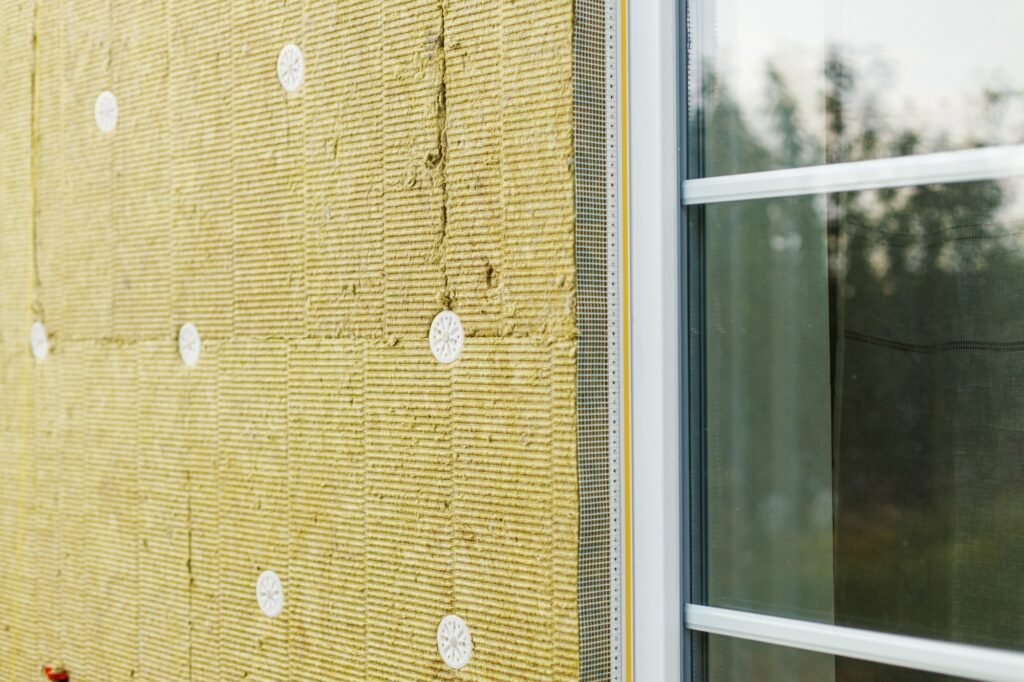
LANDERCOLL HEMC / MHEC bruges ofte i fliseklæber, EIFS / ETICS-mørtel, cementpuds, reparationsmørtel, vandtætningsmørtel, isoleringsmørtel, vægspartelmasse og andre krævende tørmikssystemer.
Opskrifter til tørre færdigblandede mørtler varierer meget afhængigt af anvendelsestype, bindemiddelsystem, tilgængelighed af råmaterialer, ydeevnemål og lokale standarder.
| Komponent | Function in Ready-Mix Dry Mortar |
|---|---|
| Cement / Gips / Kalk | Primært bindersystem afhængigt af produkttype. |
| Sand / Aggregater | Giv struktur, volumen, styrke og påføringsvenlighed. |
| Fyldstoffer / Fine Pulvere | Juster balance mellem konsistens, glathed, tæthed og omkostninger. |
| Rødspredelig polymerpulver | Understøtter adhæsionsrelateret adfærd, fleksibilitet og holdbarhed. |
| Celluloseether (HPMC / HEMC) | Forbedrer vandretention, bearbejdelighed, åben tid, reologi og konsistens. |
| Stivelsesether | Kan understøtte anti-sag-adfærd og reologikontrol. |
| Fibre | Understøtter revnemodstand og forstærkning i udvalgte systemer. |
| Hydrofobe additiver | Understøtter vandmodstand i udvendige eller vandtætte systemer. |
| Luftindblandingsadditiver | Forbedrer bearbejdelighed og densitetskontrol i udvalgte systemer. |
| Hærdetidsregulerende tilsætningsstoffer | Justerer hærdetid og styrkeudvikling. |
| Andre Tilsætningsstoffer | Justerer særlige egenskaber, forarbejdning eller overfladekvalitet. |
Different dry mortar products require different cellulose ether performance profiles. This table provides a practical selection reference for common ready-mix dry mortar systems.
| Dry Mortar Type | Anbefalet produkt | Vigtigste ydeevnekrav |
|---|---|---|
| Fliseklæber | HPMC / HEMC / MHEC | Vandretention, åben tid, spartling, skridsikker. |
| Flisefuge | HPMC / HEMC / MHEC | Filling smoothness, consistency, surface finish. |
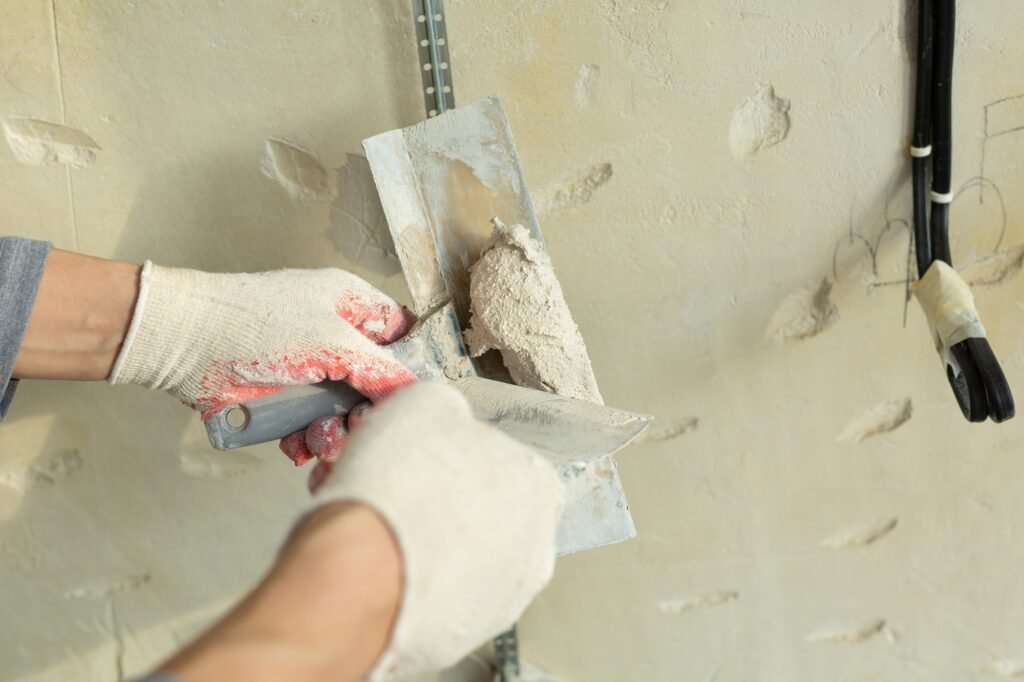
| Vægspartel / Finpudsning | HPMC / HEMC / MHEC | Smooth scraping, water retention, leveling. |
| Cementpuds / Gips | HPMC / HEMC / MHEC | Bearbejdelighed, smørbarhed, anti-sag. |
| Gipsgips | HPMC / HEMC / MHEC | Smooth application, water management, finish. |
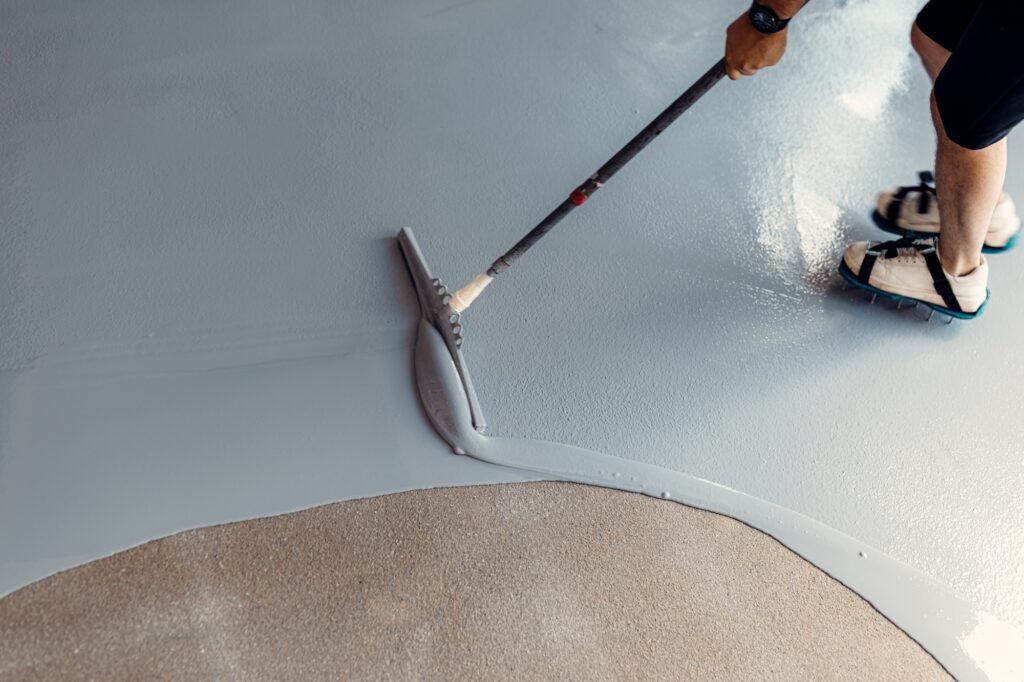
| Selvnivellerende spartelmasse | Low–medium viscosity HPMC / HEMC | Flow stability, suspension, anti-segregation. |
| Muremørtel | HPMC / HEMC / MHEC | Board life, spreadability, water retention. |
| Reparaturmørtel | HEMC / MHEC / HPMC | Modstandsdygtighed over for hæng, fastholdelse af form, sammenhængskraft. |
| Vandtæt mørtel | HPMC / HEMC / MHEC | Spreadability, water retention, layer stability. |
| Isoleringsmørtel | HPMC / HEMC / MHEC | Lightweight aggregate stability, anti-sag, cohesion. |
| Fugemasser | HPMC / HEMC / MHEC | Smooth filling, shape retention, surface finish. |
The dosage of cellulose ether in ready-mix dry mortar depends on product type, viscosity grade, target performance, binder system, raw material quality, application method, and local job-site conditions.
In ready-mix dry mortar formulations, cellulose ether supports water retention, workability, open time, rheology, anti-sag behavior, mortar cohesion, and surface finish — the properties applicators evaluate most directly on the job site.
Water retention is one of the most critical functions of cellulose ether in ready-mix dry mortar. It helps the wet mortar retain moisture after mixing, supporting cement hydration, gypsum setting behavior, workability duration, and stable application performance — particularly on absorbent substrates such as brick, block, aerated concrete, or dry drywall.
Good workability makes dry mortar easier to mix, spread, scrape, trowel, fill, level, and finish. HPMC and HEMC / MHEC improve application comfort, reduce harshness from coarse sand or filler systems, and help applicators work more efficiently on-site.
Open time is especially important in tile adhesive, EIFS / ETICS mortar, plaster, render, and other systems where applicators need sufficient time to apply, adjust, position, and finish the material. Cellulose ether helps extend the workable window by slowing moisture loss.
Cellulose ether helps control the flow and structural behavior of wet mortar. This pseudoplastic (shear-thinning) behavior allows the material to flow and spread under tool pressure while remaining stable and in place after the tool is removed.
Vertical construction applications — including tile adhesive, render, repair mortar, waterproof mortar, and insulation mortar — require sufficient mortar body to stay in position after application. Suitable cellulose ether grades, particularly HEMC / MHEC, help improve anti-sag resistance and reduce material slippage.
Cellulose ether improves wet mortar cohesion and helps the material remain uniform during mixing, application, and finishing. For wall putty, plaster, joint filler, grout, and finishing mortar, cellulose ether supports smoother surface formation by improving water retention, consistency, and workability — resulting in better final surface appearance and reduced rework.
Many fresh mortar performance issues are related to water retention, workability, rheology, and consistency — areas where cellulose ether grade and dosage selection directly affect results.
Rapid water loss, absorbent substrate, hot or windy conditions.
Improve water retention and extend workable time.
Harsh sand or filler, unsuitable viscosity, poor water balance.
Improve smoothness and application comfort.
Weak rheology, excessive water, low viscosity grade.
Improve anti-sag behavior and mortar body.
Low dosage, unsuitable grade, highly absorbent substrate.
Improve moisture control and retention.
Poor rheology, excessive water, unstable particle system.
Improve consistency and suspension stability.
Excessive dosage or unsuitable high-viscosity grade.
Juster balance mellem grad og dosering.
Poor filler grading, rapid water loss, unstable consistency.
Support smoother finishing behavior.
Raw material variation, poor dispersion, wrong additive balance.
Improve formulation stability and reliability.
Understanding the variables that influence cellulose ether behavior helps manufacturers make better formulation decisions and avoid common performance issues.
Tile adhesive, wall putty, plaster, self-leveling compound, repair mortar, and waterproof mortar each require different viscosity, water retention, and rheology profiles from the cellulose ether.
Cement, gypsum, lime, calcium aluminate cement, and blended binders affect hydration behavior, setting time, water demand, and cellulose ether interaction. Gypsum-based systems require careful viscosity selection to avoid over-retardation.
Particle size distribution, shape, fineness, and absorption characteristics influence water demand, workability, surface finish, and consistency. Coarser or more angular sands typically require higher cellulose ether dosages.
Polymer powder affects adhesion behavior, flexibility, durability, and rheology. Compatibility with cellulose ether should be evaluated during formulation development.
Viscosity grade directly affects water retention capacity, consistency, anti-sag behavior, spreadability, open time, and surface finish. Higher viscosity grades generally provide stronger water retention but may increase stickiness if overdosed.
Too little cellulose ether leads to poor water retention or weak workability. Too much may cause stickiness, reduced flow, delayed finishing, or difficult application. The correct dosage must be confirmed through testing.
Dry blending uniformity, water addition sequence, mixing time, rest time, and remixing all affect cellulose ether hydration and final wet mortar behavior.
Moisture exposure, poor packaging seal, high humidity storage, and extended storage time may degrade dry mortar quality and reduce additive effectiveness.
Hot, dry, windy, or highly absorbent conditions accelerate water loss and reduce working time. Higher cellulose ether dosages or higher-viscosity grades may be needed in these environments.
Selecting the correct cellulose ether grade requires matching product type, viscosity, water retention performance, rheology profile, application method, and target performance requirements.
What type of dry mortar are you producing?
Is the system cement-based, gypsum-based, or polymer-modified?
Do you need stronger water retention or longer open time?
Is anti-sag behavior a critical requirement?
Do you need smooth scraping, troweling, filling, or leveling performance?
What binder, sand, filler, and polymer system is used?
What application thickness is required?
What climate and substrate conditions are typical in your market?
What viscosity range and dosage level are you targeting?
Do you require surface-treated (delayed-dissolution) or untreated cellulose ether?
LANDERCOLL can help review your ready-mix dry mortar formulation direction and recommend suitable HPMC or HEMC / MHEC grades for testing.
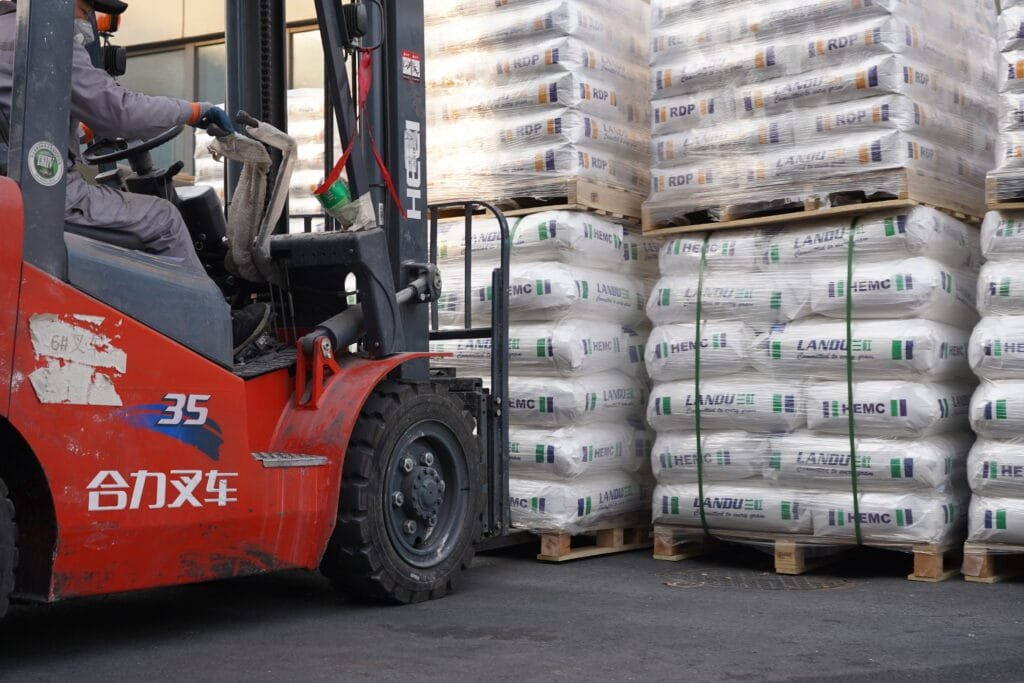
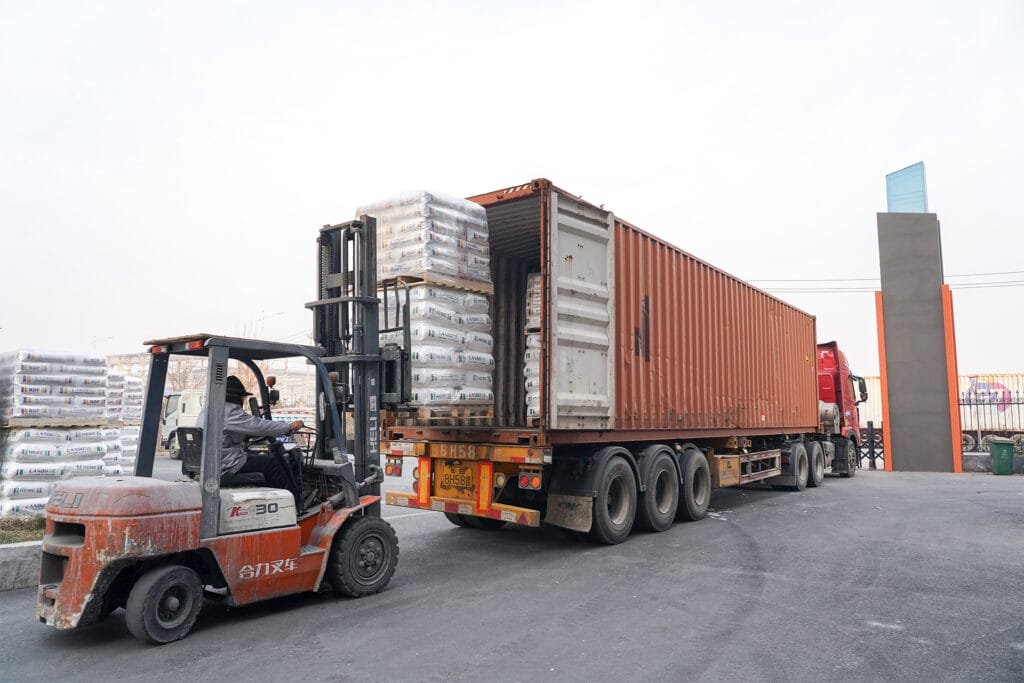
Anmod om teknisk supportLANDERCOLL cellulose ether for ready-mix dry mortar is supplied in industrial packaging suitable for drymix mortar production, transportation, and storage.
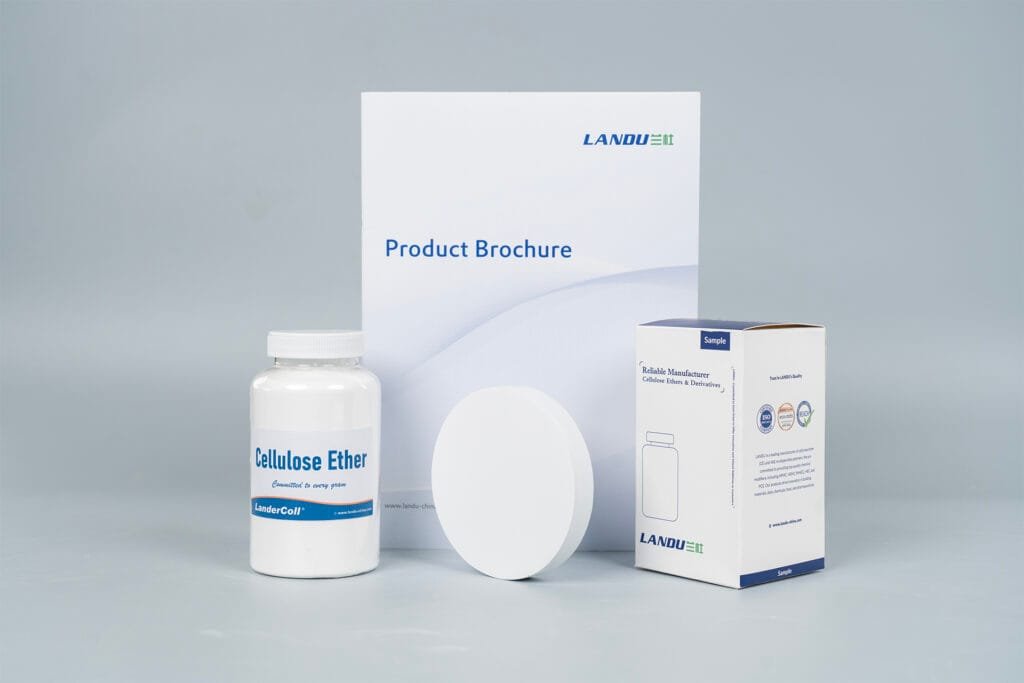
LANDERCOLL provides product-related documentation to support dry mortar formulation testing, purchasing review, and internal approval processes.
If your ready-mix dry mortar dries too quickly, has short open time, poor workability, sagging on vertical surfaces, sticky application feel, rough surface finish, mortar separation, or inconsistent batch-to-batch performance, the cellulose ether grade or dosage may need to be reviewed.
LANDERCOLL provides technical support to help drymix mortar manufacturers evaluate suitable HPMC and HEMC / MHEC options based on product type, binder system, target water retention, open time, anti-sag requirements, and job-site application conditions.
HPMC and HEMC / MHEC product selection for ready-mix dry mortar.
Water retention and open time improvement strategy.
Anti-sag and rheology control support.
Workability, troweling, and surface finish improvement.
Viscosity grade direction and dosage recommendation.
Formulation review for tile adhesive, plaster, render, grout, and repair mortar.
Sample arrangement and technical evaluation support.
TDS, SDS, COA, and quotation communication.
HPMC and HEMC / MHEC are the most commonly used cellulose ethers in ready-mix dry mortar. They improve water retention, workability, open time, consistency, anti-sag behavior, and surface finishing across cement-based, gypsum-based, and polymer-modified drymix systems.
HPMC improves water retention, workability, consistency, troweling or scraping feel, and application stability in cement-based and gypsum-based dry mortar systems. It is versatile and widely used across tile adhesive, wall putty, plaster, masonry mortar, repair mortar, waterproof mortar, and joint filler formulations.
HEMC / MHEC improves water retention, open time, anti-sag behavior, smooth application feel, and vertical surface stability. It is often selected for demanding drymix systems such as tile adhesive, EIFS / ETICS mortar, cement render, repair mortar, waterproof mortar, and insulation mortar.
The typical reference dosage range is 0.05%–0.60% by weight of dry mortar, depending on the mortar type, viscosity grade, binder system, and target performance. Tile adhesive and wall putty typically use 0.20%–0.50%, while self-leveling compounds use lower dosages of 0.05%–0.20%. Final dosage must always be confirmed through formulation testing.
Cellulose ether is used in tile adhesive, tile grout, wall putty, skim coat, cement plaster, gypsum plaster, cement render, masonry mortar, repair mortar, waterproof mortar, insulation mortar, joint filler, and self-leveling compounds — covering virtually all major ready-mix dry mortar product categories.
HPMC is versatile and suitable for a broad range of dry mortar systems. HEMC / MHEC is typically selected where stronger open time, anti-sag behavior, and vertical application stability are critical requirements. Both can be used in many of the same systems — the final choice depends on your specific performance targets, binder system, and application conditions.
Cellulose ether primarily improves fresh mortar properties such as water retention, workability, consistency, and application stability. Final hardened strength depends on the complete formulation, binder content, water-to-binder ratio, curing conditions, and raw material quality — not cellulose ether dosage alone.
Stickiness is typically caused by excessive cellulose ether dosage, an unsuitable high-viscosity grade, high redispersible polymer powder content, excessive water addition, or an unbalanced filler and sand system. Reviewing the viscosity grade and reducing the dosage incrementally usually resolves this issue.
Yes. Share your product type, formulation direction, target performance, viscosity requirement, dosage level, and raw material system. LANDERCOLL can help recommend suitable HPMC or HEMC / MHEC grades for testing and provide supporting technical documentation.
Whether you produce tile adhesive, tile grout, wall putty, cement plaster, gypsum plaster, masonry mortar, repair mortar, waterproof mortar, insulation mortar, joint filler, self-leveling compound, or other ready-mix dry mortar products, LANDERCOLL can help you identify the right HPMC or HEMC / MHEC grade for better water retention, workability, consistency, open time, anti-sag performance, and application reliability.
Our team can review your formulation direction, recommend suitable grades for testing, and provide technical documentation to support your purchasing and product development process.
