Cellulose Ether Excellence — Betroet af over 1000 virksomheder globalt Få gratis prøve

Valg af det rigtige HPMC (hydroxypropylmethylcellulose) i fliseklæbemidler er afgørende for at sikre stærk vedhæftning, holdbarhed og bearbejdelighed. HPMC spiller en central rolle i forbedringen af vandretention, konsistens og påføringsvenlighed i fliseklæbemidler. I denne artikel vil vi se nærmere på de væsentligste kriterier for valg af den ideelle HPMC-kvalitet, fordelene herved samt give praktiske råd til producenter.
Hydroxypropyl Methylcellulose (HPMC) er et vandopløseligt polymer, der er meget udbredt i byggematerialer såsom fliseklæbemidler. Det forbedrer flere egenskaber, herunder:
•Vandretention: Sikrer korrekt cementhydrering ved at fastholde fugt i klæbemidlet.
•Bearbejdelighed Forbedrer konsistens og brugervenlighed ved påføring.
•Adhæsion: Forbedrer bindingsstyrken og sikrer, at fliserne forbliver sikkert på plads.
•Åbningstid: Forlænger tiden til fliseplacering efter påføring af klæbemiddel.
HPMC er uundværlig for at opnå fliseklæbformuleringer af høj kvalitet.
1.Viskositet og molekylvægt
•HPMC-kvaliteter adskiller sig i viskositet, hvilket påvirker klæbemidlets tykkelse og smørbarhed.
•Høj viskositet HPMC forbedrer vandretention og vedhæftning.
•Low viscosity HPMC is suitable for applications requiring faster setting times.
2.Water Retention Capacity
•High water retention is essential for ensuring optimal cement hydration. This is particularly important for areas with higher temperatures, where moisture evaporation is a concern.
3.Compatibility with Other Ingredients
•Ensure the HPMC grade is compatible with cement, fillers, and additives to avoid clumping or inconsistent textures.
4.Film-Forming Ability
•A good HPMC grade creates a flexible and durable film, improving adhesive strength and reducing the risk of cracks.
5.Setting and Open Time
•Select HPMC grades that align with desired setting and open times. For large-scale projects, longer open times may be advantageous.
6.Purity and Quality
•Opt for high-purity HPMC to minimize impurities that may affect the adhesive’s performance.
Hydroxypropyl Methylcellulose (HPMC) is a critical additive in tile adhesives, significantly enhancing their performance. Evaluating the effectiveness of HPMC involves several tests to ensure optimal results in various applications. Below are three key performance tests:
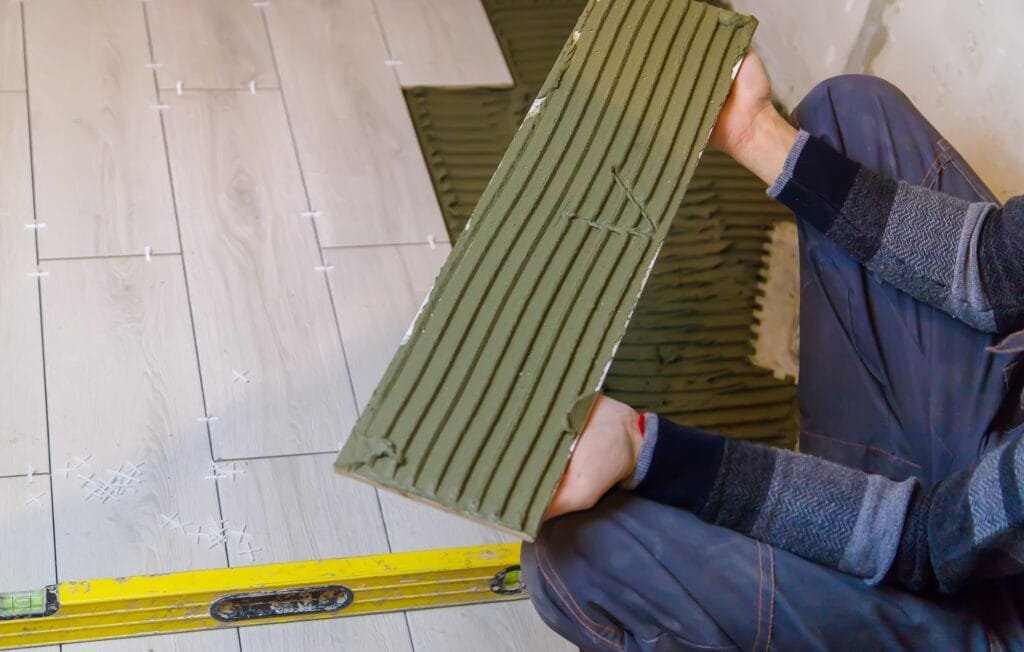
1. Water Retention Test
Formål: Measures the adhesive’s ability to retain moisture during application.
•Procedure: After mixing the adhesive with HPMC, apply it and monitor the moisture content over a specific period.
•Significance: High water retention prevents premature drying, ensuring proper curing, better bonding, and resistance to cracks.
•Optimization Tip: Adjust the HPMC content to balance water retention without affecting the workability.

2. Slump Test
Formål: Determines the flowability and consistency of the adhesive.
•Procedure: Apply the adhesive on a vertical surface and measure how much it sags or flows under its own weight.
•Significance: A proper balance ensures ease of application while maintaining the adhesive’s position without sagging.
•Optimization Tip: HPMC enhances viscosity and thixotropic properties, so fine-tune the formula for the ideal application consistency.

3. Tensile Adhesion Strength Test
Formål: Tests the bonding strength between the tiles and the substrate.
•Procedure: Allow the adhesive to cure, then measure the force required to detach a tile from the substrate.
•Significance: HPMC improves adhesion, ensuring durable bonds that withstand various stresses.
•Optimization Tip: Ensure uniform mixing and appropriate curing conditions to fully utilize HPMC’s bonding enhancement properties.
The choice of Hydroxypropyl Methylcellulose (HPMC) in tile adhesives can significantly impact performance, efficiency, and durability. Here’s how using the right HPMC can enhance your tile adhesive formulations:

1.Eco-Friendly Formulations
•Manufacturers are leaning toward eco-friendly, non-toxic HPMC grades to meet environmental regulations and consumer demand.
2.Customizable Grades
•Tailored HPMC grades allow manufacturers to optimize adhesives for specific applications, such as high-temperature regions or underwater installations.
3.Focus on Cost-Efficiency
•High-purity HPMC grades ensure long-term cost savings by reducing material wastage and enhancing performance.
For tile adhesive manufacturers, achieving consistent quality and performance is crucial to meeting customer expectations and staying competitive. Here are some practical tips to enhance your production process:
For manufacturers seeking a supplier that aligns with these advantages, Landu stands out as one of China’s leading HPMC manufacturers. Landu provides high-quality HPMC with consistent performance, customized solutions, and dedicated technical support to help you achieve optimal results in your tile adhesive formulations.
Choosing the right HPMC for tile adhesives ensures superior bonding, workability, and durability. Manufacturers should evaluate viscosity, water retention, compatibility, and other performance criteria to meet specific application needs. By partnering with trusted suppliers and adhering to quality standards, you can achieve consistent results in every batch.
HPMC (Hydroxypropyl Methylcellulose) plays a crucial role in tile adhesives by enhancing:
•Vandretention: Prevents premature drying, ensuring proper curing.
•Bearbejdelighed: Provides a smooth and creamy consistency for easy application.
•Bonding strength: Ensures tiles adhere securely to substrates, improving durability.
Selecting the right HPMC involves evaluating several factors:
•Viskositet: Impacts the adhesive’s consistency and handling properties.
•Water retention capacity: Determines curing time and prevents cracks.
•Kompatibilitet: Ensures smooth integration with other ingredients in the formulation.
•Film-forming ability: Affects adhesion and durability under different conditions.
Testing these properties with your specific adhesive formulation is essential for achieving the desired performance.
Professional tilers commonly use thinset mortar, a versatile and durable adhesive. However, the performance of thinset mortar largely depends on the quality of its additives, including HPMC. High-quality HPMC ensures better bonding, ease of use, and reliable results, even in challenging applications.
