

1. 점도 시험: 증점 효율 평가
테스트 목적:
점도는 타일 접착제 배합에서 HPMC의 가장 중요한 특성 중 하나입니다. 점도는 접착제의 흐름 거동과 일관성에 직접적인 영향을 미칩니다. 적절한 점도는 시공 중 쉬운 적용, 우수한 접착력, 그리고 조절된 오픈 타임을 보장합니다.

테스트 방법론:
HPMC 용액의 점도는 브룩필드 점도계 또는 회전 점도계를 사용하여 측정할 수 있습니다. 시료는 필요한 농도(일반적으로 2% w/w)로 물에 용해된 후, 제어된 온도(보통 20°C)에서 테스트됩니다. 점도는 다양한 전단 속도에서 기록됩니다. 제조업체는 점도 결과를 제형 요구 사항과 비교하여 원하는 범위 내에 있는지 확인해야 하며, 이를 통해 일관된 성능을 달성할 수 있습니다.
2. 수분 함량: 안정성 및 저장 품질 보장
테스트 목적:
HPMC의 수분 함량은 저장 안정성과 성능에 영향을 미칩니다. 과도한 수분은 덩어리짐, 분해 또는 유통기한 단축을 초래할 수 있습니다. 반면, 수분이 너무 적으면 용해성과 수화 속도에 영향을 줄 수 있습니다.

테스트 방법론:
중량 분석(오븐 건조) 또는 수분 분석기를 사용하여 수분 함량을 측정합니다. 시료는 105°C에서 일정 중량에 도달할 때까지 건조되며, 수분 함량은 원래 중량 대비 백분율로 계산됩니다. 이상적인 수분 함량은 일반적으로 5% 미만이어야 하지만, 이는 특정 응용 요구 사항에 따라 달라질 수 있습니다. 예를 들어, 고습 환경에서는 더 낮은 수분 함량이 필요할 수 있습니다.
3. Particle Size Distribution: Influencing Dissolution and Homogeneity
테스트 목적:
The particle size of HPMC directly impacts its dissolution rate and the consistency of the final tile adhesive. Finer particles generally dissolve more quickly and uniformly, leading to improved dispersion and enhanced thickening effects.

테스트 방법론:
Particle size distribution is typically measured using laser diffraction or sieve analysis. These methods help determine the uniformity of the sample’s particle size. Manufacturers should ensure the particle size distribution is optimized for efficient mixing and consistent performance in the final adhesive formulation. For example, a particle size range of 80-120 mesh is often preferred for rapid dissolution.
4. Solubility Test: Verifying Quick and Complete Dissolution
테스트 목적:
HPMC must dissolve efficiently and thoroughly in water to function as an effective thickener. Poor solubility can result in uneven dispersion, leading to performance inconsistencies in the tile adhesive.

테스트 방법론:
A standard solubility test involves dissolving the HPMC sample in warm water (40-50°C) and observing the dissolution rate and clarity of the solution. The HPMC should dissolve quickly without forming any lumps or leaving undissolved particles. Clear solutions indicate high-quality HPMC that will perform well in tile adhesive formulations.

LANDERCOLL High-Quality HPMC Chemical
Get HPMC Samples For Free
Considering high-quality HPMC samples for comparison? Reach out Landercoll now to receive your tailored HPMC solutions and elevate your product quality.
5. Ash Content: Confirming Purity and Quality
테스트 목적:
그 ash content of HPMC represents the level of inorganic impurities present in the sample. High ash content can compromise the quality and stability of the final product, affecting the adhesive’s performance.
테스트 방법론:
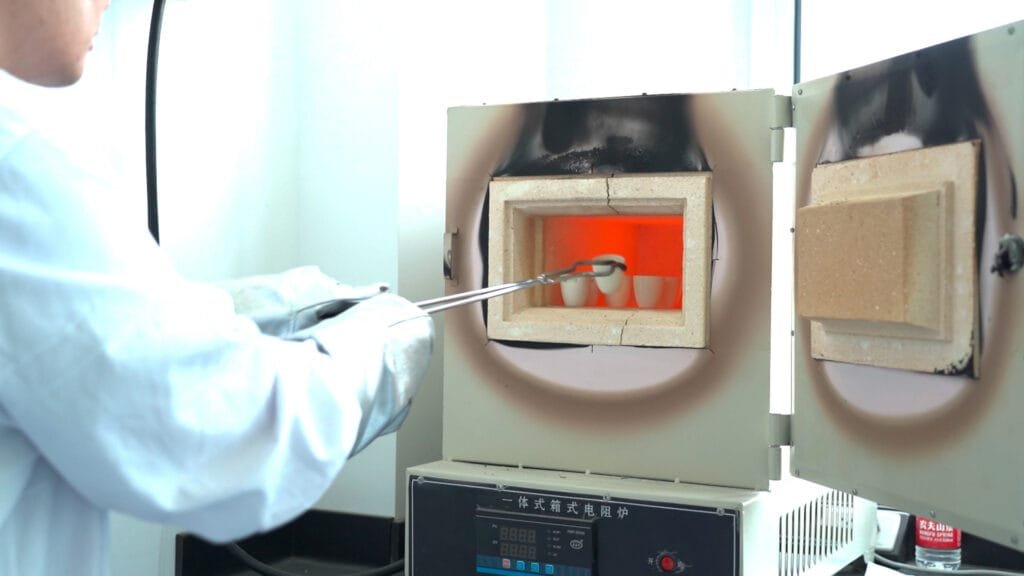
To measure ash content, the sample is subjected to high-temperature combustion (600-800°C), leaving behind an inorganic residue. The percentage of ash is calculated based on the weight of the remaining residue. Ideally, ash content should be kept below 5% to ensure high purity and product stability. In some regions, such as Europe, the ash content may need to be below 3% to meet local standards.
6. pH Value: Ensuring Product Stability
테스트 목적:
그 pH of an HPMC solution influences the stability and behavior of tile adhesives, particularly during curing. An incorrect pH can lead to premature gelling or weakening of adhesive bonds.

테스트 방법론:
The pH value is measured using a pH meter after dissolving HPMC in water. The pH should typically fall between 6 and 8, ensuring that the adhesive remains stable and works effectively with the tiles. For example, a pH of 7 is often ideal for neutral applications.
7. Hydration Time: Improving Manufacturing Efficiency
테스트 목적:
Hydration time refers to the time it takes for HPMC to fully dissolve and disperse in water. Fast hydration is crucial for manufacturing efficiency, as it ensures quicker blending and formulation of tile adhesives.

테스트 방법론:
Mix the HPMC sample with water and observe the time required for full hydration and uniform dispersion. The ideal hydration time should be short (typically less than 10 minutes) to improve the overall speed of the mixing process, ensuring efficient production.
8. Thermal Stability: Ensuring Long-Term Performance
테스트 목적:
Tile adhesives may be exposed to varying temperatures during both application and curing. Thermal stability of HPMC ensures that it maintains its properties under heat stress and does not degrade or lose viscosity.

테스트 방법론:
Expose the HPMC sample to high temperatures in a controlled environment and observe any changes in its 점도 or physical appearance. High-quality HPMC should exhibit minimal degradation at temperatures commonly encountered during tile adhesive application.
9. Chemical Composition Analysis: Verifying Raw Material Integrity
테스트 목적:
Understanding the chemical composition of HPMC ensures that it meets the specific functional requirements of tile adhesives, confirming the consistency of the material’s quality and its suitability for the intended application.

테스트 방법론:
Advanced techniques such as infrared spectroscopy (FTIR) or gas chromatography (GC) can be used to analyze the chemical structure of HPMC. FTIR is particularly useful for identifying functional groups, while GC can detect volatile impurities. These methods provide insights into the material’s purity, functional groups, and potential contaminants.
Ensure Quality with Comprehensive HPMC Testing
For 타일 접착제 제조업체, the quality of raw materials directly impacts the performance and durability of the final product. Testing HPMC samples on key parameters—viscosity, moisture content, particle size, solubility, ash content, pH value, hydration time, thermal stability, and chemical composition—provides critical data to ensure the additive meets formulation specifications.
By thoroughly testing HPMC, manufacturers can optimize their production processes, reduce variability, and improve the consistency and quality of tile adhesives. These tests not only enhance product performance but also help maintain customer satisfaction by ensuring reliable and high-quality adhesives in every batch.
By following these rigorous testing protocols, manufacturers can confidently use HPMC in tile adhesives, knowing they are enhancing both product quality and performance.
Landercoll: Offering Comprehensive HPMC Testing and Custom Solutions
Supporting Manufacturers with Quality Assurance
At Landercoll, we understand the importance of ensuring that every ingredient in your tile adhesive formulations meets the highest standards. That’s why we go beyond just providing HPMC; we offer in-depth testing services to ensure that our products deliver consistent performance and meet your specific formulation requirements. Our state-of-the-art laboratory testing facilities are equipped to carry out all the essential tests outlined above, from viscosity to thermal stability.
Tailored Testing to Meet Your Needs
Our commitment to quality extends to personalized support throughout the production process. Before any shipment leaves our facility, we conduct thorough testing on HPMC samples to ensure they meet the specifications and performance standards you require. Whether you need customized viscosity, solubility adjustments, or other formulation considerations, our laboratory can modify the product according to your needs, helping you achieve the desired results in your tile adhesive production.
Why Choose Landercoll for HPMC?
- Comprehensive Testing:We test HPMC samples for viscosity, moisture content, solubility, and more to ensure they meet industry standards.
- Tailored Solutions:Our lab adjusts HPMC to match your specific application requirements, ensuring optimal adhesive performance.
- Reliable Results:With rigorous pre-shipment testing, you can be confident that the HPMC you receive will meet your exact needs, every time.
- Expert Guidance:Our technical team is available to support you with formulation adjustments, helping you achieve superior tile adhesive products.
Quality You Can Trust in Tile Adhesive Production
Landercoll’s comprehensive testing services provide an added layer of assurance that your tile adhesive formulations will perform as expected. By working closely with our laboratory, you gain access to custom solutions that help you meet customer demands and ensure product quality at every stage of production. With Landercoll’s HPMC, you are not only receiving top-tier materials, but also the expertise and support to create exceptional tile adhesives.


