Celulozes Etera Izcilība — Uzticams vairāk nekā 1000 uzņēmumiem visā pasaulē Saņemt bezmaksas paraugu
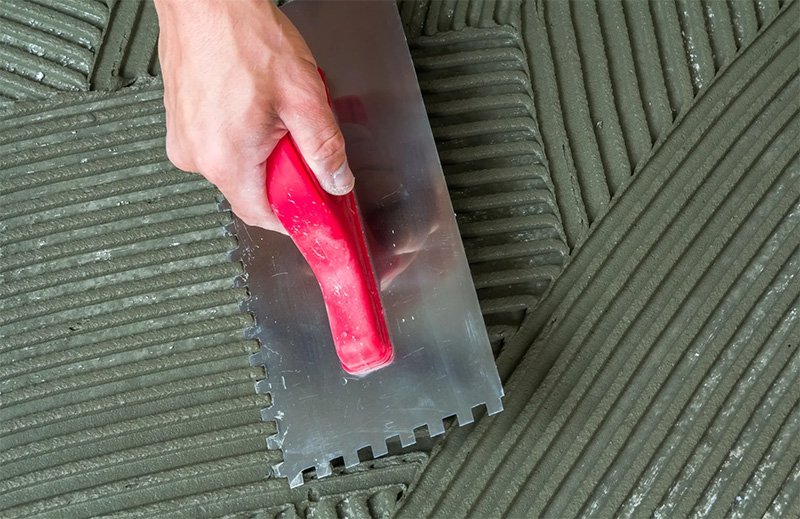
HPMC and HEMC/MHEC grades for water retention, workability, open time, anti-sag behavior, and consistent drymix mortar performance after water addition.

Need a starting grade or dosage reference for your drymix mortar formulation?
Prasīt ieteikumu Pieprasīt piedāvājumu Water Retention · Open Time · Workability
HPMC and HEMC/MHEC cellulose ether are the primary functional additives used in drymix mortar to improve water retention, workability, open time, anti-sag behavior, consistency, and surface finish. A correctly selected grade helps mortar perform reliably after water addition — making it easier for applicators to mix, spread, trowel, and finish on site, while supporting consistent batch performance in the factory.
Mortar manufacturers need more than just a product — they need stable raw materials, consistent performance across batches, practical technical support, and reliable supply. In drymix mortar production, cellulose ether is one of the most influential additives in the formulation. Even at low dosage levels, the choice of grade, viscosity, and dosage directly affects how the mortar behaves from the moment water is added through to final set.
LANDERCOLL provides construction-grade HPMC un HEMC/MHEC for manufacturers producing cement-based, gypsum-based, and polymer-modified drymix mortars — including tile adhesive, wall putty, skim coat, cement plaster, gypsum plaster, EIFS/ETICS mortar, self-leveling compounds, masonry mortar, repair mortar, waterproof mortar, insulation mortar, joint fillers, and ready-mix dry mortar systems.
In drymix mortar formulations, cellulose ether is used at relatively low dosage — typically between 0.05% and 0.60% — but its influence on fresh mortar performance is disproportionately large. For mortar manufacturers, choosing the right cellulose ether is about matching the grade to the final application, raw material system, production process, local climate, substrate condition, and the performance expectations of the end user.
| Performance Property | What It Means for the Mortar Product |
|---|---|
| Ūdens aizturi | Keeps moisture in the mortar longer, supporting hydration and bond development |
| Apstrādājamība | Makes the mortar easier to mix, spread, trowel, and finish |
| Open time | Extends the working window before the mortar becomes unworkable |
| Troweling and scraping feel | Improves the application experience for professional applicators |
| Anti-sag behavior | Helps mortar stay in place on vertical surfaces without slipping |
| Anti-slip performance | Supports tile and panel stability during installation |
| Mortar consistency | Maintains stable body and texture throughout the working period |
| Surface finishing | cURL Too many subrequests by single Worker invocation. To configure this limit, refer to https://developers.cloudflare.com/workers/wrangler/configuration/#limits |
| Batch-to-batch stability | cURL Too many subrequests by single Worker invocation. To configure this limit, refer to https://developers.cloudflare.com/workers/wrangler/configuration/#limits |
| cURL Too many subrequests by single Worker invocation. To configure this limit, refer to https://developers.cloudflare.com/workers/wrangler/configuration/#limits | cURL Too many subrequests by single Worker invocation. To configure this limit, refer to https://developers.cloudflare.com/workers/wrangler/configuration/#limits |
cURL Too many subrequests by single Worker invocation. To configure this limit, refer to https://developers.cloudflare.com/workers/wrangler/configuration/#limits
cURL Too many subrequests by single Worker invocation. To configure this limit, refer to https://developers.cloudflare.com/workers/wrangler/configuration/#limits
HPMC / HEMC / MHECcURL Too many subrequests by single Worker invocation. To configure this limit, refer to https://developers.cloudflare.com/workers/wrangler/configuration/#limits
HPMC / HEMC / MHECcURL Too many subrequests by single Worker invocation. To configure this limit, refer to https://developers.cloudflare.com/workers/wrangler/configuration/#limits
HPMC / HEMC / MHECcURL Too many subrequests by single Worker invocation. To configure this limit, refer to https://developers.cloudflare.com/workers/wrangler/configuration/#limits
HPMC / HEMC / MHECcURL Too many subrequests by single Worker invocation. To configure this limit, refer to https://developers.cloudflare.com/workers/wrangler/configuration/#limits
HEMC / MHEC / HPMCcURL Too many subrequests by single Worker invocation. To configure this limit, refer to https://developers.cloudflare.com/workers/wrangler/configuration/#limits
cURL Too many subrequests by single Worker invocation. To configure this limit, refer to https://developers.cloudflare.com/workers/wrangler/configuration/#limitscURL Too many subrequests by single Worker invocation. To configure this limit, refer to https://developers.cloudflare.com/workers/wrangler/configuration/#limits
HPMC / HEMC / MHECcURL Too many subrequests by single Worker invocation. To configure this limit, refer to https://developers.cloudflare.com/workers/wrangler/configuration/#limits
HPMC / HEMC / MHECcURL Too many subrequests by single Worker invocation. To configure this limit, refer to https://developers.cloudflare.com/workers/wrangler/configuration/#limits
HPMC / HEMC / MHECcURL Too many subrequests by single Worker invocation. To configure this limit, refer to https://developers.cloudflare.com/workers/wrangler/configuration/#limits
HPMC / HEMC / MHECcURL Too many subrequests by single Worker invocation. To configure this limit, refer to https://developers.cloudflare.com/workers/wrangler/configuration/#limits
HPMC / HEMC / MHECcURL Too many subrequests by single Worker invocation. To configure this limit, refer to https://developers.cloudflare.com/workers/wrangler/configuration/#limits cURL Too many subrequests by single Worker invocation. To configure this limit, refer to https://developers.cloudflare.com/workers/wrangler/configuration/#limits
The table below provides a practical selection reference for drymix mortar manufacturers and formulation engineers. Final product selection must be confirmed through formulation testing with your specific raw materials and application conditions.
| Mortar Product | Recommended Direction | Main Performance Goal |
|---|---|---|
| Flīžu līme | HPMC / HEMC / MHEC | Water retention, open time, anti-slip, troweling |
| Flīžu java | HPMC / HEMC / MHEC | Filling smoothness, consistency, surface finish |
| Sienu špakteļtepe / Skim Coat | HPMC / HEMC / MHEC | Smooth scraping, leveling, water retention |
| Cementa apmetums / apmetums | HPMC / HEMC / MHEC | Workability, spreadability, anti-sag |
| Ģipša apmetums | HPMC / HEMC / MHEC | Smooth application, water management, finish |
| EIFS / ETICS | HEMC / MHEC / HPMC | Open time, mesh embedding, anti-sag |
| Pašizlīdzinošie savienojumi | cURL Too many subrequests by single Worker invocation. To configure this limit, refer to https://developers.cloudflare.com/workers/wrangler/configuration/#limits | Flow stability, suspension, anti-segregation |
| Mūrēšanas java | HPMC / HEMC / MHEC | Board life, spreadability, water retention |
| Remonta javas | HEMC / MHEC / HPMC | Shape retention, anti-sag, cohesion |
| Ūdensnecaurlaidīga java | HPMC / HEMC / MHEC | Spreadability, water retention, layer stability |
| Siltumizolācijas javas | HPMC / HEMC / MHEC | Lightweight stability, anti-sag, cohesion |
| Šuves pildījumi | HPMC / HEMC / MHEC | Smooth filling, shape retention, surface finish |
LANDERCOLL supports mortar manufacturers and drymix producers with practical, formulation-focused technical support — from initial grade selection through sample evaluation and production-scale validation.
We help identify HPMC and HEMC/MHEC grade directions that match your mortar type, raw material system, target performance, and local application conditions.
A suitable cellulose ether grade helps drymix mortar perform more consistently after water addition — supporting batch stability and reducing variation across production runs and job sites.
Mortar products must be easy for applicators to mix, spread, scrape, trowel, fill, and finish. Cellulose ether helps improve the fresh properties that applicators notice and rely on during daily use.
Mortar formulations are significantly affected by local cement type, gypsum quality, sand grading, filler system, and climate conditions. LANDERCOLL helps select grades based on practical formulation conditions.
For manufacturers sourcing cellulose ether internationally, stable supply and clear documentation are essential. LANDERCOLL supports sample evaluation, quotation communication, and product document requests.
Share your mortar type, formulation system, and performance targets — we’ll suggest a suitable starting grade and dosage direction.
Ask for Mortar Grade RecommendationWhen drymix mortar performance fails on site or in production, the cellulose ether grade, dosage, or formulation balance is often the first variable to review.
Rapid water loss, absorbent substrate, low water retention.
Improve water retention and workable time.
cURL Too many subrequests by single Worker invocation. To configure this limit, refer to https://developers.cloudflare.com/workers/wrangler/configuration/#limits
cURL Too many subrequests by single Worker invocation. To configure this limit, refer to https://developers.cloudflare.com/workers/wrangler/configuration/#limits
cURL Too many subrequests by single Worker invocation. To configure this limit, refer to https://developers.cloudflare.com/workers/wrangler/configuration/#limits
cURL Too many subrequests by single Worker invocation. To configure this limit, refer to https://developers.cloudflare.com/workers/wrangler/configuration/#limits
cURL Too many subrequests by single Worker invocation. To configure this limit, refer to https://developers.cloudflare.com/workers/wrangler/configuration/#limits
cURL Too many subrequests by single Worker invocation. To configure this limit, refer to https://developers.cloudflare.com/workers/wrangler/configuration/#limits
cURL Too many subrequests by single Worker invocation. To configure this limit, refer to https://developers.cloudflare.com/workers/wrangler/configuration/#limits
cURL Too many subrequests by single Worker invocation. To configure this limit, refer to https://developers.cloudflare.com/workers/wrangler/configuration/#limits
cURL Too many subrequests by single Worker invocation. To configure this limit, refer to https://developers.cloudflare.com/workers/wrangler/configuration/#limits
cURL Too many subrequests by single Worker invocation. To configure this limit, refer to https://developers.cloudflare.com/workers/wrangler/configuration/#limits
cURL Too many subrequests by single Worker invocation. To configure this limit, refer to https://developers.cloudflare.com/workers/wrangler/configuration/#limits
cURL Too many subrequests by single Worker invocation. To configure this limit, refer to https://developers.cloudflare.com/workers/wrangler/configuration/#limits
cURL Too many subrequests by single Worker invocation. To configure this limit, refer to https://developers.cloudflare.com/workers/wrangler/configuration/#limits
cURL Too many subrequests by single Worker invocation. To configure this limit, refer to https://developers.cloudflare.com/workers/wrangler/configuration/#limits
cURL Too many subrequests by single Worker invocation. To configure this limit, refer to https://developers.cloudflare.com/workers/wrangler/configuration/#limits
Improve anti-slip behavior with suitable grade.
Poor leveling or inconsistent workability.
Improve rheology and surface finishing support.
Before selecting a cellulose ether grade for production, mortar manufacturers should test the product in their own formulation and under their own application conditions. Performance in a standard test may differ from performance in a specific production system.
Define the mortar product type and identify the primary performance targets — water retention, open time, anti-sag, workability, or surface finish.
Select a suitable viscosity direction — HPMC or HEMC/MHEC — based on the application type and performance priority.
Prepare laboratory samples at different dosage levels within the reference range (typically 0.05%–0.60%).
Test key fresh properties — water retention, workability, open time, anti-sag behavior, troweling feel, and surface finish.
Compare application feel with the current formulation and identify improvements or adjustments needed.
Run production-scale trials to confirm performance under real mixing, batching, and application conditions.
Validate under local job-site conditions — including climate, substrate type, and application method — before commercial rollout.
One of the most common questions from mortar manufacturers is when to use HPMC and when to use HEMC/MHEC. Both product types can be used across most drymix mortar applications, but they have different performance characteristics that make each more suitable for specific requirements.
HPMC is widely used across tile adhesive, wall putty, cement plaster, gypsum plaster, masonry mortar, repair mortar, waterproof mortar, insulation mortar, and joint fillers. It provides reliable water retention, workability, and consistency across a broad range of formulations. Final selection should always be confirmed through formulation testing in the specific mortar system and application conditions.
HEMC/MHEC is often preferred where open time, anti-sag behavior, anti-slip performance, and vertical application stability are the primary performance priorities — particularly in tile adhesive, EIFS/ETICS mortar, and repair mortar applications. HEMC/MHEC can offer improved open time and anti-sag performance compared to HPMC at equivalent viscosity levels in selected systems.
Need help choosing between HPMC and HEMC/MHEC? cURL Too many subrequests by single Worker invocation. To configure this limit, refer to https://developers.cloudflare.com/workers/wrangler/configuration/#limits
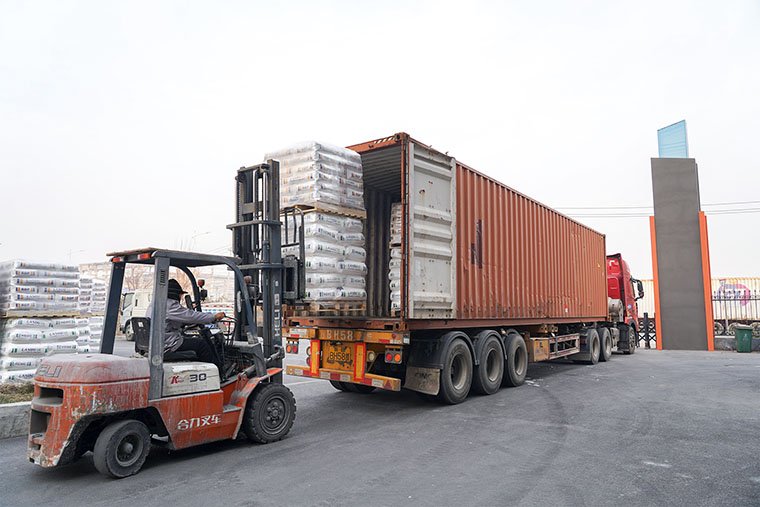
LANDERCOLL construction-grade cellulose ether is supplied in industrial packaging suitable for drymix mortar production, transportation, and storage.
 cURL Too many subrequests by single Worker invocation. To configure this limit, refer to https://developers.cloudflare.com/workers/wrangler/configuration/#limits
cURL Too many subrequests by single Worker invocation. To configure this limit, refer to https://developers.cloudflare.com/workers/wrangler/configuration/#limits
cURL Too many subrequests by single Worker invocation. To configure this limit, refer to https://developers.cloudflare.com/workers/wrangler/configuration/#limits
cURL Too many subrequests by single Worker invocation. To configure this limit, refer to https://developers.cloudflare.com/workers/wrangler/configuration/#limits
cURL Too many subrequests by single Worker invocation. To configure this limit, refer to https://developers.cloudflare.com/workers/wrangler/configuration/#limits
cURL Too many subrequests by single Worker invocation. To configure this limit, refer to https://developers.cloudflare.com/workers/wrangler/configuration/#limits
cURL Too many subrequests by single Worker invocation. To configure this limit, refer to https://developers.cloudflare.com/workers/wrangler/configuration/#limits
cURL Too many subrequests by single Worker invocation. To configure this limit, refer to https://developers.cloudflare.com/workers/wrangler/configuration/#limits
cURL Too many subrequests by single Worker invocation. To configure this limit, refer to https://developers.cloudflare.com/workers/wrangler/configuration/#limits
cURL Too many subrequests by single Worker invocation. To configure this limit, refer to https://developers.cloudflare.com/workers/wrangler/configuration/#limits
cURL Too many subrequests by single Worker invocation. To configure this limit, refer to https://developers.cloudflare.com/workers/wrangler/configuration/#limits
cURL Too many subrequests by single Worker invocation. To configure this limit, refer to https://developers.cloudflare.com/workers/wrangler/configuration/#limits
cURL Too many subrequests by single Worker invocation. To configure this limit, refer to https://developers.cloudflare.com/workers/wrangler/configuration/#limits
Construction-grade HPMC selection for specific mortar types
HEMC/MHEC grade comparison and application matching
Drymix mortar application performance discussion
Viscosity direction and dosage reference
Water retention improvement guidance
Open time and anti-sag optimization
Surface finish and workability support
Sample arrangement and quotation communication
Technical document support for purchasing and quality review
HPMC and HEMC/MHEC are the most commonly used cellulose ethers in drymix mortar. Both improve water retention, workability, open time, consistency, anti-sag behavior, and surface finish. The choice between them depends on the mortar type and the primary performance requirement.
HPMC is widely used across most drymix mortar types and provides reliable water retention, workability, and consistency. HEMC/MHEC is often preferred where open time, anti-sag behavior, anti-slip performance, and vertical application stability are the primary priorities — particularly in tile adhesive, EIFS/ETICS, and repair mortar applications. Final selection should be confirmed through formulation testing.
Cellulose ether improves fresh mortar properties including water retention, workability, consistency, open time, anti-sag behavior, troweling and scraping feel, anti-slip performance, surface finishing, and batch-to-batch stability. It is one of the most influential additives in a drymix mortar formulation despite being used at low dosage.
Typical dosage ranges from approximately 0.05% to 0.60% depending on mortar type, viscosity grade, formulation design, water demand, and target performance. Tile adhesive and EIFS mortar typically use higher dosages, while self-leveling compounds and masonry mortar may use lower dosages. Final dosage must be confirmed through formulation testing.
Cellulose ether primarily improves fresh mortar properties and water management during the working period. Final compressive strength and bond strength depend on binder content, water-to-cement ratio, curing conditions, polymer system, raw material quality, and the complete formulation design. Cellulose ether at normal dosage levels does not significantly reduce final strength when properly formulated.
Viscosity selection depends on the mortar type, application method, water demand, and target performance. Higher viscosity grades generally provide stronger water retention and anti-sag behavior but may increase application resistance. Lower viscosity grades support better flow and leveling. LANDERCOLL can recommend suitable viscosity directions based on your mortar type and formulation conditions.
Yes. Share your mortar type, formulation direction, target viscosity, dosage level, raw material system, local climate conditions, and any specific performance problems. LANDERCOLL can recommend suitable HPMC or HEMC/MHEC grades for evaluation and arrange samples for formulation testing.
Whether you manufacture flīžu līme, sienu tepe, cement plaster, ģipša apmetums, EIFS/ETICS mortar, pašizlīdzinošie savienojumi, masonry mortar, repair mortar, waterproof mortar, insulation mortar, joint fillers, or other drymix mortar products, LANDERCOLL can help you select suitable HPMC and HEMC/MHEC grades for better water retention, workability, open time, anti-sag performance, surface finish, and consistent production quality.
Our technical team is available to review your formulation, recommend suitable grades, provide dosage references, arrange samples, and support your evaluation from initial laboratory testing through to full production validation.
HPMC & HEMC/MHEC for Drymix Mortar · Water Retention · Open Time · Workability · Anti-Sag · Anti-Slip · Tile Adhesive · Wall Putty · Plaster · EIFS/ETICS · Self-Leveling · Masonry · Repair Mortar.
All performance data, dosage references, and formulation guidance provided on this page are for reference only. Final suitability must be confirmed through testing in your specific mortar formulation and application conditions. LANDERCOLL reserves the right to update product information without prior notice.
 English English
  العربية
 Deutsch
 Українська
 Ελληνικά
 Español
 Español de Perú
 Français
 Magyar
 Bahasa Indonesia
 Italiano
 Português
 Türkçe
 Русский
 Nederlands
 Slovenčina
 Svenska
 Български
 Čeština
 Dansk
Dansk
 Eesti
Eesti
 Suomi
Suomi
 日本語
日本語
 한국어
한국어
 Lietuvių kalba
 Latviešu valoda
 Norsk bokmål
 Polski
 Português do Brasil
 Română
 Slovenščina
