Excelencia en Éter de Celulosa — Confiado por más de 1000 empresas a nivel mundial Obtener muestra gratuita


CMC and selected cellulose ether solutions for glaze suspension, viscosity control, binding, water retention, surface application, and processing stability in ceramic glaze systems.
LANDERCOLL cellulose ether helps ceramic glaze manufacturers improve glaze slurry stability, application consistency, surface coverage, suspension behavior, and production reliability across wall tile, floor tile, porcelain, sanitaryware, and specialty ceramic glaze systems.
From spray glaze and dipping glaze to colored, opaque, and specialty formulations — the right cellulose ether grade supports stable suspension, controlled viscosity, and consistent surface application before firing.
— CMC · HPMC · HEC · Suspension Stability · Viscosity Control · Binding · Surface Coverage · Ceramic Glaze · Industrial Cellulose Ether
 Wall Tile Glaze
 Floor Tile Glaze
 Colored Glaze
 Spray Glaze


 Suspension · Viscosity · Surface Coverage
Ceramic glaze formulations require stable suspension of mineral particles, pigments, frits, and functional additives. During production and application, glaze slurry must maintain proper viscosity, smooth flow, good surface coverage, and stable adhesion to the ceramic body before firing.
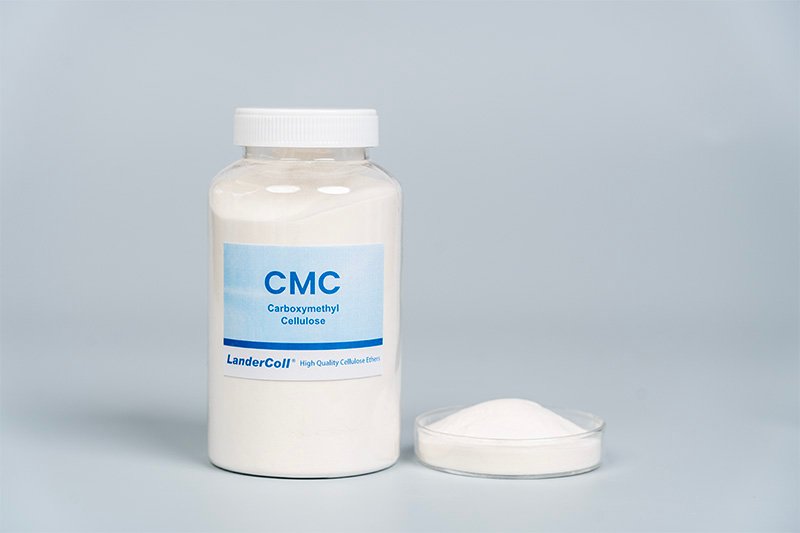
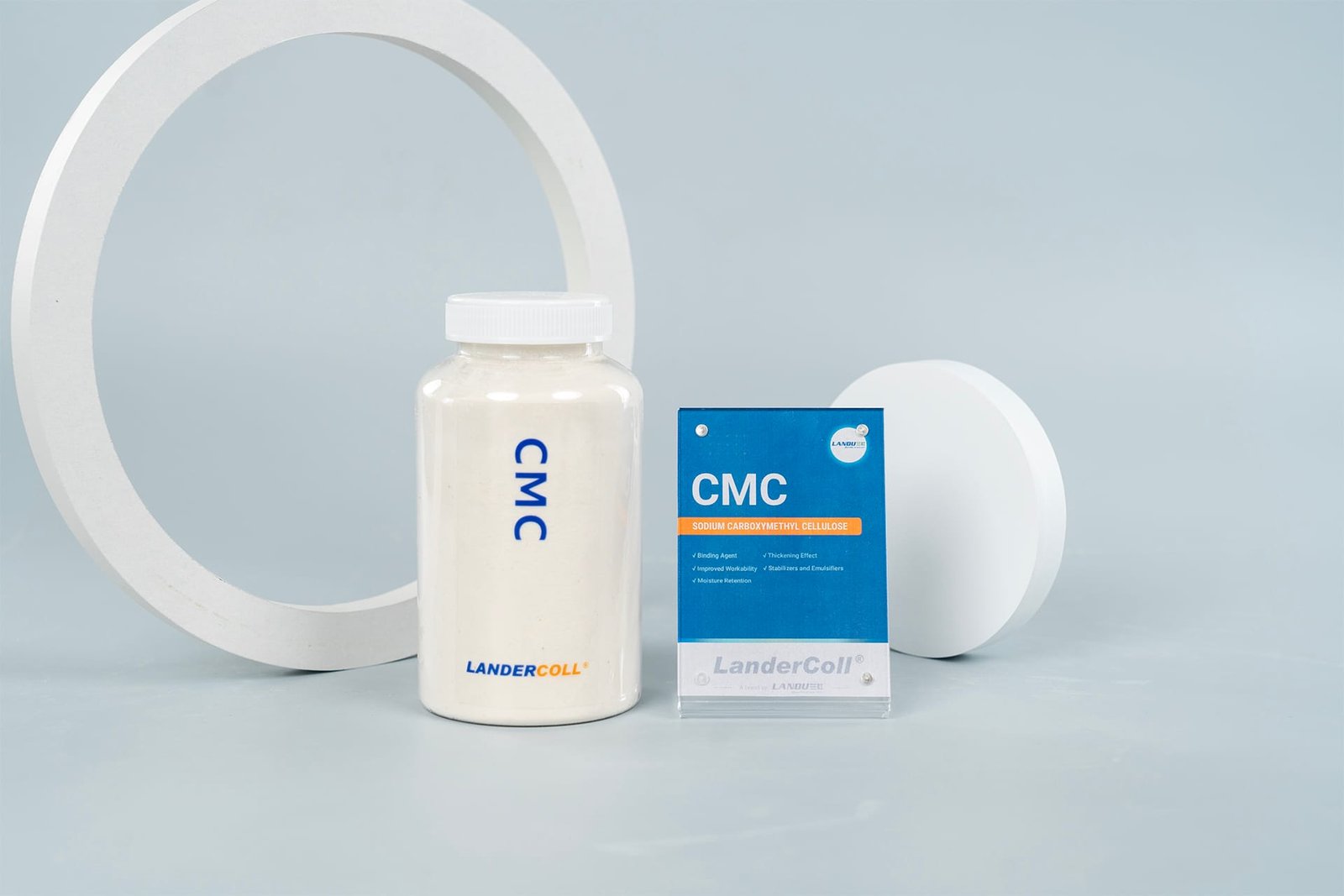
LANDERCOLL provides cellulose ether products for ceramic glaze applications — with CMC (carboximetilcelulosa) as the primary grade for suspension stability, binding, viscosity control, water retention, and improved glaze application behavior. Selected HPMC and HEC grades are also available for customized glaze systems where special rheology, flow control, or processing stability is required.
A suitable cellulose ether grade helps improve glaze uniformity, reduce settling, support better surface application, and maintain consistent production performance — directly contributing to higher yields, fewer surface defects, and more reliable fired glaze quality.
Ceramic glaze systems contain fine mineral particles, pigments, opacifiers, and frit particles that must remain uniformly dispersed throughout production and application. If the glaze slurry is unstable, particles may settle, viscosity may drift between batches, application may become uneven, and the final fired surface may show defects such as pinholes, crawling, color variation, or uneven gloss.
cURL Too many subrequests by single Worker invocation. To configure this limit, refer to https://developers.cloudflare.com/workers/wrangler/configuration/#limits

cURL Too many subrequests by single Worker invocation. To configure this limit, refer to https://developers.cloudflare.com/workers/wrangler/configuration/#limits
cURL Too many subrequests by single Worker invocation. To configure this limit, refer to https://developers.cloudflare.com/workers/wrangler/configuration/#limits

cURL Too many subrequests by single Worker invocation. To configure this limit, refer to https://developers.cloudflare.com/workers/wrangler/configuration/#limits
cURL Too many subrequests by single Worker invocation. To configure this limit, refer to https://developers.cloudflare.com/workers/wrangler/configuration/#limits

cURL Too many subrequests by single Worker invocation. To configure this limit, refer to https://developers.cloudflare.com/workers/wrangler/configuration/#limits
HEC may be used in selected glaze slurry or specialty ceramic coating systems where viscosity control and suspension support are needed. Because HEC is non-ionic, it is generally less sensitive to electrolyte interference — useful in systems with variable pH or soluble salt content.
Cellulose ether is used as a functional additive to support suspension stability, viscosity control, binding, water retention, and stable application performance before firing.
| Componente | Function in Ceramic Glaze |
|---|---|
| Frit | Main glass-forming component |
| Feldspar | Fluxing and glaze formation support |
| Quartz / Silica | Supports glaze structure and fired surface properties |
| Clay / Kaolin | Suspension, adhesion, and processing support |
| Pigments | Provide color and decorative effect |
| cURL Too many subrequests by single Worker invocation. To configure this limit, refer to https://developers.cloudflare.com/workers/wrangler/configuration/#limits | Improve opacity and visual appearance |
| Agua | Processing medium for glaze slurry |
| Éter de celulosa | Suspension, viscosity control, binding, and water retention |
| cURL Too many subrequests by single Worker invocation. To configure this limit, refer to https://developers.cloudflare.com/workers/wrangler/configuration/#limits | Improve particle dispersion and slurry flow |
| Otros aditivos | Adjust rheology, surface behavior, drying, or application performance |
Different ceramic glaze systems require different cellulose ether performance profiles. The table below provides a practical selection reference for ceramic glaze formulators and production engineers.
| Tipo de aplicación | Recommended Direction | Principales requisitos de rendimiento |
|---|---|---|
| Wall Tile Glaze | CMC | Suspension, surface coverage, application stability |
| Floor Tile Glaze | CMC | Viscosity control, adhesion, uniform coating |
| Porcelain Tile Glaze | cURL Too many subrequests by single Worker invocation. To configure this limit, refer to https://developers.cloudflare.com/workers/wrangler/configuration/#limits | Fine particle suspension, stable slurry, smooth surface |
| Colored Glaze | CMC | Pigment distribution, color uniformity, suspension |
| Opaque Glaze | cURL Too many subrequests by single Worker invocation. To configure this limit, refer to https://developers.cloudflare.com/workers/wrangler/configuration/#limits | Opacifier suspension, viscosity, stable appearance |
| Spray Glaze | CMC / selected low-viscosity grade | Sprayability, viscosity balance, surface coverage |
| Dipping Glaze | CMC | Slurry stability, adhesion, coating control |
| Specialty Glaze | cURL Too many subrequests by single Worker invocation. To configure this limit, refer to https://developers.cloudflare.com/workers/wrangler/configuration/#limits | Customized rheology, suspension, application control |
The following table provides reference dosage ranges for cellulose ether in ceramic glaze applications. Actual dosage should be determined through formulation testing and production-scale validation.
These dosage ranges are starting references only. Final dosage should be confirmed through slurry viscosity testing, suspension testing, application trials, drying evaluation, surface inspection, firing trials, and production-scale validation.
| Aplicación | Dosificación de referencia típica |
|---|---|
| Wall Tile Glaze | 0.05% – 0.30% |
| Floor Tile Glaze | 0.05% – 0.30% |
| Porcelain Tile Glaze | cURL Too many subrequests by single Worker invocation. To configure this limit, refer to https://developers.cloudflare.com/workers/wrangler/configuration/#limits |
| Colored Glaze | cURL Too many subrequests by single Worker invocation. To configure this limit, refer to https://developers.cloudflare.com/workers/wrangler/configuration/#limits |
| Opaque Glaze | cURL Too many subrequests by single Worker invocation. To configure this limit, refer to https://developers.cloudflare.com/workers/wrangler/configuration/#limits |
| Spray Glaze | 0.03% – 0.25% |
| Dipping Glaze | cURL Too many subrequests by single Worker invocation. To configure this limit, refer to https://developers.cloudflare.com/workers/wrangler/configuration/#limits |
| Specialty Glaze | 0.08% – 0.50% |
CMC helps keep glaze particles, pigments, frits, and opacifiers uniformly dispersed throughout the slurry. This supports more stable glaze slurry during storage and production, and more consistent application behavior — reducing the need for frequent re-mixing and preventing defects caused by particle segregation.
Cellulose ether helps adjust glaze slurry viscosity to match the requirements of the target application method — whether spraying, dipping, bell glazing, curtain glazing, or roller application. Proper viscosity control is essential for achieving consistent coating thickness and surface uniformity.
cURL Too many subrequests by single Worker invocation. To configure this limit, refer to https://developers.cloudflare.com/workers/wrangler/configuration/#limits
cURL Too many subrequests by single Worker invocation. To configure this limit, refer to https://developers.cloudflare.com/workers/wrangler/configuration/#limits
cURL Too many subrequests by single Worker invocation. To configure this limit, refer to https://developers.cloudflare.com/workers/wrangler/configuration/#limits
cURL Too many subrequests by single Worker invocation. To configure this limit, refer to https://developers.cloudflare.com/workers/wrangler/configuration/#limits
cURL Too many subrequests by single Worker invocation. To configure this limit, refer to https://developers.cloudflare.com/workers/wrangler/configuration/#limits
cURL Too many subrequests by single Worker invocation. To configure this limit, refer to https://developers.cloudflare.com/workers/wrangler/configuration/#limits
cURL Too many subrequests by single Worker invocation. To configure this limit, refer to https://developers.cloudflare.com/workers/wrangler/configuration/#limits
cURL Too many subrequests by single Worker invocation. To configure this limit, refer to https://developers.cloudflare.com/workers/wrangler/configuration/#limits
cURL Too many subrequests by single Worker invocation. To configure this limit, refer to https://developers.cloudflare.com/workers/wrangler/configuration/#limits
cURL Too many subrequests by single Worker invocation. To configure this limit, refer to https://developers.cloudflare.com/workers/wrangler/configuration/#limits
cURL Too many subrequests by single Worker invocation. To configure this limit, refer to https://developers.cloudflare.com/workers/wrangler/configuration/#limits
Dispersant, solids, pH, or electrolyte interaction affecting additive performance.
cURL Too many subrequests by single Worker invocation. To configure this limit, refer to https://developers.cloudflare.com/workers/wrangler/configuration/#limits
cURL Too many subrequests by single Worker invocation. To configure this limit, refer to https://developers.cloudflare.com/workers/wrangler/configuration/#limits
cURL Too many subrequests by single Worker invocation. To configure this limit, refer to https://developers.cloudflare.com/workers/wrangler/configuration/#limits
cURL Too many subrequests by single Worker invocation. To configure this limit, refer to https://developers.cloudflare.com/workers/wrangler/configuration/#limits
cURL Too many subrequests by single Worker invocation. To configure this limit, refer to https://developers.cloudflare.com/workers/wrangler/configuration/#limits
Drying stress or uneven moisture distribution in the glaze layer.
Support water retention and layer cohesion through grade optimization.
Raw material variation or poor additive balance across production batches.
Improve slurry stability and batch consistency through grade and dosage control.
Understanding the key variables that influence cellulose ether behavior in glaze systems is essential for successful formulation and production optimization.
Frits, feldspar, quartz, clay, pigments, and opacifiers influence suspension, viscosity, and adhesion.
Fine and coarse particles affect settling tendency, slurry flow, and surface smoothness.
High-solids systems require careful viscosity and rheology control.
Strongly influence slurry flow, particle distribution, and cellulose ether performance.
pH and soluble salts affect hydration, viscosity response, and suspension stability.
Spraying, dipping, bell glazing, and roller application require different viscosity profiles.
Speed, temperature, humidity, and layer thickness influence cracking and surface uniformity.
Kiln temperature, firing curve, and cooling behavior affect final fired glaze appearance.
Choosing the right cellulose ether requires balancing suspension stability, viscosity, application method, binding, water retention, surface coverage, drying behavior, and production consistency.
LANDERCOLL can help review your ceramic glaze formulation direction and recommend suitable CMC or selected cellulose ether grades for testing.
Wall tile, floor tile, porcelain, sanitaryware, or specialty glaze?
Spraying, dipping, bell glazing, curtain glazing, or another method?
What solids content and target viscosity are required?
Are pigments, opacifiers, or heavy frit particles included?
Is settling, viscosity drift, or poor surface coverage occurring?
What dispersants or deflocculants are used in the glaze?
What drying and firing conditions are required?
What production consistency and reliability targets apply?
Are there specific fired glaze appearance or surface requirements?
Not sure which cellulose ether grade is most suitable for your ceramic glaze? LANDERCOLL can recommend a practical grade for laboratory evaluation.
Ask for Ceramic Glaze Recommendation
 Hygroscopic · Seal When Not in Use
LANDERCOLL provides product-related documents to support ceramic glaze formulation testing, purchasing review, quality evaluation, and internal approval — particularly important for international procurement teams managing multi-site ceramic manufacturing operations.
Solicitar documentos del productoIf your ceramic glaze has settling, pigment separation, viscosity drift, poor adhesion before firing, uneven surface coverage, poor sprayability, cracking during drying, or inconsistent production performance — the cellulose ether grade, dosage, or system compatibility may need to be reviewed.
LANDERCOLL can evaluate suitable CMC and selected cellulose ether options based on your glaze composition, solids content, pigment system, dispersants, application method, drying conditions, and performance targets.
CMC grade selection for glaze type and application method
Suspension stability improvement discussion and dosage guidance
Viscosity and rheology adjustment for spraying, dipping, or bell glazing systems
Pigment and opacifier distribution support for colored and opaque glazes
cURL Too many subrequests by single Worker invocation. To configure this limit, refer to https://developers.cloudflare.com/workers/wrangler/configuration/#limits
cURL Too many subrequests by single Worker invocation. To configure this limit, refer to https://developers.cloudflare.com/workers/wrangler/configuration/#limits
cURL Too many subrequests by single Worker invocation. To configure this limit, refer to https://developers.cloudflare.com/workers/wrangler/configuration/#limits
Sample and quotation communication for evaluation and commercial planning
cURL Too many subrequests by single Worker invocation. To configure this limit, refer to https://developers.cloudflare.com/workers/wrangler/configuration/#limits
cURL Too many subrequests by single Worker invocation. To configure this limit, refer to https://developers.cloudflare.com/workers/wrangler/configuration/#limits
cURL Too many subrequests by single Worker invocation. To configure this limit, refer to https://developers.cloudflare.com/workers/wrangler/configuration/#limits
cURL Too many subrequests by single Worker invocation. To configure this limit, refer to https://developers.cloudflare.com/workers/wrangler/configuration/#limits
cURL Too many subrequests by single Worker invocation. To configure this limit, refer to https://developers.cloudflare.com/workers/wrangler/configuration/#limits
cURL Too many subrequests by single Worker invocation. To configure this limit, refer to https://developers.cloudflare.com/workers/wrangler/configuration/#limits
cURL Too many subrequests by single Worker invocation. To configure this limit, refer to https://developers.cloudflare.com/workers/wrangler/configuration/#limits
cURL Too many subrequests by single Worker invocation. To configure this limit, refer to https://developers.cloudflare.com/workers/wrangler/configuration/#limits
cURL Too many subrequests by single Worker invocation. To configure this limit, refer to https://developers.cloudflare.com/workers/wrangler/configuration/#limits
cURL Too many subrequests by single Worker invocation. To configure this limit, refer to https://developers.cloudflare.com/workers/wrangler/configuration/#limits
Our cellulose ether portfolio for ceramic glaze applications is supported by full technical documentation, application guidance, and dedicated technical support — helping your production team reduce defects, improve surface quality, and achieve more consistent glaze performance batch after batch.
CMC for Ceramic Glaze · HPMC for Specialty Glaze · HEC for Glaze Slurry · Suspension Stability · Viscosity Control · Binding · Surface Coverage · Ceramic Tile Body · Construction · Industrial · Pharmaceutical Applications.
 English English
  العربية
 Deutsch
 Українська
 Ελληνικά
 Español
 Español de Perú
 Français
 Magyar
 Bahasa Indonesia
 Italiano
 Português
 Türkçe
 Русский
 Nederlands
 Slovenčina
 Svenska
 Български
 Čeština
 Dansk
Dansk
 Eesti
Eesti
 Suomi
Suomi
 日本語
日本語
 한국어
한국어
 Lietuvių kalba
 Latviešu valoda
 Norsk bokmål
 Polski
 Português do Brasil
 Română
 Slovenščina
