Cellulose Ether Excellence — Trusted by 1000+ Enterprises Globally Get Free Sample
LANDERCOLL cellulose ether helps self-leveling compound manufacturers improve water management, flow stability, anti-segregation behavior, suspension consistency, surface quality, and application reliability.
Trusted by drymix flooring material producers across Europe, Asia, and the Middle East for cement-based, gypsum-based, hybrid, and polymer-modified self-leveling systems.
Self-leveling compounds are used to create smooth, flat, and uniform floor surfaces before the installation of tiles, vinyl flooring, carpets, hardwood flooring, epoxy coatings, and other floor finishes.


Self-leveling compounds must flow freely under their own weight to create a level surface, while remaining stable enough to prevent bleeding, sedimentation, segregation, surface defects, and inconsistent setting behavior.
LANDERCOLL supplies selected HPMC and HEMC / MHEC cellulose ether products for controlled water retention, stable flow behavior, anti-segregation support, suspension stability, and consistent surface smoothness.
A suitable cellulose ether grade, selected at the right viscosity and dosage, helps maintain the flow and stability balance by supporting water management and rheology control without excessively restricting flow.
Self-leveling compounds are cement-based, gypsum-based, or hybrid flooring materials engineered to flow across a substrate and create a smooth, level surface with minimal mechanical intervention.
They are widely used in residential, commercial, and industrial construction for floor renovation, substrate preparation, surface smoothing, floor leveling, and flooring underlayment applications.
A typical cement-based self-leveling compound formulation includes cement, calcium aluminate cement, gypsum, fine aggregates, fillers, redispersible polymer powder, superplasticizer, defoamer, set-control additives, cellulose ether, and other functional additives.
Cellulose ether is used at a carefully controlled, typically low dosage to support water retention, suspension stability, formulation consistency, and anti-segregation behavior without reducing the flowability the system requires.

Self-leveling compounds must combine high flow with high stability. If the formulation flows too freely, it may bleed or segregate. If it is too thick, it loses leveling ability and may leave waves, trowel marks, or uneven thickness.
Self-leveling systems usually need low to medium viscosity cellulose ether grades at controlled dosage levels, so water management and suspension stability can improve without sacrificing flow spread.

HPMC can be used in selected self-leveling compound formulations where controlled water retention, suspension stability, and formulation consistency are required alongside adequate flowability.
In self-leveling systems, HPMC grade selection is critical. Excessive viscosity will reduce flow spread and compromise leveling performance.

HEMC / MHEC may be used in selected self-leveling compound systems where water retention, rheology balance, and suspension stability are needed alongside controlled flow behavior.
It is typically selected at lower viscosity grades or carefully controlled dosage levels compared with vertical mortar systems such as tile adhesive or EIFS base coat.
Self-leveling formulations are highly sensitive to raw material selection, additive balance, water dosage, mixing method, and application conditions.
| Component | Function in Self-Leveling Compounds |
|---|---|
| Cement | Main hydraulic binder; provides structural strength and setting. |
| Calcium Aluminate Cement | Supports early strength development and setting control in selected systems. |
| Gypsum | Helps adjust setting behavior and dimensional stability in selected systems. |
| Fine Aggregates | Provide structure, body, and mechanical support. |
| Fillers | Adjust flow, surface smoothness, density, and cost balance. |
| Redispersible Polymer Powder (RDP) | Supports adhesion, flexibility, and surface performance. |
| Superplasticizer | Improves flowability and reduces water demand. |
| Cellulose Ether (HPMC / HEMC) | Supports water retention, suspension stability, and anti-segregation. |
| Defoamer | Helps reduce entrapped air and surface defects such as pinholes. |
| Set-Control Additives | Adjust working time, setting progression, and strength development. |
| Other Performance Additives | Adjust shrinkage, surface quality, strength, or special requirements. |
Different self-leveling systems have different flow, stability, and surface quality requirements. This table provides a practical starting reference.
| Application Type | Recommended Product | Main Performance Requirements |
|---|---|---|
| Cement-Based Self-Leveling | Low to medium viscosity HPMC or HEMC / MHEC | Flow balance, water retention, stability. |
| Gypsum-Based Self-Leveling | Selected HPMC or HEMC / MHEC | Water management, smoothness, consistency. |
| Flooring Underlayment | Low viscosity HPMC or HEMC / MHEC | Flowability, surface quality, anti-segregation. |
| Thin-Layer Self-Leveling (≤10 mm) | Low viscosity HPMC or HEMC / MHEC | High flow, smooth surface, stable slurry. |
| Thick-Layer Self-Leveling (>10 mm) | Low to medium viscosity HPMC or HEMC / MHEC | Suspension stability, controlled flow, anti-sedimentation. |
| Fast-Setting Self-Leveling | Selected HPMC or HEMC / MHEC | Workability, water management, setting balance. |
| Polymer-Modified Self-Leveling | HPMC or HEMC / MHEC | Polymer compatibility, flow stability, surface quality. |
| Industrial Floor Smoothing | Selected HPMC or HEMC / MHEC | High stability, surface smoothness, process control. |
The dosage of cellulose ether in self-leveling compounds is typically lower than in vertical construction mortars because high flowability must be preserved.
In self-leveling formulations, cellulose ether must support stability and water behavior while preserving the flow spread needed for natural leveling.
Self-leveling compounds need sufficient flow to spread across the floor surface and level naturally. Cellulose ether must be selected and dosed carefully so it supports stability and water management without restricting the flow spread the system requires.
Water retention supports stable cement hydration, better surface formation, and reduced rapid water loss to absorbent concrete or screed surfaces.
Cellulose ether helps keep cement, fillers, fine aggregates, and additives uniformly distributed throughout the mixed slurry.
Suitable grades help reduce the risk of particle separation, bleeding, sedimentation zones, and weak surface layers.
A smooth, defect-free surface is essential for flooring underlayment and floor finishing systems. Cellulose ether supports better water management and more uniform material distribution during leveling.
Self-leveling materials must remain workable and pumpable long enough for mixing, transport, pouring, spreading, and air release before setting begins.
Cellulose ether helps reduce bleeding risk by improving water retention and suspension stability within the slurry.
Many fresh self-leveling compound problems are related to water management, suspension stability, and rheology balance.
Excess water, weak water retention, poor additive balance.
Improve water management and reduce water migration.
Poor suspension, heavy particles, excessive flow.
Support suspension stability and anti-segregation behavior.
Excessive viscosity, wrong grade, low superplasticizer efficiency.
Adjust cellulose ether grade and reduce dosage.
Poor air release, filler instability, bleeding, uneven flow.
Support stable surface formation and material uniformity.
Low slurry structure, heavy fillers, poor rheology.
Improve suspension and slurry consistency.
Air entrainment, defoamer imbalance, unstable slurry.
Support consistency while reviewing defoamer balance.
Fast-setting binder, high temperature, poor additive balance.
Support workable consistency during the application window.
Bleeding, segregation, poor hydration balance.
Improve water behavior and formulation uniformity.
Understanding the variables that influence cellulose ether behavior in self-leveling systems helps formulators make better product selection and dosage decisions.
Cement, calcium aluminate cement, gypsum, and blended systems influence setting behavior, flow retention, early strength, and water demand.
Cellulose ether must be compatible with the superplasticizer system to maintain flow spread and formulation stability.
Particle size distribution affects flow behavior, sedimentation risk, surface smoothness, and strength development.
Lower viscosity grades are generally preferred because excessive viscosity reduces flow spread.
Insufficient dosage may fail to control bleeding; excessive dosage can reduce flow or create sticky slurry behavior.
Air release is critical for preventing pinholes, surface craters, and entrapped air defects.
Water dosage directly affects flow spread, bleeding risk, strength development, shrinkage, and surface quality.
Thin-layer and thick-layer products require different flow profiles, suspension behavior, and stability performance.
Temperature affects setting time, flow retention, hydration rate, and working time.
Mixing time, water addition sequence, mixing speed, and powder dispersion quality affect air entrainment and slurry behavior.
Selecting the right cellulose ether requires balancing flowability with stability. The best grade supports water retention, suspension, and anti-segregation without making the system too viscous.
Cement-based, gypsum-based, or blended?
What flow spread target does the formulation need?
Thin layer, standard layer, or thick layer?
Better anti-segregation control, bleeding reduction, or both?
What type and dosage are used?
What filler and aggregate grading system is included?
What final surface quality is required?
What working time and setting time are needed?
What dosage level balances cost and performance?
What temperature and humidity conditions are typical?
LANDERCOLL can review your self-leveling compound formulation direction and recommend a suitable HPMC or HEMC / MHEC grade for laboratory testing.
Ask for Grade RecommendationLANDERCOLL cellulose ether for self-leveling compound applications is supplied in industrial packaging designed for drymix flooring material production environments, international shipping, and warehouse storage.
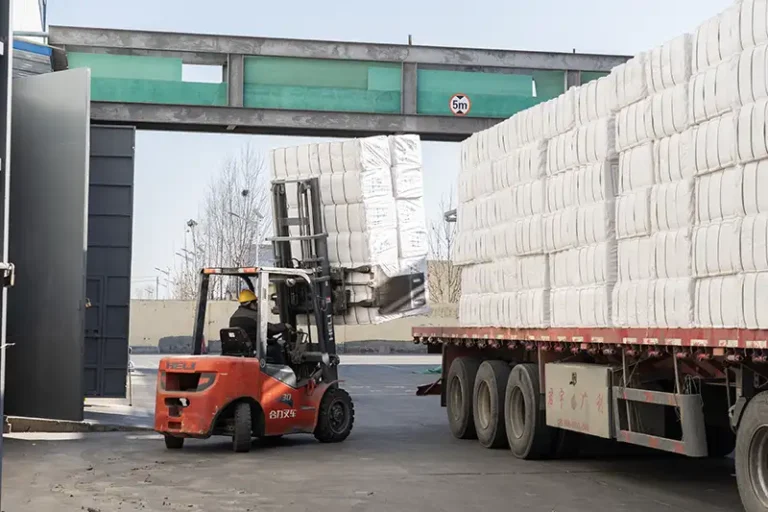
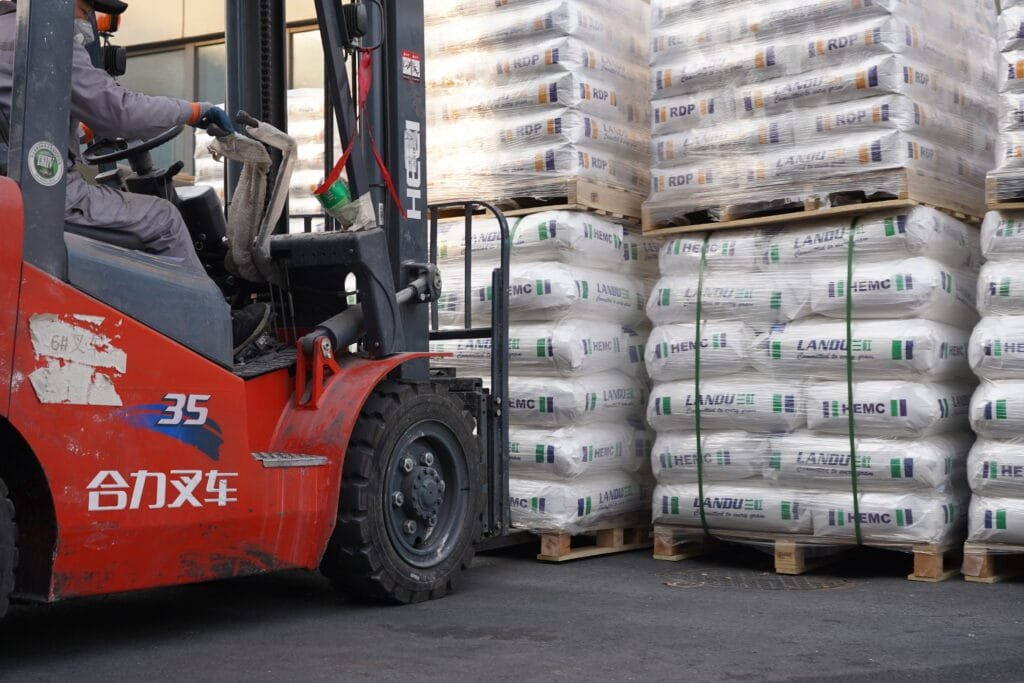
LANDERCOLL can provide a full set of product documentation to support self-leveling compound formulation development, purchasing review, quality approval, and import compliance.
If your self-leveling compound is experiencing bleeding, segregation, insufficient flow spread, rough surface formation, sedimentation, pinholes, weak surface layer, or inconsistent batch performance, the cellulose ether grade or dosage may need to be reviewed.
LANDERCOLL provides technical support to help drymix flooring material manufacturers evaluate suitable low to medium viscosity HPMC and HEMC / MHEC options based on binder system, superplasticizer type, filler grading, flow spread target, application thickness, and performance requirements.
HPMC and HEMC / MHEC product selection for self-leveling systems.
Flow and stability balance evaluation.
Water retention improvement strategy.
Anti-segregation and bleeding reduction support.
Surface quality improvement discussion.
Viscosity grade direction and dosage recommendation.
Compatibility review with superplasticizer and defoamer systems.
Sample arrangement, technical evaluation, quotation, and supply communication.
Selected low to medium viscosity HPMC and HEMC / MHEC grades are used to support water retention, suspension stability, anti-segregation behavior, and surface quality while maintaining high flowability.
Cellulose ether improves water management, suspension stability, formulation consistency, and anti-segregation behavior, reducing bleeding, uneven settling, and defective surfaces.
Yes. Cellulose ether can reduce flow spread depending on viscosity grade and dosage, so low viscosity grades at controlled dosage are typically used in self-leveling compounds.
HPMC supports controlled water retention, suspension stability, anti-segregation behavior, and formulation consistency in selected self-leveling systems.
HEMC / MHEC supports water retention, flow stability, filler and aggregate suspension, and anti-segregation behavior in selected self-leveling formulations.
A common reference dosage range is 0.05%–0.20% by dry weight. Thin-layer systems may use 0.03%–0.15%. Final dosage must be confirmed through testing.
It helps bind and manage water within the formulation, reducing free water migration to the surface and lowering the risk of weak surface layers.
Poor flow after cellulose ether addition is often caused by too high a viscosity grade, excessive dosage, superplasticizer incompatibility, insufficient mixing time, or incorrect water dosage.
Both can be effective depending on binder system, superplasticizer type, flow target, and stability requirements. Final selection should be confirmed by formulation testing.
Start with binder system type, flow spread target, application thickness, stability requirement, superplasticizer system, filler grading, and surface quality standard.
Yes. LANDERCOLL can arrange HPMC and HEMC / MHEC samples for self-leveling compound formulation testing based on binder system, flow spread target, and performance requirements.
Whether you produce cement-based self-leveling compounds, gypsum-based self-leveling systems, flooring underlayment, thin-layer smoothing compounds, thick-layer leveling systems, fast-setting floor compounds, or polymer-modified self-leveling formulations, LANDERCOLL can help you identify the right HPMC or HEMC / MHEC grade for better flow stability, water retention, anti-segregation behavior, and surface quality.
Our team works with drymix flooring material manufacturers across multiple markets to support formulation development, product selection, sample evaluation, and supply communication for self-leveling compound cellulose ether applications.
 English English
  العربية
 Deutsch
 Українська
 Ελληνικά
 Español
 Español de Perú
 Français
 Magyar
 Bahasa Indonesia
 Italiano
 Português
 Türkçe
 Русский
 Nederlands
 Slovenčina
 Svenska
 Български
 Čeština
 Dansk
Dansk
 Eesti
Eesti
 Suomi
Suomi
 日本語
日本語
 한국어
한국어
 Lietuvių kalba
 Latviešu valoda
 Norsk bokmål
 Polski
 Português do Brasil
 Română
 Slovenščina
