Cellulose Ether Excellence — Trusted by 1000+ Enterprises Globally Get Free Sample

The right cellulose ether grade does more than thicken — it shapes how your coating flows, feels, suspends, levels, and performs throughout its entire shelf life.
LANDERCOLL paint grade cellulose ether helps improve thickening, rheology control, pigment suspension, leveling, brushing feel, roller application, anti-sag behavior, and storage stability in water-based coating systems.
— HEC · HPMC · CMC · Trusted by paint manufacturers and coating formulators in architectural, decorative, and industrial coating markets.
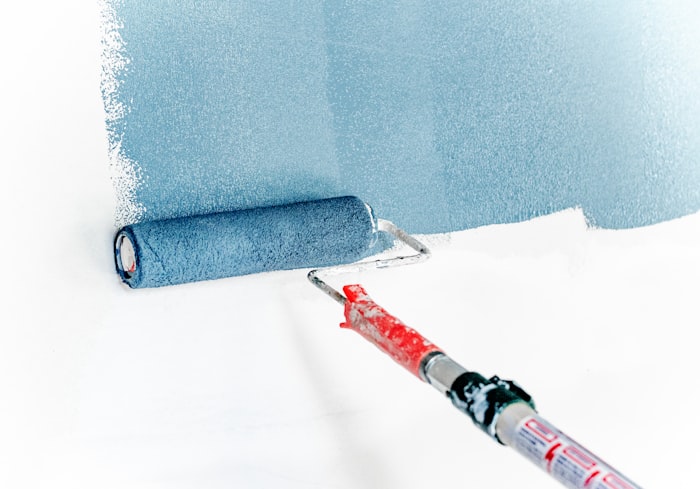 Latex Paint
 Exterior Wall
 Interior Paint
 Texture Coating

Paint grade cellulose ether is an important functional additive for water-based coating formulations. It is used to control viscosity, improve rheology, suspend pigments and fillers, enhance leveling, support stable application, and maintain product consistency during storage.
LANDERCOLL paint grade cellulose ether is primarily based on HEC (Hydroxyethyl Cellulose). HEC is widely used in interior wall paint, exterior wall paint, latex paint, emulsion paint, texture coatings, architectural coatings, decorative coatings, and selected industrial water-based coating systems.

In water-based paints, cellulose ether influences viscosity build, brush and roller feel, leveling, anti-sag behavior, pigment suspension, spatter resistance, and storage stability — all in a single additive.
Paint grade cellulose ether refers to cellulose ether products specifically designed for water-based paints and coating systems. These products are selected for their ability to control viscosity, improve rheology, stabilize pigments and fillers, and support smooth, consistent application performance.
The most widely used cellulose ether for paint applications is HEC (Hydroxyethyl Cellulose). As a non-ionic, water-soluble cellulose ether, HEC hydrates in water and forms a viscous solution that helps improve coating structure, stability, and application behavior.
In water-based paints, cellulose ether can influence several important formulation properties, including viscosity build, brush and roller feel, leveling, anti-sag behavior, pigment suspension, spatter resistance, and storage stability. This makes paint grade cellulose ether a key additive for manufacturers who need consistent coating performance and a better end-user application experience.
Three product families cover the full range of paint and coating applications — from mainstream latex paint thickening to specialty paper coating and textile surface systems. HEC is the primary product for most water-based paint systems.
HEC is the main LANDERCOLL product family for paint grade applications. It provides reliable thickening, rheology control, suspension stability, flow adjustment, and storage stability in water-based coating systems. In paints and coatings, HEC helps maintain uniform pigment and filler distribution, improves viscosity stability, and supports smooth application by brush, roller, or spray depending on the formulation design.

HPMC is not typically the first choice for mainstream water-based paint thickening, but it can support selected coating systems where thickening, film formation, water retention, surface quality, or formulation stability are required. In specialty coatings or surface formulations, suitable HPMC grades may help improve consistency and contribute to film-forming behavior.

CMC is primarily used in food, detergents, ceramics, paper, textile, oilfield, and industrial applications. However, it can also support selected coating systems where thickening, stabilization, binding, and surface structure are required. In paper coating, textile printing, adhesive systems, and certain industrial coating formulations, CMC can provide useful viscosity, binding, and stabilization performance.
From interior wall paint to exterior architectural coatings, each application type places different demands on the cellulose ether grade — viscosity level, flow profile, suspension strength, anti-sag need, and storage stability requirement all vary by formulation design and end-use environment.

Interior wall paint requires stable viscosity, smooth application, good leveling, and consistent surface appearance. HEC helps control the rheology of the paint so it can be applied easily by brush or roller while maintaining in-can stability throughout storage and use. A suitable paint grade HEC can improve user experience and help reduce common formulation problems such as poor flow, uneven application, pigment settling, and unstable viscosity during storage.
Exterior Wall Paint
Requires stronger formulation stability and reliable application under varying environmental conditions — temperature, humidity, and substrate absorption all affect performance.
Latex Paint
Latex paint depends heavily on rheology control. The formulation needs to remain stable in the container, flow properly during application, and form a uniform coating surface after drying.
Emulsion Paint
Requires a stable balance between polymer emulsion, pigments, fillers, water, and functional additives. Cellulose ether helps improve physical stability and application behavior of the complete system.
 Texture Coatings
Contain higher levels of fillers and require stronger body, structure, and suspension stability. A suitable high-viscosity HEC grade helps maintain filler distribution and anti-sag performance.

Require a balanced combination of stability, application comfort, appearance quality, and performance reliability. Paint grade cellulose ether supports viscosity, leveling, pigment suspension, and handling behavior for a better customer experience.

Water-based coatings need controlled flow, stable viscosity, and good application properties. HEC helps adjust rheological behavior, allowing smooth spreading while maintaining structure during storage. For industrial systems, selected HPMC or CMC may also support film behavior or surface performance.
Different coating systems require different viscosity levels, rheology profiles, and suspension performance. Use this table as a starting point — final selection should always be confirmed through formulation testing.
Pigments, fillers, binders, emulsions, surfactants, pH level, dispersants, salts, preservatives, and processing methods can all significantly affect cellulose ether performance in paint systems.
| Application | Recommended Product | Main Performance Requirements |
|---|---|---|
| Interior Wall Paint | Medium viscosity HEC | Viscosity control, leveling, brushability, pigment suspension |
| Exterior Wall Paint | Medium to high viscosity HEC | Storage stability, anti-sag, pigment and filler suspension |
| Latex Paint | Medium viscosity HEC | Flow control, roller application, in-can stability |
| Emulsion Paint | Medium viscosity HEC | Rheology control, consistency, suspension stability |
| Texture Coatings | High viscosity HEC | Strong body, anti-sag, filler suspension |
| Water-Based Coatings | Low to medium viscosity HEC | Flow behavior, viscosity adjustment, stability |
| Architectural Coatings | Medium viscosity HEC | Smooth application, leveling, uniform appearance |
| Selected Industrial Coatings | HEC / selected HPMC / CMC | Rheology, stability, process control |
| Paper Coatings | CMC / HEC | Binding, surface sizing, coating stability |
| Inks and Surface Systems | HEC / CMC | Flow control, stability, surface uniformity |

The following ranges are general starting points for laboratory evaluation only — they are not fixed usage standards.
| Application | Reference Dosage |
|---|---|
| Interior Wall Paint | 0.2% – 0.7% |
| Exterior Wall Paint | 0.2% – 0.8% |
| Latex Paint | 0.2% – 0.7% |
| Emulsion Paint | 0.2% – 0.7% |
| Water-Based Coatings | 0.1% – 0.6% |
| Texture Coatings | 0.3% – 1.0% |
| Architectural Coatings | 0.2% – 0.8% |
| Selected Industrial Coatings | Depends on formulation |
| Paper Coatings | Depends on coating formula |
| Inks and Surface Systems | Depends on target viscosity |
These dosage levels are reference starting points only. Final dosage must be confirmed through laboratory testing, viscosity measurement, storage stability testing, application testing, and production trials under real conditions.
Paint grade cellulose ether contributes to multiple performance dimensions simultaneously. Understanding each functional contribution helps formulators select the right grade, viscosity level, and dosage for each coating system design.
Builds and controls viscosity in water-based coatings. Proper viscosity improves handling, storage performance, and application consistency across different coating types and methods.
Controls how paint flows under brush, roller, or spray. Supports a practical balance between easy, smooth application and stable structural integrity during storage and after application.
Keeps pigments and fillers evenly distributed throughout the product. Reduces settling and supports uniform appearance and consistent color development.
Helps the coating spread more evenly after application, reducing brush marks and roller texture — supporting smoother surface formation when properly selected and dosed.
Provides sufficient body to resist sagging on vertical surfaces after application. Suitable HEC grades support sag resistance without compromising spreadability.
Directly affects the end-user experience during application. Improves brushability, roller feel, coating smoothness, and overall application comfort.
Maintains viscosity, suspension, and consistency during storage — reducing the risk of separation, sedimentation, and viscosity drift over time.

HEC (Hydroxyethyl Cellulose) is one of the most widely used cellulose ether products in water-based paints because it provides a practical and reliable balance of thickening, rheology control, suspension stability, and application performance.
In a coating system, HEC can help maintain viscosity during storage, improve pigment distribution, support smooth application, and reduce settling. It is especially valuable for manufacturers who need stable, consistent performance in interior wall paint, exterior wall paint, latex paint, emulsion paint, and texture coatings.
Maintains stable viscosity during storage and use across temperature changes.
Keeps pigments and fillers evenly distributed and prevents settling.
Improves brush and roller application, reduces marks and uneven surfaces.
Supports smooth brush and roller feel for a better end-user experience.
Improves body and sag resistance in vertical surface applications.
Reduces separation, sedimentation, and viscosity drift over time.
Consistent coating quality — from production to application
Choosing the right paint grade cellulose ether requires a thorough understanding of the complete coating system. The best product should match the required viscosity level, flow behavior, pigment and filler system, binder system, application method, and storage stability target.
If you are unsure which paint grade HEC is suitable for your coating system, LANDERCOLL can help review your formulation requirements and recommend a practical grade direction for initial testing.
Not sure which paint grade HEC fits your formulation? LANDERCOLL can review your requirements and recommend a starting direction.
Ask for Paint Grade RecommendationInterior paint, exterior paint, latex, emulsion, or texture coating?
What viscosity does your formulation require?
Do you need better flow, leveling, or anti-sag behavior?
What pigment and filler system is used in the formulation?
What binder or emulsion system is used?
What is the pH range of the formulation?
Are surfactants, dispersants, preservatives, or salts present?
Brush, roller, spray, or trowel application?
What storage stability target is required for your product?
Fast dispersion or delayed hydration behavior needed?
LANDERCOLL paint grade cellulose ether is supplied in industrial packaging suitable for coating production environments, transportation, and warehouse storage. Because cellulose ether powder can absorb moisture from the environment, proper storage conditions help maintain powder flowability, dispersion behavior, viscosity performance, and formulation stability throughout the product shelf life.
 Industrial Packaging
25 kg per bag — industrial standard for coating production
Moisture-protective liner protects from humidity in transit
Palletized packaging available upon request
Customized packaging for long-term cooperation projects
LANDERCOLL can provide product-related technical and commercial documents to support product evaluation, purchasing review, coating formulation testing, and internal approval processes.
 Documentation
If your coating is experiencing any of the following issues, the cellulose ether grade may need to be reviewed or optimized. LANDERCOLL can help evaluate suitable HEC and selected cellulose ether products based on your paint type, target viscosity, pigment and filler system, binder system, processing method, and application requirements.
Unstable viscosity during storage or production
Pigment or filler settling in the container
Poor leveling or uneven surface appearance
Weak product body or insufficient structure
Excessive sagging on vertical surfaces
Poor brushability or uncomfortable roller feel
Storage separation or phase instability
Inconsistent performance between production batches
Paint grade HEC product selection and comparison
Viscosity direction recommendation
Rheology improvement strategy
Pigment and filler suspension support
Flow and leveling performance discussion
Anti-sag performance adjustment
Grade comparison and alternative evaluation
Sample arrangement and quotation communication
Paint grade cellulose ether is a functional polymer additive used in water-based paints and coatings to improve thickening, rheology control, pigment suspension, leveling, application behavior, and storage stability. The most widely used paint grade cellulose ether is HEC (Hydroxyethyl Cellulose).
HEC (Hydroxyethyl Cellulose) is the most widely used cellulose ether for water-based paints and coatings, including interior wall paint, exterior wall paint, latex paint, emulsion paint, and texture coatings. HPMC and CMC may be used in selected specialty coating systems.
HEC improves viscosity control, pigment suspension, rheology, leveling, brushability, roller application comfort, anti-sag behavior, and storage stability in water-based paint formulations. It is a key functional additive for maintaining consistent coating performance.
Yes. HEC is commonly used in latex paint to support viscosity control, in-can stability, smooth brush and roller application, and pigment suspension. It is one of the standard thickeners used in latex paint production worldwide.
Pigment settling may be caused by low viscosity, poor rheology control, unsuitable dispersant system, high-density fillers, insufficient suspension support from the thickener, poor mixing during production, or incorrect cellulose ether selection or dosage.
Yes. Suitable paint grade cellulose ether can support better flow and leveling behavior. However, the final leveling result depends on the complete coating formulation, including binder type, pigments, dispersants, surfactants, and other functional additives.
Yes. Suitable HEC grades can help improve coating body and sag resistance in vertical surface applications. The right viscosity grade and dosage should be selected based on the specific coating system and application requirements.
For many water-based paints, HEC dosage typically ranges from 0.1% to 0.8% by weight of the formulation, depending on the coating type, target viscosity, and performance requirements. Texture coatings may require higher dosages. Final dosage should always be confirmed through formulation testing.
Start by identifying your coating type, target viscosity, application method, pigment and filler system, pH range, binder system, and storage stability requirement. LANDERCOLL can help recommend a suitable HEC grade for initial evaluation and testing.
HEC is the preferred cellulose ether for mainstream water-based paint applications because of its reliable thickening, rheology control, and suspension performance in aqueous systems. HPMC is more commonly used in construction materials but can support selected specialty coating systems where film formation, water retention, or surface quality are specific requirements.
Whether you produce interior wall paint, exterior wall paint, latex paint, emulsion paint, texture coatings, architectural coatings, or selected industrial water-based coatings, LANDERCOLL can help you choose the right paint grade cellulose ether for better viscosity control, storage stability, and application performance.
Our team can provide product recommendations, technical guidance, sample arrangements, and quotations based on your specific coating system requirements and performance targets.
Paint Grade HEC Supplier for Interior Wall Paint, Exterior Wall Paint, Latex Paint, Emulsion Paint, Texture Coatings, Architectural Coatings, and Selected Industrial Water-Based Coating Systems.
Technical support available. Samples on request. Product documents provided for qualified inquiries.
 English English
  العربية
 Deutsch
 Українська
 Ελληνικά
 Español
 Español de Perú
 Français
 Magyar
 Bahasa Indonesia
 Italiano
 Português
 Türkçe
 Русский
 Nederlands
 Slovenčina
 Svenska
 Български
 Čeština
 Dansk
Dansk
 Eesti
Eesti
 Suomi
Suomi
 日本語
日本語
 한국어
한국어
 Lietuvių kalba
 Latviešu valoda
 Norsk bokmål
 Polski
 Português do Brasil
 Română
 Slovenščina
