Cellulose Ether Excellence — Trusted by 1000+ Enterprises Globally Get Free Sample
LANDERCOLL cellulose ether helps EIFS / ETICS mortar manufacturers improve water retention, open time, anti-sag behavior, workability, and application stability in exterior insulation and finish systems.
Trusted by drymix mortar producers across Europe, Asia, and the Middle East for exterior insulation mortar systems that require consistent fresh mortar behavior on vertical facade applications.
EIFS and ETICS are exterior wall insulation systems designed to improve building energy efficiency, facade durability, and finishing quality. These systems rely on multiple mortar layers, each with specific fresh mortar performance demands.


Mortar must bond insulation boards securely, hold reinforcing mesh in position, remain workable during facade installation, and resist sagging on vertical surfaces.
LANDERCOLL supplies HPMC and HEMC / MHEC cellulose ether for drymix mortar manufacturers who need water retention, open time, anti-sag performance, smooth workability, and consistent application behavior across EIFS / ETICS layers.
The right cellulose ether grade supports fresh mortar performance and helps ensure smoother, more reliable job-site application during insulation board bonding, mesh embedding, and surface finishing.
EIFS stands for Exterior Insulation and Finish System. ETICS stands for External Thermal Insulation Composite System. Both terms describe multi-layer exterior wall insulation systems that combine insulation boards, adhesive mortar, reinforcement layers, base coat, embedded fiberglass mesh, and decorative or protective finishing coats.
These systems are widely used in residential, commercial, and industrial construction to reduce heat loss, improve facade performance, and meet modern building energy standards.
In EIFS / ETICS construction, cement-based drymix mortars are used for bonding insulation boards to substrates, embedding fiberglass mesh into base coat layers, leveling surfaces, and creating a stable base for finishing coats.
Cellulose ether plays a central role in controlling water retention, open time, rheology, anti-sag behavior, troweling feel, and wet mortar stability.

EIFS / ETICS mortars are applied on exterior walls and vertical insulation surfaces under varying climate conditions. They must stay workable long enough for board bonding and mesh embedding while maintaining enough structure to resist sagging after application.
LANDERCOLL provides HEMC / MHEC and HPMC cellulose ether grades for insulation board adhesive mortar, base coat mortar, mesh embedding mortar, reinforcement mortar, and finishing coat systems.
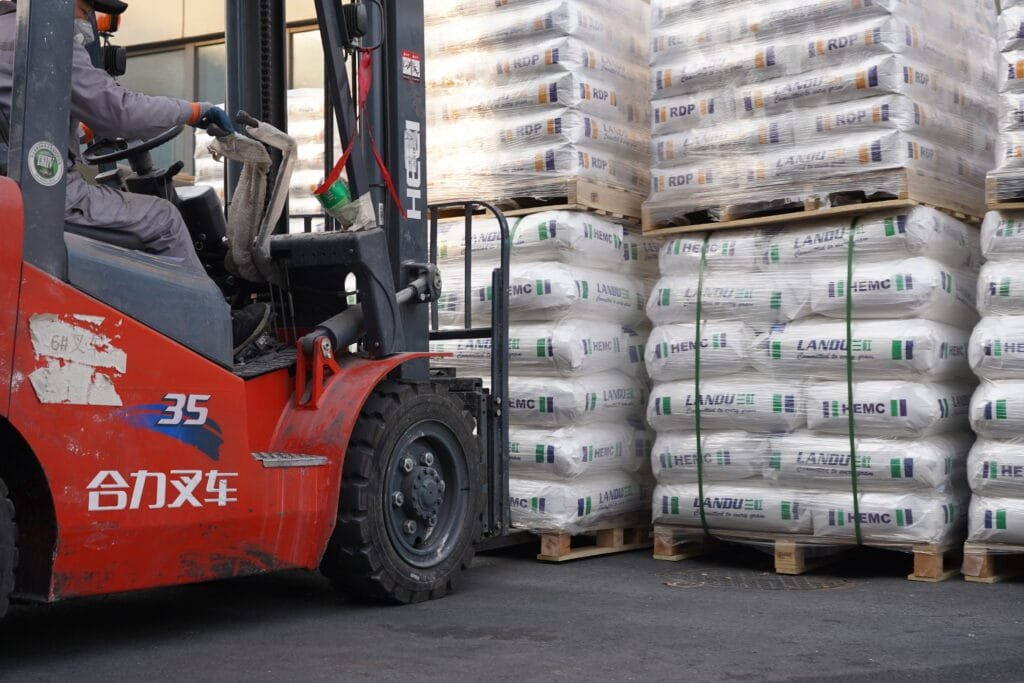
HEMC / MHEC is particularly well-suited for EIFS / ETICS systems where extended open time, anti-sag performance, smooth troweling, strong water retention, and consistent workability are critical requirements.
In insulation board adhesive mortar, base coat mortar, and mesh embedding mortar, HEMC / MHEC helps maintain workable consistency over a longer application window and improves stability on vertical facade surfaces.
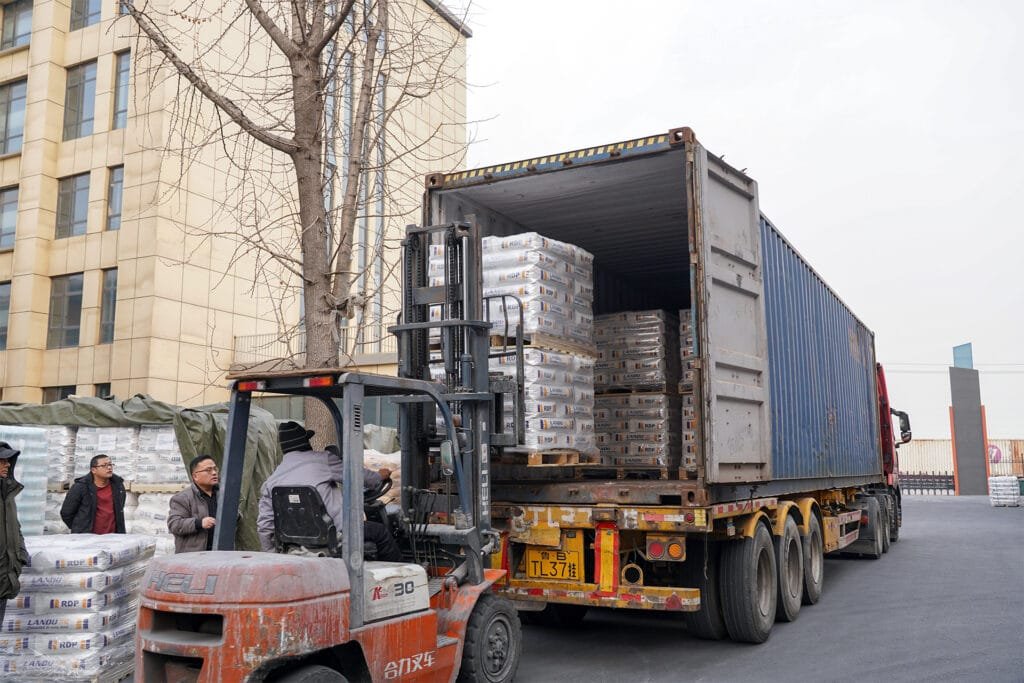
HPMC is one of the most widely used cellulose ethers in drymix construction materials and is suitable for a broad range of EIFS / ETICS mortar systems.
In adhesive and base coat systems, HPMC helps reduce rapid water loss to the substrate, supports smooth spreading during board bonding, and improves application comfort during facade installation.
EIFS / ETICS mortar formulations vary depending on insulation board type, system design, climate zone, target performance, and locally available raw materials.
| Component | Function in EIFS / ETICS Mortar |
|---|---|
| Cement | Main hydraulic binder; provides structural strength and bonding. |
| Graded Sand / Fillers | Provide structure, body, consistency, and mechanical support. |
| Redispersible Polymer Powder (RDP) | Supports adhesion, flexibility, crack resistance, and durability. |
| Cellulose Ether (HPMC / HEMC) | Improves water retention, open time, workability, and anti-sag behavior. |
| Starch Ether | Supports anti-sag performance and rheology control. |
| Fibers | Improve crack resistance and reinforcement in selected mortar layers. |
| Hydrophobic Additives | Support water resistance and durability in exterior applications. |
| Other Performance Additives | Adjust setting time, surface quality, durability, or special requirements. |
Different mortar layers in an EIFS / ETICS system have different performance priorities. This table provides a general product selection direction by application type.
| Application Type | Recommended Product | Main Performance Requirements |
|---|---|---|
| Insulation Board Adhesive Mortar | HEMC / MHEC or HPMC | Open time, workability, adhesion support. |
| Base Coat Mortar | HEMC / MHEC or HPMC | Troweling, water retention, consistency. |
| Mesh Embedding Mortar | HEMC / MHEC or HPMC | Smooth embedding, open time, anti-sag. |
| Reinforcement Mortar | HEMC / MHEC or HPMC | Cohesion, workability, stable layer formation. |
| Finishing Coat Mortar | HPMC or HEMC / MHEC | Surface finish, smoothness, consistency. |
| Exterior Insulation Mortar | High-viscosity HEMC / MHEC or HPMC | Anti-sag, open time, vertical stability. |
| Polymer-Modified EIFS Mortar | HPMC or HEMC / MHEC | Polymer compatibility, workability, consistency. |
The appropriate dosage depends on the specific mortar layer, target open time, anti-sag requirement, viscosity grade, polymer system, local climate, and job-site conditions.
Cellulose ether supports the key fresh mortar properties required for board bonding, mesh embedding, vertical stability, surface leveling, and durable facade layer formation.
Prevents mortar from losing moisture too quickly to substrate, insulation board surface, or surrounding environment. Adequate water retention supports cement hydration, open time, workable consistency, and stable layer formation.
Applicators need sufficient working time to position insulation boards, embed mesh, and adjust mortar layers before workability is lost.
Suitable HPMC and HEMC / MHEC grades improve wet mortar structure and yield stress on vertical exterior surfaces.
Improves rheology and spreading comfort, reducing applicator fatigue during facade installation.
Helps maintain open time and consistency for easier mesh placement, full coverage, and smooth finishing.
Improves wet mortar cohesion and reduces separation, uneven layer thickness, and inconsistent surface quality.
Supports smoother and more even base coat and finishing coat formation by improving consistency and water retention.
Many fresh mortar problems in EIFS / ETICS systems are related to water retention, rheology, and workability.
Rapid water loss, absorbent substrate, hot or windy conditions.
Improve water retention and extend workable window.
Weak rheology, excess water, low viscosity grade.
Improve anti-sag behavior and wet mortar structure.
Low workability, short open time, inconsistent consistency.
Improve smoothness, open time, and embedding comfort.
Harsh formulation, poor filler balance, unsuitable grade.
Improve workability and spreading feel.
Rapid drying, unstable consistency, rough filler system.
Support smoother, more even surface formation.
Poor rheology, excess water, unbalanced formulation.
Improve consistency, cohesion, and stability.
Excessive dosage or unsuitable viscosity grade.
Adjust cellulose ether grade and dosage balance.
Raw material variation, poor hydration, wrong grade.
Improve formulation stability and production consistency.
Understanding the variables that influence cellulose ether behavior helps formulators make better product and dosage decisions.
EPS, XPS, mineral wool, and other board types have different surface textures, absorption rates, and bonding requirements.
Cement type, filler quality, particle size distribution, and sand grading affect water demand and application feel.
Polymer powder influences adhesion, flexibility, durability, and compatibility with cellulose ether.
Adhesive, base coat, reinforcement, and finishing coat systems each have different rheology and open time requirements.
Viscosity affects water retention strength, workability profile, anti-sag behavior, and consistency.
Insufficient dosage leads to short open time; excessive dosage may cause stickiness or difficult spreading.
Temperature, humidity, wind speed, and sunlight exposure affect evaporation and open time.
Highly absorbent substrates draw water rapidly from fresh mortar and reduce workability.
Trowel application, board bonding, mesh embedding, spray application, and layer thickness affect flow and sag behavior.
Selecting the right cellulose ether requires balancing water retention, open time, anti-sag behavior, troweling comfort, mesh embedding workability, mortar consistency, and surface finish quality.
Adhesive, base coat, reinforcement, or finishing coat?
EPS, XPS, mineral wool, or another insulation board?
Is open time or anti-sag behavior more important?
What RDP system is used, and at what dosage?
What viscosity grade are you currently using?
What substrate absorption levels are typical?
What temperature, humidity, and wind conditions are common?
Do you need smoother mesh embedding or better finishing coat quality?
LANDERCOLL can review your EIFS / ETICS formulation direction and recommend a suitable HPMC or HEMC / MHEC grade for laboratory testing.
Ask for Grade RecommendationLANDERCOLL cellulose ether for EIFS / ETICS applications is supplied in industrial packaging designed for drymix mortar production environments, international shipping, and warehouse storage.
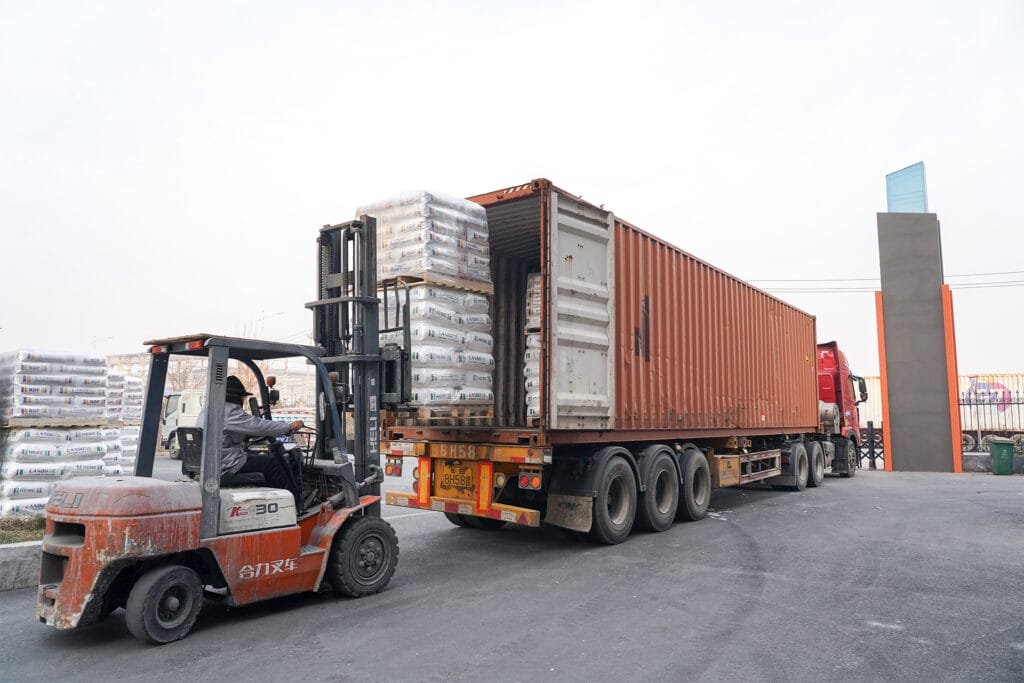
LANDERCOLL can provide a full set of product documentation to support EIFS / ETICS formulation development, purchasing review, quality approval, and import compliance.
If your EIFS / ETICS mortar is experiencing short open time, poor mesh embedding, sagging on vertical walls, rough troweling, inconsistent batch performance, or poor surface finish, the cellulose ether grade or dosage may need to be reviewed.
LANDERCOLL provides technical support to help drymix mortar manufacturers evaluate suitable HPMC and HEMC / MHEC options based on insulation system design, mortar layer requirements, polymer system, target workability, and local application conditions.
HPMC and HEMC / MHEC product selection for EIFS / ETICS.
Water retention improvement strategy.
Open time extension support.
Anti-sag performance discussion and grade recommendation.
Mesh embedding workability improvement.
Surface finish quality support.
Viscosity grade direction and dosage recommendation.
Sample arrangement, technical evaluation, quotation, and supply communication.
HPMC and HEMC / MHEC are the most commonly used cellulose ethers in EIFS / ETICS mortar systems. Both improve water retention, open time, anti-sag behavior, troweling performance, mortar consistency, and surface finish quality.
HEMC / MHEC improves water retention, extends open time, enhances anti-sag behavior on vertical surfaces, supports smooth mesh embedding, and maintains stable mortar consistency during application.
HPMC improves water retention, workability, mortar consistency, troweling comfort, and surface finishing quality in ETICS mortar systems.
Open time allows applicators to bond insulation boards, press them into position, embed reinforcing mesh, adjust layer thickness, and finish the surface before the mortar loses workability.
Yes. Suitable HPMC and HEMC / MHEC grades improve wet mortar yield stress and structural integrity, helping mortar resist sagging and slumping after application.
A common reference dosage range is 0.20%–0.50% by dry weight of the total mortar formulation, depending on mortar layer, polymer powder system, target open time, anti-sag requirement, and climate conditions.
Both are effective. HEMC / MHEC is often preferred for extended open time and strong anti-sag behavior. HPMC provides versatile water retention, workability, and surface finish support across multiple layers.
Start by identifying the mortar layer, insulation board type, polymer powder system, target open time, anti-sag requirement, application thickness, and local climate conditions.
Yes. Hot, dry, or windy conditions accelerate water evaporation, shorten open time, and reduce workability, so higher water retention grades or adjusted dosage may be needed.
Yes. LANDERCOLL can arrange HPMC and HEMC / MHEC samples for EIFS / ETICS formulation testing based on your mortar type, current formulation direction, and performance requirements.
Whether you produce insulation board adhesive mortar, base coat mortar, reinforcement mortar, mesh embedding mortar, finishing coat mortar, or polymer-modified EIFS / ETICS systems, LANDERCOLL can help you identify the right HPMC or HEMC / MHEC grade for better water retention, extended open time, improved anti-sag behavior, and reliable application stability.
Our team works with drymix mortar manufacturers across multiple markets to support formulation development, product selection, sample evaluation, and supply communication for EIFS / ETICS cellulose ether applications.
 English English
  العربية
 Deutsch
 Українська
 Ελληνικά
 Español
 Español de Perú
 Français
 Magyar
 Bahasa Indonesia
 Italiano
 Português
 Türkçe
 Русский
 Nederlands
 Slovenčina
 Svenska
 Български
 Čeština
 Dansk
Dansk
 Eesti
Eesti
 Suomi
Suomi
 日本語
日本語
 한국어
한국어
 Lietuvių kalba
 Latviešu valoda
 Norsk bokmål
 Polski
 Português do Brasil
 Română
 Slovenščina
