1. Understanding HPMC: Key Chemistry and Properties

1.1 Molecular Structure and Functionality
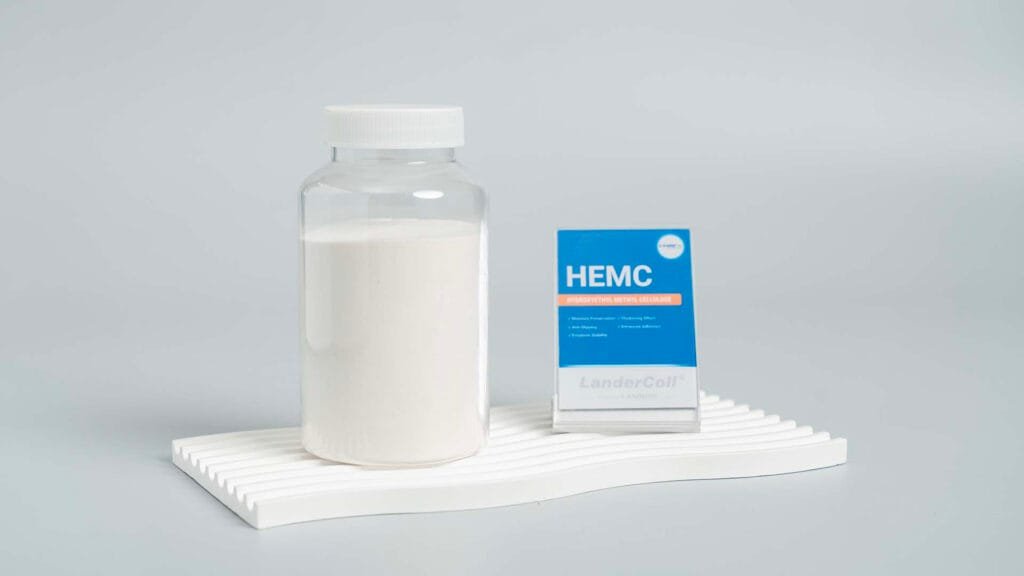
Hydroxypropyl Methylcellulose (HPMC) is a cellulose derivative known for its unique rheological properties, which make it highly effective as a binder, thickener, and stabilizer in various construction applications, including adhesives, mortars, and plasters. The structure of HPMC consists of a β(1→4)-D-glucopyranose backbone, modified with both methoxy and hydroxypropoxy groups. These modifications impart solubility and stability to the molecule, which is essential in construction materials.
The degree of substitution (DS) is a critical factor that influences the viscosity and performance of HPMC. A higher DS generally leads to enhanced water retention and improved workability time in construction mixes.
Group | Substitution Range | Function |
Methoxy | 19-24% | Controls gelation temperature (58-64°C) |
Hydroxypropoxy | 7-12% | Enhances cold-water solubility |
Unmodified OH | 55-60% | Strengthens hydrogen bonding capacity |
Key Insight: The Degree of Substitution (DS) plays a significant role in defining:
- Gelation Temperature: The temperature at which the HPMC solution begins to form a gel.
- Water Retention: The ability to retain moisture, which is vital for preventing cracks and improving adhesion.
- Viscosity Control: Affects the thickness and flow behavior of the mix, crucial for workability during application.
1.2 Rheological Properties
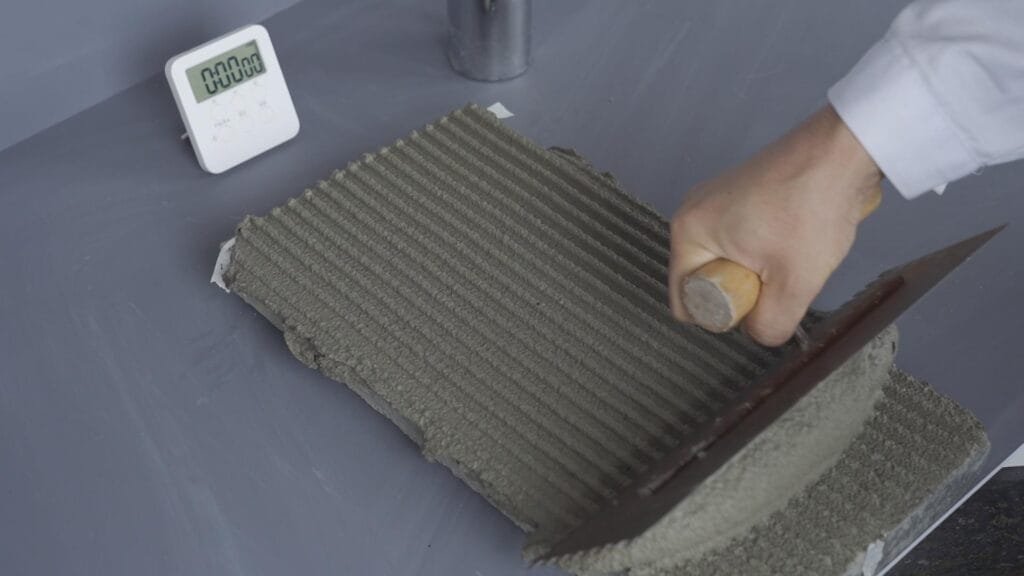
The rheological properties of HPMC are vital for its application in construction materials. Its time-dependent viscosity behavior directly impacts the workability of cement-based formulations. Typically, the viscosity of an HPMC solution decreases over time as it reacts with other materials in the mix. Here is a typical viscosity profile over a 45-minute work period:
Time (min) | Viscosity (mPa·s) |
0 | 45,000 ± 5% |
15 | 39,000 ± 8% |
30 | 36,500 ± 10% |
45 | 33,800 ± 12% |
This viscosity decrease is essential to understanding how HPMC behaves during application, as it reflects the balance between initial workability and final bond strength. Modifications to the HPMC content, such as adding accelerators or retarders, can extend or shorten the workability time.
2. Engineering the 45-Minute Workability Window
2.1 Workability Time Formula
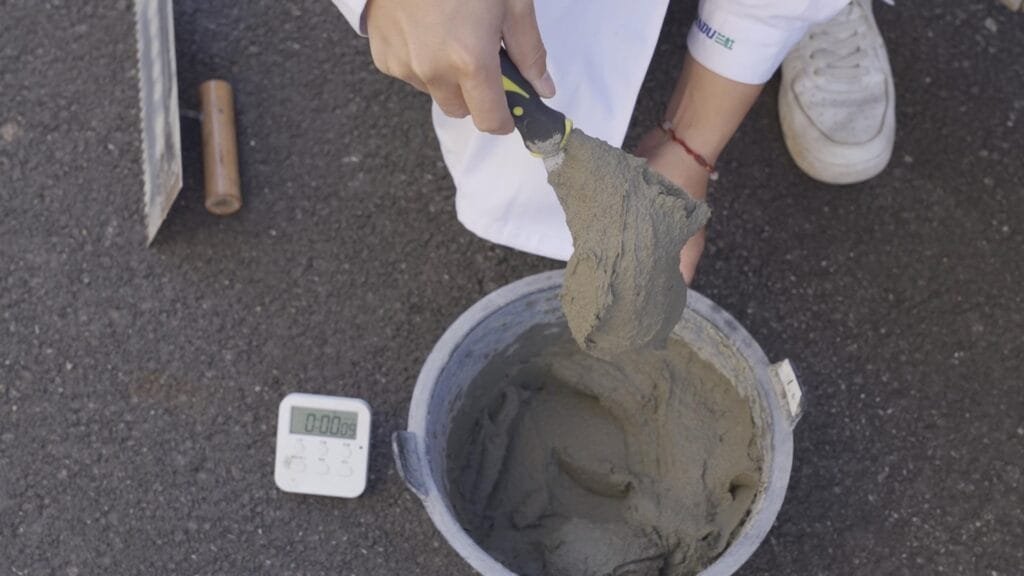
Workability time (WT) is the period during which the mixture remains usable before the initial set begins. In high-performance construction mixes, achieving a 45-minute workability window with a maximum of 5% bond strength loss is highly desirable for most construction projects.
The formula to calculate Workability Time (WT) is:
WT(min) = [HPMC% × (DS/0.2)] × (T_amb/25)⁻⁰‧⁵ × (RH/50)⁰‧³
Where:
- HPMC%: 0.2-0.6% (amount of HPMC in the formulation)
- DS: Degree of Substitution (0.9-1.5)
- T_amb: Ambient temperature (°C)
- RH: Relative humidity (%)
Case Example: Dubai Summer Application:
- Formula:
WT = [0.45% × (1.2/0.2)] × (42/25)⁻⁰‧⁵ × (30/50)⁰‧³ ≈ 45 minutes
This formula can be adjusted for various conditions, ensuring that HPMC-based formulations maintain a consistent workability window across different environmental scenarios.
2.2 Environmental Adaptation Matrix
Environmental factors, such as temperature and humidity, play a crucial role in determining the workability of construction materials. Here’s a matrix that shows how HPMC can be adjusted for different conditions:
Condition | Adjustment | Effectiveness |
High Temp (>35°C) | +0.1% HPMC, +0.02% retarder | +18% viscosity retention |
Low RH (<40%) | -0.05% HPMC, +0.1% superabsorbent polymer (SAP) | +7 minutes workability extension |
Windy (>5m/s) | +0.15% HPMC, +0.05% PVA | +63% crack reduction |
These adaptations ensure that the formulation performs well in varying conditions, whether in hot, dry environments or colder, more humid regions.
3. Application-Specific Formulations
3.1 Tile Adhesive Systems (EN 12004 C2TE)
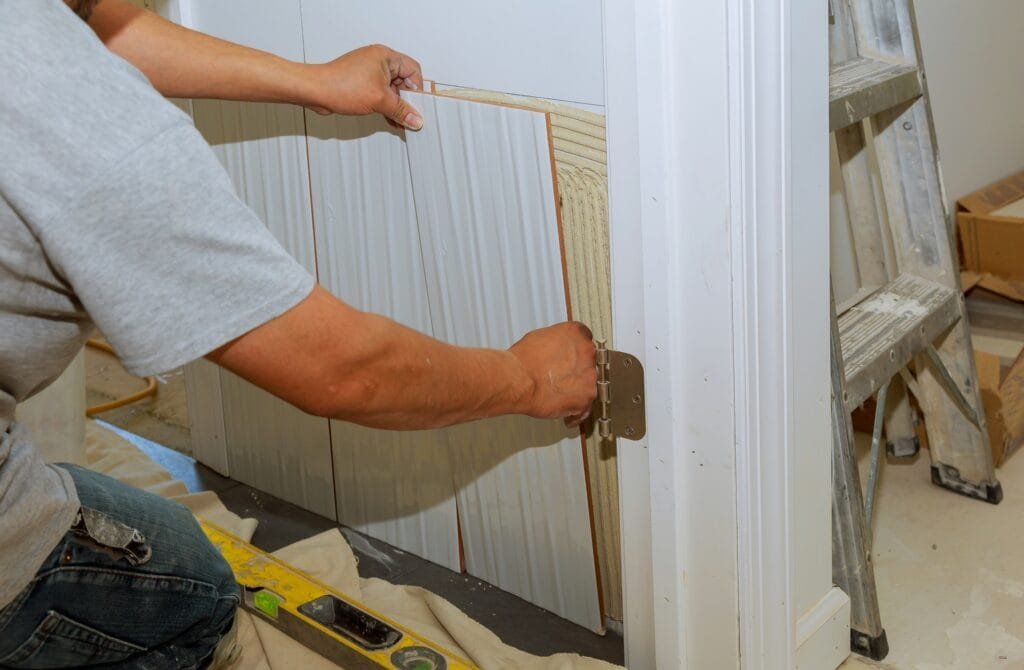
Tile adhesives are one of the most common applications for HPMC in construction. The standard formulation for C2TE tile adhesives is designed to offer excellent bonding strength and optimal open time:
Optimal Formula:
Component | % | Function |
HPMC (75K) | 0.35 | Workability control |
Cement CEM I 52.5 | 28.5 | Binder |
Silica Sand | 68.0 | Skeleton |
RDP (VAc/VeoVa) | 2.5 | Flexibility |
Calcite | 4.0 | Rheology aid |
Starch Ether | 0.15 | Anti-sag |
Performance Data:
- Open Time: 45 minutes at 35°C/30% RH
- Bond Strength: 1.2 MPa (28 days)
Small adjustments to HPMC content can extend or shorten workability without sacrificing bond strength. For instance, adding a slight increase of HPMC (from 0.35% to 0.40%) can increase open time by 5-10 minutes.
3.2 Cold-Weather Repair Mortars (ACI 546)
For cold-weather applications, HPMC plays a significant role in adjusting the formulation to ensure that the mortar sets and cures effectively, even in temperatures as low as -10°C. Here’s a typical winter mix:
Cold-Weather Formula:
Component | Winter Formula | Summer Formula |
HPMC (100K) | 0.42% | 0.38% |
Accelerator | 0.8% Ca(NO3)2 | 0.3% Li2CO3 |
Retarder | None | 0.05% gluconate |
Microsilica | 7% | 5% |
Steel Fibers | 1.5% | 1.0% |
Performance Metrics:
- 24-Hour Strength: 8.3 MPa vs. conventional 5.1 MPa
- Frost Resistance: 75 cycles (EN 13687-1)
The addition of HPMC in cold conditions improves the mixture’s ability to retain moisture and achieve full cure despite the harsh environment.
4. Global Case Studies
4.1 Tropical High-Rise (Singapore, 2024)
- Challenge: 90% RH with 34°C average temperatures.
- Solution: 0.33% HPMC + 0.06% desiccant, DS adjusted from 1.1 → 1.3.
- Results:
- Waste reduction: 22% → 5.7%
- Bond strength: 1.05 MPa (28 days)
4.2 Arctic Infrastructure (Alaska, 2023)
- Challenge: Application in -25°C.
- Innovation: 0.6% HPMC + 2% anti-freeze, pre-heated aggregates (45°C).
- Performance:
- 24-hour strength: 8.3 MPa vs. conventional 5.1 MPa
- Frost resistance: 75 cycles (EN 13687-1)
These case studies demonstrate HPMC’s versatility and its ability to adapt to extreme environmental conditions, ensuring consistent performance across a range of construction applications.
5. Future of HPMC in Construction
5.1 Emerging Trends
Smart HPMC Systems: Research into pH-responsive HPMC formulations has shown that these materials can self-regulate viscosity based on the alkalinity of the substrate, offering better control in varying environmental conditions.
Sustainability Advancements: Bio-based HPMC, derived from renewable cellulose sources, is gaining traction. With the potential to reduce carbon footprints by 40%, this innovation is expected to revolutionize the industry in the coming years.
5.2 Innovations in Bond Strength Retention
As the demand for eco-friendly and high-performance building materials grows, HPMC formulations are expected to integrate more bio-based additives, offering not only enhanced performance but also better sustainability profiles.
6. Final Thoughts and Outlook
By adjusting the Degree of Substitution (DS) and optimizing the HPMC dosage, it is possible to extend the open time of cementitious materials, maintain high bond strength, and improve overall workability. These formulations can be adapted to different climates and operational needs, ensuring that contractors across the world can rely on consistent performance.
HPMC continues to evolve with innovations in bio-based and pH-responsive systems, offering greater flexibility, sustainability, and long-term cost savings for the construction industry.
For those looking to maximize the potential of HPMC in their projects, Landercoll® offers high-quality, customizable cellulose ether products tailored to meet specific performance requirements. With years of expertise in construction additives and a commitment to innovation, Landercoll is the trusted partner for achieving optimal results in tile adhesives, repair mortars, and a wide range of cementitious applications.
Explore Landercoll’s full range of solutions today and elevate your construction materials to the next level of performance and sustainability.
Facebook
Twitter
LinkedIn