Cellulose Ether Excellence — Trusted by 1000+ Enterprises Globally Get Free Sample
Not sure which cellulose ether to choose? Start from what your formulation needs to achieve — and find the right product family from there.
LANDERCOLL cellulose ether products — HPMC, HEMC / MHEC, HEC, and CMC — help improve thickening, water retention, rheology control, film formation, suspension stability, binding, cohesion, texture, and formulation consistency across construction, coatings, detergents, personal care, food, pharmaceuticals, ceramics, oilfield, and industrial applications.
This page is designed for manufacturers, formulators, and sourcing teams who want to start from a performance question rather than a product name.
Most customers do not begin product selection by asking for HPMC, HEMC / MHEC, HEC, or CMC by name. They begin with a performance problem — and these are the right questions to start with.
The Product by Function section connects formulation challenges with suitable cellulose ether solutions — helping you understand which product families support specific performance goals before narrowing down to a specific grade.
LANDERCOLL cellulose ether products are used across drymix, liquid, semi-solid, paste, slurry, and industrial fluid systems. Each product family has distinct strengths, and the best choice always depends on the application, required viscosity, raw material system, processing method, and final performance target.
Cellulose ether is widely selected because it can provide multiple functional benefits within a single ingredient. Depending on product type, grade, concentration, and formulation system, LANDERCOLL cellulose ether can support the following core functions — each described in detail in the sections below.
| Function | Primary Relevance |
|---|---|
| Thickening | Paints, detergents, personal care, food, oilfield, industrial |
| Water Retention | Construction mortars, drymix systems |
| Rheology Control | Paints, coatings, mortars, personal care, oilfield |
| Film Forming | Pharma coating, food, construction, industrial |
| Suspension Stability | Paints, ceramics, food, oilfield, detergents |
| Binding and Cohesion | Ceramics, pharma, paper, drymix mortar |
| Texture Improvement | Personal care, food, detergents, toothpaste |
| Stabilization | Paints, detergents, food, personal care, industrial |
| Process Consistency | Ceramics, drymix, oilfield, industrial production |
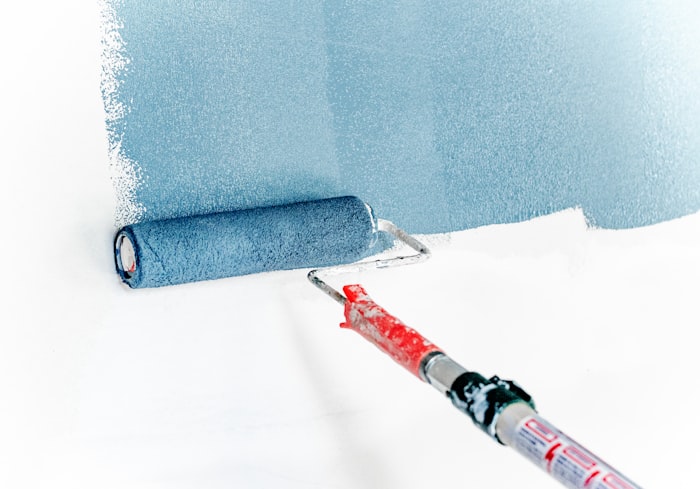
Thickening is about creating the right flow behavior, texture, body, and stability for the specific end application — not simply making a product thicker.
Thickening is one of the most fundamental functions of cellulose ether across industries. In many formulations, viscosity directly determines product appearance, handling behavior, application performance, storage stability, and consumer experience.
The thickening behavior of cellulose ether is pseudoplastic (shear-thinning) — viscosity decreases under shear during mixing or application, and recovers at rest. This behavior supports both processability and in-place stability across a wide range of applications.
| Product | Thickening Strength | Best System Type |
|---|---|---|
| HEC | Excellent | Water-based paints, personal care, detergents, oilfield |
| CMC | Excellent | Food, detergents, ceramics, oilfield, toothpaste, industrial |
| HPMC | Excellent | Construction, detergents, pharma, food, personal care |
| HEMC / MHEC | Excellent in construction | Drymix mortar, tile adhesive, plaster, wall putty |
Water retention is one of the most critical functions in cement-based and gypsum-based construction materials — and one of the primary reasons cellulose ether is used in drymix mortar systems globally.
When mortar is applied to a porous substrate, the substrate draws water out of the mortar by capillary suction. If water is lost too quickly: cement hydration is incomplete, open time is shortened, the mortar surface dries out prematurely causing cracking, and application behavior becomes inconsistent and difficult to control.
LANDERCOLL HPMC and HEMC / MHEC help retain water within the mortar matrix by forming a polymer network that physically restricts water migration — supporting stronger bond development, better surface quality, longer open time, and more reliable job-site performance.
| Product | Water Retention Strength | Best System Type |
|---|---|---|
| HPMC | Excellent | Cement-based and gypsum-based drymix systems |
| HEMC / MHEC | Excellent | Cement-based and gypsum-based drymix systems |
| HEC | Moderate / selected | Selected construction and industrial systems |
| CMC | Selected use | Selected industrial and oilfield systems |

Water retention determines whether mortar performs reliably on the job site — from open time and workability to bond strength and surface finish.

Rheology control determines how a formulation flows, spreads, levels, holds shape, and responds to shear — during mixing, application, and use.
Rheology control goes beyond viscosity. It determines how a formulation flows, spreads, levels, holds shape, and responds to shear. Getting rheology right is often the difference between a product that performs reliably and one that causes problems on the production line or job site.
LANDERCOLL cellulose ether products help adjust rheological behavior by providing pseudoplastic (shear-thinning) viscosity profiles — the formulation flows and spreads under shear during application, then recovers structure and stability at rest.
| Product | Rheology Strength | Best System Type |
|---|---|---|
| HEC | Excellent | Water-based paints, coatings, personal care, detergents |
| HPMC | Excellent | Construction, detergents, pharma, food, industrial |
| HEMC / MHEC | Excellent in mortar | Drymix construction systems |
| CMC | Good | Food, ceramics, oilfield, industrial systems |
Film forming is an important function in applications where a thin, continuous polymer layer contributes to surface quality, protection, cohesion, controlled release, or structural integrity. When a cellulose ether solution dries, the dissolved polymer chains can form a continuous, flexible film.
HPMC is the most established cellulose ether for film-forming applications, particularly in pharmaceutical tablet coating, food coating systems, and selected industrial and construction applications. Its film-forming capability is one of the reasons it is so widely used as a pharmaceutical excipient under the name Hypromellose.
| Product | Film Forming Strength | Best System Type |
|---|---|---|
| HPMC | Excellent | Pharma coating, food, construction, industrial |
| HEMC / MHEC | Selected use | Construction finishing systems |
| HEC | Selected use | Water-based coating systems |
| CMC | Selected use | Food and industrial systems |
Important: Food and pharmaceutical film-forming applications require suitable compliant grades and relevant documentation. Contact LANDERCOLL for grade selection and documentation support.

HPMC is the most established cellulose ether for pharmaceutical tablet coating and food coating systems — recognized under the name Hypromellose.

Without adequate suspension support, particles settle, float, or create uneven distribution — leading to inconsistent performance and processing problems.
Suspension stability is important in any formulation containing pigments, fillers, powders, abrasive particles, mineral materials, ceramic particles, or other insoluble components. Cellulose ether improves suspension stability through viscosity building (increasing resistance to particle movement) and polymer network formation (creating a structural matrix that supports particle distribution).
| Product | Suspension Strength | Best System Type |
|---|---|---|
| HEC | Excellent | Paints, coatings, personal care, detergents, oilfield |
| CMC | Excellent | Food, ceramics, oilfield, detergents, industrial |
| HPMC | Good | Construction, food, pharma, industrial |
| HEMC / MHEC | Selected use | Drymix construction systems |
Binding and cohesion are important in formulations that require internal strength, shape retention, green strength before firing, tablet integrity, or improved structural consistency during processing and handling. Cellulose ether supports binding by forming a polymer network between particles — holding them together, improving cohesion, and providing structural stability.
This function is distinct from thickening: binding is about holding a material together, while thickening is about controlling flow behavior.
| Product | Binding Strength | Best System Type |
|---|---|---|
| CMC | Excellent | Ceramics, paper, textile, toothpaste, pharma, industrial |
| HPMC | Good | Pharma tablets, construction, food, industrial |
| HEMC / MHEC | Good in mortar | Drymix construction systems |
| HEC | Selected use | Adhesives, selected industrial systems |

Binding is about holding a material together — providing structural stability during processing, handling, and before final firing or curing.

Texture is critical in consumer-facing products. Cellulose ether improves texture by controlling viscosity, stabilizing system structure, supporting smooth polymer network formation, and improving consistency across temperature and storage conditions.

Stabilization affects how a formulation behaves during storage, transportation, processing, and end use. Instability can manifest as phase separation, viscosity drift, particle settling, syneresis, or inconsistent application behavior. Cellulose ether helps prevent these problems by controlling viscosity, managing water behavior, and maintaining system structure.
The table below provides a structured reference for matching LANDERCOLL cellulose ether product families with common formulation functions. Use this as a starting point — final grade confirmation always requires formulation testing.
| Function | HPMC | HEMC / MHEC | HEC | CMC |
|---|---|---|---|---|
| Thickening | ✅ | ✅ | ✅ | ✅ |
| Water Retention | ✅ | ✅ | ⚪ | ⚪ |
| Rheology Control | ✅ | ✅ | ✅ | ✔ |
| Film Forming | ✅ | ⚪ | ⚪ | ⚪ |
| Suspension Stability | ✔ | ⚪ | ✅ | ✅ |
| Binding and Cohesion | ✔ | ✔ | ⚪ | ✅ |
| Texture Improvement | ✔ | ⚪ | ✅ | ✅ |
| Stabilization | ✔ | ✔ | ✅ | ✅ |
| Anti-Redeposition | ⚪ | ⚪ | ⚪ | ✅ |
| Process Consistency | ✅ | ✅ | ✔ | ✅ |
This table is a general reference only. Product selection should always be confirmed according to application type, viscosity target, raw material system, processing conditions, regulatory requirements, and final performance goals. Contact LANDERCOLL for application-specific grade recommendations.
Here is a structured overview of which functions and product families are most relevant for each major industry served by LANDERCOLL.

The most important functions in drymix construction materials are water retention, workability improvement, rheology control, open time extension, and anti-sag performance. These functions directly affect how mortar mixes, spreads, holds position, and performs on the job site.
| Key Function | Recommended Products |
|---|---|
| Water Retention | HPMC, HEMC / MHEC |
| Workability Improvement | HPMC, HEMC / MHEC |
| Rheology / Anti-Sag | HPMC, HEMC / MHEC |
| Open Time Extension | HPMC, HEMC / MHEC |
| Binding and Cohesion | HPMC, HEMC / MHEC |
The most important functions in water-based paints and coatings are thickening, rheology control, pigment suspension, leveling, and storage stability. HEC is the most widely used cellulose ether in this industry due to its strong latex compatibility and absence of thermal gelation.
| Key Function | Recommended Products |
|---|---|
| Thickening / Rheology | HEC |
| Pigment Suspension | HEC, CMC |
| Leveling / Flow Control | HEC |
| Storage Stability | HEC |
| Film Forming (selected) | HPMC |

In detergent and home care formulations, the key functions are thickening, texture improvement, stabilization, suspension stability, and anti-redeposition performance. CMC is the established choice for anti-redeposition in laundry detergents; HEC and HPMC are used for viscosity and texture.
| Key Function | Recommended Products |
|---|---|
| Anti-Redeposition | CMC |
| Thickening / Product Body | HEC, CMC, HPMC |
| Texture Improvement | HEC, CMC |
| Stabilization | HEC, CMC |

In personal care formulations, the key functions are thickening, texture improvement, stabilization, and suspension support. HEC is widely used for its smooth thickening profile; HPMC and CMC are used in selected systems.
| Key Function | Recommended Products |
|---|---|
| Thickening / Texture | HEC, HPMC |
| Stabilization | HEC, HPMC |
| Suspension Support | HEC, CMC |
| Smooth Sensory Feel | HEC |

In food systems, the key functions are thickening, stabilization, texture control, suspension stability, and water management. CMC (E466) is the most widely used cellulose derivative in food; HPMC (E464) is used in selected food applications. Food applications require suitable food-grade products and compliance with the regulations of the target market.
| Key Function | Recommended Products |
|---|---|
| Thickening / Texture | CMC (E466), HPMC (E464) |
| Stabilization | CMC |
| Water Management | CMC |
| Film Forming (edible) | HPMC |

In pharmaceutical formulations, the key functions are binding, film forming, controlled release support, suspension stability, and stabilization. HPMC (Hypromellose) is the most widely used cellulose ether in pharmaceutical applications; CMC (Carmellose Sodium) is also established. Pharmaceutical applications require suitable pharmacopoeial-grade products and relevant documentation.
| Key Function | Recommended Products |
|---|---|
| Tablet Binding | HPMC, CMC |
| Film Coating | HPMC |
| Controlled Release | HPMC |
| Pharma Suspension | CMC, HPMC |

In ceramic production, the key functions are binding, suspension stability, water management, and process consistency. CMC is the most widely used cellulose derivative in ceramics due to its effectiveness at low dosage and clean burnout during firing.
| Key Function | Recommended Products |
|---|---|
| Binding / Green Strength | CMC |
| Glaze Suspension | CMC |
| Plasticity / Workability | CMC |
| Process Consistency | CMC, HPMC |

In oilfield and industrial fluid systems, the key functions are thickening, suspension stability, fluid stability, water management, and rheology control. CMC and HEC are the most commonly used cellulose derivatives in oilfield applications.
| Key Function | Recommended Products |
|---|---|
| Fluid Viscosity | CMC, HEC |
| Fluid-Loss Control | CMC |
| Suspension Stability | CMC, HEC |
| Rheology Control | HEC, CMC |
Choosing the right cellulose ether starts with clearly defining the main performance problem you need to solve. Starting from the right question leads to a better product selection. Below are the key questions to consider — and then the primary functional strengths of each LANDERCOLL product family.
Construction mortar, paint, shampoo, food sauce, ceramic glaze, drilling fluid? This defines the system type and regulatory requirements.
Thickening, water retention, suspension, binding, texture, stabilization? Identifying the primary function narrows the product family.
Drymix powder, liquid, semi-solid paste, slurry, or industrial fluid? System type determines compatibility and dissolution requirements.
Low, medium, high, or extra-high? Viscosity grade selection drives product choice within a family.
Surfactants, salts, pigments, fillers, cement, gypsum? These affect compatibility, especially for anionic CMC in high-electrolyte systems.
Dry mixing, wet mixing, extrusion, casting, spraying? Processing method influences dissolution behavior and grade selection.
Open time, anti-sag, surface finish, mouthfeel, shelf life? End-use requirements define the final performance benchmark.
Food grade, pharmaceutical grade, TDS, SDS, COA? Regulatory needs may determine grade type and supplier qualification requirements.
Cellulose ether selection can be complex because most products are multifunctional. A single grade may support thickening, stabilization, water retention, binding, texture improvement, and rheology control simultaneously — and the relative contribution of each function depends on the grade, concentration, formulation system, and processing conditions.
The right choice depends on what your formulation needs to achieve first. LANDERCOLL can help you identify the primary performance target and connect it with the most suitable product family and grade direction.
Application matching and grade direction recommendation based on your primary performance target and system type.
Low, medium, high, or extra-high viscosity direction guidance across product families for your target application.
TDS, SDS, COA, grade recommendation documents, and application guides to support your evaluation and approval processes.
Laboratory samples, trial quantities, and commercial volume quotation with responsive communication.
Supply planning, consistent product quality, and long-term cooperation from initial inquiry through production.
HEC and CMC are widely used for thickening in water-based liquid systems — HEC is especially preferred in paints and personal care, while CMC is commonly used in food, detergents, ceramics, and oilfield fluids. HPMC provides excellent thickening in construction, pharmaceutical, and food systems. HEMC / MHEC is the primary choice for thickening in drymix construction materials. The best choice depends on the application, system type, and target viscosity.
HPMC and HEMC / MHEC are the two most widely used cellulose ethers for water retention in cement-based and gypsum-based drymix construction materials. Both are used in tile adhesive, wall putty, cement plaster, gypsum plaster, masonry mortar, and EIFS / ETICS systems. The choice between them depends on specific performance targets, regional market preferences, and formulation design.
HEC is the most widely used cellulose ether for rheology control in water-based paints and architectural coatings. It provides reliable thickening, leveling support, pigment suspension, and storage stability, and has strong compatibility with latex polymer systems. HPMC can also be used in selected coating systems.
HEC and CMC are the most commonly used cellulose ethers for suspension stability in water-based systems. HEC is preferred in paints, coatings, and personal care; CMC is preferred in food, ceramics, oilfield fluids, and detergents. HPMC can also support suspension stability in selected construction, food, and industrial formulations.
CMC is the most widely used cellulose derivative for binding in ceramic production. It improves plasticity and workability during shaping, builds green strength before firing, stabilizes ceramic glaze suspensions, and burns out cleanly during the firing process. HPMC can also be used in selected ceramic systems.
CMC is the established standard for anti-redeposition performance in laundry detergent — it prevents removed soil from redepositing onto fabric surfaces during washing. HEC and HPMC can also be used in detergent systems to improve viscosity, product body, and texture, depending on the formulation type and performance target.
Yes. All cellulose ether products are multifunctional. A single grade of HPMC can simultaneously provide water retention, thickening, workability improvement, and film-forming support in a tile adhesive formulation. HEC can provide thickening, rheology control, and suspension stability in a paint system at the same time. The relative contribution of each function depends on the product type, grade, dosage, and formulation system.
Start from the performance problem you most need to solve. If your mortar dries too fast on the substrate, water retention is the priority. If your paint settles during storage, suspension stability is the key issue. If your detergent looks too thin, thickening and texture are the focus. If your ceramic body breaks during handling, binding and green strength need attention. LANDERCOLL can help review your application and recommend a suitable product direction.
Thickening refers to increasing the viscosity of a formulation — making it less fluid and more resistant to flow. Rheology control is a broader concept that includes not only viscosity level but also how the formulation responds to shear (pseudoplasticity), how it levels after application, how it resists sagging on vertical surfaces, and how it behaves during mixing, pumping, and use. Cellulose ether provides both thickening and rheology control simultaneously — the balance depends on the grade selected and the formulation system.
Whether your formulation needs thickening, water retention, rheology control, film formation, suspension stability, binding, texture improvement, or stabilization — LANDERCOLL can help you match the right product family and grade direction to your application. Our product range covers HPMC, HEMC / MHEC, HEC, and CMC across construction, coatings, detergents, personal care, food, pharmaceuticals, ceramics, oilfield, and industrial applications. Tell us what your formulation needs to achieve, and our team will help you find a practical solution.
 English English
  العربية
 Deutsch
 Українська
 Ελληνικά
 Español
 Español de Perú
 Français
 Magyar
 Bahasa Indonesia
 Italiano
 Português
 Türkçe
 Русский
 Nederlands
 Slovenčina
 Svenska
 Български
 Čeština
 Dansk
Dansk
 Eesti
Eesti
 Suomi
Suomi
 日本語
日本語
 한국어
한국어
 Lietuvių kalba
 Latviešu valoda
 Norsk bokmål
 Polski
 Português do Brasil
 Română
 Slovenščina
