Celluloseether-Exzellenz — Vertraut von über 1000 Unternehmen weltweit Kostenloses Muster erhalten
LANDERCOLL cellulose ether helps waterproof mortar manufacturers improve water retention, workability, anti-sag behavior, mortar cohesion, surface finishing quality, and job-site application reliability.
Trusted by drymix mortar producers supplying waterproofing systems for basements, bathrooms, roofs, water tanks, and exterior façade applications.


Waterproof mortar is used to protect building structures from water ingress, moisture penetration, and dampness damage. It is applied on substrates including basement walls and floors, bathroom and wet room surfaces, water tanks and reservoirs, swimming pools, roof decks, retaining walls, and exterior façade surfaces where water resistance is a critical performance requirement.
A suitable cellulose ether grade helps waterproof mortar remain workable after mixing, hold its position after application on vertical or overhead surfaces, reduce rapid water loss to the substrate, support more uniform layer formation, and improve overall application comfort.
LANDERCOLL supplies HPMC and HEMC / MHEC cellulose ether products to waterproof mortar manufacturers who need reliable water retention, improved workability, stable anti-sag behavior, consistent mortar cohesion, and controlled application performance across different waterproofing system types and application conditions.
This is especially important for flexible waterproof mortar, rigid waterproof mortar, polymer-modified waterproofing slurry, basement waterproofing mortar, bathroom waterproofing mortar, and drymix waterproofing systems.
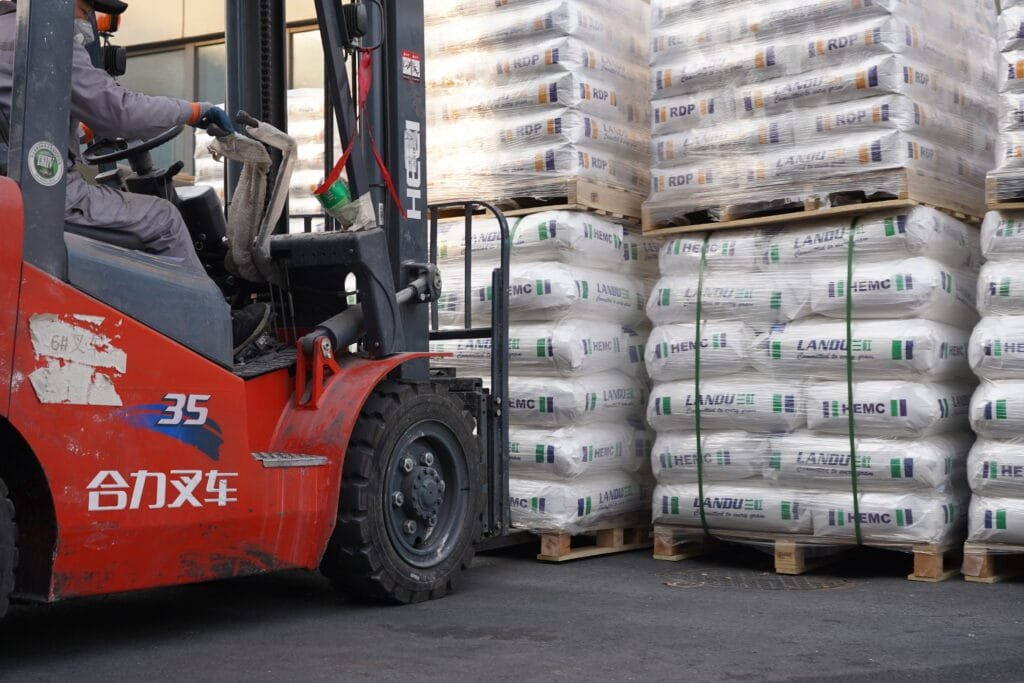
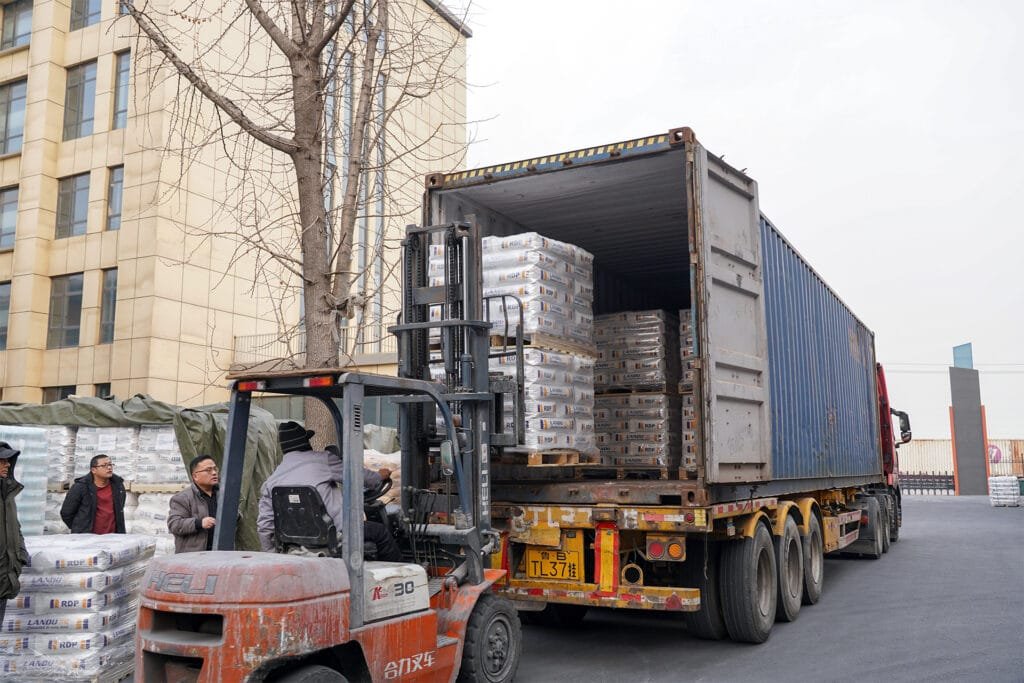
Waterproof mortar — also referred to as waterproofing mortar, cementitious waterproofing, or crystalline waterproofing mortar — is a cement-based material formulated to create a water-resistant barrier on building surfaces. It is applied as a protective coating, lining, or render layer to prevent water penetration through walls, floors, and structural elements.
Waterproof mortar is widely used in construction and renovation applications including below-grade waterproofing (basements, foundations, underground structures), wet area waterproofing (bathrooms, showers, wet rooms), water-retaining structure lining (water tanks, swimming pools, reservoirs), roof waterproofing, and exterior façade waterproofing systems.
Waterproof mortar systems are broadly classified into two types: rigid waterproof mortar (cement-rich, crystalline, or mineral-based systems) and flexible waterproof mortar (polymer-modified systems with redispersible polymer powder or liquid polymer). Both types require good workability, water retention, anti-sag behavior, and consistent application performance.
A typical waterproof mortar formulation includes cement, fillers, graded sand, redispersible polymer powder (RDP), cellulose ether, hydrophobic additives, crystalline additives (in selected systems), fibers, and other functional additives. Cellulose ether plays an important role in controlling water retention, workability, anti-sag behavior, mortar consistency, and surface finish quality.
cURL Too many subrequests by single Worker invocation. To configure this limit, refer to https://developers.cloudflare.com/workers/wrangler/configuration/#limits
cURL Too many subrequests by single Worker invocation. To configure this limit, refer to https://developers.cloudflare.com/workers/wrangler/configuration/#limits

cURL Too many subrequests by single Worker invocation. To configure this limit, refer to https://developers.cloudflare.com/workers/wrangler/configuration/#limits
cURL Too many subrequests by single Worker invocation. To configure this limit, refer to https://developers.cloudflare.com/workers/wrangler/configuration/#limits

HPMC (Hydroxypropyl Methyl Cellulose) is widely used in waterproof mortar formulations because it provides strong water retention, controlled thickening, workability improvement, and mortar consistency stabilization. It helps waterproof mortar retain moisture during application and early curing, supports more uniform layer formation, and improves overall application comfort.
In flexible waterproof mortar, polymer-modified waterproofing slurry, and bathroom waterproofing systems, HPMC improves spreading behavior, reduces mortar harshness, and supports more stable, predictable application performance across different substrate types and application conditions.
HPMC is compatible with cement, redispersible polymer powder, hydrophobic additives, crystalline additives, and the typical additive systems used in drymix waterproof mortar production.
HEMC / MHEC (Hydroxyethyl Methyl Cellulose) is particularly well-suited for waterproof mortar systems where anti-sag behavior, vertical application stability, extended open working time, strong water retention, and smooth troweling are critical performance requirements.
In basement waterproofing, wall waterproofing, and other vertical or overhead applications, HEMC / MHEC helps improve wet mortar body and yield stress — allowing waterproof mortar to stay in position after application while remaining workable enough for spreading, compaction, and controlled finishing. HEMC / MHEC can offer performance advantages over standard HPMC grades in applications where anti-sag behavior and open time are the primary targets.
Waterproof mortar formulations vary depending on waterproofing system type (rigid or flexible), application area, required water resistance class, substrate condition, and locally available raw materials.
| Komponente | Function in Waterproof Mortar |
|---|---|
| cURL Too many subrequests by single Worker invocation. To configure this limit, refer to https://developers.cloudflare.com/workers/wrangler/configuration/#limits | Main hydraulic binder; provides structural strength and waterproofing base. |
| Graded Sand / Fillers | Provide structure, body, consistency, and mechanical support. |
| cURL Too many subrequests by single Worker invocation. To configure this limit, refer to https://developers.cloudflare.com/workers/wrangler/configuration/#limits | Supports flexibility, adhesion, crack bridging, and durability in flexible systems. |
| cURL Too many subrequests by single Worker invocation. To configure this limit, refer to https://developers.cloudflare.com/workers/wrangler/configuration/#limits | cURL Too many subrequests by single Worker invocation. To configure this limit, refer to https://developers.cloudflare.com/workers/wrangler/configuration/#limits |
| cURL Too many subrequests by single Worker invocation. To configure this limit, refer to https://developers.cloudflare.com/workers/wrangler/configuration/#limits | Reduce water absorption and improve water repellency of the mortar layer. |
| Crystalline Additives | Support self-sealing and crystalline waterproofing in selected rigid systems. |
| cURL Too many subrequests by single Worker invocation. To configure this limit, refer to https://developers.cloudflare.com/workers/wrangler/configuration/#limits | Improve crack resistance and layer reinforcement in selected systems. |
| cURL Too many subrequests by single Worker invocation. To configure this limit, refer to https://developers.cloudflare.com/workers/wrangler/configuration/#limits | Adjust working time, setting progression, and early strength development. |
| cURL Too many subrequests by single Worker invocation. To configure this limit, refer to https://developers.cloudflare.com/workers/wrangler/configuration/#limits | Adjust shrinkage, durability, surface quality, or special waterproofing requirements. |
Different waterproof mortar systems have different anti-sag, workability, water retention, and consistency requirements depending on application area, system type, and layer thickness.
| Art der Anwendung | Empfohlenes Produkt | Hauptleistungsanforderungen |
|---|---|---|
| Flexibler wasserdichter Mörtel | HPMC or HEMC / MHEC | Water retention, workability, polymer compatibility. |
| Wasserfester Mörtel | HPMC or HEMC / MHEC | Consistency, water retention, surface finish. |
| Basement Waterproofing Mortar | HEMC / MHEC or HPMC | Anti-sag, workability, vertical stability. |
| Bathroom / Wet Room Waterproofing | HPMC or HEMC / MHEC | Workability, surface finish, consistency. |
| Water Tank / Reservoir Lining | HPMC or HEMC / MHEC | cURL Too many subrequests by single Worker invocation. To configure this limit, refer to https://developers.cloudflare.com/workers/wrangler/configuration/#limits |
| cURL Too many subrequests by single Worker invocation. To configure this limit, refer to https://developers.cloudflare.com/workers/wrangler/configuration/#limits | HPMC or HEMC / MHEC | cURL Too many subrequests by single Worker invocation. To configure this limit, refer to https://developers.cloudflare.com/workers/wrangler/configuration/#limits |
| cURL Too many subrequests by single Worker invocation. To configure this limit, refer to https://developers.cloudflare.com/workers/wrangler/configuration/#limits | cURL Too many subrequests by single Worker invocation. To configure this limit, refer to https://developers.cloudflare.com/workers/wrangler/configuration/#limits | cURL Too many subrequests by single Worker invocation. To configure this limit, refer to https://developers.cloudflare.com/workers/wrangler/configuration/#limits |
| cURL Too many subrequests by single Worker invocation. To configure this limit, refer to https://developers.cloudflare.com/workers/wrangler/configuration/#limits | HPMC or HEMC / MHEC | cURL Too many subrequests by single Worker invocation. To configure this limit, refer to https://developers.cloudflare.com/workers/wrangler/configuration/#limits |
| cURL Too many subrequests by single Worker invocation. To configure this limit, refer to https://developers.cloudflare.com/workers/wrangler/configuration/#limits | cURL Too many subrequests by single Worker invocation. To configure this limit, refer to https://developers.cloudflare.com/workers/wrangler/configuration/#limits | cURL Too many subrequests by single Worker invocation. To configure this limit, refer to https://developers.cloudflare.com/workers/wrangler/configuration/#limits |
cURL Too many subrequests by single Worker invocation. To configure this limit, refer to https://developers.cloudflare.com/workers/wrangler/configuration/#limits
cURL Too many subrequests by single Worker invocation. To configure this limit, refer to https://developers.cloudflare.com/workers/wrangler/configuration/#limits
cURL Too many subrequests by single Worker invocation. To configure this limit, refer to https://developers.cloudflare.com/workers/wrangler/configuration/#limits
cURL Too many subrequests by single Worker invocation. To configure this limit, refer to https://developers.cloudflare.com/workers/wrangler/configuration/#limits
cURL Too many subrequests by single Worker invocation. To configure this limit, refer to https://developers.cloudflare.com/workers/wrangler/configuration/#limits
cURL Too many subrequests by single Worker invocation. To configure this limit, refer to https://developers.cloudflare.com/workers/wrangler/configuration/#limits
cURL Too many subrequests by single Worker invocation. To configure this limit, refer to https://developers.cloudflare.com/workers/wrangler/configuration/#limits
cURL Too many subrequests by single Worker invocation. To configure this limit, refer to https://developers.cloudflare.com/workers/wrangler/configuration/#limits
cURL Too many subrequests by single Worker invocation. To configure this limit, refer to https://developers.cloudflare.com/workers/wrangler/configuration/#limits
Many fresh waterproof mortar problems are related to water retention, anti-sag behavior, and workability — areas where cellulose ether grade and dosage selection directly affect application performance and final waterproofing quality.
Weak rheology, excess water, low viscosity grade
cURL Too many subrequests by single Worker invocation. To configure this limit, refer to https://developers.cloudflare.com/workers/wrangler/configuration/#limits
Low water retention, absorbent substrate, hot or dry conditions
Improve water retention and extend working time
Poor consistency, sagging, rapid stiffening
Support stable rheology and uniform layer formation
Poor filler balance, low workability, rapid water loss
Improve smoothness and troweling behavior
Rapid drying, shrinkage, poor curing, insufficient hydration
Support water retention and stable hydration
Low workability, short open time, stiff mortar
Improve workability and open time
Excessive dosage or unsuitable viscosity grade
cURL Too many subrequests by single Worker invocation. To configure this limit, refer to https://developers.cloudflare.com/workers/wrangler/configuration/#limits
Poor rheology, excess water, unstable formulation
Improve consistency and slurry stability
Raw material variation, poor mixing, wrong grade
Improve formulation stability and production consistency
Air entrainment, rapid drying, poor consistency
Support stable surface formation and water management
Understanding the key variables that influence cellulose ether behavior in waterproof mortar helps formulators make better product selection and dosage decisions.
Rigid, flexible, crystalline, and polymer-modified waterproofing slurry each have different rheology, workability, and water retention requirements.
Basement walls, bathroom floors, water tank linings, roof decks, and exterior façade surfaces each present different application challenges.
Polymer powder type and dosage strongly influence flexibility, adhesion, and crack-bridging performance in flexible waterproof mortar systems.
Hydrophobic additives and crystalline waterproofing agents affect water absorption, setting behavior, and mortar rheology.
Cement fineness, composition, and source affect hydration rate, water demand, setting behavior, and interaction with cellulose ether.
cURL Too many subrequests by single Worker invocation. To configure this limit, refer to https://developers.cloudflare.com/workers/wrangler/configuration/#limits
cURL Too many subrequests by single Worker invocation. To configure this limit, refer to https://developers.cloudflare.com/workers/wrangler/configuration/#limits
cURL Too many subrequests by single Worker invocation. To configure this limit, refer to https://developers.cloudflare.com/workers/wrangler/configuration/#limits
cURL Too many subrequests by single Worker invocation. To configure this limit, refer to https://developers.cloudflare.com/workers/wrangler/configuration/#limits
cURL Too many subrequests by single Worker invocation. To configure this limit, refer to https://developers.cloudflare.com/workers/wrangler/configuration/#limits
cURL Too many subrequests by single Worker invocation. To configure this limit, refer to https://developers.cloudflare.com/workers/wrangler/configuration/#limits
cURL Too many subrequests by single Worker invocation. To configure this limit, refer to https://developers.cloudflare.com/workers/wrangler/configuration/#limits
cURL Too many subrequests by single Worker invocation. To configure this limit, refer to https://developers.cloudflare.com/workers/wrangler/configuration/#limits
cURL Too many subrequests by single Worker invocation. To configure this limit, refer to https://developers.cloudflare.com/workers/wrangler/configuration/#limits
cURL Too many subrequests by single Worker invocation. To configure this limit, refer to https://developers.cloudflare.com/workers/wrangler/configuration/#limits
What redispersible polymer powder type and dosage are used?
cURL Too many subrequests by single Worker invocation. To configure this limit, refer to https://developers.cloudflare.com/workers/wrangler/configuration/#limits
cURL Too many subrequests by single Worker invocation. To configure this limit, refer to https://developers.cloudflare.com/workers/wrangler/configuration/#limits
cURL Too many subrequests by single Worker invocation. To configure this limit, refer to https://developers.cloudflare.com/workers/wrangler/configuration/#limits
What working time and setting behavior are needed?
cURL Too many subrequests by single Worker invocation. To configure this limit, refer to https://developers.cloudflare.com/workers/wrangler/configuration/#limits
cURL Too many subrequests by single Worker invocation. To configure this limit, refer to https://developers.cloudflare.com/workers/wrangler/configuration/#limits
cURL Too many subrequests by single Worker invocation. To configure this limit, refer to https://developers.cloudflare.com/workers/wrangler/configuration/#limits
Nach Qualitätsempfehlung fragencURL Too many subrequests by single Worker invocation. To configure this limit, refer to https://developers.cloudflare.com/workers/wrangler/configuration/#limits
LANDERCOLL can provide a full set of product documentation to support waterproof mortar formulation development, purchasing review, quality approval, and import compliance.
If your waterproof mortar sags on vertical surfaces, dries too quickly on absorbent substrates, produces uneven layer thickness, feels harsh during troweling, develops surface cracks during early curing, or performs inconsistently across batches or job sites, the cellulose ether grade or dosage may need to be reviewed.
LANDERCOLL provides technical support to help drymix waterproof mortar manufacturers evaluate suitable HPMC and HEMC / MHEC options based on their specific waterproofing system type, application area, surface geometry, substrate condition, polymer system, and target performance requirements.
HPMC and HEMC / MHEC product selection for waterproof mortar systems.
Anti-sag performance improvement strategy.
Water retention improvement and rapid drying reduction.
Workability and surface finishing improvement discussion.
Layer uniformity and mortar cohesion support.
Viscosity grade direction and dosage recommendation.
Compatibility review with polymer powder and hydrophobic additive systems.
Sample arrangement and technical evaluation support.
Quotation and supply communication.
HPMC (Hydroxypropyl Methyl Cellulose) and HEMC / MHEC (Hydroxyethyl Methyl Cellulose) are the most commonly used cellulose ethers in waterproof mortar. Both types improve water retention, workability, anti-sag behavior, mortar cohesion, and application consistency across different waterproofing system types and application conditions.
HPMC improves water retention, workability, mortar consistency, cohesion, and surface finishing behavior in waterproof mortar formulations. It helps mortar retain moisture during application and early curing, reduces troweling harshness, and supports more uniform layer formation across the waterproofed surface.
HEMC / MHEC improves water retention, anti-sag behavior, vertical application stability, open working time, and controlled finishing in waterproof mortar systems. It is particularly useful in basement waterproofing, wall waterproofing, and exterior façade waterproofing where anti-sag performance and extended open time are primary requirements.
Water retention prevents waterproof mortar from losing moisture too quickly to absorbent substrates. Adequate water retention supports cement hydration, crystalline growth (in crystalline systems), workable consistency during application, and more uniform barrier layer formation.
A common reference dosage range is 0.15%–0.50% by dry weight, depending on waterproofing system type, application area, target anti-sag performance, and viscosity grade. Vertical and exterior applications typically require higher dosage levels (0.20%–0.50%). Final dosage must be confirmed through laboratory testing and field evaluation.
Yes. Suitable HPMC and HEMC / MHEC grades improve wet mortar yield stress and internal structure, helping waterproof mortar stay in position after application on vertical walls, basement surfaces, and other non-horizontal areas.
Both are effective in waterproof mortar systems. HEMC / MHEC is often preferred for vertical applications, basement waterproofing, and exterior façade systems where anti-sag behavior and open time are the primary targets. HPMC provides versatile water retention, workability, and consistency support across flexible, rigid, and polymer-modified waterproofing systems.
Cellulose ether is used at low dosage levels in waterproof mortar and primarily affects fresh mortar properties — water retention, workability, anti-sag behavior, and consistency. It does not directly provide waterproofing function. Waterproofing performance is determined by the overall formulation design, including hydrophobic additives, crystalline agents, polymer powder, cement content, and application quality.
Start by identifying the waterproofing system type, primary application area, surface geometry, substrate absorption, target anti-sag performance, polymer system, and climate conditions. LANDERCOLL can help recommend suitable HPMC or HEMC / MHEC grades based on your specific formulation and waterproofing application requirements.
Yes. LANDERCOLL can arrange product samples of HPMC and HEMC / MHEC for waterproof mortar formulation testing and evaluation. Contact our team with your waterproofing system type, current formulation direction, application area, and performance requirements to receive a suitable sample recommendation.
Whether you produce flexible waterproof mortar, rigid waterproof mortar, crystalline waterproofing mortar, basement waterproofing systems, bathroom waterproofing mortar, water tank lining mortar, roof waterproofing systems, exterior façade waterproofing, or polymer-modified waterproofing slurry, LANDERCOLL can help you identify the right HPMC or HEMC / MHEC grade for better water retention, reliable anti-sag behavior, improved workability, and consistent waterproofing layer quality.
Our team works with drymix mortar manufacturers across multiple markets to support formulation development, product selection, sample evaluation, and supply communication for waterproof mortar cellulose ether applications.
 English English
  العربية
 Deutsch
 Українська
 Ελληνικά
 Español
 Español de Perú
 Français
 Magyar
 Bahasa Indonesia
 Italiano
 Português
 Türkçe
 Русский
 Nederlands
 Slovenčina
 Svenska
 Български
 Čeština
 Dansk
Dansk
 Eesti
Eesti
 Suomi
Suomi
 日本語
日本語
 한국어
한국어
 Lietuvių kalba
 Latviešu valoda
 Norsk bokmål
 Polski
 Português do Brasil
 Română
 Slovenščina
