
01
Water-Phase Viscosity
Builds aqueous-phase viscosity for consistent process behavior.




HEC (Hydroxyethyl Cellulose) is the primary cellulose ether used in selected emulsion polymerization systems. It provides water-phase viscosity control, protective colloid support, particle suspension, emulsion stability, and improved handling consistency in vinyl acetate emulsions, acrylic emulsions, styrene-acrylic emulsions, adhesive emulsions, coating binder emulsions, and other water-based polymer emulsion systems.
LANDERCOLL HEC helps polymer emulsion producers improve water-phase viscosity control, protective colloid support, particle suspension, emulsion stability, handling consistency, and storage performance across selected vinyl acetate, acrylic, styrene-acrylic, adhesive, and coating binder emulsion systems.
From vinyl acetate and acrylic polymerization to adhesive emulsions and high-solids binder systems — the right HEC grade delivers dependable aqueous-phase stabilization, controlled rheology, and consistent batch-to-batch production performance.
— HEC · Protective Colloid · Viscosity Control · Emulsion Stability · Particle Suspension · Emulsion Polymerization
 HEC · Emulsion Polymerization
Protective colloid, viscosity, and stability support for water-based polymer emulsion production.
HEC bridges production stability and downstream usability — from polymerization through storage and transport to final paint, coating, or adhesive formulation.
Emulsion polymerization is a critical process used to produce water-based polymer emulsions for paints, coatings, adhesives, construction chemicals, textiles, paper coatings, and a wide range of other industrial applications. In many systems, stable water-phase rheology, particle stabilization, controlled viscosity, and reliable dispersion behavior are essential for both production reliability and final emulsion usability.


In many emulsion polymerization systems, stable water-phase rheology, particle stabilization, controlled viscosity, and reliable dispersion behavior are essential for production reliability and final emulsion usability.
LANDERCOLL provides HEC (Hydroxyethyl Cellulose) for selected emulsion polymerization systems that require water-soluble polymer support, protective colloid function, viscosity adjustment, and emulsion stability improvement.
A suitable HEC grade can help improve aqueous-phase stability, support particle suspension, reduce sedimentation risk, and improve handling properties in vinyl acetate emulsions, acrylic emulsions, styrene-acrylic emulsions, adhesive emulsions, coating binder emulsions, and water-based binder systems.
cURL Too many subrequests by single Worker invocation. To configure this limit, refer to https://developers.cloudflare.com/workers/wrangler/configuration/#limits cURL Too many subrequests by single Worker invocation. To configure this limit, refer to https://developers.cloudflare.com/workers/wrangler/configuration/#limits
cURL Too many subrequests by single Worker invocation. To configure this limit, refer to https://developers.cloudflare.com/workers/wrangler/configuration/#limits
cURL Too many subrequests by single Worker invocation. To configure this limit, refer to https://developers.cloudflare.com/workers/wrangler/configuration/#limits
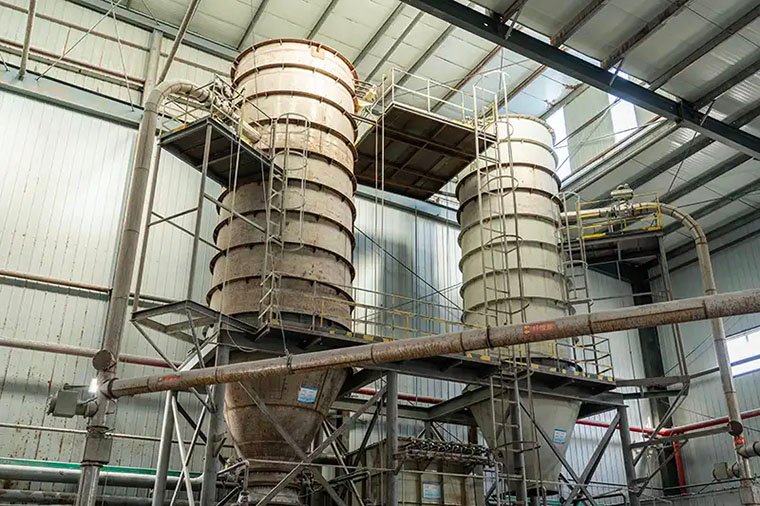
LANDERCOLL HEC helps emulsion polymerization systems achieve water-phase viscosity control, protective colloid support, emulsion stability, particle suspension, sedimentation resistance, handling consistency, storage stability, rheology control, process consistency, and downstream formulation usability.
Builds aqueous-phase viscosity for consistent process behavior.
Stabilizes polymer particles during and after polymerization.
Reduces separation, sedimentation, and performance inconsistency.
Keeps dispersed components well distributed throughout the system.
Reduces settling tendency in storage and transport.
Improves pumpability, filling behavior, and downstream usability.
Maintains viscosity and suspension over extended storage.
Provides controlled flow for production and application.
Supports more consistent batch-to-batch production performance.
Supports compatibility in paints, coatings, adhesives, and construction chemicals.
Controlled water-phase viscosity and protective colloid support keep polymer particles stable during polymerization, storage, and transport.
Consistent handling, suspension, and rheology support reliable use in paints, coatings, adhesives, and construction chemical formulations.
Emulsion polymerization performance depends on balancing protective colloid support, viscosity control, process compatibility, and downstream application requirements across the full production cycle.
Low viscosity — insufficient thickener or unsuitable grade
Sedimentation — weak suspension or large particles
Phase separation — poor stabilization or weak rheology
Viscosity drift — pH changes or poor hydration
HEC is the main LANDERCOLL cellulose ether product recommended for selected emulsion polymerization applications. It is water-soluble, nonionic, and suitable for many water-based systems where viscosity control, protective colloid behavior, and emulsion stability are required.
HEC · Non-Ionic · Water-Soluble
HEC is a non-ionic, water-soluble cellulose derivative that dissolves readily in the aqueous phase of emulsion polymerization systems. Its nonionic character provides broad compatibility with surfactants, initiators, and other process additives commonly used in emulsion polymerization.
cURL Too many subrequests by single Worker invocation. To configure this limit, refer to https://developers.cloudflare.com/workers/wrangler/configuration/#limits
cURL Too many subrequests by single Worker invocation. To configure this limit, refer to https://developers.cloudflare.com/workers/wrangler/configuration/#limits
| Komponente | cURL Too many subrequests by single Worker invocation. To configure this limit, refer to https://developers.cloudflare.com/workers/wrangler/configuration/#limits |
|---|---|
| Wasser | cURL Too many subrequests by single Worker invocation. To configure this limit, refer to https://developers.cloudflare.com/workers/wrangler/configuration/#limits |
| cURL Too many subrequests by single Worker invocation. To configure this limit, refer to https://developers.cloudflare.com/workers/wrangler/configuration/#limits | cURL Too many subrequests by single Worker invocation. To configure this limit, refer to https://developers.cloudflare.com/workers/wrangler/configuration/#limits |
| cURL Too many subrequests by single Worker invocation. To configure this limit, refer to https://developers.cloudflare.com/workers/wrangler/configuration/#limits | cURL Too many subrequests by single Worker invocation. To configure this limit, refer to https://developers.cloudflare.com/workers/wrangler/configuration/#limits |
| Initiators | Start the polymerization reaction. |
| Buffers | Help maintain system pH during polymerization. |
| Protective Colloids | Support particle stabilization and emulsion stability. |
| Cellulose Ether (HEC) | Improves viscosity, protective colloid support, suspension, and stability. |
| pH Modifiers | Adjust system pH and formulation stability. |
| Entschäumer | Reduce foam during production. |
| Konservierungsmittel | Support storage stability after production. |
| Sonstige Zusatzstoffe | Adjust process behavior, final emulsion properties, or application performance. |
Different polymer emulsion systems require different stabilization and viscosity profiles. The following table provides a practical selection reference.
| Emulsion System Type | Recommended HEC Direction | Hauptleistungsanforderungen |
|---|---|---|
| Vinyl Acetate Emulsions | HEC | Protective colloid support, viscosity control, emulsion stability. |
| Acrylic Emulsions | Selected HEC | cURL Too many subrequests by single Worker invocation. To configure this limit, refer to https://developers.cloudflare.com/workers/wrangler/configuration/#limits |
| Styrene-Acrylic Emulsions | Selected HEC | cURL Too many subrequests by single Worker invocation. To configure this limit, refer to https://developers.cloudflare.com/workers/wrangler/configuration/#limits |
| cURL Too many subrequests by single Worker invocation. To configure this limit, refer to https://developers.cloudflare.com/workers/wrangler/configuration/#limits | HEC | cURL Too many subrequests by single Worker invocation. To configure this limit, refer to https://developers.cloudflare.com/workers/wrangler/configuration/#limits |
| cURL Too many subrequests by single Worker invocation. To configure this limit, refer to https://developers.cloudflare.com/workers/wrangler/configuration/#limits | HEC | cURL Too many subrequests by single Worker invocation. To configure this limit, refer to https://developers.cloudflare.com/workers/wrangler/configuration/#limits |
| cURL Too many subrequests by single Worker invocation. To configure this limit, refer to https://developers.cloudflare.com/workers/wrangler/configuration/#limits | Mittlere bis hohe Viskosität HEC | cURL Too many subrequests by single Worker invocation. To configure this limit, refer to https://developers.cloudflare.com/workers/wrangler/configuration/#limits |
| cURL Too many subrequests by single Worker invocation. To configure this limit, refer to https://developers.cloudflare.com/workers/wrangler/configuration/#limits | Niedrige bis mittlere Viskosität HEC | cURL Too many subrequests by single Worker invocation. To configure this limit, refer to https://developers.cloudflare.com/workers/wrangler/configuration/#limits |
| Specialty Water-Based Polymer Emulsions | Selected HEC | cURL Too many subrequests by single Worker invocation. To configure this limit, refer to https://developers.cloudflare.com/workers/wrangler/configuration/#limits |
The dosage of HEC depends on monomer system, target viscosity, solids content, protective colloid requirement, particle stability target, and downstream application.
HEC influences every stage of emulsion polymerization performance — from protective colloid support and viscosity control to emulsion stability, particle suspension, process consistency, and downstream formulation usability.
HEC can provide protective colloid support in selected emulsion polymerization systems. It helps stabilize polymer particles and supports more consistent emulsion behavior during production and storage, particularly in vinyl acetate and adhesive emulsion systems.
HEC helps adjust the viscosity of the water phase and final emulsion system. Controlled viscosity improves handling, storage behavior, pumping, filling, and downstream formulation use.
A stable emulsion reduces the risk of separation, sedimentation, and inconsistent performance during storage and transport. HEC supports stability by improving water-phase structure and particle suspension.
Polymer particles and other dispersed components must remain well distributed throughout the emulsion. HEC helps improve suspension behavior and reduce settling tendency, particularly in higher-solids systems.
cURL Too many subrequests by single Worker invocation. To configure this limit, refer to https://developers.cloudflare.com/workers/wrangler/configuration/#limits
cURL Too many subrequests by single Worker invocation. To configure this limit, refer to https://developers.cloudflare.com/workers/wrangler/configuration/#limits
cURL Too many subrequests by single Worker invocation. To configure this limit, refer to https://developers.cloudflare.com/workers/wrangler/configuration/#limits
cURL Too many subrequests by single Worker invocation. To configure this limit, refer to https://developers.cloudflare.com/workers/wrangler/configuration/#limits
cURL Too many subrequests by single Worker invocation. To configure this limit, refer to https://developers.cloudflare.com/workers/wrangler/configuration/#limits
cURL Too many subrequests by single Worker invocation. To configure this limit, refer to https://developers.cloudflare.com/workers/wrangler/configuration/#limits
cURL Too many subrequests by single Worker invocation. To configure this limit, refer to https://developers.cloudflare.com/workers/wrangler/configuration/#limits
cURL Too many subrequests by single Worker invocation. To configure this limit, refer to https://developers.cloudflare.com/workers/wrangler/configuration/#limits
cURL Too many subrequests by single Worker invocation. To configure this limit, refer to https://developers.cloudflare.com/workers/wrangler/configuration/#limits
cURL Too many subrequests by single Worker invocation. To configure this limit, refer to https://developers.cloudflare.com/workers/wrangler/configuration/#limits
cURL Too many subrequests by single Worker invocation. To configure this limit, refer to https://developers.cloudflare.com/workers/wrangler/configuration/#limits
cURL Too many subrequests by single Worker invocation. To configure this limit, refer to https://developers.cloudflare.com/workers/wrangler/configuration/#limits
cURL Too many subrequests by single Worker invocation. To configure this limit, refer to https://developers.cloudflare.com/workers/wrangler/configuration/#limits
cURL Too many subrequests by single Worker invocation. To configure this limit, refer to https://developers.cloudflare.com/workers/wrangler/configuration/#limits
cURL Too many subrequests by single Worker invocation. To configure this limit, refer to https://developers.cloudflare.com/workers/wrangler/configuration/#limits
Raw material variation, mixing differences, poor hydration.
Supports more stable water-phase behavior.
Unstable emulsion, unsuitable viscosity, poor suspension.
Helps improve handling and formulation consistency.
The performance of HEC in any given emulsion polymerization system is influenced by multiple interacting variables. Understanding these factors is essential for successful grade selection and dosage optimization.
Different monomers and copolymer systems have different stabilization requirements and compatibility with HEC.
Surfactants affect particle formation, particle stability, foam behavior, and compatibility with HEC.
Polymerization conditions may influence process stability, pH, temperature profile, and final emulsion behavior.
System pH affects viscosity stability, emulsion stability, and compatibility with other additives.
Higher solids content usually requires stronger viscosity control and suspension stability.
Polymerization temperature and cooling conditions affect viscosity development, hydration, and emulsion stability.
Mixing speed, shear level, addition sequence, and hydration time affect HEC dispersion and final performance.
Different grades provide different levels of thickening, flow control, and stabilization support.
Too little may not provide enough viscosity or suspension; too much may create excessive viscosity or processing difficulty.
Choosing the right HEC requires balancing protective colloid support, viscosity control, process compatibility, emulsion stability, and downstream application requirements. There is no universal grade — the right choice depends on your specific system.
What type are you producing? Vinyl acetate, acrylic, styrene-acrylic, adhesive, or specialty.
Monomer type affects stabilization and compatibility requirements.
Define the target viscosity range for production and final emulsion.
Confirm the role of HEC in your stabilization strategy.
Higher solids typically require stronger viscosity and suspension support.
Compatibility must be confirmed through polymerization testing.
Production pH and temperature profile affect HEC hydration and stability.
Do you need better suspension, storage stability, or handling consistency?
cURL Too many subrequests by single Worker invocation. To configure this limit, refer to https://developers.cloudflare.com/workers/wrangler/configuration/#limits
cURL Too many subrequests by single Worker invocation. To configure this limit, refer to https://developers.cloudflare.com/workers/wrangler/configuration/#limits
cURL Too many subrequests by single Worker invocation. To configure this limit, refer to https://developers.cloudflare.com/workers/wrangler/configuration/#limits
cURL Too many subrequests by single Worker invocation. To configure this limit, refer to https://developers.cloudflare.com/workers/wrangler/configuration/#limitscURL Too many subrequests by single Worker invocation. To configure this limit, refer to https://developers.cloudflare.com/workers/wrangler/configuration/#limits
cURL Too many subrequests by single Worker invocation. To configure this limit, refer to https://developers.cloudflare.com/workers/wrangler/configuration/#limits
cURL Too many subrequests by single Worker invocation. To configure this limit, refer to https://developers.cloudflare.com/workers/wrangler/configuration/#limits
cURL Too many subrequests by single Worker invocation. To configure this limit, refer to https://developers.cloudflare.com/workers/wrangler/configuration/#limits
cURL Too many subrequests by single Worker invocation. To configure this limit, refer to https://developers.cloudflare.com/workers/wrangler/configuration/#limits
cURL Too many subrequests by single Worker invocation. To configure this limit, refer to https://developers.cloudflare.com/workers/wrangler/configuration/#limits
cURL Too many subrequests by single Worker invocation. To configure this limit, refer to https://developers.cloudflare.com/workers/wrangler/configuration/#limits
cURL Too many subrequests by single Worker invocation. To configure this limit, refer to https://developers.cloudflare.com/workers/wrangler/configuration/#limits
cURL Too many subrequests by single Worker invocation. To configure this limit, refer to https://developers.cloudflare.com/workers/wrangler/configuration/#limits
cURL Too many subrequests by single Worker invocation. To configure this limit, refer to https://developers.cloudflare.com/workers/wrangler/configuration/#limits
Sample and quotation communication.
TDS, SDS, COA, and application guides on request.
HEC (Hydroxyethyl Cellulose) is commonly used in selected emulsion polymerization systems to provide viscosity control, protective colloid support, particle suspension, and emulsion stability. It is nonionic, water-soluble, and compatible with a broad range of surfactant and initiator systems used in water-based polymer emulsion production.
HEC helps build water-phase viscosity, support particle stabilization through protective colloid function, improve suspension behavior, and maintain more stable handling and storage performance. It also supports downstream formulation usability in paints, coatings, adhesives, and construction chemical applications.
Yes. In selected polymer emulsion systems — particularly vinyl acetate and adhesive emulsion systems — HEC can provide protective colloid support and help improve emulsion stability. Compatibility and effectiveness should always be confirmed through polymerization trials under actual process conditions.
A common reference dosage range is 0.05%–0.80% by weight, depending on the monomer system, solids content, target viscosity, and stabilization requirement. Vinyl acetate systems typically use 0.10%–0.50%, while high-solids emulsions may require up to 0.80%. Final dosage should always be confirmed through laboratory polymerization trials.
HEC can help improve water-phase structure and particle suspension, which may reduce sedimentation tendency in selected emulsion systems. The effectiveness depends on particle size, density, solids content, and the overall stabilization system used.
HEC may support emulsion stability and reduce coagulum tendency in some systems, but coagulum formation is affected by many factors including the surfactant system, initiator system, pH, mixing conditions, temperature profile, monomer addition rate, and overall process control. HEC alone cannot guarantee coagulum prevention.
HEC primarily supports viscosity, suspension, stabilization, and handling behavior. Final polymer emulsion performance — including film formation, adhesion, mechanical properties, and chemical resistance — depends on monomer composition, polymerization process, surfactants, initiators, solids content, and downstream formulation design.
Start by defining your monomer system, target viscosity, solids content, stabilization requirement, pH, process temperature, addition sequence, and downstream application. LANDERCOLL can help recommend suitable HEC grades for evaluation and provide technical guidance throughout the testing process.
Whether you produce vinyl acetate emulsions, acrylic emulsions, styrene-acrylic emulsions, adhesive emulsions, coating binder emulsions, or specialty water-based polymer emulsions, LANDERCOLL HEC can help you achieve optimal viscosity control, protective colloid support, suspension stability, and process consistency.
Our technical team provides grade selection support, dosage guidance, and process compatibility assistance to help polymer emulsion producers develop reliable, high-performance water-based systems. Contact us today to receive an HEC grade recommendation, request samples, or get a competitive quote.
 English English
  العربية
 Deutsch
 Українська
 Ελληνικά
 Español
 Español de Perú
 Français
 Magyar
 Bahasa Indonesia
 Italiano
 Português
 Türkçe
 Русский
 Nederlands
 Slovenčina
 Svenska
 Български
 Čeština
 Dansk
Dansk
 Eesti
Eesti
 Suomi
Suomi
 日本語
日本語
 한국어
한국어
 Lietuvių kalba
 Latviešu valoda
 Norsk bokmål
 Polski
 Português do Brasil
 Română
 Slovenščina